London Historical Landmarks
1. Tower of London
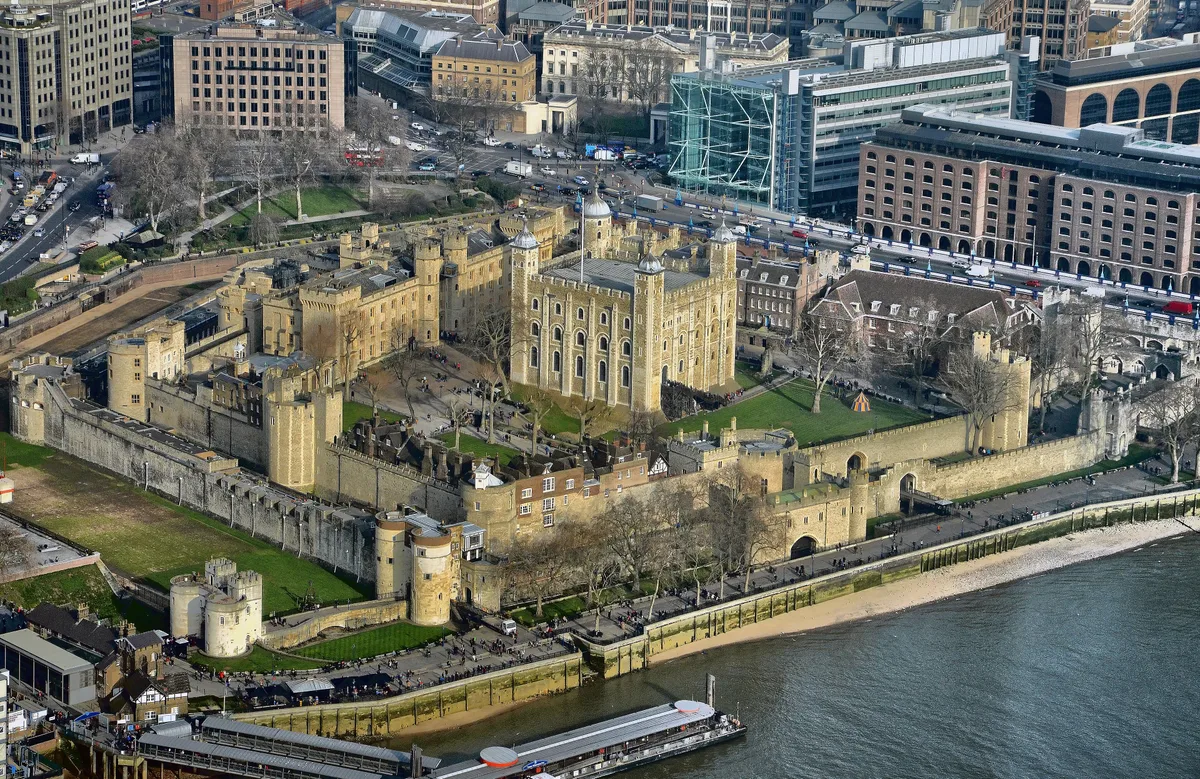
Photo: [Duncan] from Nottingham, UK / CC BY 2.0
What Your Eye SeesA medieval fortress on the north bank of the Thames, with the central White Tower rising above a concentric ring of walls, towers, and a moat. The Crown Jewels are displayed inside.
ContextFounded by William the Conqueror in 1078, the Tower of London has served as a royal palace, prison, armory, treasury, zoo, mint, and public records office over its 950-year history. Its White Tower still guards the Crown Jewels, and the fortress was the execution site of three English queens, including Anne Boleyn.
A UNESCO World Heritage Site, the Tower is guarded by the Yeoman Warders, known as Beefeaters, who still perform the nightly Ceremony of the Keys, locking the gates as they have for 700 years. Behind its walls the Crown Jewels are kept, and a former royal menagerie once held lions and exotic beasts given by foreign rulers.
On ScreenThe Tower of London was a filming location for the game Assassin's Creed Syndicate (2015) and appears in Mission: Impossible – Rogue Nation (2015) and Spider-Man: Far From Home (2019).
Source: UNESCO (Tower of London); Wikipedia (Tower of London); Wikipedia (Tower of London); Assassin's Creed Syndicate production notes; Mission: Impossible – Rogue Nation production notes
 Did
DidYou
Know
By legend, Charles II decreed that ravens must always stay at the Tower, yet the earliest written record of them dates only to 1883, and the Tower's own historian calls the 'ancient' lore a Victorian invention. The superstition endures: if the ravens ever leave, the Crown will fall. During World War II the Tower briefly held Rudolf Hess, Hitler's deputy.
Share→ The Crown Jewels
Inside the Jewel House, the actual coronation regalia is kept under guard: the Imperial State Crown, set with some 2,868 diamonds, and the Sovereign's Sceptre holding the Cullinan I, at 530 carats the largest colourless cut diamond in the world. These are working crowns, still worn by the monarch, and visitors glide past them on a moving walkway.
→ The Traitors' Gate
Look across to the south wall facing the Thames for the dark, vaulted arch still carrying its medieval portcullis. Built by Edward I as a water gate for the royal family, it became the grim entry point for prisoners accused of treason, brought by barge up the river.
→ Graffiti In The Salt Tower
Imprisoned Tudor Catholics carved messages and religious emblems into the Salt Tower's stone. One of the most famous prisoners was the Jesuit John Gerard, who escaped in October 1597 by crossing the moat on a rope, and whose escape he later recorded in writing.
Sources: Historic Royal Palaces; Wikipedia
 Euro Heritage
 Gothic Soul
2. Big Ben (Elizabeth Tower)
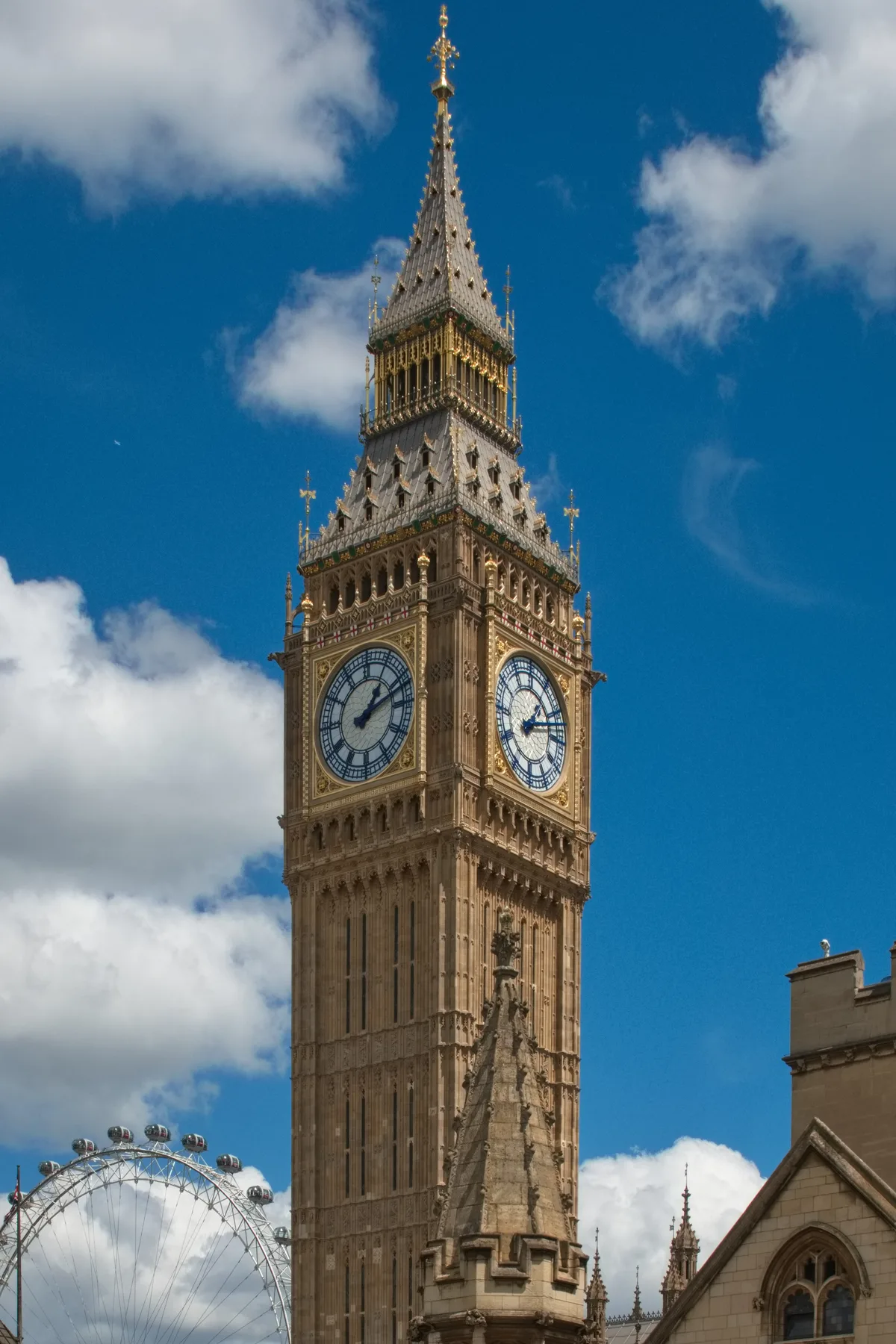
Photo: Dave Bezaire / CC BY-SA 2.0
What Your Eye SeesA 96-metre Gothic Revival clock tower rising from the Palace of Westminster, with a four-faced clock dial dominating the Westminster skyline.
ContextCompleted in 1859, the tower was designed by Charles Barry and Augustus Pugin as the clock tower of the new Palace of Westminster. Renamed Elizabeth Tower in 2012 for the Queen's Diamond Jubilee, it houses the 13.7-tonne bell known as Big Ben, though strictly that name belongs to the bell, not the tower. The clock has kept time since 1859, through two world wars and a major fire.
On ScreenBig Ben appears in the films V for Vendetta (2005) and Mary Poppins (1964).
Source: UNESCO (Palace of Westminster); Wikipedia (Big Ben); Wikipedia (Big Ben); V for Vendetta production notes; Mary Poppins production notes
DidYou
Know
The clock's time is fine-tuned by stacking old pre-decimal pennies on the pendulum, add one and the great mechanism gains about two-fifths of a second a day. The bell itself was the second casting: the first 16-ton 'Great Bell of Westminster' cracked in testing in 1857.
Share→ The Ayrton Light
The lantern above the clock faces is lit whenever the House of Commons is sitting after dark. It was installed in the 1870s on the orders of Acton Smee Ayrton, First Commissioner of Works, so that Queen Victoria could see from Buckingham Palace whether Parliament was still in session.
→ The Four Great Dials
Each of the four clock faces is nearly 7 metres across, an iron frame holding 324 pieces of opal glass, like a giant stained-glass window. At the base of every dial, in gilded letters, runs the inscription 'DOMINE SALVAM FAC REGINAM NOSTRAM VICTORIAM PRIMAM', 'O Lord, keep safe our Queen Victoria the First.'
Sources: UK Parliament; Wikipedia
Euro Heritage
Gothic Soul
3. Buckingham Palace
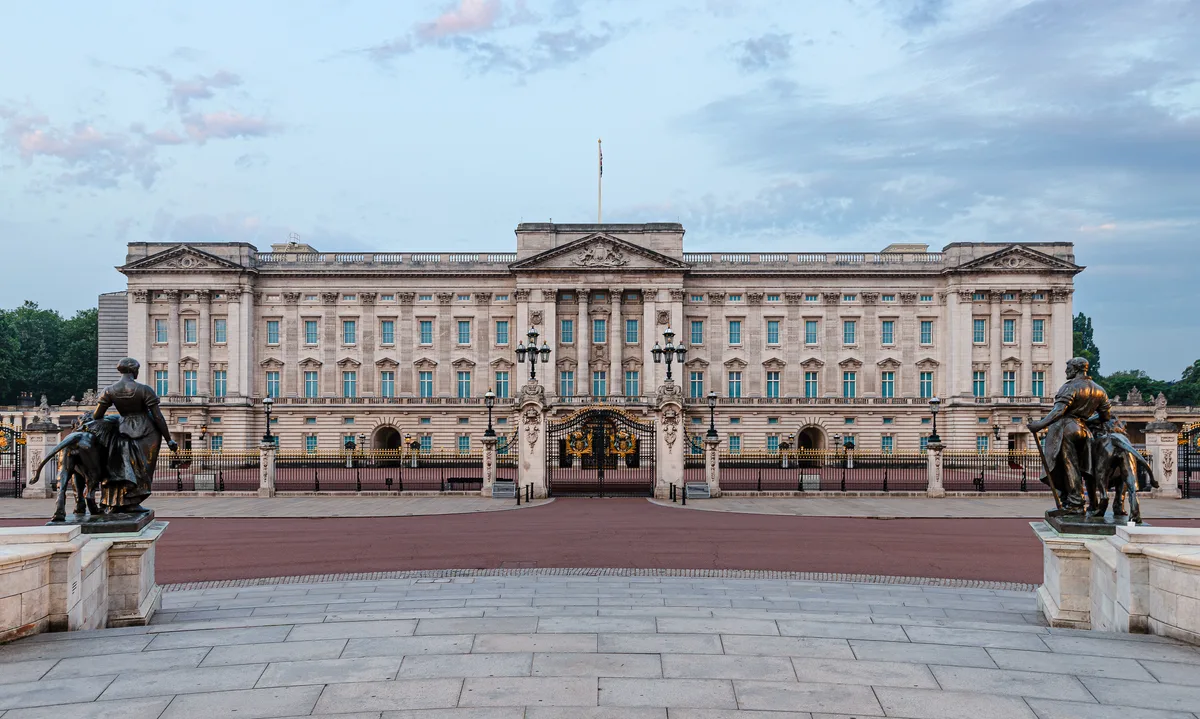
Photo: Julian Herzog (Website) / CC BY 4.0
What Your Eye SeesA grand Neoclassical palace with a Portland stone facade, a central balcony above the main entrance, and gardens stretching across 39 acres behind it.
ContextOriginally built as Buckingham House in 1703, it was bought by George III in 1761 as a family retreat and transformed into a palace by John Nash for George IV. It became the official royal residence in 1837 under Queen Victoria, who was the first monarch to live there. The palace has 775 rooms, including 52 royal and guest bedrooms.
The forecourt hosts the Changing of the Guard, a ceremonious handover of duty performed by the King's Guard in bearskin hats and scarlet tunics, a spectacle of drill and military music that draws crowds daily. Inside, state rooms and the royal art collection open to the public when the monarch is not in residence.
On ScreenBuckingham Palace appeared in the 2012 Olympic opening film with Daniel Craig as James Bond and the 2022 Platinum Jubilee sketch Paddington Meets the Queen.
Source: Wikipedia (Buckingham Palace); Britannica; Wikipedia (Paddington); Wikipedia (London 2012 Olympic film); production notes
DidYou
Know
Buckingham Palace was bombed seven times during World War II, yet the royal family refused to leave London. The famous balcony was a later addition, the palace originally had no such feature, added to let the royal family connect with crowds on ceremonial occasions.
Share→ The Queen Victoria Memorial
Step onto the forecourt to see the great monument unveiled in 1911, sculpted by Thomas Brock. About 25 metres high and crowned by a gilded Winged Victory, it marks the reign of Victoria, the first British monarch to use the title of empress.
→ The Flag Over The Palace
Glance at the mast above the palace: when the Royal Standard flies, the monarch is in residence. When the Union Flag is raised instead, the King is away, one look tells you who is home.
Sources: Wikipedia; Royal.uk (official royal website)
Euro Heritage
4. Westminster Abbey
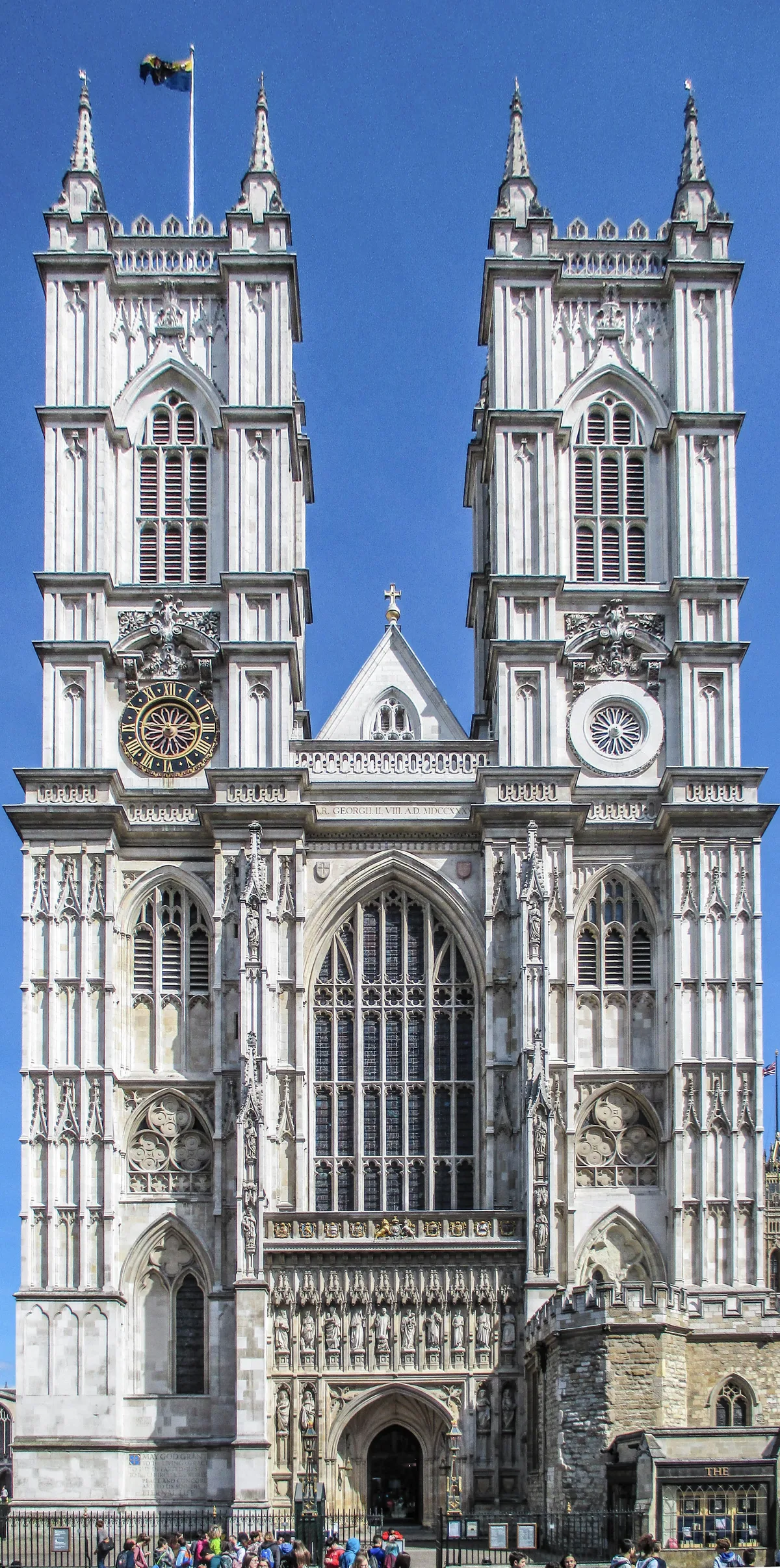
Photo: Antiquary / CC BY 4.0
What Your Eye SeesA soaring Gothic abbey with twin towers, flying buttresses, and a stunning fan-vaulted ceiling. The interior is lined with tombs, statues, and the Coronation Chair.
ContextRebuilt by Henry III in 1245 on the site of a 10th-century monastery, Westminster Abbey has been the coronation church since 1066, when Edward the Confessor was entombed there. Every English monarch for nearly 1,000 years has been crowned here, and it remains the nation's chief coronation and burial church.
On ScreenWestminster Abbey features in the film The Da Vinci Code (2006).
Source: UNESCO (Palace of Westminster); Wikipedia (Westminster Abbey); Wikipedia (The Da Vinci Code); production notes
DidYou
Know
Westminster Abbey holds the tombs of 30 monarchs and over 3,300 of Britain's most notable figures, Isaac Newton, Charles Darwin, Geoffrey Chaucer, Stephen Hawking. Shakespeare is memorialised here, the Unknown Warrior is buried here, and the Coronation Chair has been used since 1308.
Share→ The Cosmati Pavement
Approach the mosaic floor before the high altar, laid in 1268 during Henry III's rebuilding, with inlaid glass, marble and porphyry brought by Italian craftsmen. The geometric design was meant to be read as an image of the universe and the world's order under Christ.
→ Britain's Oldest Door
The door in the Chapter House dates from around 1050, in the reign of Edward the Confessor, making it one of the oldest surviving doors in Britain. It was long said to be covered with human skin, but scientific testing found the covering is actually cattle hide from a later repair.
→ The Stone Of Destiny
The Coronation Chair was built in 1296–1300 to hold the Stone of Scone beneath its seat. Scottish students stole the stone in 1950; it was recovered, then formally returned to Scotland in 1996 (to Edinburgh Castle), travelling to Westminster only for coronations.
Sources: Westminster Abbey; Wikipedia
Euro Heritage
Gothic Soul
 Spiritual Seeker
5. St. Paul's Cathedral
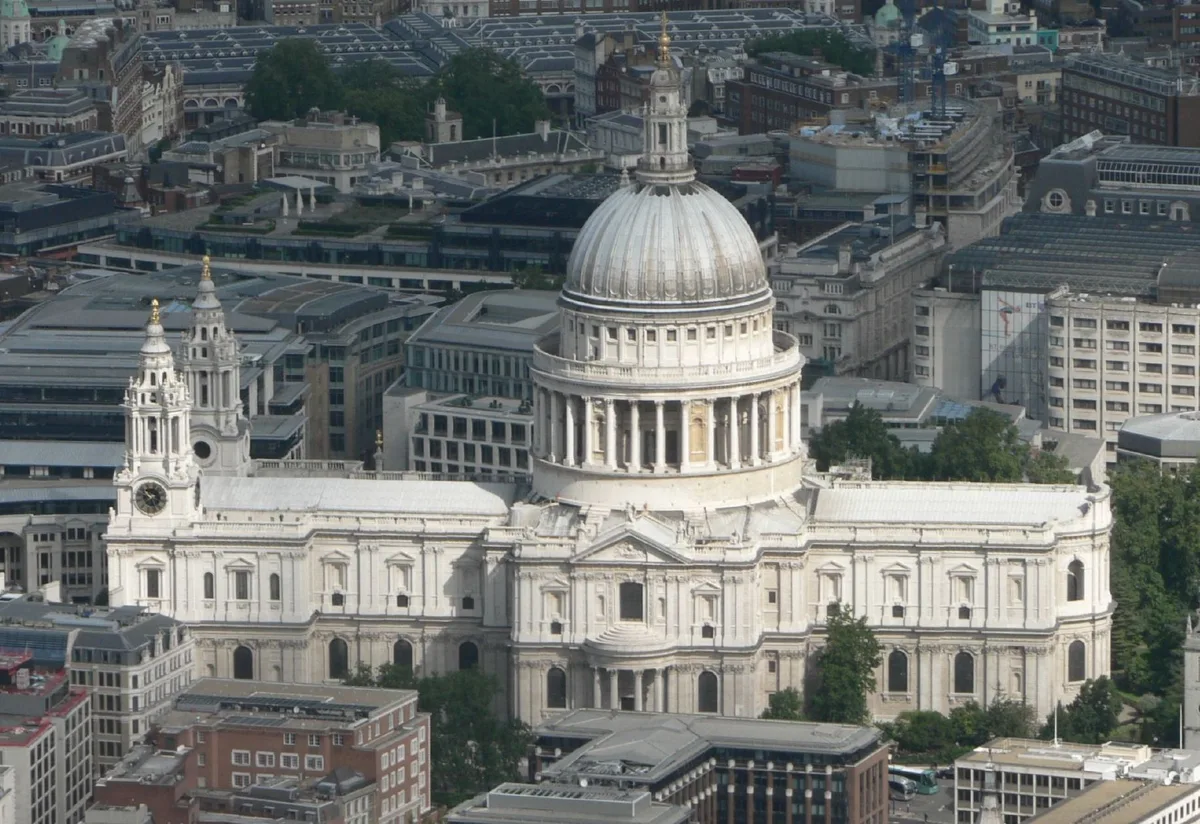
Photo: Mark Fosh / CC BY 2.0
What Your Eye SeesA massive English Baroque cathedral crowned by one of the largest cathedral domes in the world, rising 111 metres above the London skyline.
ContextDesigned by Sir Christopher Wren after the Great Fire of London (1666), St. Paul's Cathedral was completed in 1710 and became the seat of the Bishop of London. It is the fourth church on the site, and its great dome, among the largest in the world, rose where a medieval cathedral had been destroyed in the fire.
St Paul's also inspired one of cinema's gentlest scenes: in Mary Poppins (1964), the Bird Woman sits on the cathedral steps selling breadcrumbs 'tuppence a bag' in the song 'Feed the Birds.'
On ScreenSt Paul's Cathedral appears in Harry Potter and the Prisoner of Azkaban (2004) and Mission: Impossible – Fallout (2018).
Source: Wikipedia (St Paul's Cathedral); Britannica; Wikipedia (St Paul's Cathedral); Harry Potter production notes; Mission: Impossible – Fallout production notes
DidYou
Know
During the Blitz, St. Paul's became the symbol of British endurance, a famous photograph shows it standing amid smoke and fire. A volunteer fire watch team camped on the dome every night, and despite 28 direct hits around it, the cathedral survived. Wren's tomb reads: 'Si monumentum requiris, circumspice.'
Share→ The Whispering Gallery
Look up into the dome's lowest gallery, a whisper spoken against its inner wall carries around the curve and sounds at your ear on the far side, nearly 34 metres away, an effect of the great circular masonry.
→ The Golden Gallery
The Golden Gallery is the highest of the dome's three galleries, about 85 metres up. Reaching the golden ball and cross at the very top means climbing around 530 steps, rewarded with a panorama across London.
Sources: St. Paul's Cathedral; Wikipedia
Euro Heritage
 Baroque Master
Spiritual Seeker
Baroque Master
Spiritual Seeker
6. Tower Bridge
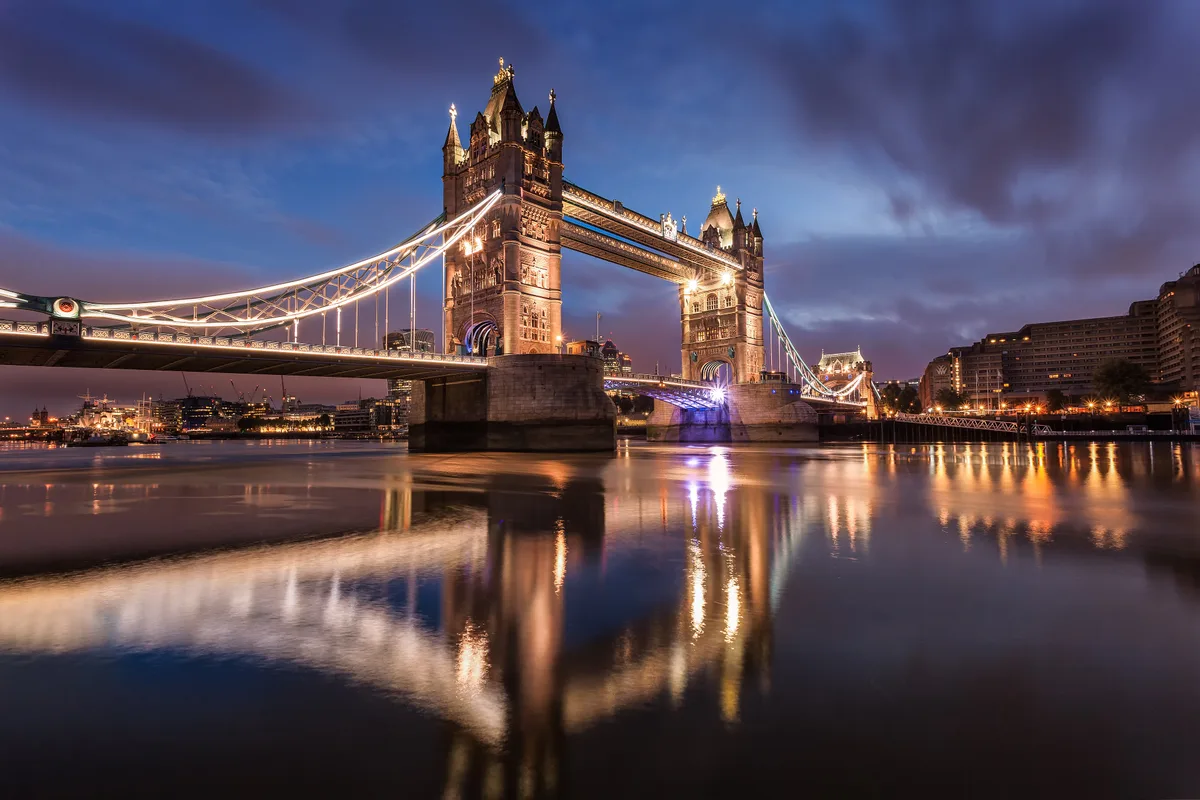
Photo: Fuzzypiggy / CC BY-SA 3.0
What Your Eye SeesA combined bascule and suspension bridge with two 65-metre Victorian Gothic towers connected by raised walkways. The roadway splits in two to allow ships through.
ContextCompleted in 1894, Tower Bridge was designed by architect Sir Horace Jones with engineer Sir John Wolfe Barry, and built by 432 workers over eight years at a cost of about £1.18 million. Opened by the future Edward VII, it was built to ease road traffic while preserving access to the busy Pool of London docks, and remains one of the world's most recognizable bridges.
On ScreenThe film The Mummy Returns (2001) used Tower Bridge as a filming location.
Source: Wikipedia (Tower Bridge); Britannica; Wikipedia (The Mummy Returns); production notes
DidYou
Know
Tower Bridge is a bascule bridge, each leaf weighing 1,100 tons, originally opened by steam-powered hydraulic accumulators. It opens about 800 times a year. Its Victorian Gothic style was deliberately chosen to match the nearby Tower of London, requiring a special Act of Parliament.
Share→ The Victorian Engine Rooms
Beneath the southern approach, the bridge's Victorian heart survives intact: original steam engines, coal-fired boilers and ranks of polished hydraulic machinery, preserved in the engine rooms and open for visitors to walk through.
→ The High Walkways
The raised walkways that link the two towers were meant to let pedestrians cross while the road opened for ships, but they closed in 1910 after gaining a bad reputation. They reopened for visitors in 1982 and gained glass floors in 2014.
→ Grounded In The River
Stand at the base of each Gothic tower: a steel frame clad in stone, set on piers and around 70,000 tonnes of concrete in the Thames bed, a Victorian-scale foundation strong enough for the two huge bascule leaves to pivot against each other.
Sources: Tower Bridge (towerbridge.org.uk); Wikipedia; Tower Bridge
Euro Heritage
Gothic Soul
7. The British Museum
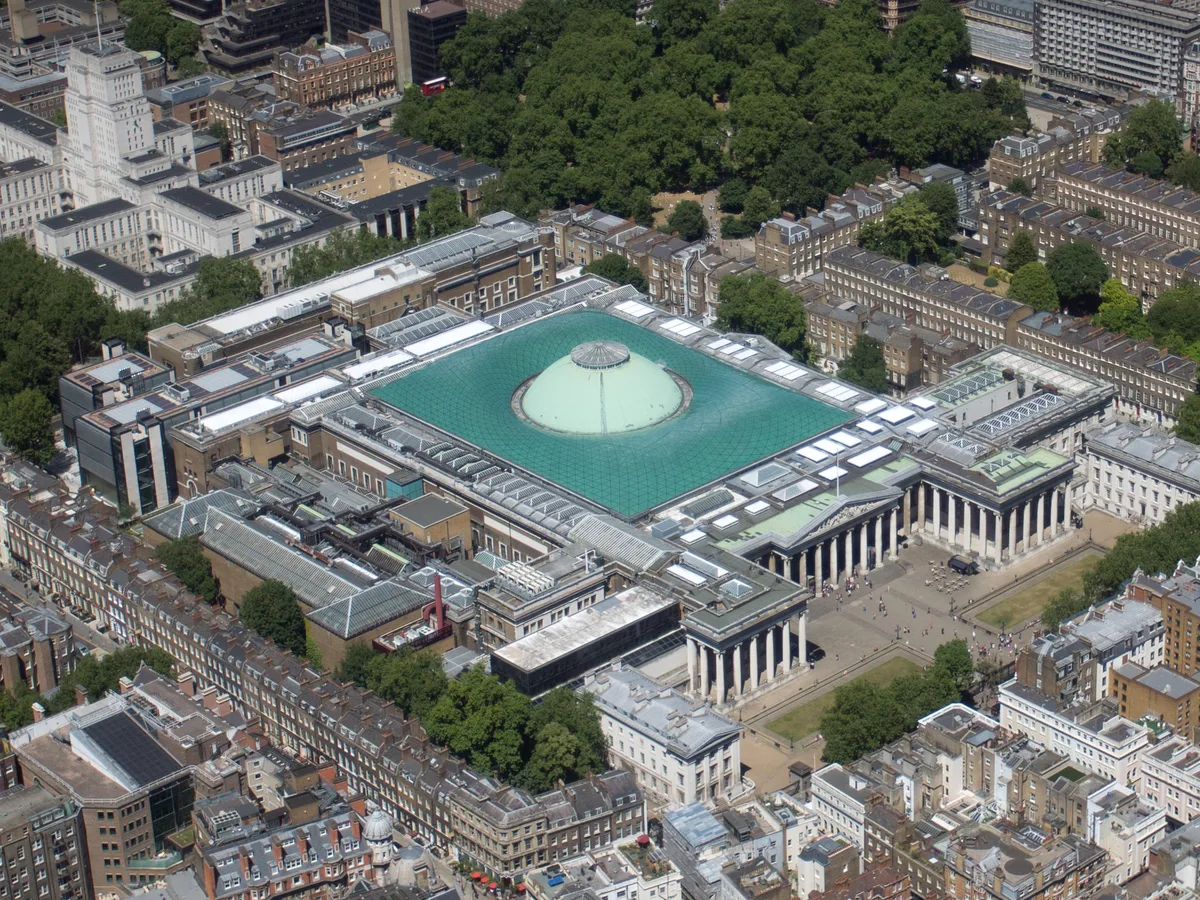
Photo: Luke Massey & the Greater London National Park City Initiative / CC BY 2.0
What Your Eye SeesA grand Neoclassical building with a 44-column Ionic portico, surrounding the Great Court, a vast glass-roofed courtyard enclosing the circular Reading Room.
ContextFounded in 1753 by an Act of Parliament, the British Museum was the first national public museum in the world. Its collection grew from 71,000 objects to over 8 million today, built on the 1753 purchase of Sir Hans Sloane's collection and now spanning two million years of human history.
Among its most famous objects are the Rosetta Stone, whose three scripts revealed ancient Egyptian writing, and the Parthenon sculptures removed from Athens by Lord Elgin in the early 1800s, both lasting symbols of the museum's encyclopedic reach and of long-running restitution debates.
On ScreenThe British Museum was a filming location for Night at the Museum: Secret of the Tomb (2014).
Source: Wikipedia (British Museum); Britannica; Wikipedia (British Museum); Night at the Museum production notes
DidYou
Know
Of the British Museum's vast holdings, only about 1 per cent, some 80,000 objects, can ever be put on display at once, largely because so many are too fragile or light-sensitive to be shown; the rest sit in storage.
Share→ The Great Court
Step beneath the vast glass canopy sheltering the courtyard around the Reading Room, opened in 2000 and designed by Foster and Partners. It formed the largest covered public square in Europe, with the historic Reading Room resting at its centre.
→ The Rosetta Stone
Find the museum's single most-visited object, the Rosetta Stone, acquired in 1802. Carrying the same text in Greek, demotic and hieroglyphs, it was the key that let Champollion reveal the hieroglyphic script in the 1820s.
Sources: British Museum; Wikipedia
Euro Heritage
 Renaissance
8. London Eye
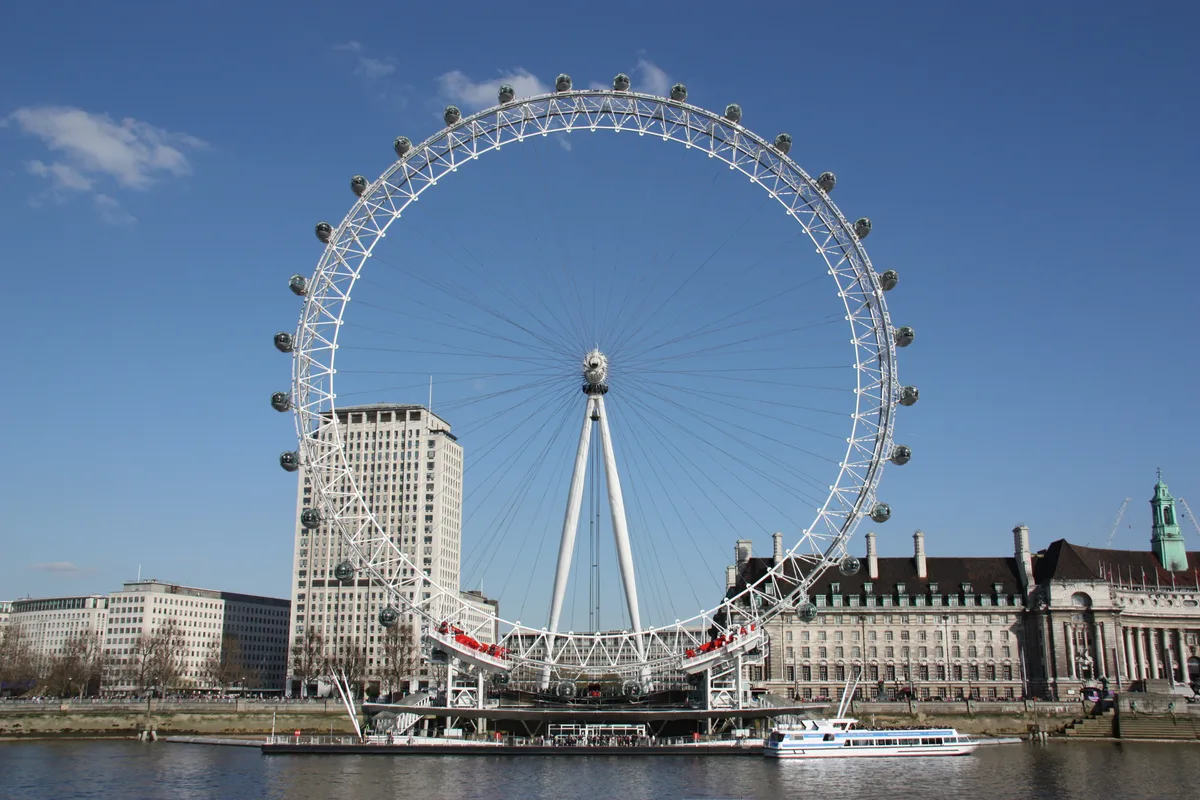
Photo: Khamtran / CC BY-SA 3.0
What Your Eye SeesA 135-metre giant observation wheel on the South Bank of the Thames, with 32 glass capsules offering panoramic views across the London skyline.
ContextBuilt to celebrate the millennium in 2000, the London Eye was designed by architects David Marks and Julia Barfield and took seven years to realise. Originally intended as a temporary structure for just five years, its popularity made it a permanent landmark, and at 135 m it was the world's tallest observation wheel when built.
Source: Wikipedia (London Eye)
DidYou
Know
The London Eye's 32 capsules are no accident, each stands for one of London's 32 boroughs, numbered 1 to 33 with 13 skipped for superstition.
Share→ A Cantilevered Wheel
Unlike a classic Ferris wheel held from both sides, the London Eye is cantilevered, the whole wheel is supported from one side by a giant A-frame, so the capsules hang clear and the view is never blocked by a frame.
→ Too Slow To Stop
The Eye never stops moving. At about 26 centimetres per second, it turns so gently that you step into the capsule as it glides past at walking pace, there is no waiting for a full stop, and each passenger boards smoothly.
Sources: Wikipedia; London Eye
 Modernist
9. Houses of Parliament (Palace of Westminster)
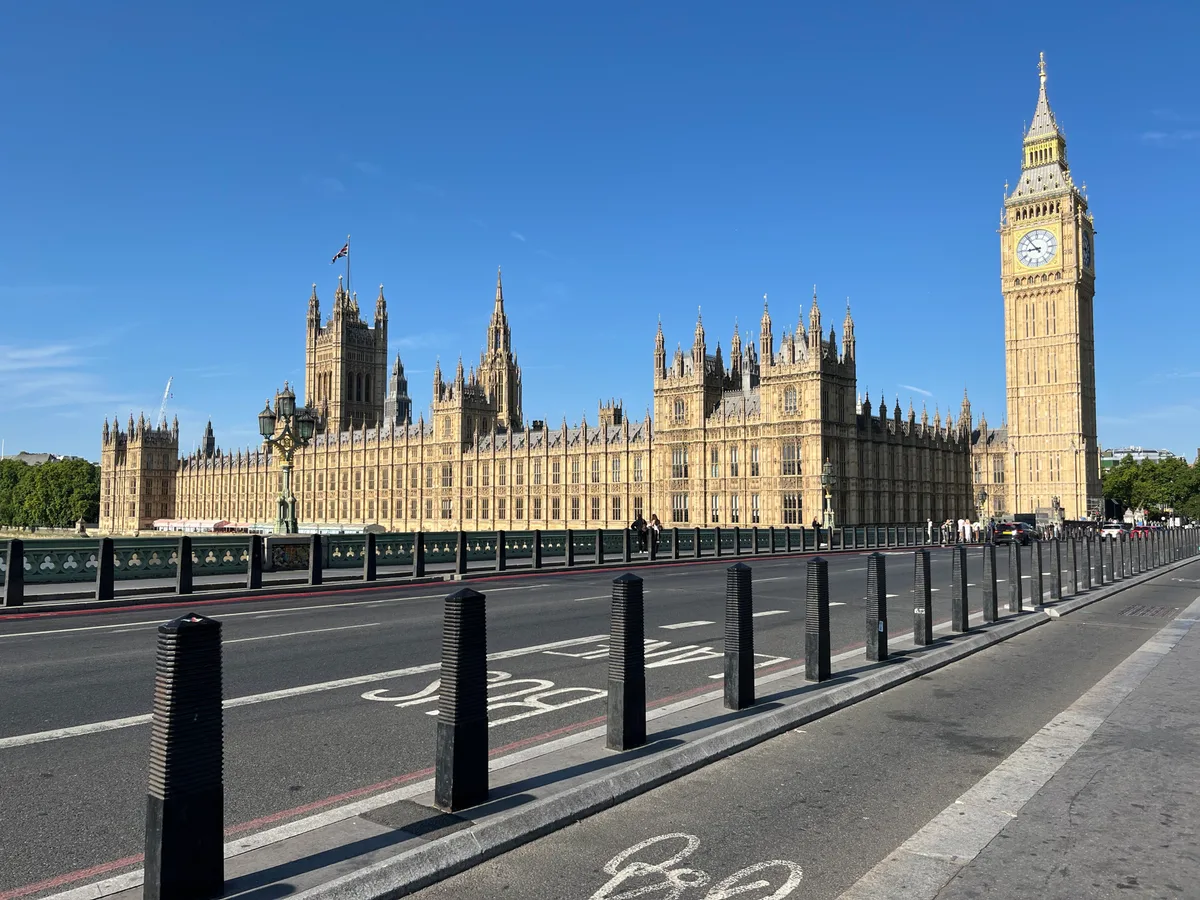
Photo: ThatsTheBoss / CC0
What Your Eye SeesA vast Gothic Revival palace stretching along the Thames, crowned by two sharply different towers, the square Victoria Tower to the south and the famous clock tower, Big Ben, to the north.
ContextRebuilt after the fire of 1834 destroyed the old medieval palace, the Houses of Parliament were designed by Sir Charles Barry with A.W.N. Pugin and completed around 1860. The surviving 11th-century Westminster Hall was folded into the new complex, today a UNESCO World Heritage Site of more than 1,100 rooms.
The complex's most famous silhouette is the Elizabeth Tower, home to the bell known as Big Ben, whose hour-strikes ring across the River Thames. Barry's perpendicular-Gothic design, with Pugin's riot of decorative detail, set the visual template for how the world pictures a parliament.
On ScreenThe Houses of Parliament feature in the film V for Vendetta (2006).
Source: UNESCO (Palace of Westminster); Wikipedia (Palace of Westminster); Wikipedia (V for Vendetta); production notes
DidYou
Know
'Westminster' is a metonym for the UK Parliament itself, and the Westminster system of parliamentary democracy, exported to former colonies on every continent, takes its name from this one building. The House of Commons sits north, the House of Lords south, meeting beneath the octagonal Central Lobby.
Share→ The Hammer-Beam Roof
Westminster Hall, the oldest part of the palace, carries the largest medieval timber roof in Northern Europe, an oak hammer-beam structure commissioned by Richard II in 1393 and built by the king's carpenter Hugh Herland. Look up: the carved corbels are adorned with angels, and the great beams meet with no central columns, leaving a single clear span over the hall.
→ Two Unequal Towers
Compare the two towers: at the south-west corner the square Victoria Tower rises 98.5 metres, named for the reigning queen; at the north end the Elizabeth Tower, home of Big Ben, is shorter at around 96 metres. The palace was designed on a deliberately asymmetrical plan, so the two never mirror each other.
→ Two-Tone Stonework
The original facades were clad in honey-coloured Anston limestone from Yorkshire, which decayed quickly in London's polluted air. Since 1928 repairs have used a paler, coarser Clipsham limestone from Rutland, so across the walls you can see a patchwork of two distinct stone tones where replacement blocks sit against the older, darkened original.
Sources: UK Parliament; Wikipedia (Westminster Hall); Wikipedia
Euro Heritage
Gothic Soul
10. Hampton Court Palace
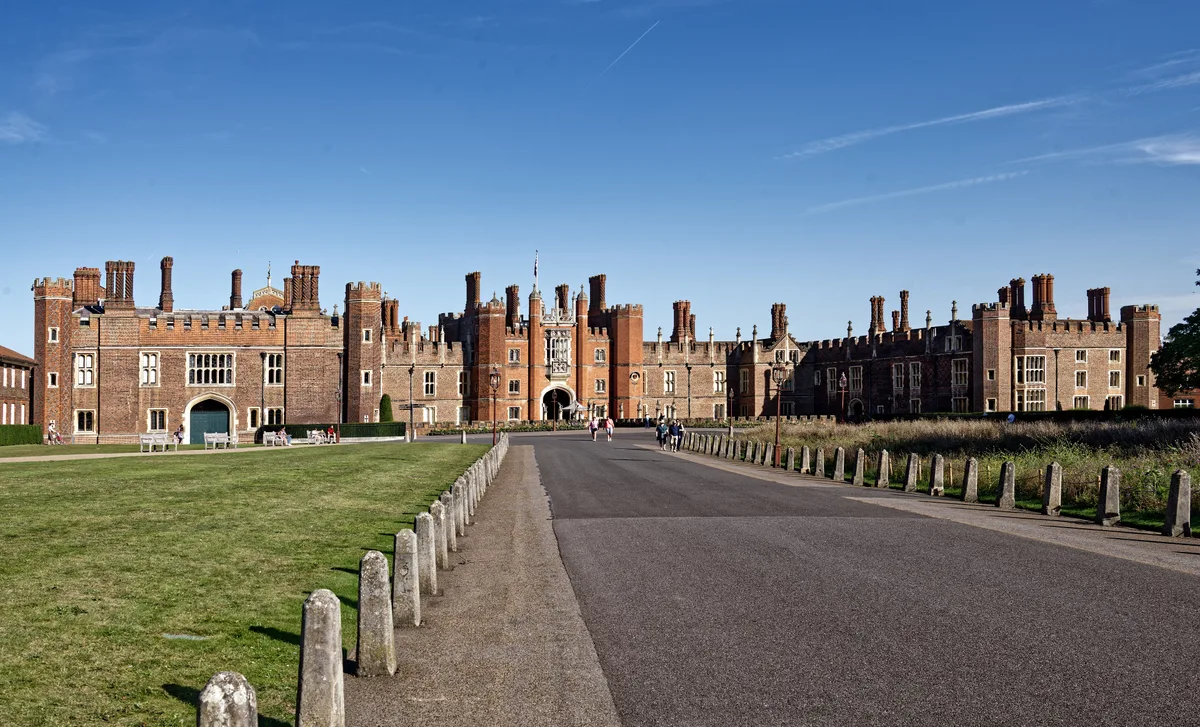
Photo: Tilman2007 / CC BY-SA 4.0
What Your Eye SeesA sprawling red-brick Tudor palace beside the Thames, with Anne Boleyn's Gatehouse arching into Clock Court and the Great Hall's hammer-beam roof rising behind it. To the east, the Baroque Fountain Court contrasts sharply with the Tudor brickwork.
ContextBegun in 1514 for Cardinal Wolsey and later taken over by Henry VIII, the palace grew into one of the largest Tudor royal residences in England. A later phase, led by Sir Christopher Wren, added the Baroque Fountain Court in the late 17th century.
On ScreenHampton Court Palace appears extensively in The Favourite (2018), Bridgerton, The Great and The Young Victoria, all shot on the palace's real state rooms and gardens.
Source: Wikipedia (Hampton Court Palace); Britannica; Historic Royal Palaces
DidYou
Know
Hampton Court is one of only two surviving palaces of the many owned by Henry VIII, alongside St James's. Its Great Hall was the last medieval great hall built for the English monarchy, so impatient was the king that masons worked through the night by candlelight.
Share→ The Astronomical Clock
On the gatehouse between the Base Court and Clock Court hangs one of Europe's finest pre-Copernican astronomical clocks. Made in 1540 by the French clockmaker Nicholas Oursian, whose initials N.O. are on the dial, it is about three metres across with three copper dials. Beyond the time and the moon's phases it shows the hour of high water at London Bridge, a detail that mattered to courtiers arriving by barge, since the bridge's rapids were dangerous at low tide.
→ Diaper Brickwork
The palace's red brick is not plain. Across the Tudor walls runs a diaper pattern, diamonds of darker, over-fired bricks set into the lighter red brick, a favourite decorative device of the early Tudor masons. Look closely at the courtyards and you will see the darker burnt bricks forming the pattern against the warm red background.
→ Jean Tijou's Ironwork
Look in the formal gardens for the tall wrought-iron screens and gates, the work of Jean Tijou, the French Huguenot ironsmith commissioned by William III in the 1690s. His Baroque scrollwork, curling leaves, arabesques and gilded highlights, framed the parterres and was the most fashionable ironwork of its day in England.
Sources: Wikipedia (Hampton Court astronomical clock); Historic Royal Palaces; Wikipedia (Hampton Court Palace); Wikipedia
Euro Heritage
11. Kensington Palace
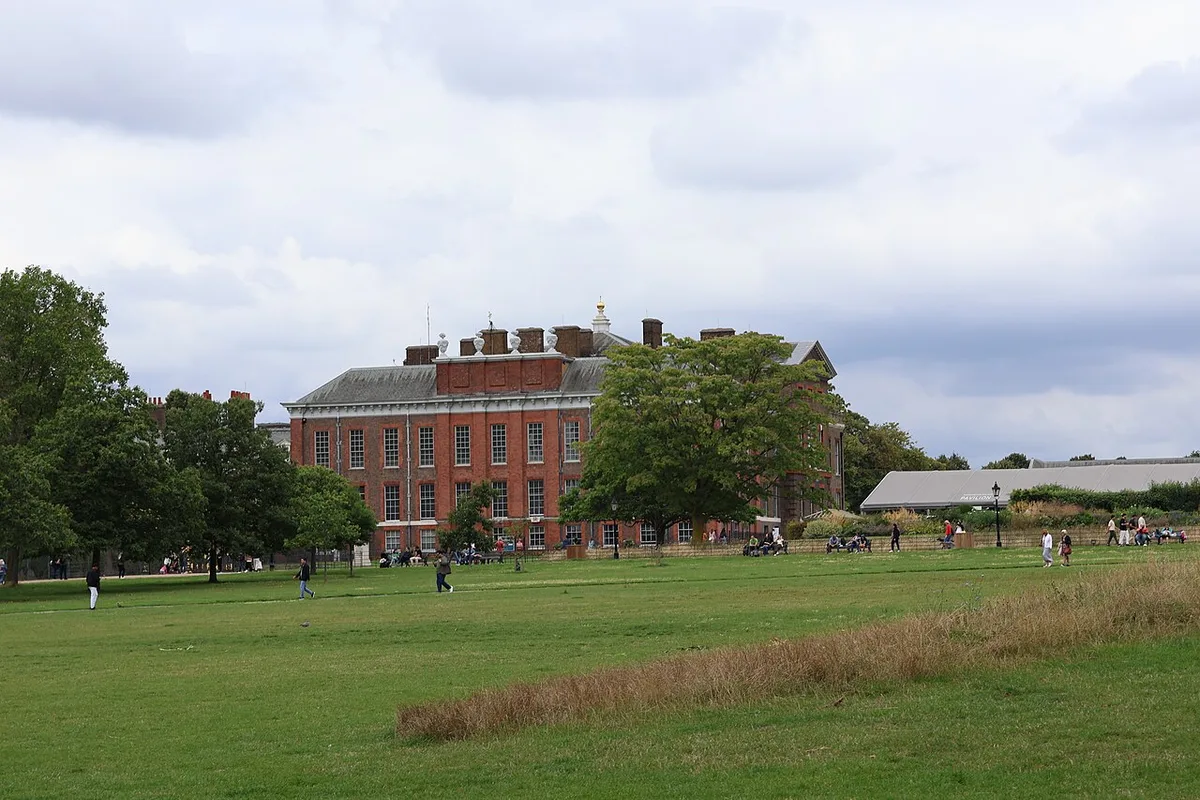
Photo: DiscoA340 / CC BY-SA 4.0
What Your Eye SeesA comparatively modest red-brick royal palace set in Kensington Gardens, entered beneath a low clock tower and cupola. Behind the plain facades lie ornate state rooms and the King's Staircase, painted floor to ceiling with trompe-l'oeil murals.
ContextAcquired by William III and Mary II in 1689 as a healthier retreat from Whitehall, the former Nottingham House was enlarged by Sir Christopher Wren, who also laid out its gardens. It later became the childhood home of Queen Victoria, who was born here in 1819 and learned at 18 that she had inherited the throne.
Source: Wikipedia (Kensington Palace); Britannica
DidYou
Know
After George II died in 1760, Kensington ceased to be a monarch's main home and was handed to minor royals, which is precisely why so much of its historic interior survived, untouched by later overhauls.
Share→ The King's Staircase
The King's Staircase, rebuilt in marble after a 1691 fire, is wrapped in one of the great painted interiors of Georgian England. William Kent completed its trompe-l'oeil murals in the mid-1720s: a painted arcade filled with some 45 courtiers, guards and servants of George I's household looks down on you as you climb. Kent hid himself in the ceiling, in a brown turban, holding an artist's palette.
→ The Sunken Garden
Look below the palace walls for the Sunken Garden, dropping a full storey beneath the surrounding lawns. Created in 1908 at Edward VII's request and modelled on the Pond Garden at Hampton Court, it is a formal Edwardian composition of terraces, borders and a central pool, since 2017 planted white and pastel in memory of Diana, Princess of Wales, whose statue stands beside the pool.
→ The Orangery
Study its long, elegant facade of tall arched windows: it was an elaborate greenhouse built in the style of a small palace to shelter the queen's citrus trees through London's winters, its proportions survive intact today.
Sources: Historic Royal Palaces
Euro Heritage
Baroque Master
12. Royal Observatory Greenwich
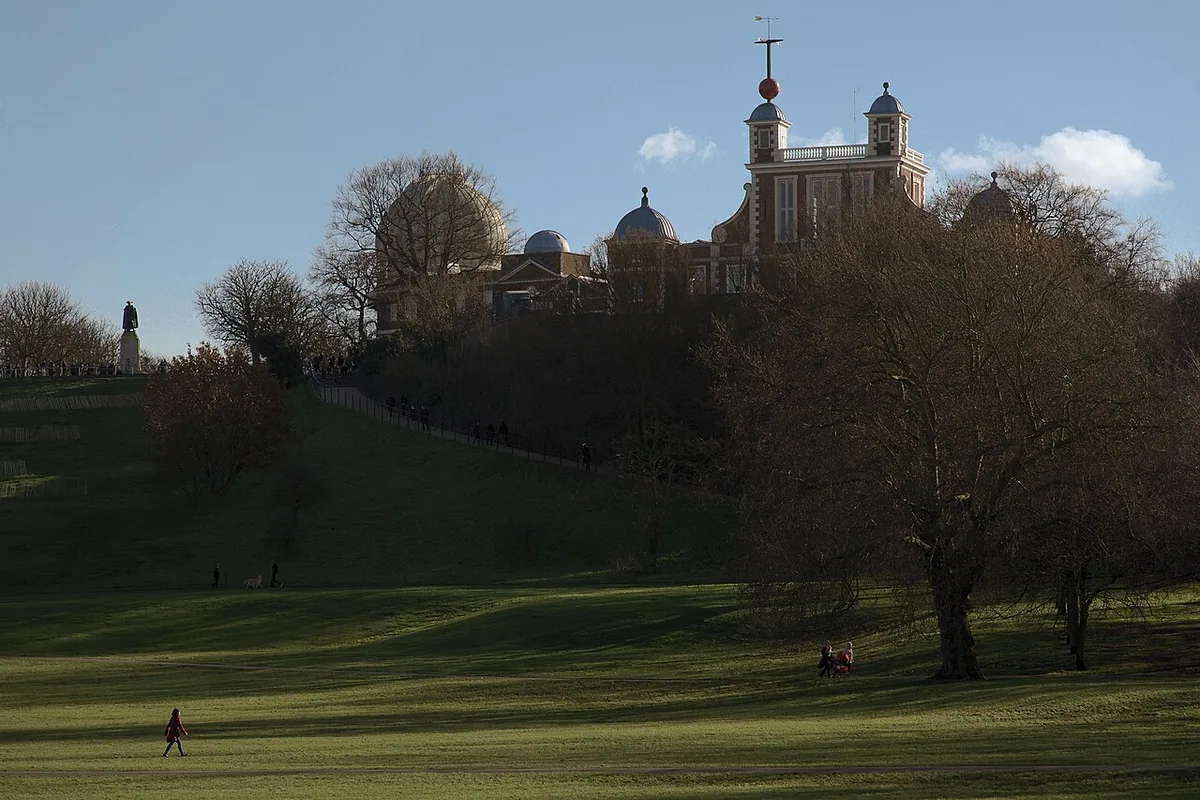
Photo: Brian Toward / CC0
What Your Eye SeesA red-brick hilltop complex in Greenwich Park, the octagonal Flamsteed House with a time ball on its turret, flanked by observatory domes. In the courtyard, a line in the paving marks the world's Prime Meridian.
ContextFounded in 1675 by Charles II to solve the problem of navigation at sea, the Royal Observatory was the world's first purpose-built scientific research institution. Its location defined Greenwich Mean Time, and its meridian was adopted as the world's Prime Meridian in 1884.
Source: UNESCO (Maritime Greenwich); Wikipedia (Royal Observatory Greenwich)
DidYou
Know
Its first Astronomer Royal, John Flamsteed, spent 44 years here compiling a star catalogue of more than 3,000 stars that became the foundation of modern positional astronomy. The site still carries the IAU observatory code 000, the world's 'zero' observatory, a nod to its historic role as the reference point for time and longitude.
Share→ The Time Ball
On the roof of Flamsteed House sits the red time ball. Since 1833 it has dropped at exactly 13:00 every day, one of the world's first public time signals, so ships on the Thames could set their chronometers. The mechanism was built by Maudslay, Sons and Field, and the drop still happens every afternoon; arrive before 12:55 and you will see the ball rise on its mast first.
→ The Shepherd Gate Clock
On the wall beside the main gate hangs the Shepherd Gate Clock, installed by Charles Shepherd in 1852. It was one of the world's first electric clocks, a slave dial driven by pulses from a master clock inside the building, and the first clock ever to display Greenwich Mean Time to the general public. Its unusual 24-hour face, with midday at the bottom, still shows GMT all year round.
→ The Brass Meridian Line
In the courtyard, a line in the paving marks the meridian that passes through the Airy Transit Circle, the telescope with which Astronomer Royal George Airy fixed longitude zero in 1851. At the 1884 International Meridian Conference this line was adopted as the world's Prime Meridian, and visitors still stand with one foot in each hemisphere. The strip was originally brass and has since been upgraded to stainless steel.
Sources: Royal Museums Greenwich; Wikipedia; Wikipedia (Royal Observatory, Greenwich)
 Time Traveler
 Global Voyager
13. Trafalgar Square (Nelson's Column)
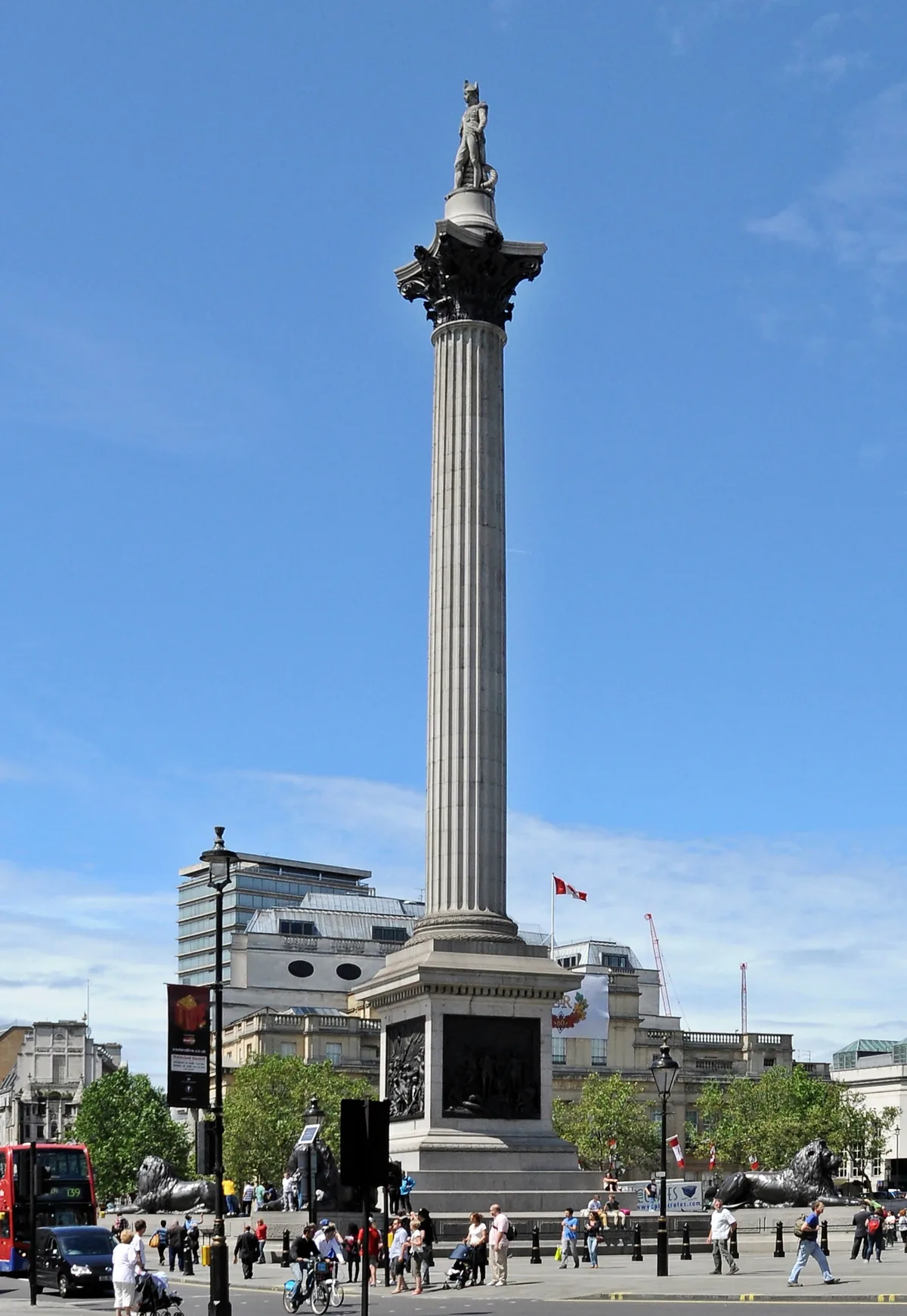
Photo: Beata May / CC BY-SA 3.0
What Your Eye SeesA vast public square centred on Nelson's Column, a 51.6-metre fluted granite column topped by a statue of the admiral, with four bronze lions couchant at its base. To the north rises the National Gallery's neoclassical facade.
ContextLaid out in the early 19th century around the area known as Charing Cross, the square was named for the 1805 Battle of Trafalgar. Nelson's Column, raised in 1843, commemorates Admiral Horatio Nelson's decisive victory over the combined French and Spanish fleets, and his death during the battle.
Beyond the column, Trafalgar Square functions as Britain's premier public stage, a gathering point for protests, celebrations, and New Year crowds. On its north side the National Gallery holds European masterpieces, and the Fourth Plinth, left empty for 150 years, now hosts a rotating programme of contemporary sculpture.
On ScreenTrafalgar Square appears in the films 28 Days Later (2002) and Wonder Woman (2017).
Source: Wikipedia (Trafalgar Square); Wikipedia (Trafalgar Square); 28 Days Later production notes; Wonder Woman production notes
DidYou
Know
Nelson's Column was meant to exceed 200 ft, but Prime Minister Robert Peel feared it might topple onto the crowded square, so it was cut to 169 ft (51.6 m). A 2006 laser survey found it was actually 14.5 ft shorter than the 185 ft long quoted, and the 17-ft statue of Nelson, carved from Craigleith sandstone, is almost exactly three times his real height.
Share→ Cannon-Metal Reliefs
Around the pedestal run four bronze reliefs, each about 5.5 metres square, cast from French guns captured in battle. They show Nelson's four great victories, Cape St Vincent, the Nile, Copenhagen and his death at Trafalgar. The south-facing panel, by John Edward Carew, shows the dying admiral on the deck of HMS Victory beneath the famous signal 'England expects every man will do his duty'.
→ The Sitting Lions
At the four corners of the pedestal crouch the bronze lions added in 1867, designed by Sir Edwin Landseer, an animal painter rather than a sculptor, which helps explain their unusual pose. Unlike the roaring standing lions of most monuments, these lie relaxed with heads turned, as if indifferent to the crowd; Landseer studied a dead lion from London Zoo to get the anatomy right.
→ The Fourth Plinth
On the north-west corner of the square, the fourth plinth was built in 1841 for an equestrian statue of King William IV that was never completed. It stood empty for more than 150 years; since 1999 it has carried a changing series of contemporary artworks, from a scaled HMS Victory in a bottle to a giant blue cockerel, commissioned by the Mayor of London.
Sources: Wikipedia (Nelson's Column); Victorian Web; London City Hall (Fourth Plinth); Wikipedia
Euro Heritage
Where in London was The Mummy Returns filmed?
The Mummy Returns (2001) shot its London scenes at Tower Bridge, where a double-decker bus, its top deck torn off, leaps the rising bascule while the heroes are chased by undead mummies, and inside the British Museum. A little-known production fact: Tower Bridge had not permitted a film crew since a John Wayne movie decades earlier, and Scotland Yard once threatened to arrest the production over the traffic the shoot caused.
Which Assassin's Creed game is set in London?
Assassin's Creed Syndicate (2015). Set in 1868 London during the Industrial Revolution, it lets players roam the Tower of London, St Paul's Cathedral, Big Ben (Elizabeth Tower), Westminster Abbey and Buckingham Palace as the twin assassins Jacob and Evie Frye. Ubisoft spent six months on historical accuracy, even consulting the St Paul's archivist on when the bells rang, and recreating the gold grasshopper on the Royal Exchange's weathervane.
What is the oldest building in the Tower of London?
The White Tower, built by William the Conqueror between 1066 and 1078. It is the Tower's oldest structure and the reason the entire complex carries its name. Its walls are 4.6 metres thick at the base, and it has housed armour collections, a royal observatory, and the Crown Jewels.
Where is the Prime Meridian of the world?
At the Royal Observatory Greenwich in London. The Observatory was founded in 1675 by Charles II to solve the problem of determining longitude at sea. The Prime Meridian, the reference line for 0 degrees longitude, was established there in 1884 and still divides the Eastern and Western Hemispheres.
What is the largest diamond in the Crown Jewels?
The Cullinan I, also called the Great Star of Africa, at 530.2 carats the largest colourless cut diamond in the world. It sits in the Sovereign's Sceptre, one of the coronation regalia, and was cut from a 3,106-carat rough crystal found in South Africa in 1905 and presented to King Edward VII. Its smaller companion, the Cullinan II, is set in the Imperial State Crown. Both are on public display at the Tower of London.
These landmarks reward close attention. Vestigia is a field companion for people who look longer, with curated context, architectural detail, and the stories most visitors walk past. Free on the App Store and Google Play.