Prague Historical Landmarks
1. Prague Castle
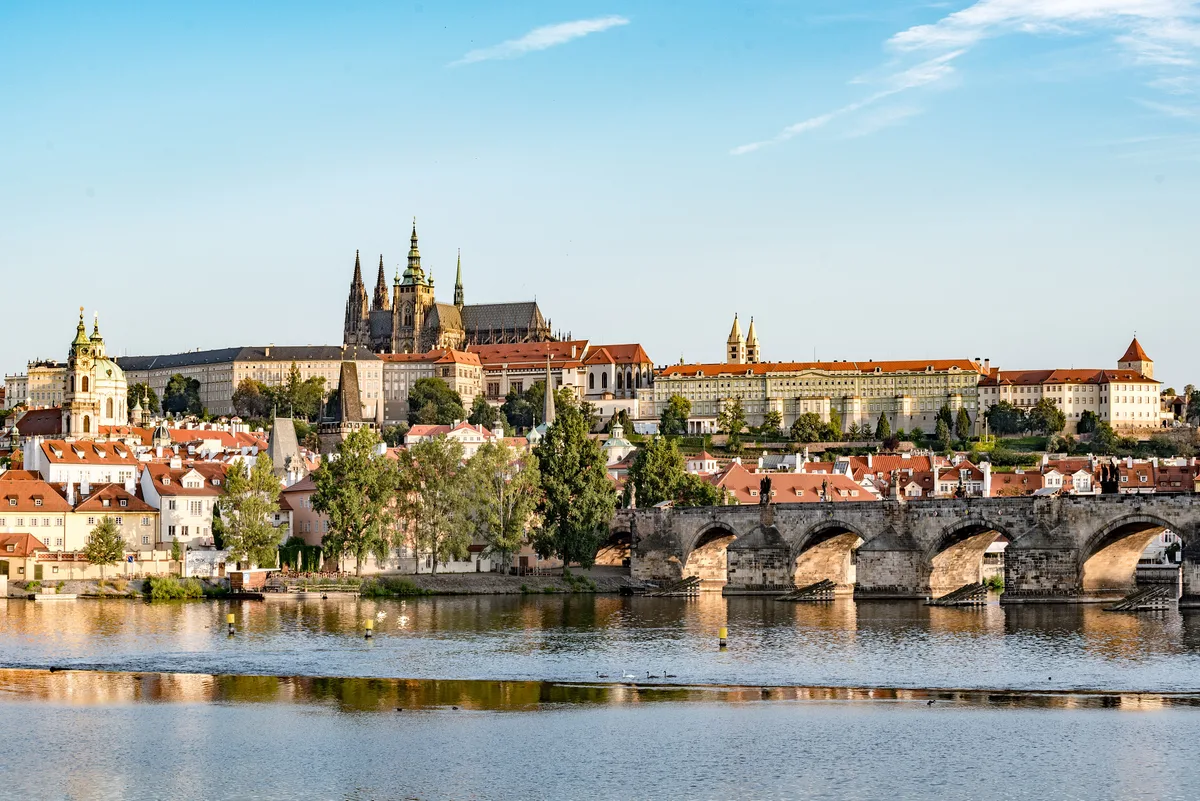
Photo: Tilman2007 / CC BY-SA 4.0
What Your Eye SeesA sprawling castle complex perched on a hill above the Vltava River, crowned by the soaring Gothic spires of St. Vitus Cathedral. Its palaces, gardens, and fortifications stretch across the skyline like a medieval city in its own right.
ContextFounded around 880 AD by Prince Bořivoj of the Přemyslid dynasty, Prague Castle sprawls across nearly 70,000 m², the largest ancient castle complex in the world. For over 1,100 years it has been the seat of Czech kings, Holy Roman Emperors, and presidents. Its jumble of palaces and churches, from Romanesque to Gothic, was reshaped in the 1920s by architect Josip Plečnik, and is now a UNESCO World Heritage site.
On ScreenPrague Castle was a filming location for Mission: Impossible (1996) and appears in the film Amadeus (1984).
Source: UNESCO (Historic Centre of Prague); Wikipedia (Prague Castle); Wikipedia (Prague Castle); Mission: Impossible production notes; Amadeus production notes
 Did
DidYou
Know
In 1618, two Catholic governors were thrown from a third-floor window of the castle, the famous Second Defenestration of Prague. They survived the 21-metre fall; accounts differ on whether the Virgin Mary caught them or they landed in manure. This single act triggered the Thirty Years' War.
Share→ The Fighting Giants At The Main Gate
At the main entrance from Castle Square, two giants wrestle in stone above the Matthias Gate. The originals were carved by Ignác Platzer in the 18th century; the statues crowning the gate today are copies made in 1912.
→ The Vladislav Hall
Step into the Old Royal Palace to stand in the Vladislav Hall, about 62 metres long, one of the largest medieval secular halls in Europe. Its late Gothic ribbed vault was designed so that knights could ride in on horseback for the indoor jousting tournaments once held here.
→ Franz Kafka's Studio
Climb to Golden Lane and find House No. 22, a tiny blue dwelling that the writer Franz Kafka rented in 1916–17, where he wrote several short stories. The rooms are barely a metre and a half high, preserved much as they were.
Sources: Wikipedia; Prague Castle; Prague City Tourism
 Euro Heritage
 Baroque Master
 Gothic Soul
2. Charles Bridge
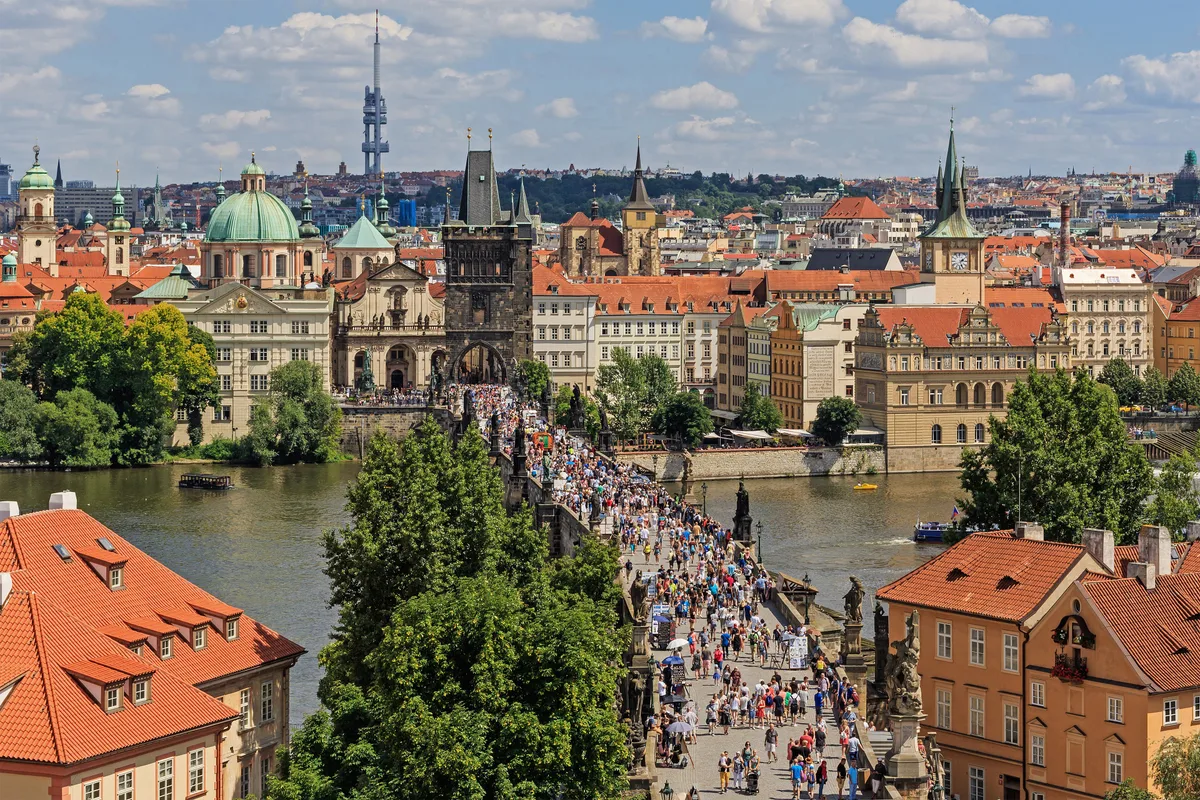
Photo: A.Savin / FAL
What Your Eye SeesA 516-metre stone bridge lined with 30 Baroque statues, connecting the Old Town to the Lesser Quarter. Its three Gothic bridge towers frame a view that has remained unchanged for over 600 years.
ContextCommissioned by King Charles IV, who laid the first stone on 9 July 1357, Charles Bridge replaced the Judith Bridge destroyed by a 1342 flood. Built by architect Peter Parler with 16 arches over the Vltava, the 516-metre span was Prague's only river crossing until 1841, a vital link on European trade routes. Its balustrade now carries 30 Baroque statues of saints.
On ScreenCharles Bridge was a filming location for Mission: Impossible (1996) and appears in Spider-Man: Far From Home (2019).
Source: UNESCO (Historic Centre of Prague); Wikipedia (Charles Bridge); Wikipedia (Charles Bridge); Mission: Impossible production notes; Spider-Man: Far From Home production notes
DidYou
Know
The bridge's 30 statues are mostly modern replicas, the originals sit in the Lapidarium, and on the summer solstice the sun sets in perfect alignment behind St Vitus Cathedral when viewed from the Old Town tower.
Share→ The Statue Of St. John Of Nepomuk
Look down at the base of the bronze statue on the right side of the bridge, which marks where the priest John of Nepomuk is said to have been thrown into the Vltava in 1393, and where visitors touch the bronze relief for good luck, polishing it to a shine over the centuries.
→ The 'Turk' Statue's Hidden Prisoners
Near the Castle end, look beneath the group of St. John of Matha, Felix of Valois and Ivan to find a hidden prison: an iron-grated cave carved into the rock where shackled Christians crouch under the gaze of a turbaned Turk and his dog.
Sources: Wikipedia; Prague City Tourism
Euro Heritage
Gothic Soul
3. Prague Astronomical Clock
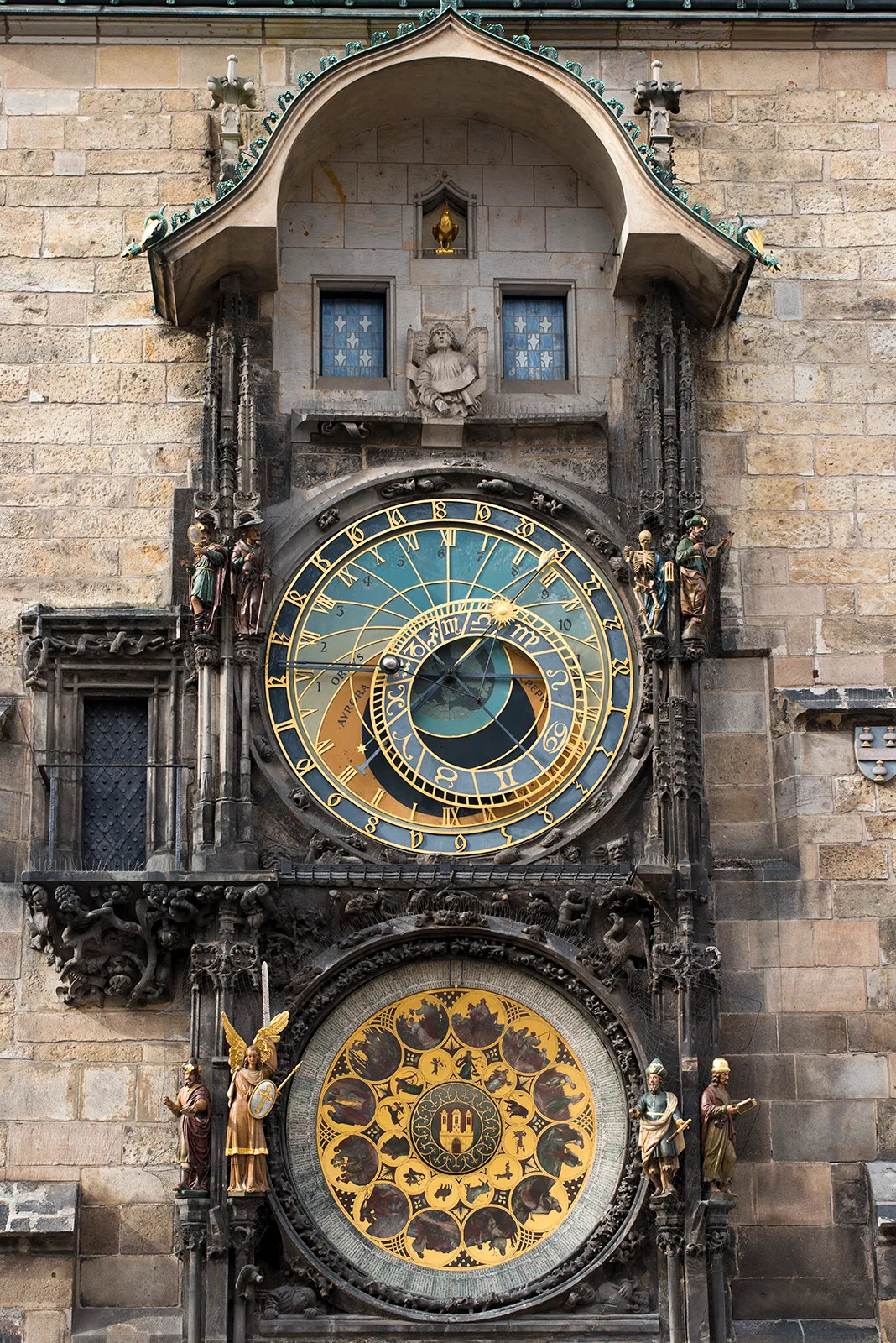
Photo: Steve Collis from Melbourne, Australia / CC BY 2.0
What Your Eye SeesA medieval astronomical clock mounted on the southern wall of the Old Town Hall, featuring an ornate dial tracking the sun and moon, moving figurines that perform every hour, and a calendar dial below.
ContextBuilt in 1410 by clockmaker Mikuláš of Kadaň and mathematician Jan Šindel, the Orloj on the Old Town Hall is the oldest working astronomical clock in the world. A calendar dial was added around 1490, and its façade was soon crowned with gothic statues of the Apostles, Death and the Philosopher. It has run almost continuously for over 600 years, pausing only for repairs.
On ScreenThe Old Town Square and Astronomical Clock appear in the film Spider-Man: Far From Home (2019).
Source: UNESCO (Historic Centre of Prague); Wikipedia (Prague astronomical clock); Wikipedia (Prague Astronomical Clock); Spider-Man: Far From Home production notes
DidYou
Know
During the 1945 Prague Uprising, the clock was deliberately hit by German armoured-vehicle fire and wrecked, its hall and nearby buildings burned. Its restoration took three years, with the wooden Apostles re-carved by Vojtech Sucharda, and the clock started working again in 1948.
Share→ The Calendar Dial
Look closely at Josef Mánes's 1865 calendar dial, which shows the months through seasonal occupations rendered in twelve medallions. The original painting is preserved at the Prague City Museum, what the crowds photograph today is a carefully made copy.
→ The Walk Of The Apostles
Every hour, look up as the two doors above the dial swing open and the twelve wooden apostles file past, one after another, until a golden rooster crows and the bell strikes. Crowds gather for a show that lasts under a minute.
Sources: Prague City Tourism; Wikipedia
Euro Heritage
Gothic Soul
4. St. Vitus Cathedral
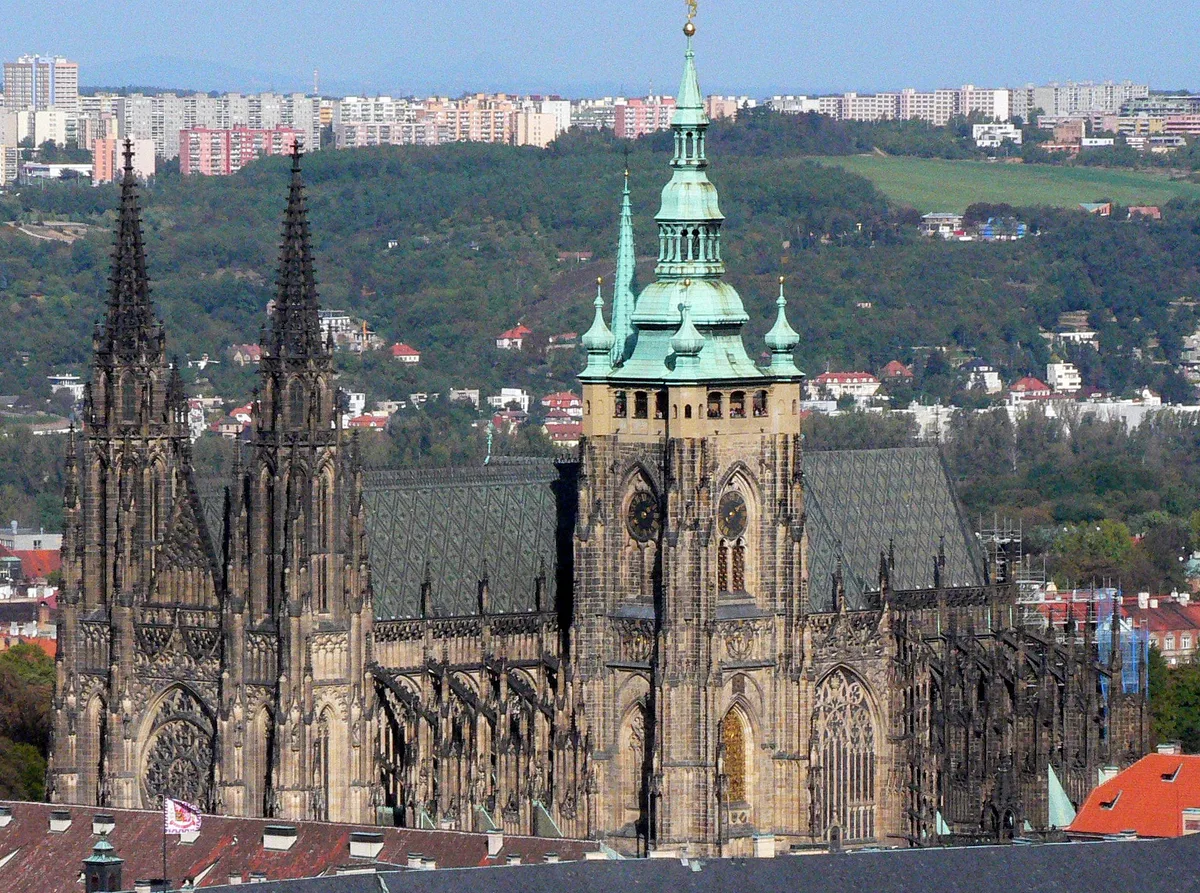
Photo: MathKnight and Zachi Evenor / CC BY 2.5
What Your Eye SeesA soaring Gothic cathedral within the castle complex, with twin spires reaching 99.6 metres, elaborate rose windows, and flying buttresses defining the Prague skyline.
ContextFounded in 1344 by Charles IV on the site of an earlier Romanesque rotunda, the cathedral was begun by Matthias of Arras and continued by Peter Parler. Work halted during the Hussite Wars and resumed only in the 19th century; the church was finally consecrated in 1929. It shelters the Crown Jewels of Bohemia, the tomb of St Wenceslas, and the graves of Czech kings and Holy Roman Emperors.
Source: UNESCO (Historic Centre of Prague); Wikipedia (St. Vitus Cathedral)
DidYou
Know
The cathedral's original medieval plans were thought lost for centuries, then rediscovered in the 19th century, allowing architects to finish the building exactly as its 14th-century designers had intended, making it one of the longest continuously planned projects in history.
Share→ The Rose Window
The great stained-glass rose window in the western facade was designed by František Kysela in the 1920s and depicts scenes from the biblical Creation, one of the most admired 20th-century windows in the cathedral.
→ The Parler Net Vaults
Look up into the choir for Peter Parler's vaulting, revolutionary late Gothic ribs that curve without a central support post, letting the vault open wide bays. It stands among the pioneering examples of the net-and-star vault in Central Europe.
→ The Silver Tomb
Look for the shimmering silver tomb of St. John of Nepomuk, made of around two tonnes of silver, a work of the 1730s. Its shrine holds the venerated relic of the saint's tongue, preserved after his martyrdom in 1393.
Sources: Wikipedia; Prague Castle
Euro Heritage
Gothic Soul
 Spiritual Seeker
5. John Lennon Wall
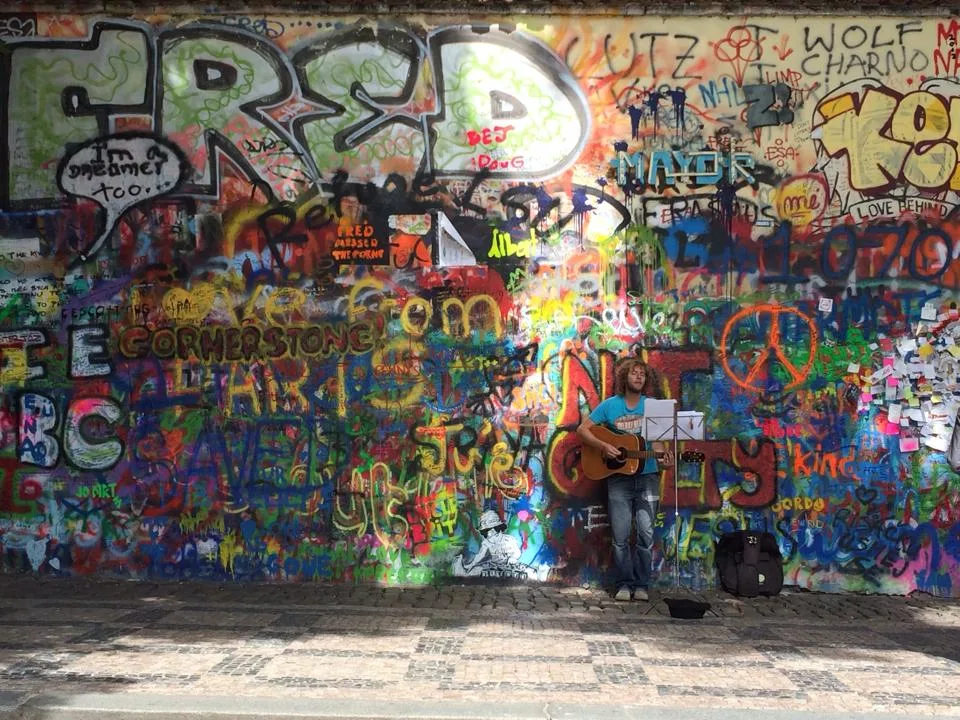
Photo: Spaul57 / CC BY-SA 4.0
What Your Eye SeesA colourful wall covered in graffiti, lyrics, and peace symbols opposite the French Embassy in the Lesser Quarter. Its surface changes constantly as new artists paint over old messages.
ContextAfter John Lennon's murder in December 1980, an anonymous artist painted his portrait on this wall in Malá Strana's Grand Priory Square, opposite the French embassy. Despite repeated whitewashing by the Communist secret police, new messages of peace and dissent reappeared each morning. The wall became a rare, open forum for free speech under a regime that banned Western music and arrested those who played it.
Source: UNESCO (Historic Centre of Prague); Wikipedia (John Lennon Wall)
DidYou
Know
Under the Communists, the Lennon Wall was the one spot in Soviet-controlled Prague where you could say anything, because, as the joke went, the secret police couldn't arrest a wall.
Share→ The Wall Belongs To The Knights Of Malta
Step up to the graffitied wall and notice it is actually the outer wall of the Grand Priory, a compound of the Sovereign Military Order of Malta in Prague, which is why the decades of paint sit on a calm, aristocratic property rather than a municipal one.
→ The Headstone-Shaped Niche
Look for the recess in the wall that resembles a gravestone, it is the mount of an old drinking fountain, and it was here that the very first portrait of John Lennon was painted, giving the wall its name.
Sources: Wikipedia; Lonely Planet; Living Prague
 Renaissance
 Modernist
6. Old-New Synagogue
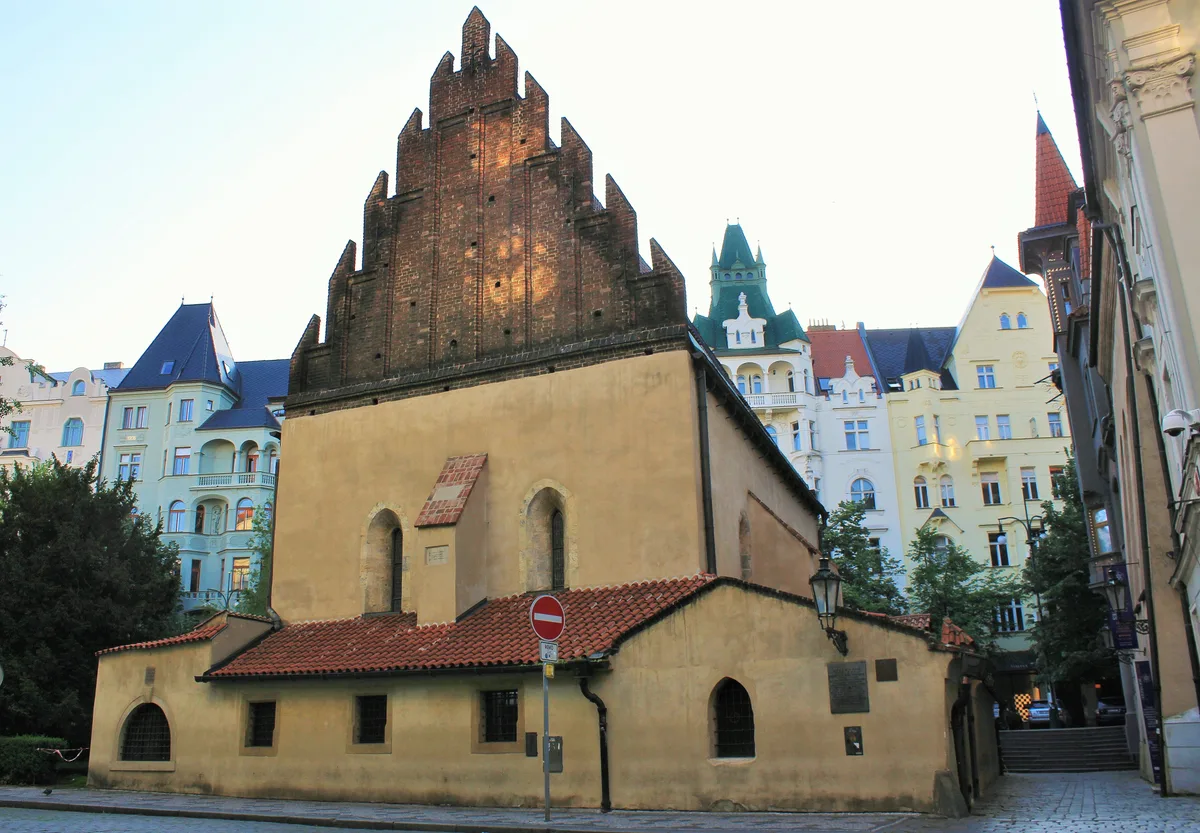
Photo: Øyvind Holmstad / CC BY-SA 3.0
What Your Eye SeesA Gothic medieval synagogue with a steep gabled roof, pointed-arch windows, and a distinctive stepped gable. Its high-vaulted hall is one of the best-preserved medieval interiors in Prague.
ContextCompleted around 1270, the Old-New Synagogue is the oldest active synagogue in Europe and the oldest surviving medieval synagogue of twin-nave design. Built by stone-masons from the royal workshop, it has served Prague's Jewish community continuously for over 750 years, surviving expulsions, the Holocaust, and Communist rule. Its name, Altneuschul, means simply 'Old-New'.
Source: UNESCO (Historic Centre of Prague); Wikipedia (Old New Synagogue)
DidYou
Know
The Nazis left the Old-New Synagogue standing through World War II because they intended it as the centerpiece of a 'museum of an extinct race', and legend holds that the Golem of Prague still lies hidden in its bricked-up attic.
Share→ A Medieval Gothic Hall
Step inside and the interior is a surprise: a double-nave hall with two great central pillars and a vault that springs in five ribs instead of the usual four, some say deliberately, to avoid the sign of the cross. Twelve narrow windows, said to echo the twelve tribes, keep the medieval light dim.
→ The Banner Of The Jewish Quarter
Inside the nave, look up at the great red banner embroidered in gold: a Star of David enclosing the pointed 'Jewish hat' Jews were once required to wear, above the words of the Shema. The flag on display is a modern copy of the community's historic banner.
Sources: Wikipedia; Jewish Museum Prague
Euro Heritage
Gothic Soul
Spiritual Seeker
7. Dancing House
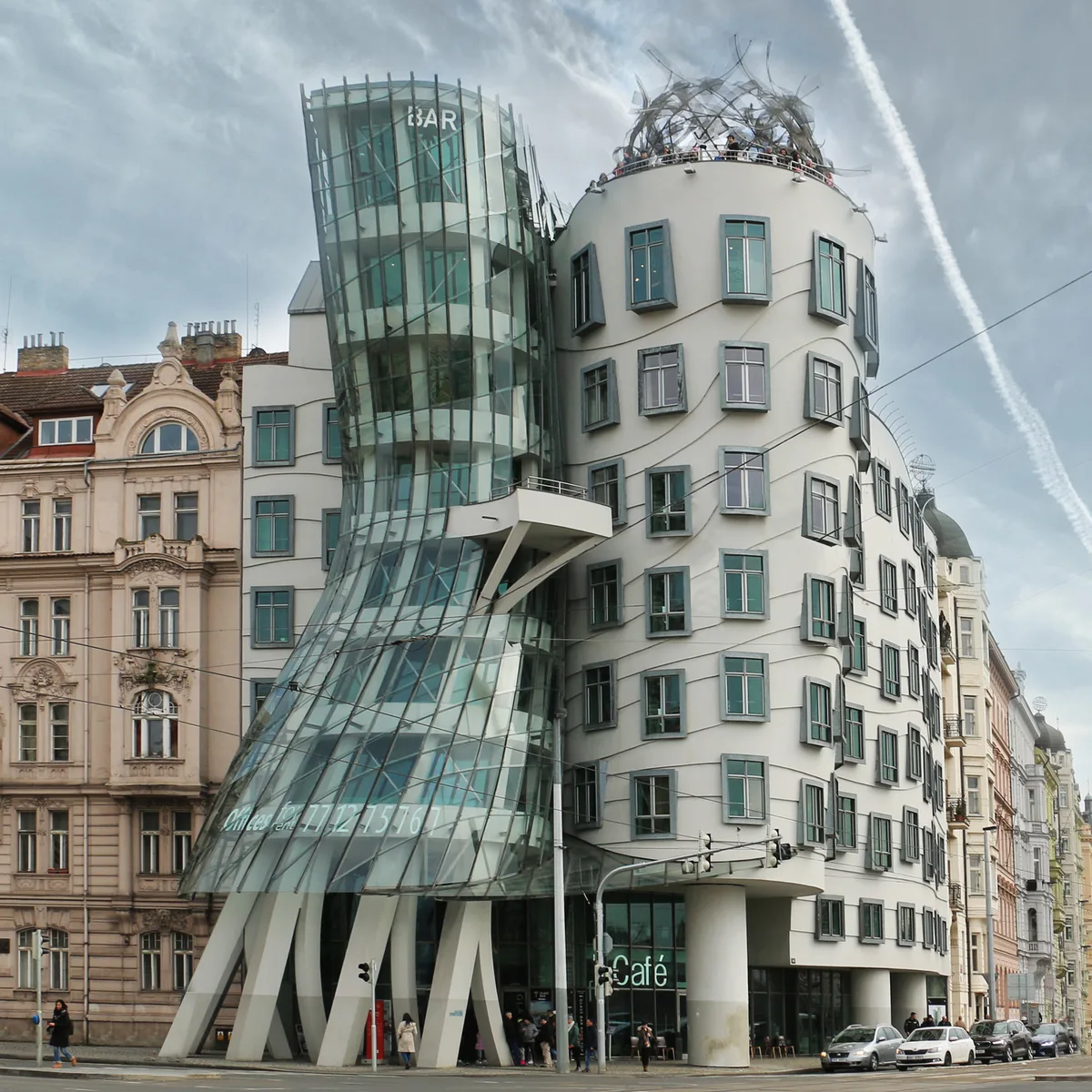
Photo: Danny Alexander Lettkemann, Architekt / CC BY-SA 4.0
What Your Eye SeesA striking deconstructivist building on the Vltava riverfront, with a glass tower that twists organically next to a concrete cylinder, creating the illusion of a couple dancing.
ContextDesigned by Croatian-Czech architect Vlado Milunić with Frank Gehry, the Dancing House (Ginger and Fred) was completed in 1996 on a riverside plot flattened by the 14 February 1945 US bombing. Backed by insurer Nationale-Nederlanden and championed by neighbour Václav Havel, its two leaning towers were meant to symbolise Czechoslovakia's shift from communism to democracy. It won Time magazine's design award.
Source: UNESCO (Historic Centre of Prague); Wikipedia (Dancing House)
DidYou
Know
The curving glass tower, nicknamed 'Ginger', is supported by curved pillars, while its partner 'Fred' is a concrete tower deliberately leaned at an angle, as if caught mid-dip on the dance floor. The facade uses 99 prefabricated concrete panels, each a different shape and dimension.
Share→ The 'Medusa' On The Roof
Look up at the roof of the Dancing House for a tangle of twisted steel tubes and wire mesh, nicknamed 'Medusa', a fixed metal flourish crowning the curved glass tower, added when the house was built.
→ The Ruins Beneath
The corner plot had stood empty since February 1945, when a U.S. bombing raid on Prague destroyed the house there. Architect Vlado Milunić kept the surviving retaining wall, so the playful 'democracy' symbol rises from the scar of a World War II ruin.
Sources: Wikipedia
Modernist
8. Powder Tower
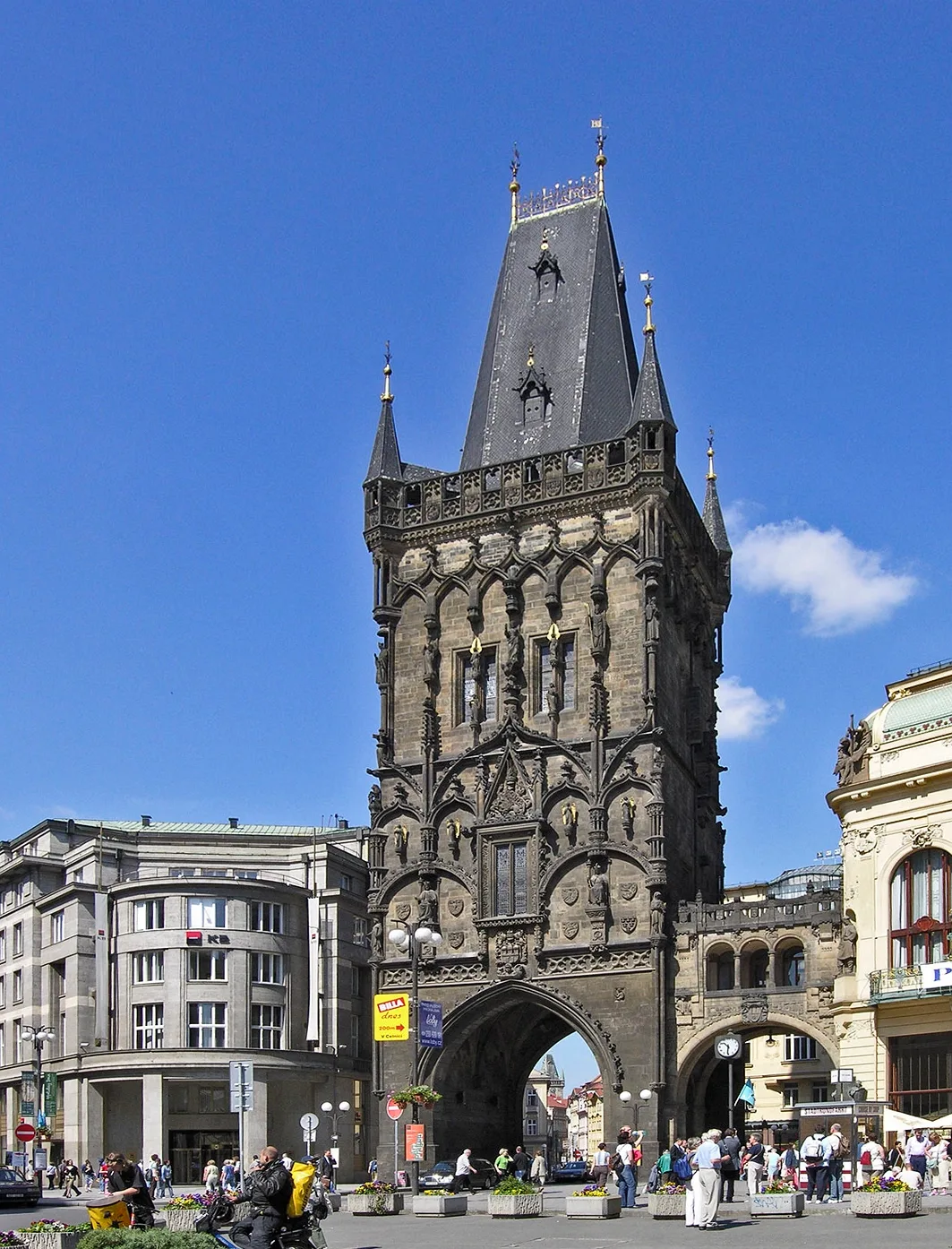
Photo: Hans Peter Schaefer, http://www.reserv-a-rt.de / CC BY-SA 3.0
What Your Eye SeesA 65-metre Gothic tower with a richly decorated stone facade, standing at the entrance to the Old Town. Its blackened spires and elaborate reliefs mark the former gateway to the royal city.
ContextBuilt in 1475 as one of the original 13 gates to Prague's Old Town, the Powder Tower rose under King Vladislav II and master builder Matěj Rejsek in flamboyant late-Gothic style. Intended as a grand coronation entrance rather than a fortification, it later stored gunpowder, giving it its name, and still marks the start of the Royal Route to Prague Castle.
On ScreenThe Powder Tower rises over the opening Prague scenes of Mission: Impossible (1996): the balcony of Max's hideout in the film is the side terrace of the Municipal House, with the Gothic gate beside it.
Source: UNESCO (Historic Centre of Prague); Wikipedia (Powder Tower); sceen-it.com; Prague City Tourism; IMDb (Mission: Impossible)
DidYou
Know
During the 1757 Prussian siege of Prague, shelling badly damaged the tower's sculptures, which were taken down in 1817, its carvings of Czech kings and patron saints are thus largely reconstructions of the late-Gothic originals.
Share→ The Covered Bridge To The Municipal House
Look up from Republic Square: a covered walkway spans from the tower to the neighbouring Municipal House, two buildings three centuries apart, joined at the shoulder.
→ Climb The Old Staircase
A stone stair of roughly 186 steps leads inside the tower to its upper gallery, one of the best vantages over the ancient rooftops of the Old Town, and a route the coronation procession once passed beside on its way to the castle.
Sources: Prague City Tourism
Euro Heritage
Gothic Soul
Where is the Golem of Prague?
Legend says Rabbi Judah Loew made the Golem in the 1500s and that its clay body still rests in the attic of the Old-New Synagogue in Prague’s Josefov quarter, the oldest active synagogue in Europe. The creature lived when the Hebrew word “emet” (truth) was written on its forehead; removing the letter aleph turned “emet” into “met” (dead), switching it off. Keepers are said to still check on it.
Where was Ride or Die filmed?
Ride or Die (Prime Video, 2026) was shot entirely in Prague, playing itself, rare for a city usually used as a stand-in for elsewhere. Filming took in Charles Bridge, Old Town Square and the Astronomical Clock, the Vltava riverfront, Kampa Park, Rudolfinum and views of Prague Castle, plus streets such as Rytířská and Mariánské náměstí.
How old is the Prague Astronomical Clock?
The clock's mechanism and astronomical dial date to 1410, making it the oldest astronomical clock still in operation anywhere in the world. It was built by clockmaker Mikulas of Kadan and astronomer Jan Sindel. The calendar dial was added around 1490, and about three quarters of the mechanism is still original.
Is the legend of Master Hanus and the blinded clockmaker true?
No. A story by writer Alois Jirasek claims the Prague councillors had the clock's maker blinded so he could never build a rival for another city, after which he stopped the clock. Historians trace the tale to a 1552 misunderstanding: the clock was actually built in 1410 by Mikulas of Kadan, not by Hanus, and no maker was ever blinded.
Is Prague Castle the largest ancient castle in the world?
According to Guinness World Records, yes. Founded around 880, Prague Castle is the largest ancient castle in the world, roughly 570 metres long with an area of about 70,000 square metres. It is not a single building but a walled complex of palaces and churches spanning Romanesque to modern styles, and its 9th-century origins make it one of the longest continuously occupied seats of power in Europe.
These landmarks reward close attention. Vestigia is a field companion for people who look longer, with curated context, architectural detail, and the stories most visitors walk past. Free on the App Store and Google Play.