Rome Historical Landmarks
1. The Pantheon
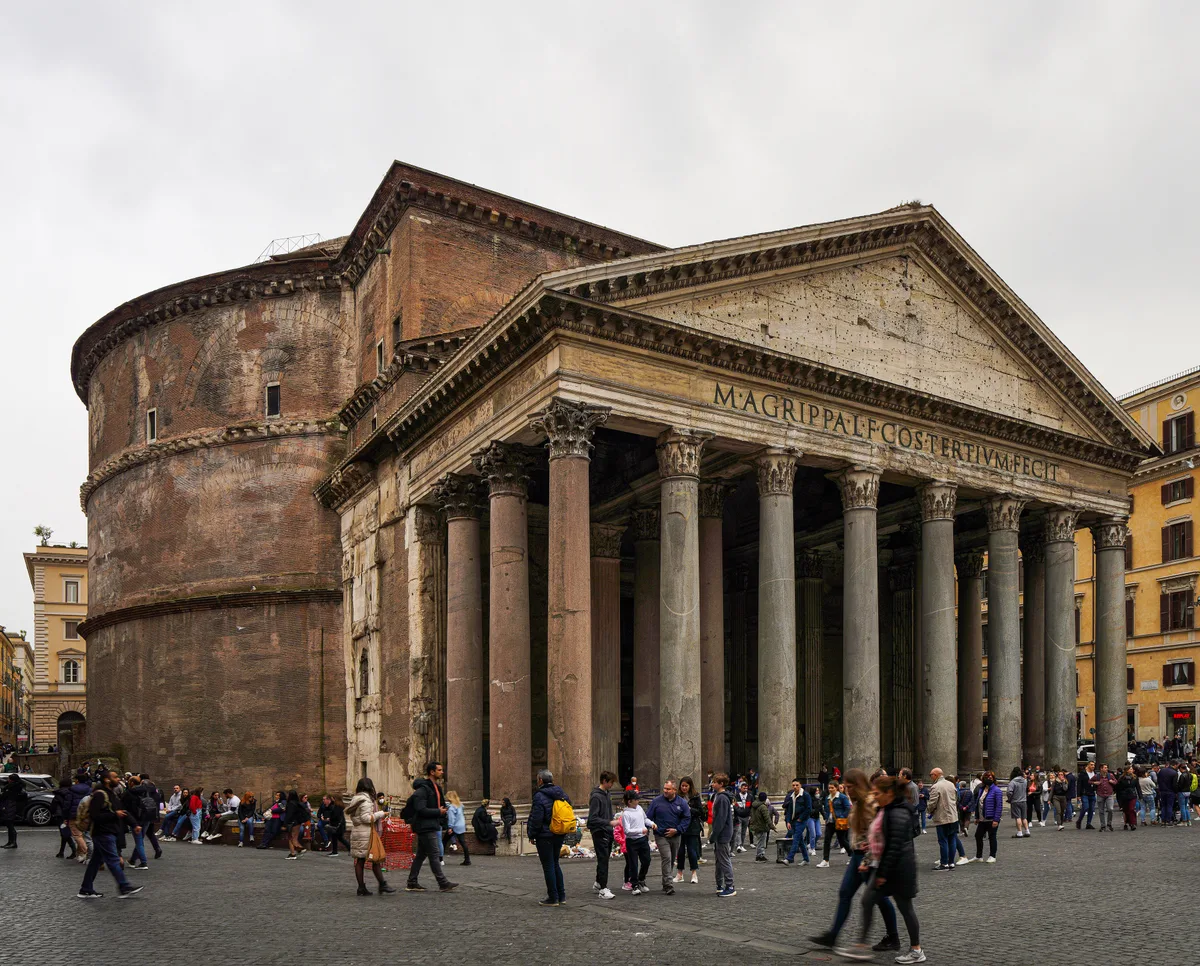
Photo: NikonZ7II / CC BY-SA 4.0
What Your Eye SeesA massive circular temple with a portico of sixteen granite Corinthian columns, crowned by the largest unreinforced concrete dome in the world. A single opening at its centre, the oculus, lets light pour in like a spotlight.
ContextBuilt under Emperor Hadrian around 126 AD on the site of an earlier temple commissioned by Marcus Agrippa. The Pantheon has been in continuous use for close to 2,000 years, first as a temple to all Roman gods, then as a Catholic church since the 7th century.
Its dome, still the largest unreinforced concrete dome in the world, spans 43.3 metres and is exactly as tall as it is wide, so the circular interior would fit inside a sphere of the same diameter. Light enters through the roughly 9-metre oculus, the dome's only opening, while the coffered ceiling is made from concrete that grows lighter toward the top, using pumice near the crown to reduce the load. Hadrian had Agrippa's original inscription re-cut onto the new façade, which is why the emperor's own name appears nowhere on the building. The same Hadrian who commissioned it also rests a short walk away in Castel Sant'Angelo, the mausoleum he built for himself and his family, and his face looks back from a marble portrait in Istanbul's Archaeology Museums and from the Hadrian's Gate in Antalya, raised when he toured the east in 130 CE.
On ScreenThe Pantheon appears in the film Angels & Demons (2006).
Source: UNESCO (Historic Centre of Rome); Britannica; Wikipedia (Pantheon, Rome); Wikipedia (Angels & Demons; Passetto di Borgo)
Part of the journey: Roman Sites in Italy →
 Did
DidYou
Know
For 1,700 years the Pantheon was credited to Agrippa, whose name still stands on the facade, until brick-stamps embedded in the fabric revealed that Hadrian was the true builder, and that Agrippa's temple on the site had in fact burned down twice before Hadrian's was raised.
Share→ The Oculus Floor
Look down at the marble floor beneath the oculus: it is sloped with visible drainage holes. Rain enters freely through the nine-metre opening and exits through the same Roman drainage system built around 1,900 years ago.
→ The 16 Columns
The portico's sixteen granite Corinthian columns are each a single piece of grey granite from Egypt, monolithic shafts weighing around 60 tons. They were dragged from the Mons Claudianus quarries, barged down the Nile and ferried across the Mediterranean to Rome.
Sources: Wikipedia
 Ancient Roots
2. The Colosseum
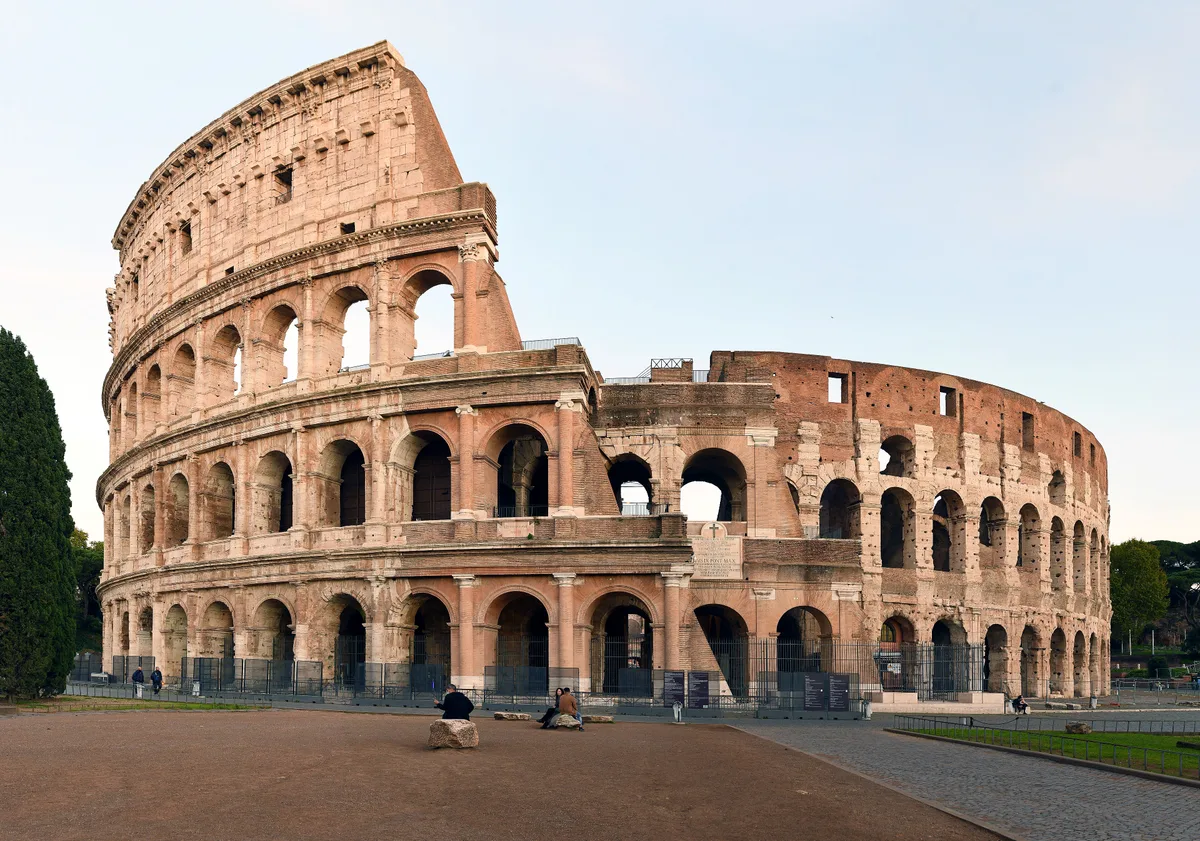
Photo: FeaturedPics / CC BY-SA 4.0
What Your Eye SeesAn elliptical amphitheatre of travertine stone rising four stories, with rows of arched openings framed by Doric, Ionic, and Corinthian columns. Its partially collapsed outer wall reveals the elaborate tunnel system inside.
ContextCommissioned by Emperor Vespasian of the Flavian dynasty and completed in 80 AD, the Colosseum was the largest amphitheatre ever built, capable of seating up to 80,000 spectators. It hosted gladiatorial contests, animal hunts, and public spectacles for over four centuries.
The building you walk through is the ruin itself, not a set. Vespasian began the work in 70–72 AD on the site of a lake from Nero's demolished palace, returning the land to the public; his son Titus opened it in 80 AD with games said to last 100 days. The top gallery and the hypogeum, a network of underground passages where gladiators and wild animals were held before the contests, were added by Domitian. A vast awning, the velarium, could be drawn across 240 masts to shade the seats, worked by sailors detached from the Roman fleet at Misenum.
On ScreenThe Colosseum on screen in Gladiator (2000) was never the real arena: Ridley Scott toured it, called it too small, and had it rebuilt at about one-third scale inside Fort Ricasoli in Malta, with the upper tiers added by CGI.
Source: UNESCO (Historic Centre of Rome); Britannica; Wikipedia (Colosseum); theasc.com; Variety; IMDb (Gladiator)
Part of the journey: Roman Sites in Italy →
DidYou
Know
The arena's shade was run by hundreds of sailors detached from the Roman fleet at Misenum, a crew large enough to man a warship, deployed instead to 'air-condition' 80,000 spectators, a feat of crowd engineering unmatched until the 20th century.
Share→ The Numbered Entrances
Roman numerals are still carved above the ground-floor arches. 76 of 80 entrances were numbered for ticketed seating, the same system used in stadiums today.
→ The Hypogeum Walls
Look down at the exposed underground tunnels. The vertical grooves once held wooden elevators that lifted animal cages to the arena. Pulley marks are still visible in the stone.
Sources: Wikipedia
Ancient Roots
3. Trevi Fountain
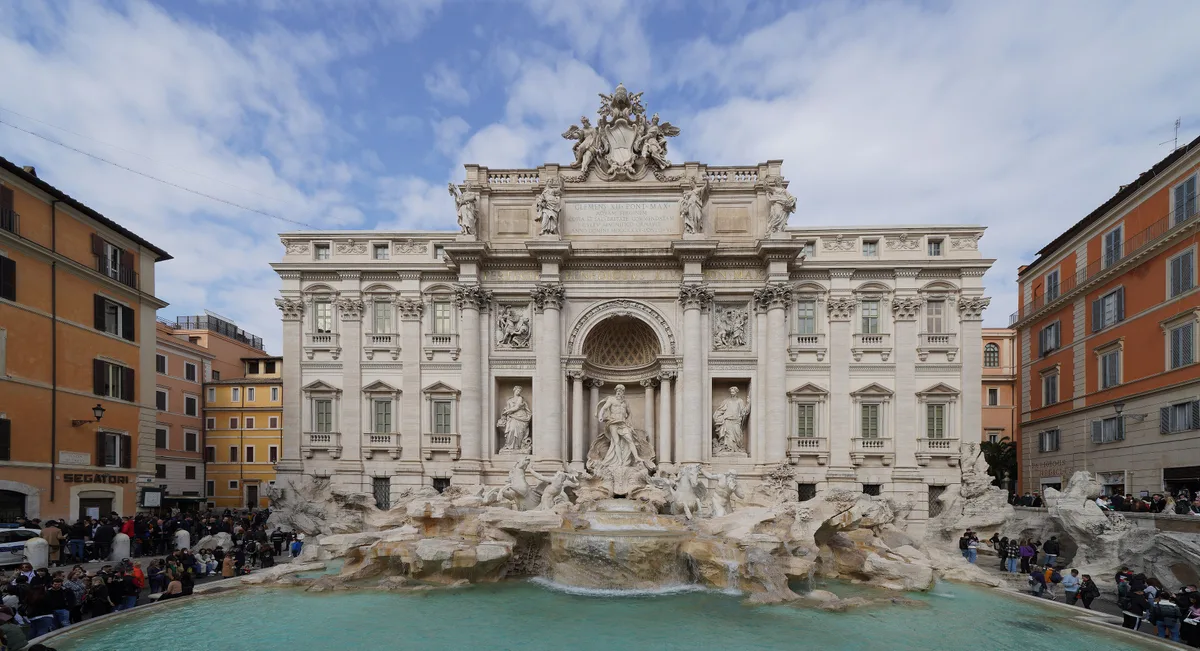
Photo: NikonZ7II / CC BY-SA 4.0
What Your Eye SeesA monumental Baroque fountain built against the facade of the Palazzo Poli, with Oceanus riding a shell-shaped chariot pulled by seahorses, surrounded by cascading water and sculpted figures.
ContextDesigned by Nicola Salvi and completed in 1762, the Trevi Fountain marks the terminal point of the Aqua Virgo, one of Rome's ancient aqueducts that has supplied water to the city since 19 BC. The fountain was funded by a papal lottery and took 30 years to build.
The fountain's central figure is Oceanus, riding a shell chariot pulled by two sea-horses, one calm, one rearing, guided by tritons. Its water still arrives through the Aqua Virgo, the aqueduct whose name comes from a legend that a young virgin (virgo) showed thirsty Roman soldiers the spring's source in 19 BC; it has flowed ever since, making Trevi one of the rare ancient aqueducts still in use.
On ScreenTrevi Fountain is the setting for the celebrated scene in La Dolce Vita (1960) in which Anita Ekberg wades into its waters.
Source: UNESCO (Historic Centre of Rome); Britannica; Wikipedia (Trevi Fountain); Wikipedia (Trevi Fountain; Aqua Virgo); Wikipedia (Trevi Fountain); La Dolce Vita production notes
DidYou
Know
Over €1.4 million in coins are thrown into the Trevi Fountain every year. Since 2001, the entire sum has been collected weekly and donated to Caritas, making the fountain one of the most productive charitable collection points in the world, processing over 12,000 coins a day without a single collection box.
Share→ The Papal Inscription
Look up at the attic of the fountain: an inscription records Pope Clement XII, who commissioned the work in 1732, praising the Aqua Virgo for the abundance and healthfulness of its water. Above it, the coat of arms of the Corsini family, a six-pointed star over a checkered band, crowns the whole composition.
→ The Two Seahorses
One seahorse is calm, the other agitated. They represent the two moods of the sea. Look at their eyes and posture, the contrast is deliberate.
Sources: Wikipedia
 Euro Heritage
 Baroque Master
 Green Soul
4. Temple of Saturn
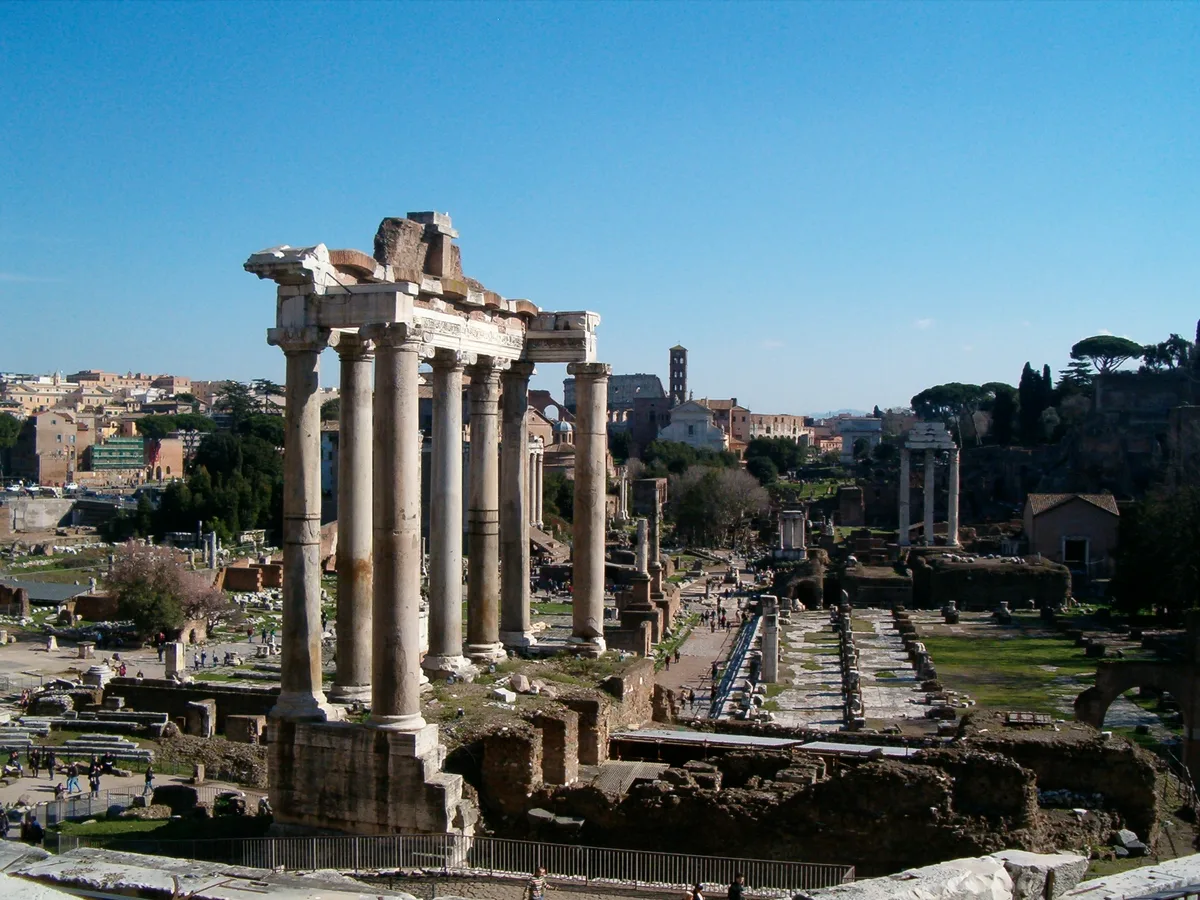
Photo: Marcok / CC BY-SA 3.0
What Your Eye SeesEight weathered granite columns crowned by Ionic capitals, supporting the remnant of a pediment whose frieze still carries a Latin inscription. They stand on a high travertine podium at the foot of the Capitoline Hill, at the western edge of the Roman Forum.
ContextTraditionally dedicated in 497 BC by the consul Titus Larcius, the Temple of Saturn was the oldest Republican temple in Rome after the Temple of Jupiter Optimus Maximus. Completely rebuilt by Munatius Plancus in 42 BC, the ruins visible today belong to the third phase, reconstructed after a fire in 360 AD, a late-antique project that deliberately revived pagan forms as Christianity spread.
Beneath its high podium lay the aerarium, Rome's state treasury, where the republic kept its reserves and the bronze tablets of its laws. Each 17 December the temple gave the city its great festival, the Saturnalia, when the cult statue's feet, bound in wool for the rest of the year, were freed and social ranks were briefly reversed.
On ScreenThe Temple of Saturn appears in the game Assassin's Creed Brotherhood (2010).
Source: UNESCO (Historic Centre of Rome); Britannica; Wikipedia (Temple of Saturn); Wikipedia (Temple of Saturn); Assassin's Creed Brotherhood production notes
DidYou
Know
The temple's high podium doubled as Rome's public noticeboard, where laws and decrees were posted for every citizen to read, and inside, the cult statue of Saturn gripped a scythe, the harvest god's own implement, a detail easy to miss among the ruins.
Share→ The Fire Restoration Inscription
Read the line of lettering across the architrave: SENATVS POPVLVSQVE ROMANVS INCENDIO CONSVMPTVM RESTITVIT, 'The Senate and People of Rome restored what fire had consumed.' The inscription records that what stands today is a restoration after a fire, not the Republican original.
→ The Mismatched Columns
Look closely at the eight surviving columns and you'll see they are far from identical: two are cut from pink Aswan granite, six from grey Mons Claudianus granite, and only three are single blocks, the rest were assembled from two pieces fitted together. The mismatch is the clearest sign that the temple was rebuilt with recycled material.
→ The Travertine Podium
Before the columns, notice the temple's great podium, faced in travertine and standing some nine metres above the Forum paving. This massive base survives from the 42 BC rebuild by Lucius Munatius Plancus, making it the oldest part of what you see today.
Sources: Wikipedia
Ancient Roots
 Spiritual Seeker
5. Castel Sant'Angelo
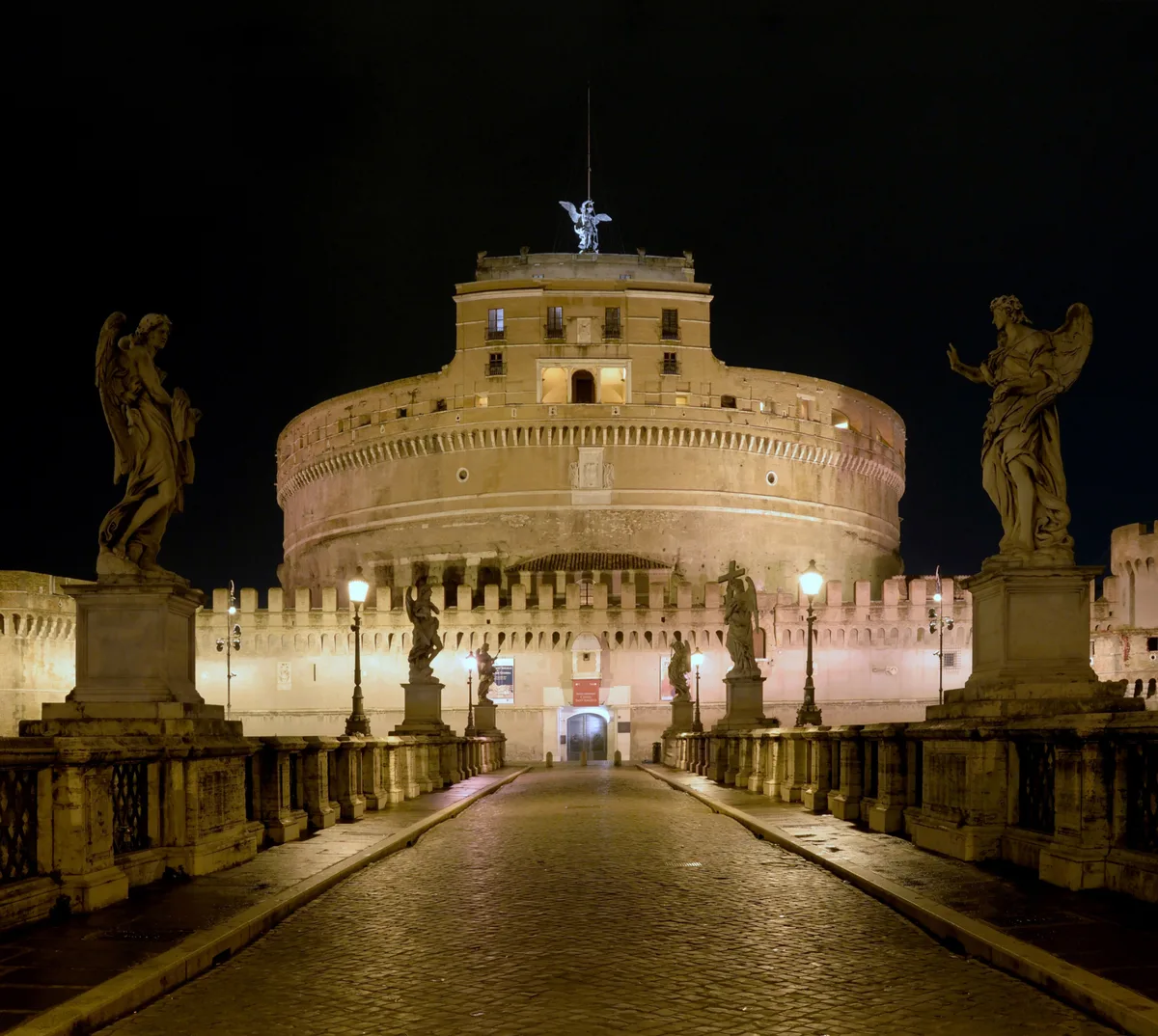
Photo: Livioandronico2013 / CC BY-SA 4.0
What Your Eye SeesA towering cylindrical structure on the banks of the Tiber, crowned by a bronze statue of an angel. A stone bridge lined with angel sculptures leads to its entrance.
ContextOriginally built as a mausoleum for Emperor Hadrian and his family between 123 and 139 AD, the castle was later repurposed as a papal fortress, prison, and refuge. It is connected to the Vatican by the Passetto di Borgo, a raised secret corridor used by popes to escape danger.
It takes its name from a vision in 590 AD, when Pope Gregory I saw the Archangel Michael sheathing his sword above the tomb, understood as a sign that a plague then ravaging Rome had ended. The cylindrical mausoleum was once crowned by a garden and a golden quadriga, and Hadrian's ashes were placed here in 139 AD alongside those of his wife Sabina. The marble angel now on the summit dates from 1753. The emperor buried within also built the Pantheon nearby, and his likeness survives in Istanbul's Archaeology Museums and at Antalya's Hadrian's Gate, raised for his 130 CE eastern tour, one reign linking a Roman mausoleum, a dome, a marble portrait and a Mediterranean gateway.
On ScreenCastel Sant'Angelo features in the film Angels & Demons (2006).
Source: UNESCO (Historic Centre of Rome); Britannica; Wikipedia (Castel Sant'Angelo); Wikipedia (Angels & Demons; Castel Sant'Angelo)
Part of the journey: Roman Sites in Italy →
DidYou
Know
During the 1527 Sack of Rome, Pope Clement VII fled the city along the 800-metre Passetto di Borgo above the streets, unseen as 34,000 imperial troops ransacked below, one of several popes who used the raised corridorr as an escape route.
Share→ The Spiral Ramp
The entrance ramp winds upward in a gentle spiral, originally the route used to carry the emperor's funerary procession to the burial chamber. Look at the lower brickwork, the original Roman herringbone pattern (opus spicatum) is still visible.
→ The Angel's Sword
Look up at the bronze angel crowning the castle: it is sheathing its sword, not drawing it. This commemorates the 590 AD plague, when the archangel Michael was said to have appeared sheathing his sword over the castle to signal the plague's end.
Sources: Wikipedia
Ancient Roots
6. Arch of Constantine
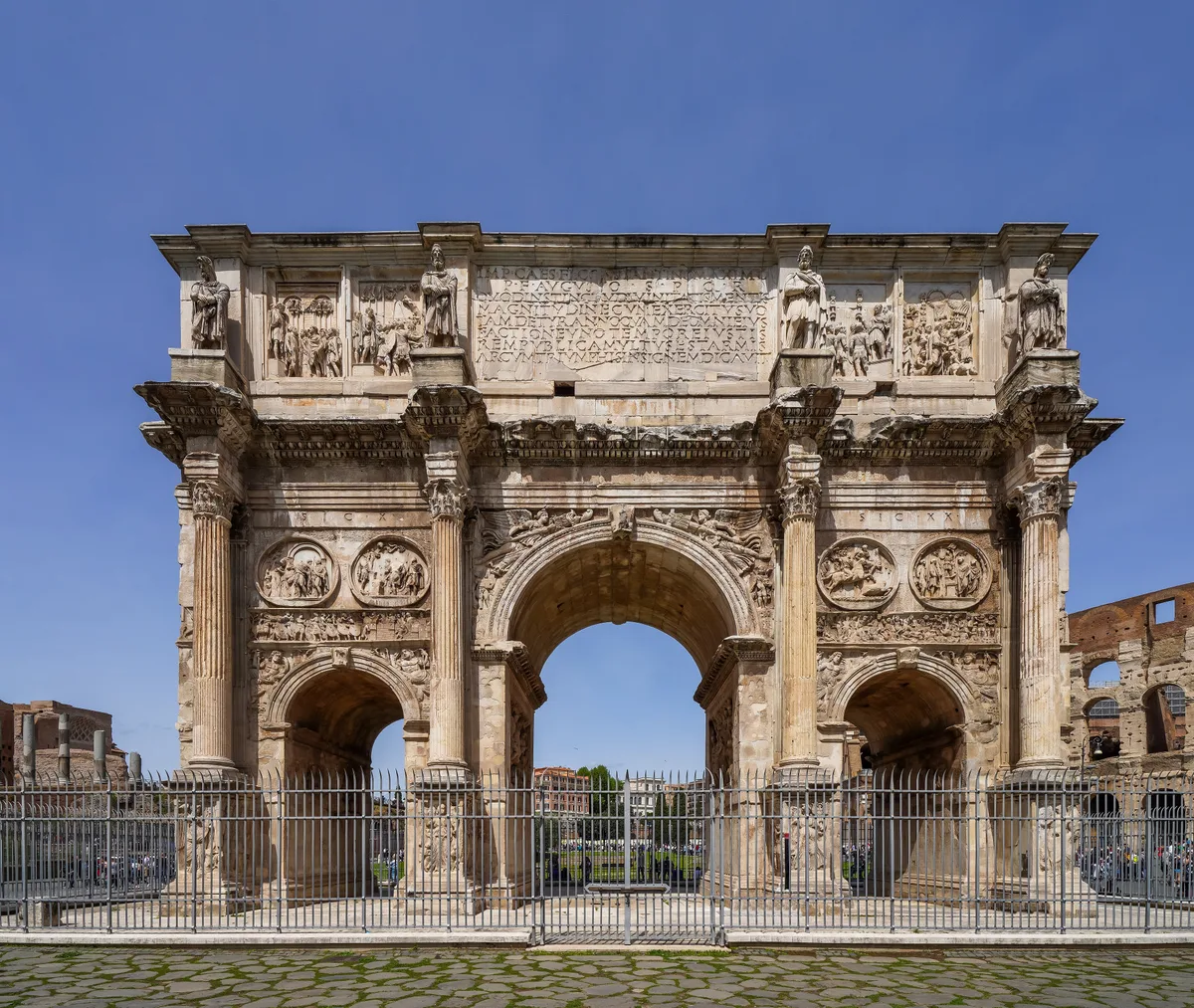
Photo: NikonZ7II (Paris Orlando) / CC BY-SA 4.0
What Your Eye SeesA three-arched marble triumphal arch standing between the Colosseum and the Palatine Hill, decorated with sculpted relief panels and Corinthian columns.
ContextErected in 315 AD to commemorate Constantine I's victory over Maxentius at the Battle of the Milvian Bridge, where Constantine famously saw the Chi-Rho symbol in the sky. It is the largest surviving Roman triumphal arch and served as the model for the Arc de Triomphe in Paris.
Set into the arch's central passage were the remnants of a colossal seated statue of Constantine, only the 2.6-metre marble head, hands and feet survive, now in the Capitoline Museums, a rare survival of imperial Roman portrait sculpture at this scale.
The arch's reused reliefs also bind it to Emperor Trajan, whose Column inspired the twin pillars of Karlskirche in Vienna.
On ScreenThe Arch of Constantine appears in the game Assassin's Creed Brotherhood (2010).
Source: UNESCO (Historic Centre of Rome); Britannica; Wikipedia (Arch of Constantine); Wikipedia (Arch of Constantine); Wikipedia (Arch of Constantine); Assassin's Creed Brotherhood production notes
DidYou
Know
Most of the reliefs on the Arch of Constantine were not made for it, they were stripped from earlier monuments to Trajan, Hadrian, and Marcus Aurelius. The heads were simply re-carved to resemble Constantine. Ancient political rebranding: recycling past glory to legitimise the present.
Share→ The Inscribed Dedication
Read the lettering that runs across the attic: the Senate and People of Rome dedicated the arch to Constantine, recording that he triumphed 'instinctu divinitatis', by divine inspiration. Still legible from street level, it is the arch's own account of why it was raised.
→ The Captive Dacians
Look up to the attic: eight marble statues of captured Dacian warriors stand between the inscription panels, arms bound, heads bowed, cloaks and tunics carved in bold relief. Walk around the arch and you can study each figure; these defeated prisoners were Rome's permanent trophies of conquest, set in stone above the street.
Sources: Wikipedia
Ancient Roots
7. Palatine Hill
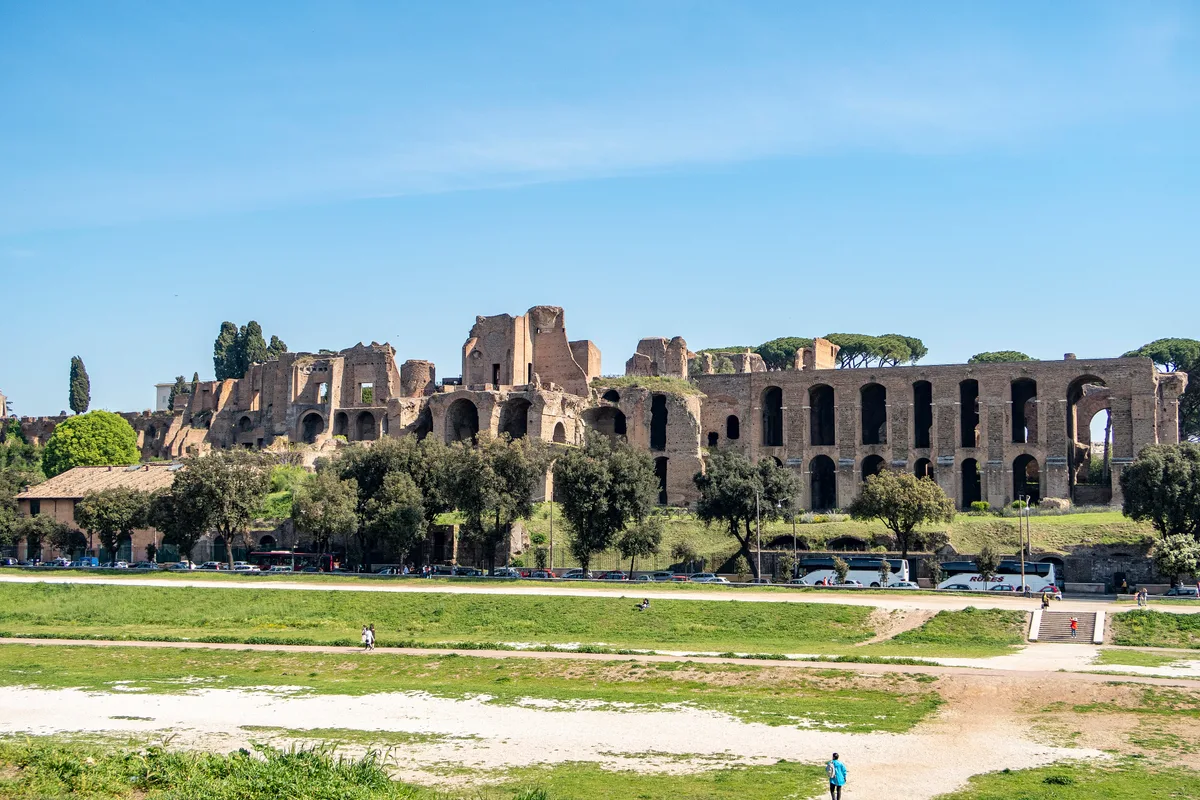
Photo: Lil Herodotus / CC BY-SA 4.0
What Your Eye SeesA sprawling hilltop archaeological zone overlooking the Roman Forum, with the remains of imperial palaces, sprawling gardens, and a stadium. The view from its terrace spans the entire Forum to the Colosseum beyond.
ContextThe centremost of Rome's Seven Hills and one of the oldest inhabited parts of the city. Roman mythology places the founding of Rome here by Romulus in 753 BC. In reality, it became the exclusive residential district for Rome's emperors, with Augustus building his personal residence here and every subsequent emperor expanding the imperial complex atop it.
At the foot of the hill lies the Lupercal, the cave where Romulus and Remus were said to have been nursed by the she-wolf, the mythic birthplace of the city above which the first palace rose. Excavated nearby, the House of Augustus and House of Livia preserve vivid Pompeian-style frescoes, the private rooms of the first emperor open to the public.
On ScreenPalatine Hill appears in the game Assassin's Creed Brotherhood (2010).
Source: UNESCO (Historic Centre of Rome); Britannica; Wikipedia (Palatine Hill); Wikipedia (Palatine Hill; House of Livia); Wikipedia (Palatine Hill); Assassin's Creed Brotherhood production notes
DidYou
Know
The very word 'palace' comes from Palatium, the Latin name of this hill, because every Roman emperor chose to live here, the hill's name outgrew Rome and now names every royal residence in every European language.
Share→ The Stadium's Secret
Look at the long open space Romans called the Stadium: it wasn't for sports. The curved end and surrounding portico show it was an elaborate sunken garden, a hippodrome-shaped flowerbed laid out for the emperor's personal use.
→ The Rainwater Cisterns
Look for the massive brick cisterns near the Domus Augustana. They collected rainwater to supply the palace complex, and their waterproof plaster lining has survived remarkably well over the centuries.
Sources: Wikipedia
Ancient Roots
8. Basilica of Santa Maria Maggiore
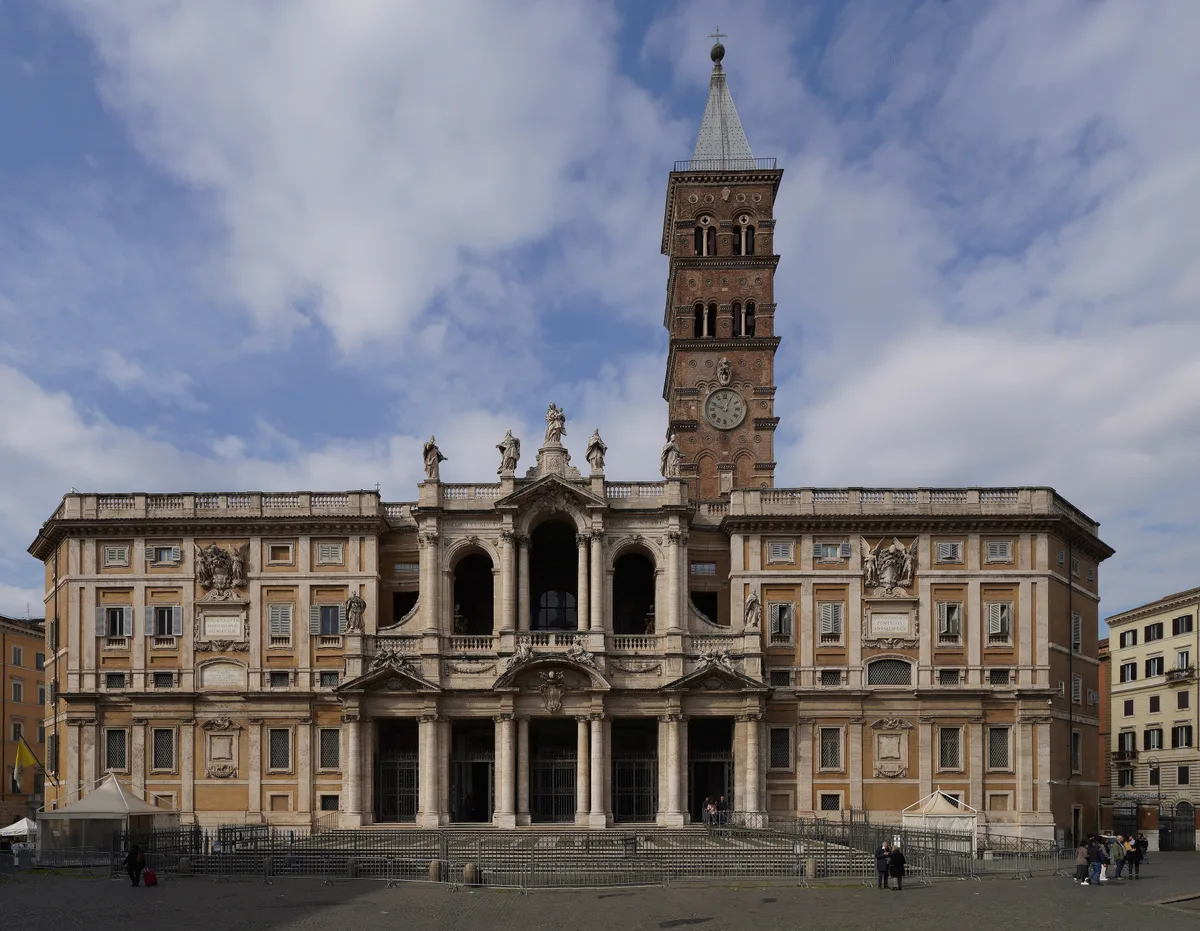
Photo: NikonZ7II / CC BY-SA 4.0
What Your Eye SeesA vast basilica with a Baroque exterior hiding one of the best-preserved Early Christian interiors in Rome. Its 5th-century mosaics, coffered golden ceiling, and 75-metre bell tower define the skyline of the Esquiline Hill.
ContextBuilt by Pope Sixtus III between 432 and 440 AD, Santa Maria Maggiore is one of the four major papal basilicas of Rome. Its interior preserves original 5th-century mosaics depicting Old Proof scenes, making it one of the most important surviving examples of Early Christian art.
Rome's largest church dedicated to the Virgin Mary, it was founded, legend says, after Pope Liberius dreamt of snow falling on the Esquiline in August 358, the Miracle of the Snow still marked each year on 5 August. Pope Paul V Borghese later crowned the facade with his family's eagle and laurel, and its 5th-century mosaics remain the oldest in Rome's Marian basilicas.
Source: UNESCO (Historic Centre of Rome); Britannica; Wikipedia (Santa Maria Maggiore, Rome); Wikipedia (Basilica di Santa Maria Maggiore)
DidYou
Know
The coffered ceiling of Santa Maria Maggiore is gilded with the first gold brought from the Americas after Columbus's voyage, a gift from Ferdinand and Isabella to Pope Alexander VI in 1493. The New World's first shipment of gold ended up on a 5th-century Roman ceiling, where it has stayed for over 500 years.
Share→ The Mosaic Togas
Look up at the 5th-century triumphal arch mosaics: they show Old Proof scenes, but the figures wear Roman senatorial dress, not biblical clothing. The artists painted the world around them rather than a reconstructed past.
→ The Cosmatesque Floor
Look down at the central nave: the floor is a Cosmatesque pavement, a mosaic of geometric patterns inlaid in coloured marble by medieval Roman craftsmen. It was laid in the mid-12th century under Pope Eugene III and has guided visitors up the nave ever since.
Sources: Wikipedia
Euro Heritage
Baroque Master
Spiritual Seeker
What is the largest unreinforced concrete dome in the world?
The Pantheon in Rome, completed around AD 125 under Emperor Hadrian. Its dome spans 43.3 metres, and the oculus at its centre is the sole light source. The concrete mix varies by height, using lighter pumice near the top, making it the largest unreinforced concrete dome ever built nearly 1,900 years later.
How big was the Colosseum?
The Colosseum could seat approximately 50,000 spectators and is the largest amphitheatre ever built. Completed in AD 80 under Titus, it measured 189 metres long and 156 metres wide. A retractable awning called the velarium shaded spectators, operated by a detachment of sailors from the Roman naval fleet.
What is the oldest temple in Rome?
The Temple of Saturn, founded in 497 BC at the foot of the Capitoline Hill. Its eight surviving Ionic columns date from a reconstruction in the late 1st century BC. The temple also housed the aerarium, the state treasury of the Roman Republic.
Did the Colosseum fill with water for naval battles?
Yes, in its early years. At the Colosseum's inaugural games in AD 80 under Titus, the arena floor was flooded and used for staged naval battles, or naumachiae, complete with ships and armour. The Roman historian Cassius Dio describes these spectacles. Within about three decades the practice ended: Emperor Domitian built the hypogeum, the underground labyrinth of corridors and lifts for animals and scenery, which made flooding the arena impossible.
These landmarks reward close attention. Vestigia is a field companion for people who look longer, with curated context, architectural detail, and the stories most visitors walk past. Free on the App Store and Google Play.