Scotland's Castles: Stone That Outlived the Crowns That Built Them
Scotland's landscape is crowded with castles, fortresses raised by rival crowns, held through clan feud and siege, and still standing on volcanic rock and sea cliff. This is a reader's guide to Scotland's most compelling castles, arranged from the most-visited to the more off-the-beaten-path, each paired with the single feature that makes it worth the stop.
All 11 castles, plotted on the map below.
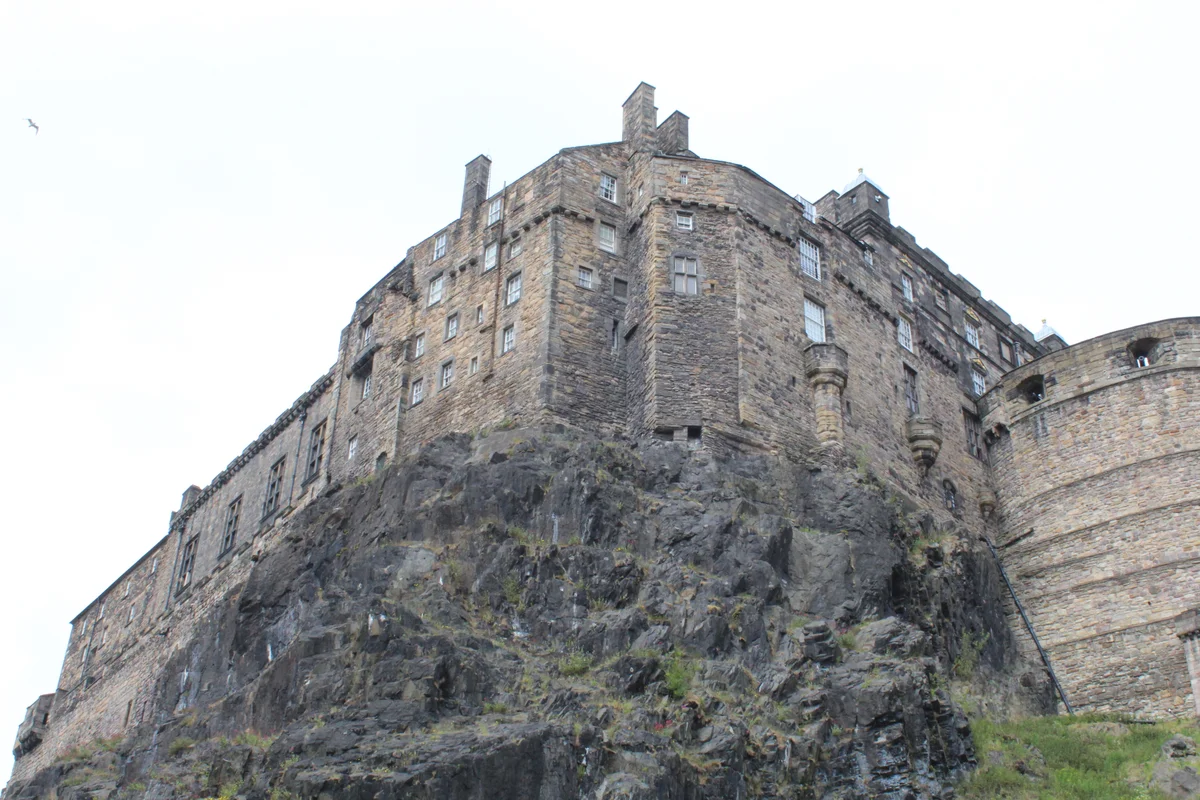
Photo: Enric / Wikimedia Commons (CC BY-SA 4.0)
At a Glance
- Period
- 12th c.–present
- UNESCO
- No
- Notable structures
- St Margaret's Chapel, Half Moon Battery, Great Hall
- Best season
- Apr–Jun, Sep–Oct
- NIGHT VISITS
- Winter (Castle of Light, Nov–Jan)
- Visiting hours
- Daily (seasonal)
- Recommended time
- 2–3 hours
- Entry
- Paid
Edinburgh · Lothian
Edinburgh Castle, the fortress that kept the Honours of Scotland
Perched on a volcanic plug fortified for at least 1,500 years, Edinburgh Castle was the practical heart of Scottish kingship long before it became a symbol. Its great guns, the 15th-century bombard Mons Meg and the Half Moon Battery's cannon, guarded the capital, and since 1861 the One O'Clock Gun has fired across the city at midday.
What makes the stop unmissable is the Honours of Scotland: the crown, sceptre and sword carried by centuries of monarchs. Hidden from Cromwell's army at Dunnottar and later buried at Kinneff, they were returned in 1660 and locked in an oak chest until Sir Walter Scott had it opened in 1818. (The Stone of Destiny, long kept here, moved to Perth Museum in 2024.)
Below the ramparts, the Scottish National War Memorial fills the former North Barrack Block with carved stones and quiet rooms, opened in 1927 after the First World War. The castle remains Scotland’s most-visited paid attraction.
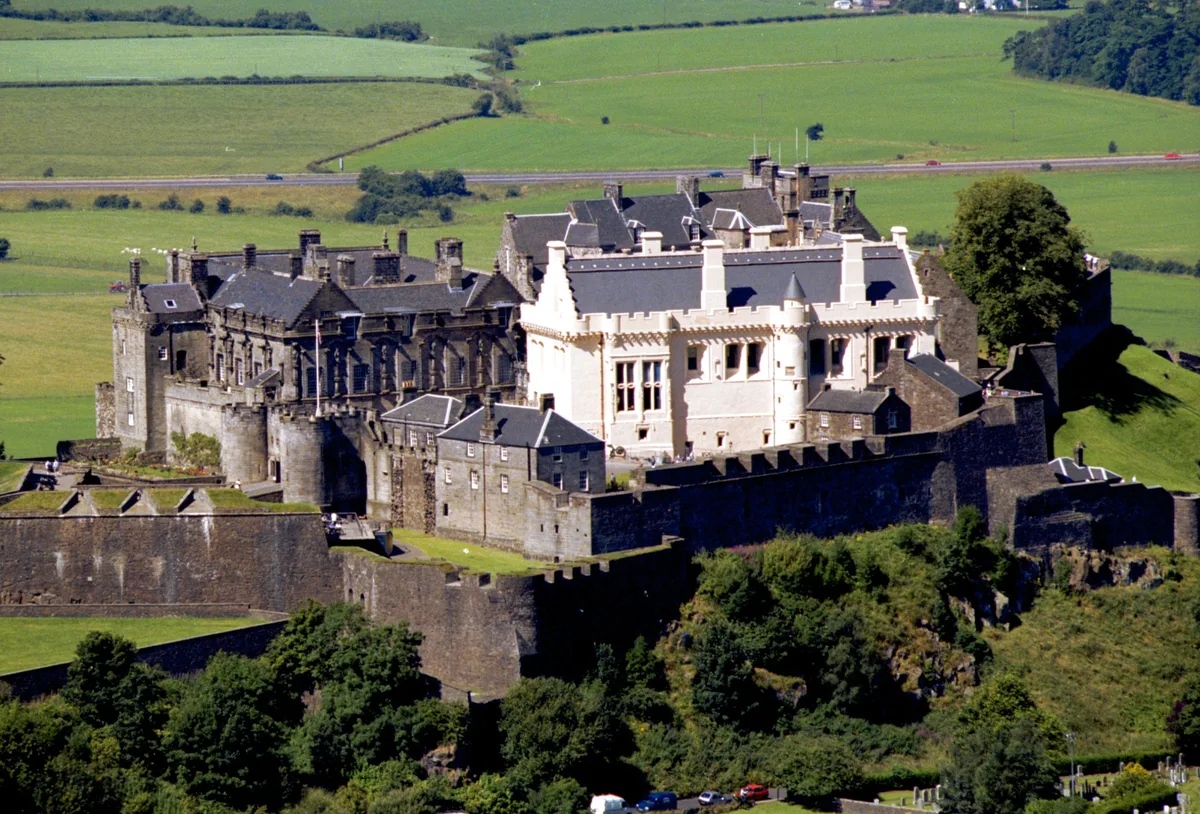
Photo: John McPake / Wikimedia Commons (CC BY 2.0)
At a Glance
- Period
- 15th–16th c. (crag earlier)
- UNESCO
- No
- Notable structures
- Great Hall, Royal Palace, Chapel Royal
- Best season
- Apr–Jun, Sep–Oct
- Visiting hours
- Daily (seasonal)
- Recommended time
- 2–3 hours
- Entry
- Paid
Stirling · Central
Stirling Castle, the Renaissance palace that watched Scotland change hands
Stirling's crag was fortified for centuries, but the castle's golden age came in the 1500s, when it guarded the lowest crossing of the Forth and the gateway to the Highlands. Whoever held Stirling largely held Scotland.
The draw is the refurbished Royal Palace, rebuilt for James V in a flourish of European Renaissance fashion and the childhood home of Mary Queen of Scots, alongside the vast Great Hall and the Chapel Royal. It is the most complete surviving piece of 16th-century Scottish royal architecture.
Mary Queen of Scots was crowned here in 1543, at nine months old, in the castle chapel. The restored Royal Palace still carries the painted “Stirling Heads,” a set of oak medallions carved with royals and courtiers.
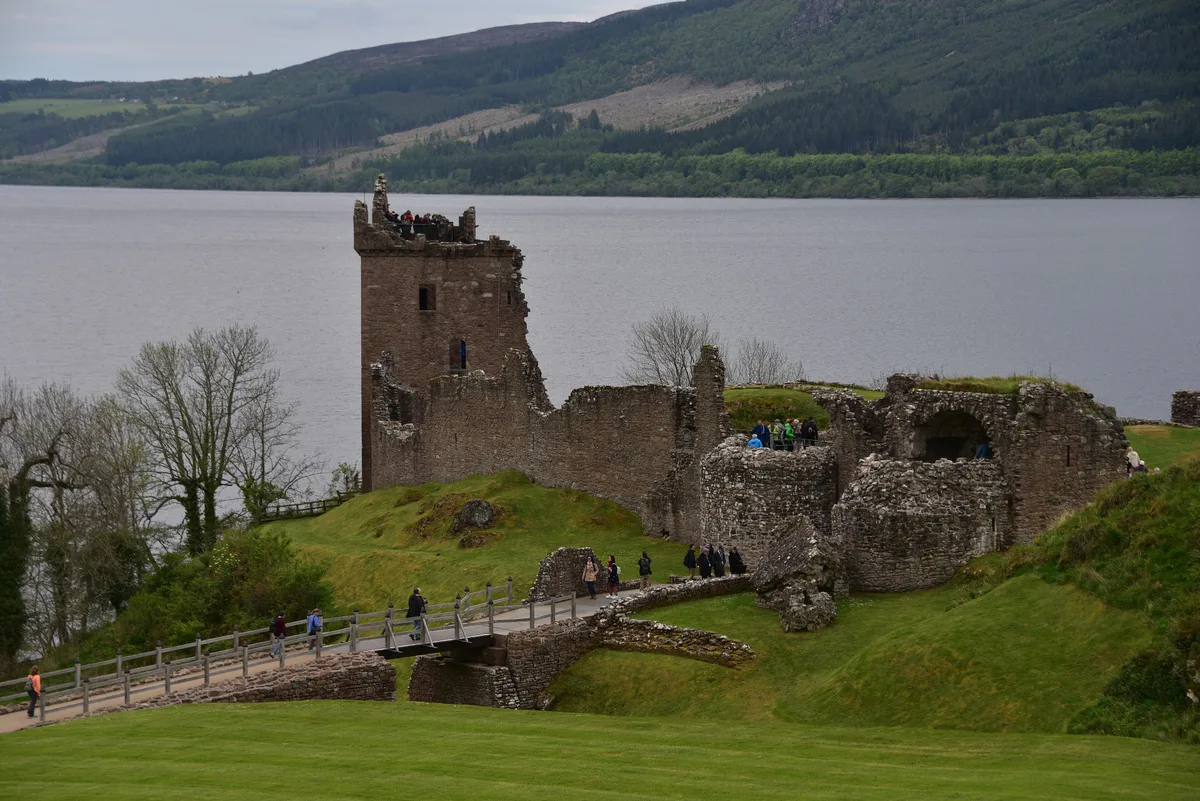
Photo: August Schwerdfeger / Wikimedia Commons (CC BY 4.0)
At a Glance
- Period
- 13th–17th c.
- UNESCO
- No
- Notable structures
- Grant Tower, great hall, trebuchet replica
- Best season
- Apr–Jun, Sep–Oct
- Visiting hours
- Daily (seasonal)
- Recommended time
- 1–2 hours
- Entry
- Paid
Loch Ness · Highlands
Urquhart Castle, Loch Ness's ruined guardian
For more than a thousand years a fortress has stood on this rocky promontory above Loch Ness. Urquhart passed back and forth between Scots and English through the Wars of Independence and was repeatedly raided by the Lords of the Isles.
What you see today is a deliberate ruin: government troops blew up the castle in 1692 during the Jacobite Risings. The climb up the broken Grant Tower still rewards with one of Scotland's great views up and down the loch, and a full-sized trebuchet replica sits on the lawn.
After the last destruction the ruins passed to the Clan Grant in the 16th century, and the tower’s broken top still marks where their lodging stood. Today the loch-side site is among the most-visited in the Highlands.
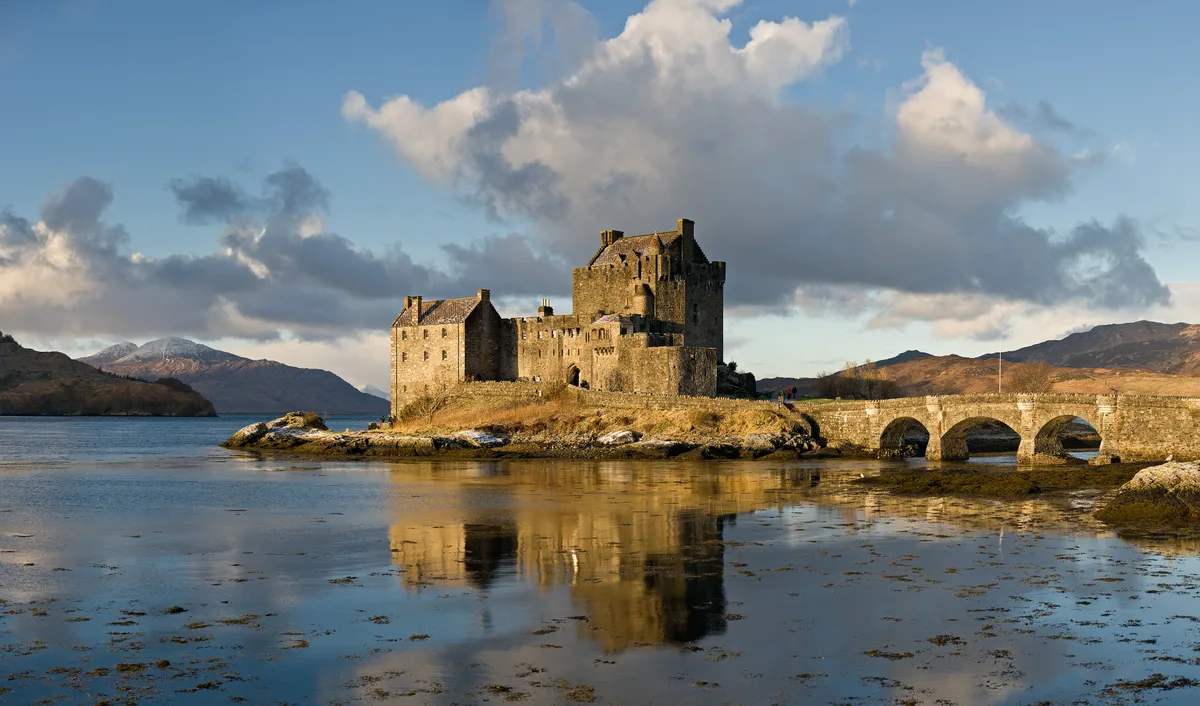
Photo: Diliff / Wikimedia Commons (CC BY-SA 3.0)
At a Glance
- Period
- 13th c. (rebuilt 1912–32)
- UNESCO
- No
- Notable structures
- Billeting tower, curtain wall, causeway
- Best season
- Apr–Jun, Sep–Oct
- Visiting hours
- Daily (seasonal)
- Recommended time
- 1–1.5 hours
- Entry
- Paid
Kyle of Lochalsh · Highlands
Eilean Donan, the castle at the meeting of three lochs
Eilean Donan sits on a small island where three sea lochs meet, Loch Duich, Loch Long and Loch Alsh, a position that made it one of the most strategic strongholds in the west. The MacKenzies and the Lords of the Isles held it from the 13th century.
The castle you photograph is largely a 20th-century act of devotion: Royal Navy shells and dynamite destroyed the original in 1719 during a Jacobite rising, and Colonel John MacRae-Gilstrap rebuilt it between 1912 and 1932. It is the most-photographed castle in the Highlands and the gateway to the Isle of Skye.
The castle’s silhouette became a Highland emblem after it appeared in the James Bond film The World Is Not Enough (1999) and Highlander (1986). Inside, the restored rooms display clan weapons, silver and Jacobite relics.
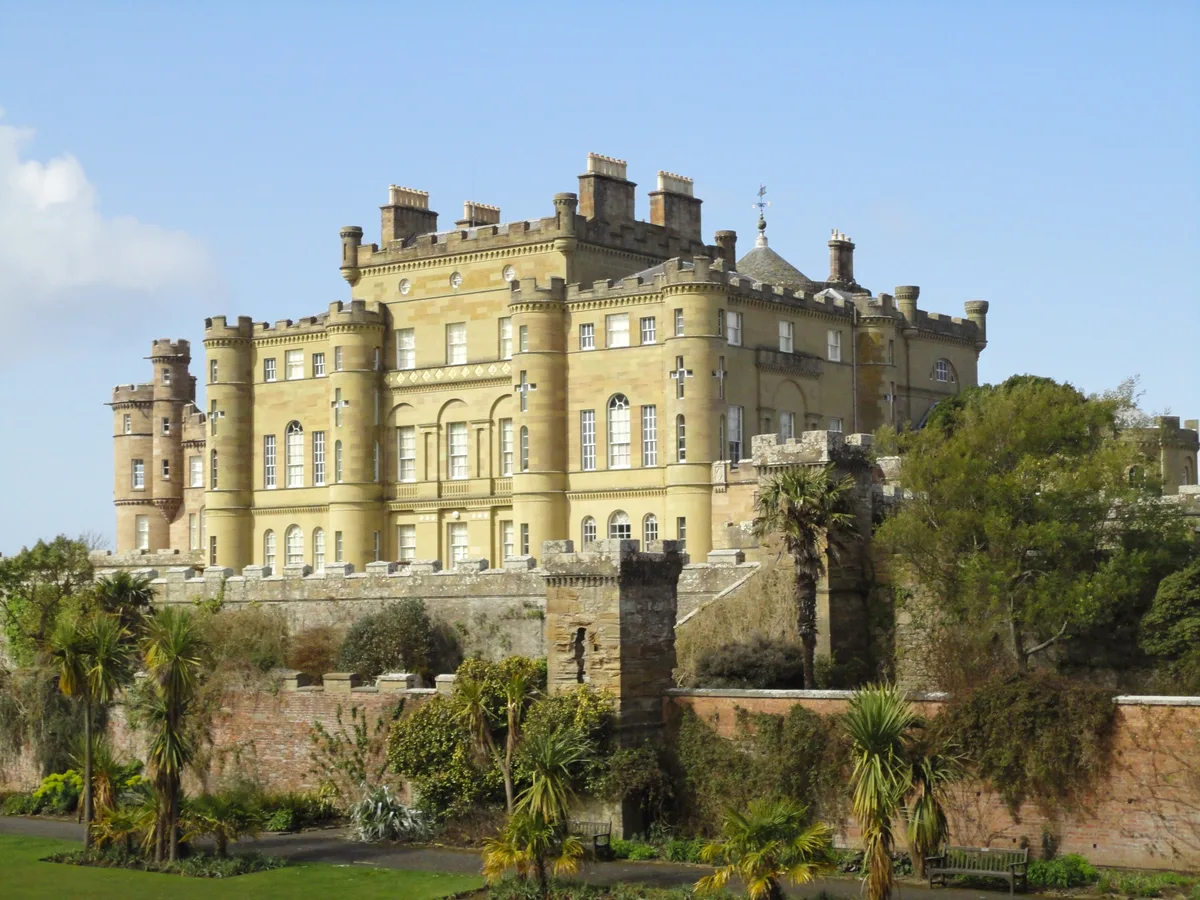
Photo: Jamesx12345 / Wikimedia Commons (CC BY-SA 3.0)
At a Glance
- Period
- 1777–1792
- UNESCO
- No
- Notable structures
- Oval Staircase, Round Drawing Room, drum tower
- Best season
- Apr–Jun, Sep–Oct
- Visiting hours
- Daily (seasonal)
- Recommended time
- 3–4 hours
- Entry
- Paid
Ayrshire · West Coast
Culzean, Robert Adam's clifftop masterpiece
Culzean is the work of Scotland's greatest neoclassical architect, Robert Adam, who between 1777 and 1792 transformed a modest tower house into a showpiece for David Kennedy, the 10th Earl of Cassillis and chief of Clan Kennedy.
The drama is in the details: the Oval Staircase rises through the heart of the building and the circular Round Drawing Room cantilevers out over the Firth of Clyde. In 1945 the Kennedys gave the castle to the National Trust for Scotland on condition that an apartment be set aside for Dwight D. Eisenhower for the rest of his life.
The clifftop estate around the castle is a country park of woodlands, cliffs and beaches laid out in Adam’s era and later. The Eisenhower apartment, with its own memorial room, is preserved much as the general left it.
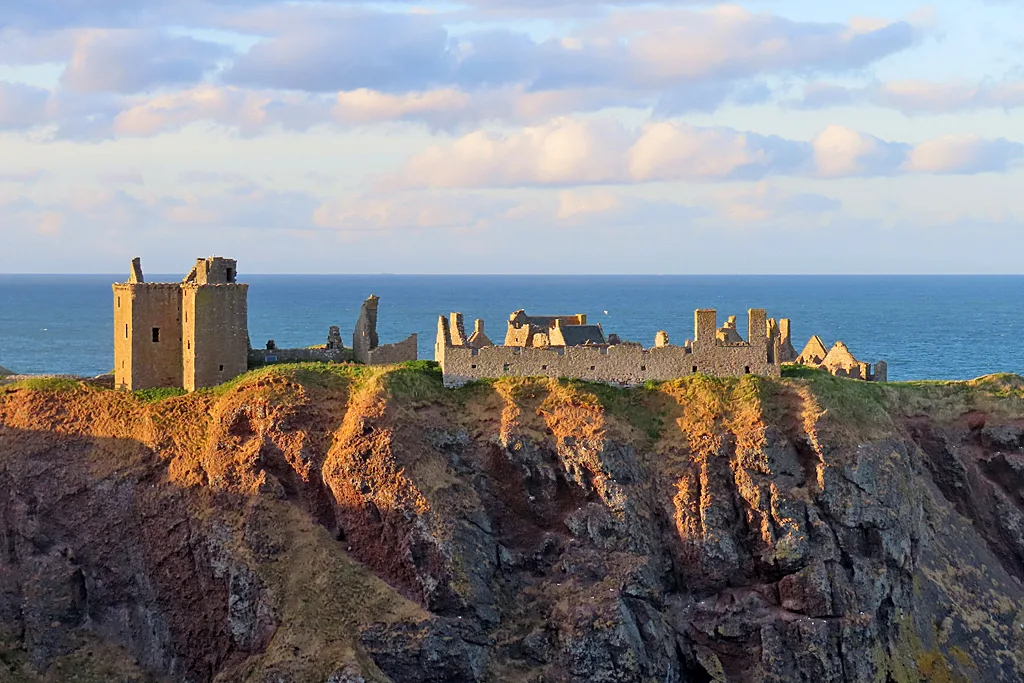
Photo: Anne Burgess / Wikimedia Commons (CC BY-SA 2.0)
At a Glance
- Period
- 13th–17th c.
- UNESCO
- No
- Notable structures
- Clifftop tower house, chapel, sea gates
- Best season
- Apr–Jun, Sep–Oct
- Visiting hours
- Daily (seasonal)
- Recommended time
- 1.5–2 hours
- Entry
- Paid
Stonehaven · Aberdeenshire
Dunnottar, the clifftop ruin that hid the Crown Jewels
Dunnottar clings to a rocky promontory in the North Sea, joined to the mainland by only a narrow neck of land. The Earls Marischal made it one of the most important strongholds in the northeast, and it sheltered William Wallace and Mary Queen of Scots.
In 1651, as Cromwell's army advanced, the Crown Jewels of Scotland were smuggled out of the castle and hidden at nearby Kinneff Church until the monarchy was restored. The clifftop ruins, tower house, chapel and the vaulted "Whig's Vault", are among the most dramatically sited in the country.
Beneath the great hall lies the vaulted “Whig’s Vault,” where 167 Covenanters were imprisoned in 1685 after the failed Argyll rising. The cliff paths along the headland still trace the old approach to the gate.
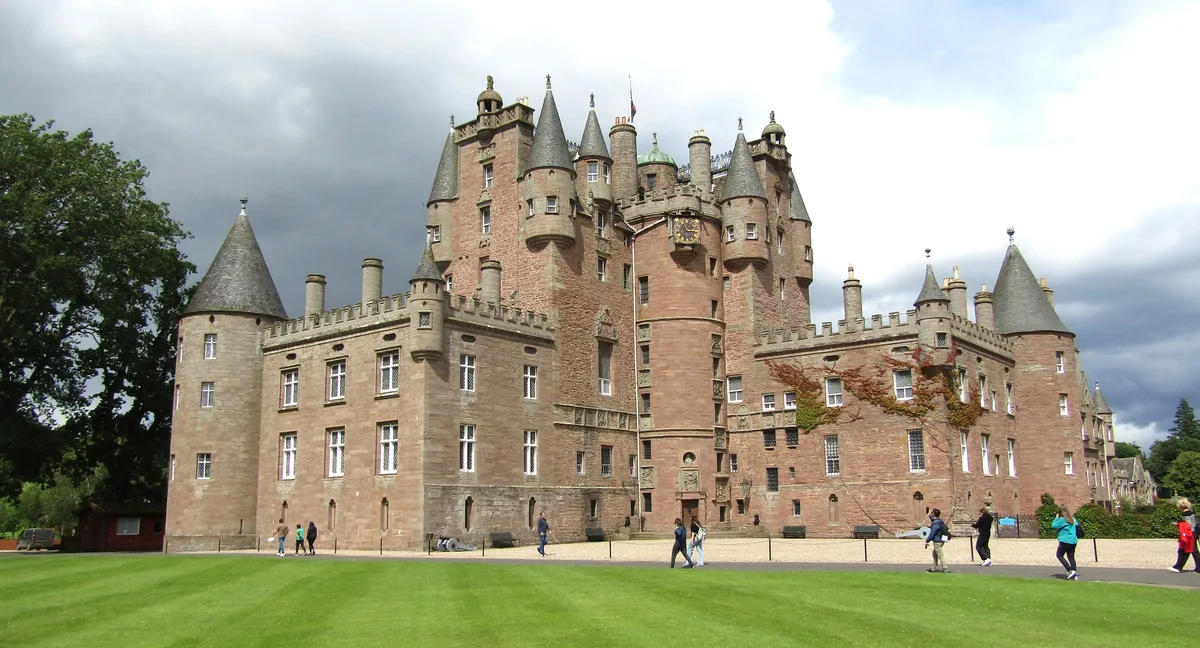
Photo: Colin Smith / Wikimedia Commons (CC BY-SA 2.0)
At a Glance
- Period
- 14th c.–present
- UNESCO
- No
- Notable structures
- Tower house, gardens, crypt
- Best season
- Apr–Jun, Sep–Oct
- Visiting hours
- Daily (seasonal)
- Recommended time
- 2–3 hours
- Entry
- Paid
Angus · Tayside
Glamis, the Lyon seat with a Macbeth shadow
Glamis has been the home of the Lyon family since 1372, one of the longest unbroken stretches of family ownership of any Scottish castle, and remains a working family home. It was the childhood home of Queen Elizabeth The Queen Mother and the birthplace of Princess Margaret.
The castle's fame is doubled by Shakespeare, who set Macbeth's murder of King Duncan at Glamis. That is anachronistic, the castle as it stands postdates the historical Macbeth, but the literary association, and the castle's own ghost stories, are part of its draw.
The castle is woven with ghost stories, chief among them the “Monster of Glamis,” a hidden heir said to be confined within the building. The walled and Italian gardens on the estate are themselves a draw for visitors.
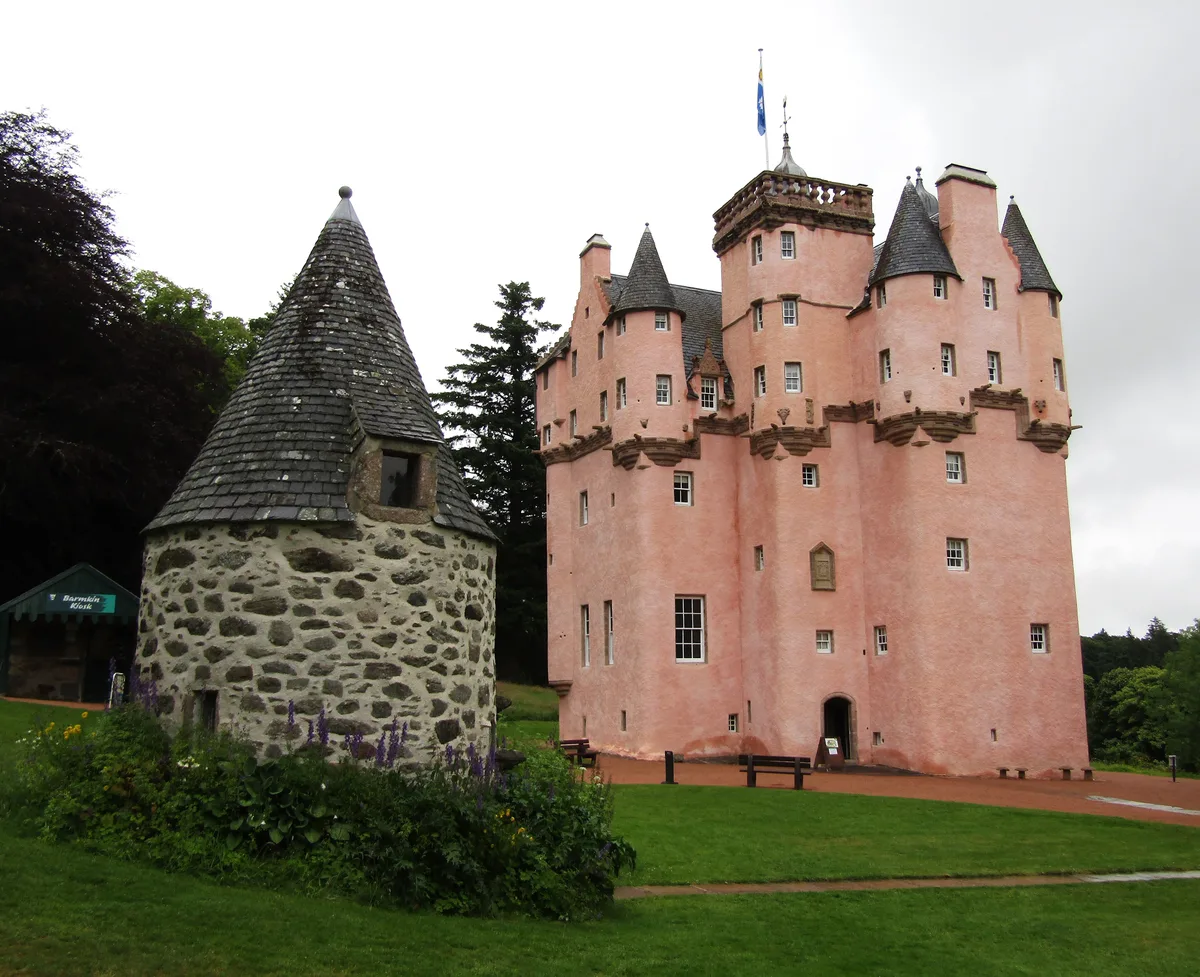
Photo: Colin Smith / Wikimedia Commons (CC BY-SA 2.0)
At a Glance
- Period
- c. 1626
- UNESCO
- No
- Notable structures
- Harled tower, corbelled turrets, crow-stepped gables
- Best season
- Apr–Jun, Sep–Oct
- Visiting hours
- Daily (timed, seasonal)
- Recommended time
- 1–1.5 hours
- Entry
- Paid
Aberdeenshire · Northeast
Craigievar, the pink tower that inspired a silhouette
Craigievar is the key Scottish tower house: a harled (rough- cast) pink tower rising in tiers, its corbelled turrets, crow-stepped gables and conical caps described as the "pink castle of storybook." It was built around 1626 for the merchant William Forbes, known as "Danzig Willie."
The National Trust for Scotland keeps the interior largely as it was and admits visitors in limited numbers, so the atmosphere is unusually intact. Its clean seven-storey silhouette is often credited as the inspiration for the Disney castle logo, a romance the Trust neither confirms nor quite denies.
The Forbes family held the tower until 1963, when it passed to the National Trust for Scotland. Its seven storeys rise in clean symmetry, the corbelled turrets giving the tower its unmistakable outline.
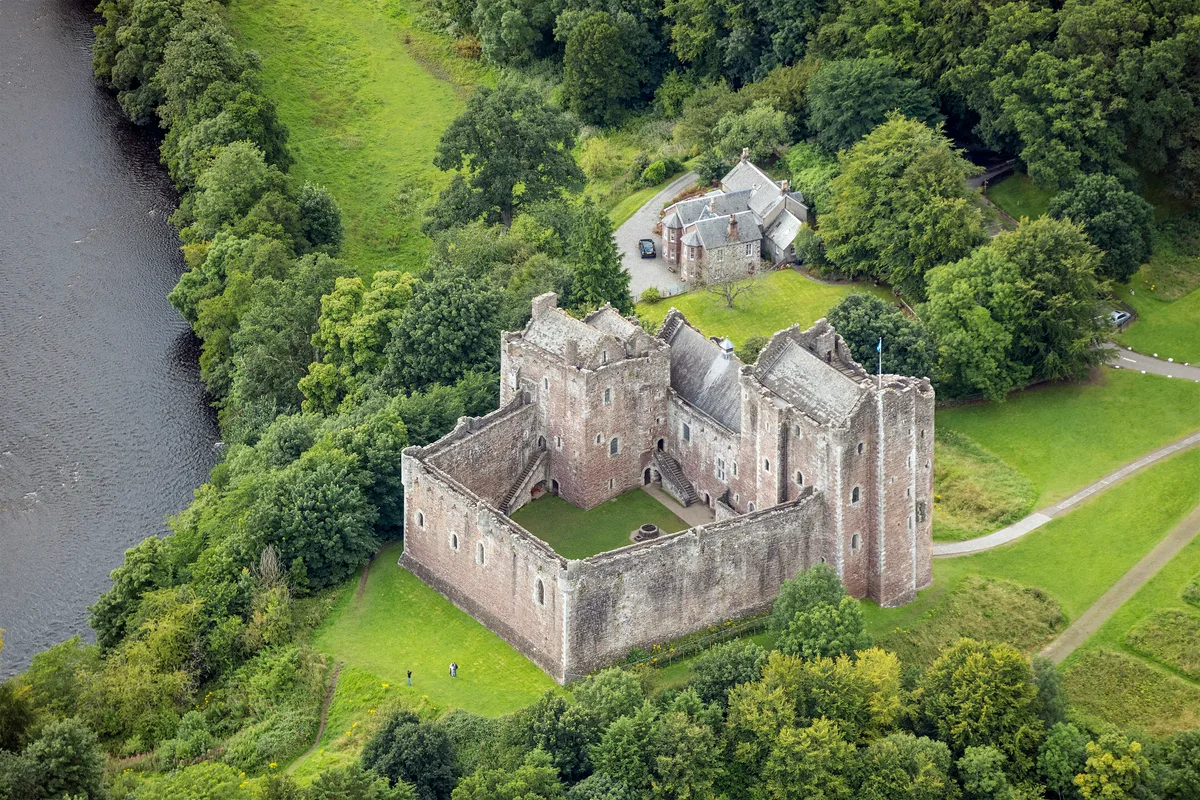
Photo: Godot13 / Wikimedia Commons (CC BY-SA 4.0)
At a Glance
- Period
- late 14th c.
- UNESCO
- No
- Notable structures
- Great tower house, Great Hall, gatehouse
- Best season
- Apr–Jun, Sep–Oct
- Visiting hours
- Daily (seasonal)
- Recommended time
- 1–1.5 hours
- Entry
- Paid
Stirlingshire · Central
Doune, the tower house that became Castle Leoch
Doune was built in the late 14th century by Robert Stewart, Duke of Albany, and survives as one of the most complete great tower houses in Scotland: the lord's hall and chamber sit directly above the gatehouse, with a remarkably intact Great Hall.
Its screen fame is outsize, it doubled for Winterfell in the first season of Game of Thrones (HBO, 2011), stands in for Castle Leoch in Outlander, and appears in Monty Python and the Holy Grail. The castle's audio tour is voiced by Terry Jones of Monty Python.
Unlike many Scottish castles, Doune was never deliberately demolished and survives almost complete, a rare example of a late-medieval lord’s residence. Its Great Hall still shows the musicians’ gallery and the serving hatch from the kitchen below.
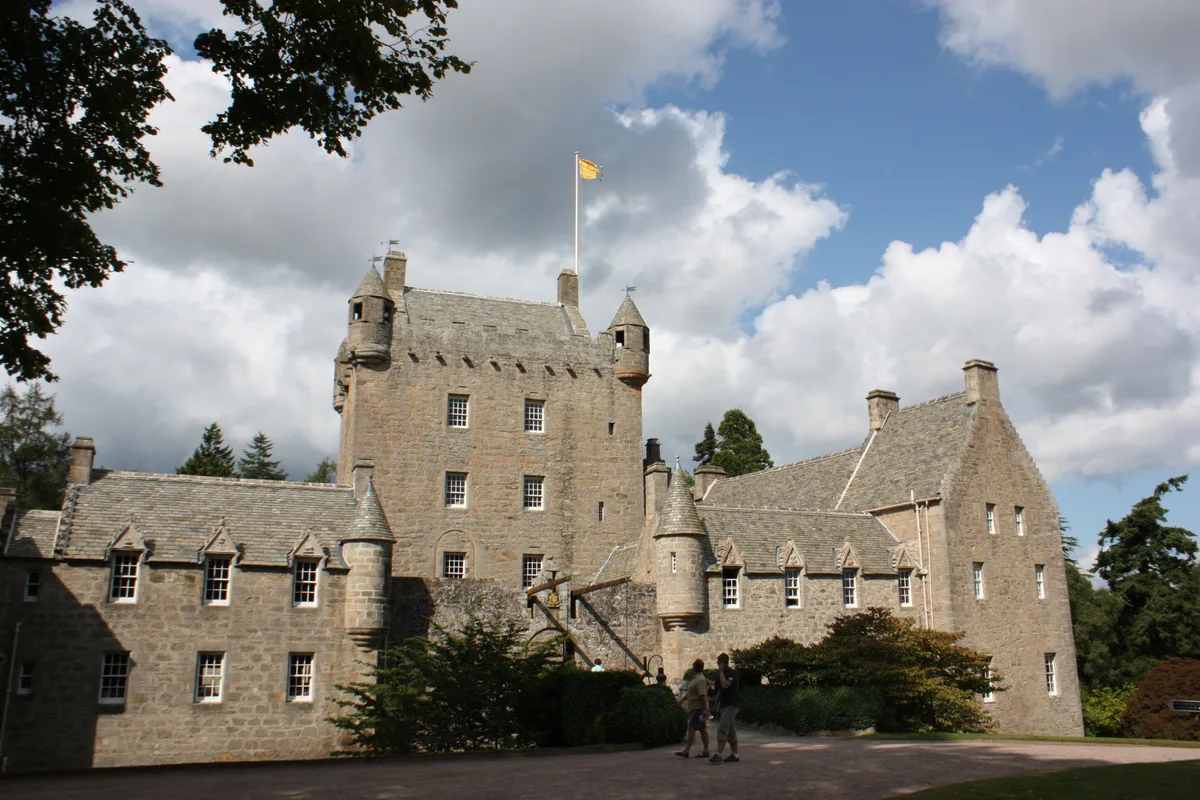
Photo: LeCardinal / Wikimedia Commons (CC BY-SA 3.0)
At a Glance
- Period
- c. 1454 (tower)
- UNESCO
- No
- Notable structures
- 15th-c. tower, drawbridge, gardens
- Best season
- Apr–Jun, Sep–Oct
- Visiting hours
- Daily (seasonal; gardens year-round)
- Recommended time
- 2–3 hours
- Entry
- Paid
Nairn · Highlands
Cawdor, the Thane's tower Shakespeare borrowed
Cawdor is a lived-in castle: a 15th-century tower built around 1454 for the Thanes of Cawdor, still the family home, wrapped in later buildings, gardens and a large estate. The medieval tower and its drawbridge are the core of the visit.
As with Glamis, Shakespeare borrowed the name, "Thane of Cawdor" is one of Macbeth's titles, though the historical Macbeth died a century before the tower existed. The anachronism is part of the castle's romance rather than its history.
By the castle’s own tradition, the tower was built around a thorn tree, whose dried remains are said to lie in the cellar to this day. The surrounding gardens, including a famed holly maze crowned by a minotaur sculpture, were laid out by later generations of the Cawdor family.
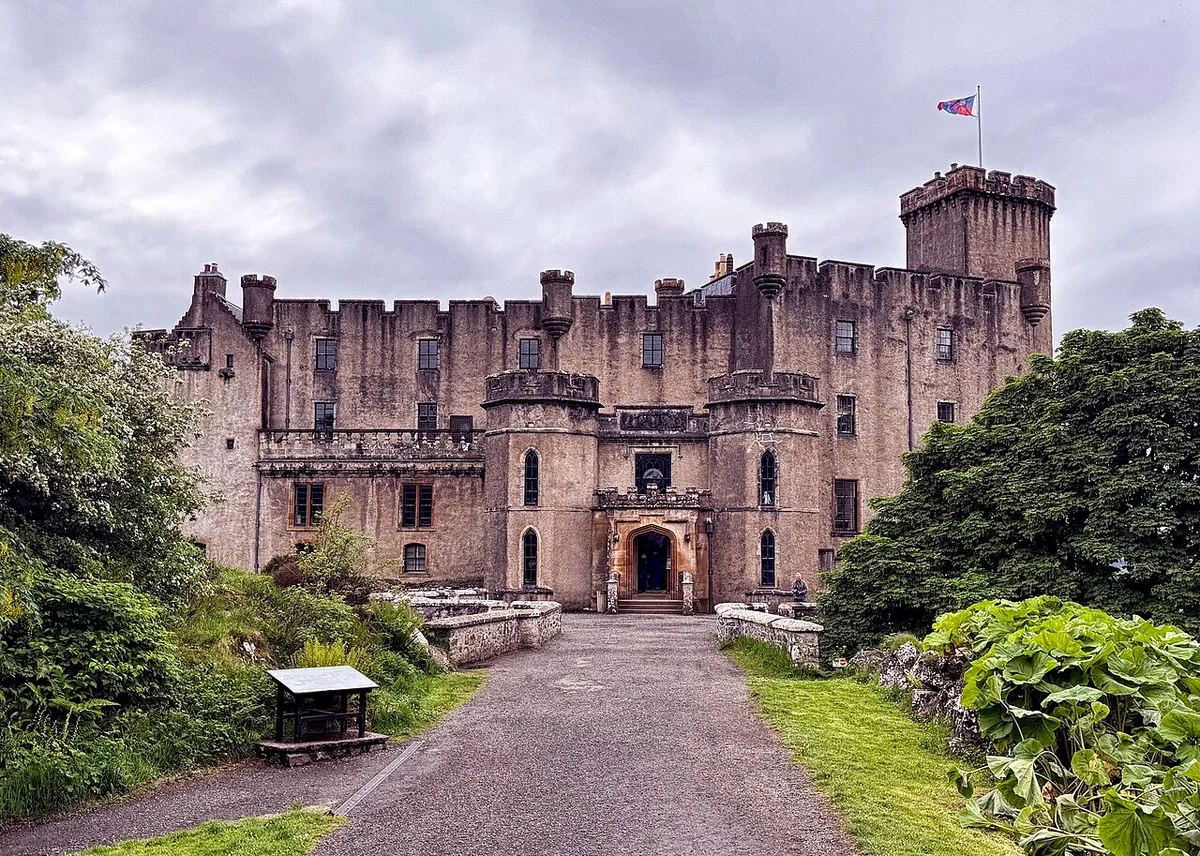
Photo: Gillfoto / Wikimedia Commons (CC BY-SA 4.0)
At a Glance
- Period
- 13th c.–present
- UNESCO
- No
- Notable structures
- Fairy Tower, 13th-c. curtain wall, the Fairy Flag (clan heirloom)
- Best season
- Apr–Oct
- NIGHT VISITS
- No
- Visiting hours
- Daily (seasonal)
- Recommended time
- 1–2 hours
- Entry
- Paid
Dunvegan · Isle of Skye
Dunvegan Castle, the Fairy Flag and Scotland's oldest lived-in castle
On the shore of Loch Dunvegan in the Isle of Skye, this is the oldest castle in Scotland still lived in, the seat of Clan MacLeod for some 800 years. The oldest stones are a 13th-century curtain wall and the tower house later called the Fairy Tower, raised as the MacLeods tightened their hold on the Hebrides.
What makes the stop unmissable is the Fairy Flag (Scottish Gaelic: A' Bhratach Shìth): a square of yellow silk, roughly two feet across, that textile experts at the Victoria and Albert Museum dated to Syria or Rhodes in the 4th–7th century, older than the MacLeod name itself. Legend says it was a parting gift from a fairy bride, to be unfurled three times in the clan's extremity (two are remembered: Glendale, around 1490, and Trumpan, 1578). In 1940 the first woman chief, Dame Flora MacLeod, offered it to Fighter Command to be flown over Dover as its third and final unfurling, should Britain fall.
Where Scotland's Castles Stand
These places open up slowly, and only to the visitor who stops and looks twice. Vestigia is a field companion for that kind of travel, in your pocket with the context and detail most guides skip. Download the app before you go.
Which castles in Scotland should I visit?
Begin with Edinburgh Castle, the volcanic-rock fortress that has stood guard over the capital for at least 1,500 years and once held the Honours of Scotland. Then Stirling Castle, the Renaissance palace that watched Scotland change hands, and Eilean Donan, the island castle at the meeting of three lochs that serves as the gateway to the Isle of Skye. For ruins, climb to Dunnottar above Stonehaven, a clifftop stronghold, and make the crossing to Dunvegan on Skye, seat of the Clan MacLeod for some 800 years.
How is a Scottish tower house different from an English castle?
A tower house is a tall, compact stone residence that folded defence into daily life, the classic Scottish castle. Rather than spreading rooms across a walled courtyard, the laird's household, guards and stores sat inside the one tall stone block behind a locked door. It answered a landscape of local lords, which is why Scotland is studded with small surviving strongholds, and Culzean began exactly this way before Robert Adam dressed it into a clifftop showpiece.
Which Scottish castle hid the Crown Jewels from Cromwell?
Dunnottar Castle, the clifftop fortress south of Aberdeen. During the civil wars of the 17th century the Honours of Scotland, the Scottish royal regalia, were smuggled out of the fortress ahead of Cromwell's army and buried at the nearby church of Kinneff. They stayed hidden through the occupation and were returned after the Restoration, which is why the Honours survive on view at Edinburgh Castle.