Tokyo Historical Landmarks
1. Senso-ji
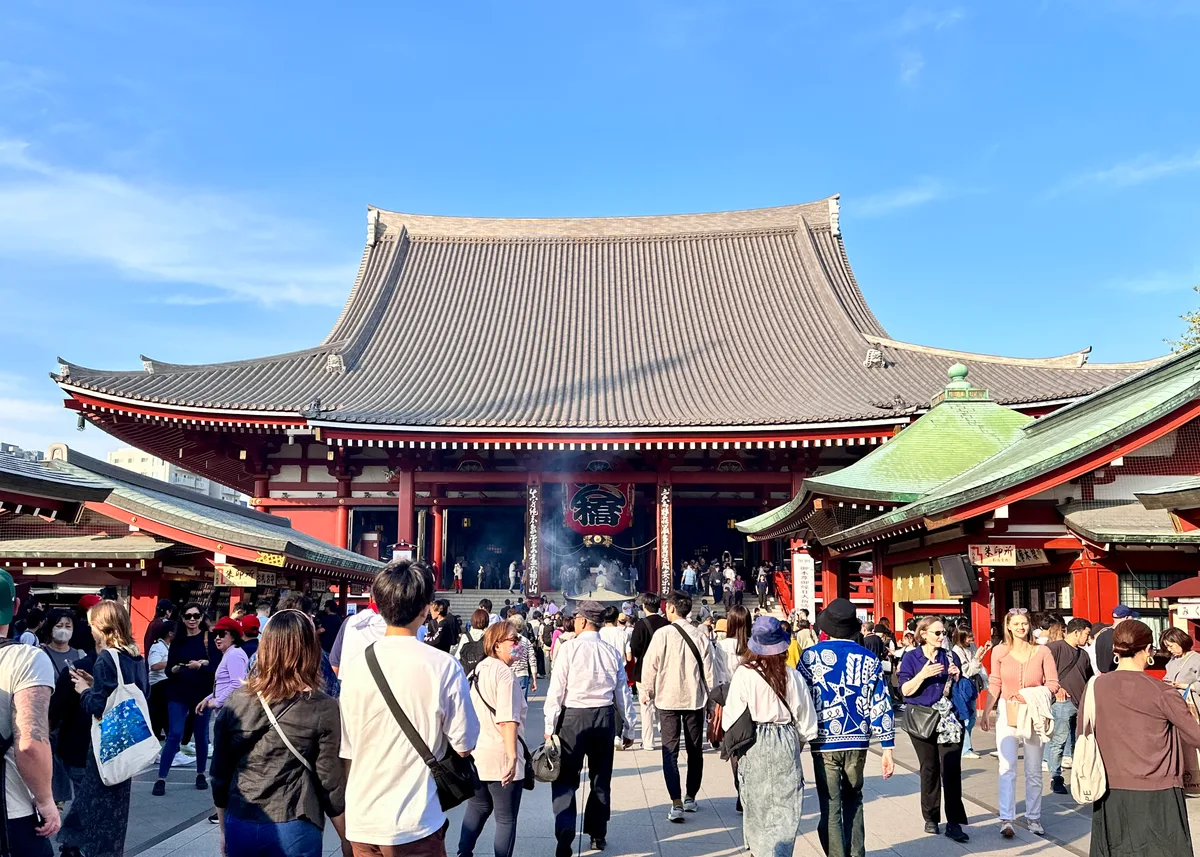
Photo: Akonnchiroll / CC0
What Your Eye SeesA vast Buddhist temple complex entered through the Kaminarimon Thunder Gate with its giant red lantern, leading to a 250-metre shopping street ending at a grand main hall with a five-storey pagoda beside it.
ContextSenso-ji is Tokyo's oldest temple, founded in 645 CE when two brothers fished a small Kannon statue from the Sumida River. For centuries it was the premier Buddhist site of the Edo region, and during the Tokugawa shogunate it received direct patronage from the ruling clan. Allied bombing in 1945 destroyed the original 17th-century main hall; the current structure is a 1958 reconstruction that faithfully reproduces the original design.
The Tokugawa clan's patronage centred on its own temples, Zojo-ji and Ueno Toshogu, while in Kyoto the shogunate ordered Kiyomizu-dera's rebuild.
On ScreenSensō-ji appears in the anime Demon Slayer and many films set in Tokyo.
Source: Wikipedia (Sensō-ji); Sensō-ji (official); Wikipedia (Sensō-ji); Tokyo Convention & Visitors Bureau
 Did
DidYou
Know
The Kaminarimon's giant red lantern is a 700-kilogram paper lantern wrapped around a bamboo frame, remade every ten years by Takahashi Chochin, a Kyoto workshop that has specialized in chochin since 1703. Both the five-storey pagoda and the main hall were destroyed in the 1945 firebombing; the pagoda was rebuilt in 1973 with a steel-reinforced concrete structure incorporating the traditional shinbashira, a central pillar that sways independently to absorb earthquake shocks.
Share→ The Worn Buddha
At the Asakusa Fudoson hall just west of the Hozomon gate, look for the small bronze Buddha at ground level. Its head and shoulders are polished smooth by the countless hands reaching down to touch it. The statue represents Binzuru, the healed companion of the historical Buddha, tradition holds that rubbing the part of his body that aches transfers the healing to you.
→ The Nakamise Lintels
Nakamise dates to the late 17th century, when neighbours who served the temple were granted the right to open shops on the approach. In May 1885 the Tokyo government ordered them all out; by December Western-style brick shops stood in their place, the modern Nakamise was born, and the street has been rebuilt again since, in 1925 and after the war.
→ The Incense Basin
Look for the giant incense burner before the main hall, where visitors wave the smoke onto their heads and bodies, a purification rite. The smoke is believed to carry healing: people direct it toward the part of the body that ails them, and it is said that those who cover their heads will grow wiser.
Sources: City-Cost (Asakusa Fudoson and the Worn Buddha); Senso-ji (senso-ji.jp); Asakusa Nakamise Shopping Street (asakusa-nakamise.jp); Old Tokyo; Life for Beginners (The sacred smoke of Senso-ji)
 Eastern Spirit
 Spiritual Seeker
2. Meiji Jingu
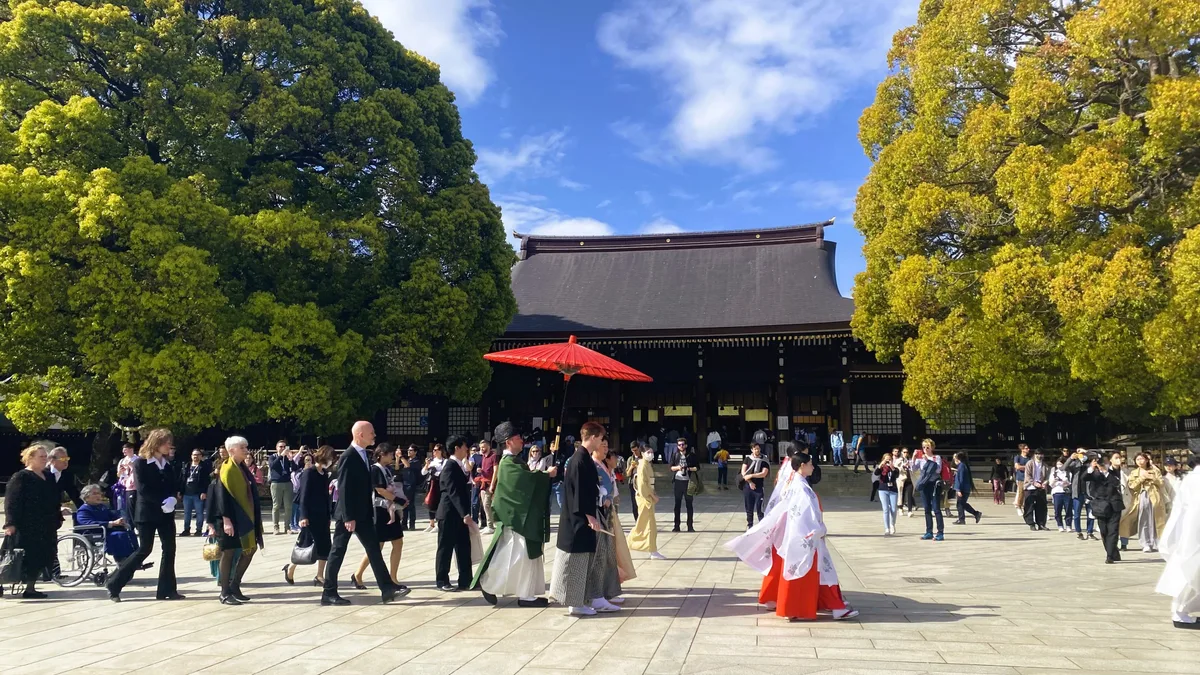
Photo: Akonnchiroll / CC BY-SA 4.0
What Your Eye SeesA vast Shinto shrine set inside a dense 170-acre forest of towering cypress trees, accessed via a long gravel path beneath enormous wooden torii gates.
ContextMeiji Jingu was built in 1920 to enshrine Emperor Meiji and Empress Shoken, the imperial couple who oversaw Japan's transformation from feudal isolation to modern industrial power. The surrounding forest was planted with 100,000 trees donated by citizens from across Japan. The original shrine was destroyed in the 1945 air raids and rebuilt in 1958 using Japanese cypress and traditional joinery techniques.
On ScreenMeiji Jingu appears in the anime Your Name (2016) and Demon Slayer.
Source: Wikipedia (Meiji Shrine); Meiji Jingu (official); Wikipedia (Your Name); Meiji Jingu
DidYou
Know
The 170-acre forest around Meiji Jingu is not ancient woodland but a designed garden planted from scratch in 1915, and its largest torii gate is made from a single 1,500-year-old cypress felled in Taiwan, the largest wooden torii in Japan.
Share→ The Sake And Wine Barrels
Look along the approach for rows of wooden sake barrels on one side and wine barrels on the other. The sake is donated annually by the Meiji Jingu Nationwide Sake Brewers Association; the wine barrels are a gift from the winegrowers of Burgundy, France, renewed each year, a nod to Emperor Meiji's taste for Western cuisine and wine.
→ The Wish Trees
Look for the rack of ema plaques circling a great camphor tree before the main hall. Visitors write wishes on the wooden plaques, decorated with the shrine's crest, the imperial chrysanthemum, or the zodiac animal of the coming year, and at the year's end the plaques are gathered and burned in a ritual fire.
→ The Iris Garden
Step into the iris garden (a separate fee) to see more than 1,500 irises of 150 varieties that bloom through June. The garden was created in 1893 at Emperor Meiji's wish, on ground that had been rice paddies in the Edo period, as a gift to Empress Shoken, who loved the flower. It is irrigated from a well dug by Kiyomasa Kato.
Sources: Meiji Jingu (meijijingu.or.jp); Japan Tourism Agency (mlit.go.jp)
Spiritual Seeker
3. Imperial Palace East Gardens (Edo Castle)
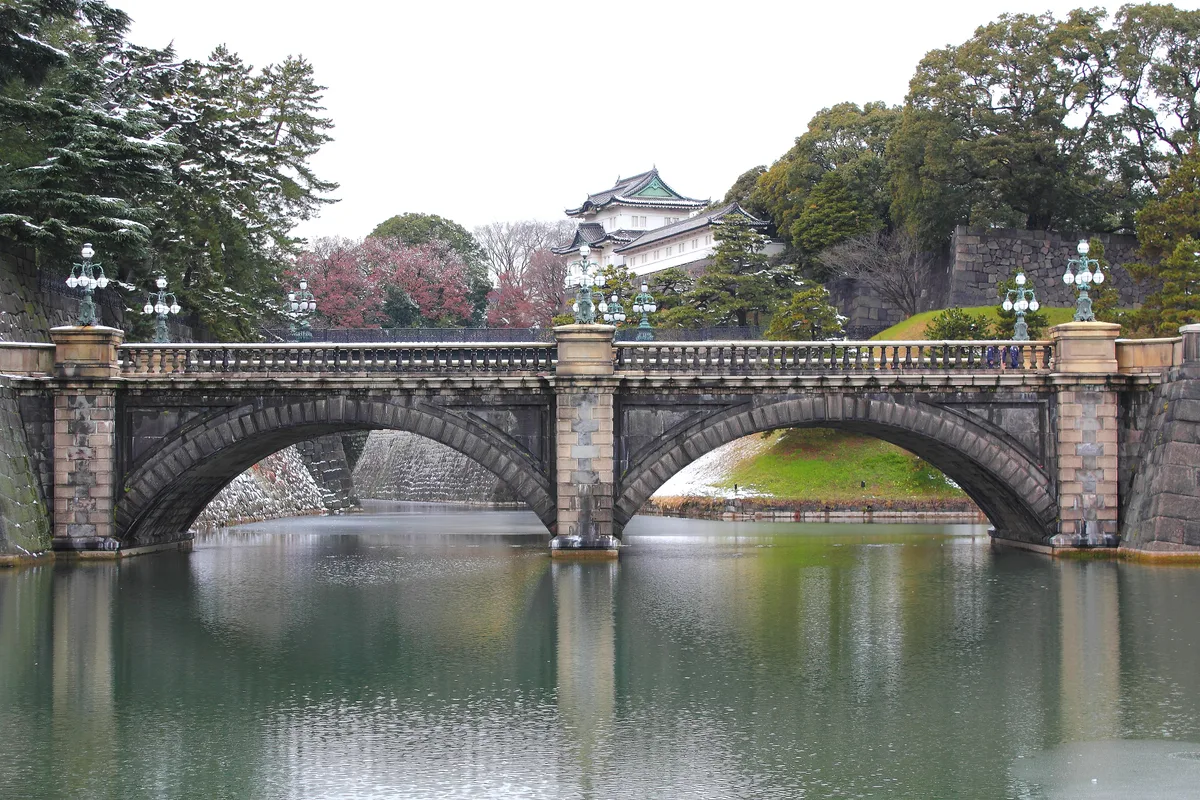
Photo: Kakidai / CC BY-SA 3.0
What Your Eye SeesA vast open landscape of stone foundations, moats, and ancient walls surrounded by modern skyscrapers, the ruins of the world's largest castle, where a three-tiered watchtower and a massive stone platform mark the seat of shogunal power.
ContextEdo Castle was built in 1457 by Ota Dokan and expanded by Tokugawa Ieyasu after his 1590 takeover. For 260 years it was the political center of Japan. The main keep, once the tallest structure in Japan, burned in the Great Fire of 1657 and was never rebuilt. After the Meiji Restoration, the castle grounds became the Imperial Palace. The East Gardens opened to the public in 1968.
This was Ieyasu's Edo Castle; in Kyoto he built Nijo Castle as the Shogunate's headquarters.
Source: Wikipedia (Edo Castle)
DidYou
Know
All that survives of the main keep is its stone foundation, but the blocks themselves tell a story: each bears a carved clan crest (kokumon) identifying the feudal lord who quarried and hauled it into place, a 17th-century ledger etched in stone.
Share→ The Hyakunin Guardhouse
Look at the 45-metre guardhouse near the entrance, which controlled access to the honmaru, the castle's main compound. Its name means 'hundred-man guardhouse': four teams of gunner samurai, the Iga, Koga, Negoro, and Twenty-five Riders groups, manned it around the clock in shifts, each shift counting 100 doshin and 20 yoriki.
→ The Otemon Gate
Look at the inner Koraimon gate, one of very few original Edo-period structures standing in Tokyo. The masugata (fortified courtyard) between the outer and inner gates was designed to trap attackers so they could be fired on from three sides.
→ The Ninomaru Garden
Look at the pond garden designed in 1636 by Kobori Enshu, Japan's most celebrated garden master, and restored in 1968 from original Edo-period blueprints. The pond contains rare long-finned carp released by the emperor emeritus in 2018.
Sources: Japan Tourism Agency (mlit.go.jp: Hyakunin Bansho Guardhouse); Chiyoda City Tourism Association; Following the Shogun (Discover 7 Must-See Spots at the Edo Castle Ruins); Wikipedia (Edo Castle); Imperial Household Agency (Kunaicho); Following the Shogun (Ninomaru Area Guide)
Eastern Spirit
4. Zojo-ji Temple
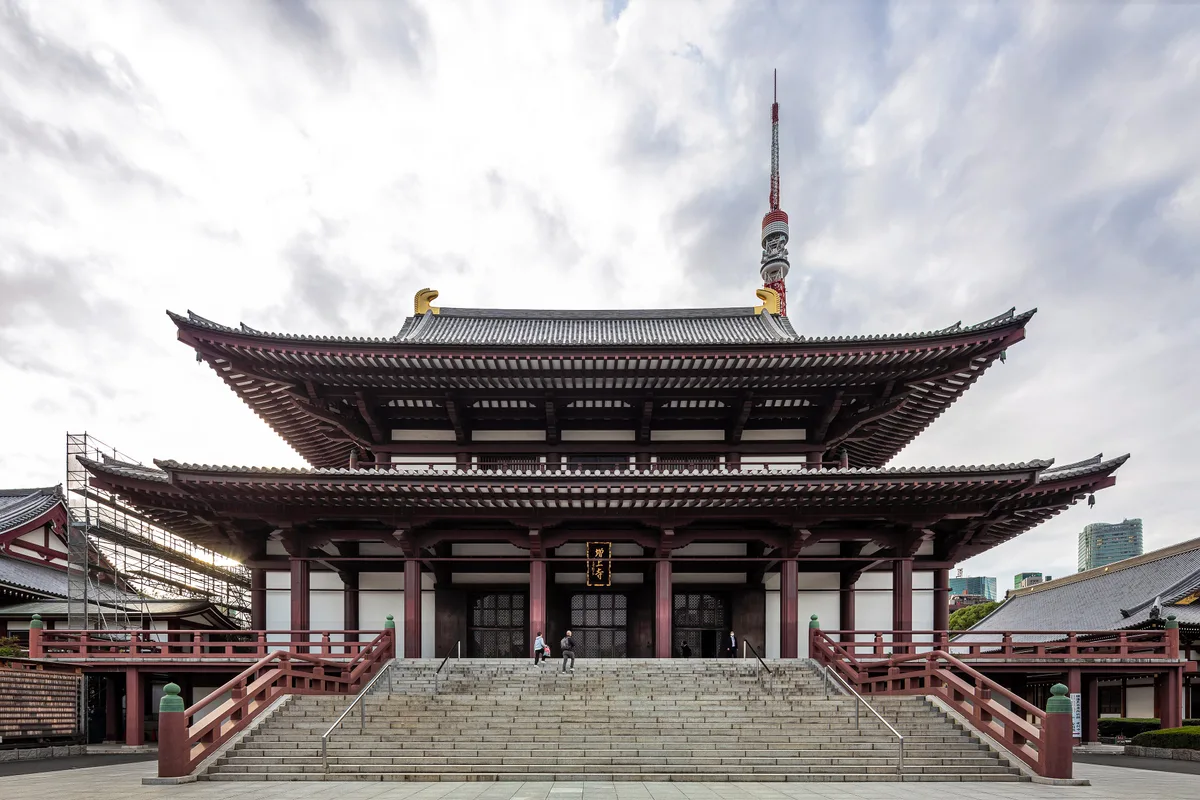
A Buddhist temple with a striking view of Tokyo Tower rising directly behind its main hall, anchored by the Sangedatsumon gate, the oldest wooden structure in Tokyo.
ContextZojo-ji was founded in 1393 and moved to its present site in 1598 under Tokugawa Ieyasu's patronage. It served as the Tokugawa family temple, six shoguns are buried in its mausoleum. At its peak, the complex contained 120 buildings. Most were destroyed in WWII, but the main gate survived and is now the oldest wooden building in Tokyo.
The Tokugawa also bound Kyoto to the clan, Nijo Castle was Ieyasu's Kyoto headquarters and Kiyomizu-dera was rebuilt under shogunate order.
Source: Wikipedia (Zōjō-ji); Zōjō-ji (official)
DidYou
Know
From the temple grounds, the 17th-century Sangedatsumon gate and the vermilion main hall frame a startling sight, the red-and-white lattice of Tokyo Tower rising directly behind them, the old capital's sacred precinct wedged against its modern icon.
Share→ The Tokugawa Mausoleum
Step behind the main hall to the mausoleum, where the Tokugawa shogun tombs rise as stone and bronze pagodas. When a shogun died, feudal lords paid tribute by donating stone or bronze lanterns, bronze ones were rarer and reserved for the highest-ranking lords, so their surviving examples are a gauge of who outranked whom.
→ The Gate Carvings
Look up at the upper floor of the Sangedatsumon for a statue of Shakyamuni flanked by two bodhisattvas and 16 arhats. And unlike most temple gates, it has no fierce guardian statues, the Jodo school welcomes all comers on the road to salvation.
→ The Spinning Pinwheels
Look among the rows of Jizo statues for the small pinwheels that whirl and click in the breeze, offered to the figures since the Edo period. They are the one lively, colourful note set against the solemn ranks of stone, a small, childlike gesture that lightens the mood of the crowded statue garden.
Sources: Wikipedia (Zojo-ji); Expedition Magazine (The Tale of the Tokugawa Artifacts); Japan Tourism Agency (mlit.go.jp: Sangedatsumon); Minato City (hiddenheritage.jp); awazo.com (Jizo and Windmills); tokyopast3.com (The Jizo Statues of Zojoji Temple)
Eastern Spirit
Spiritual Seeker
5. Kanda Myojin (Kanda Shrine)
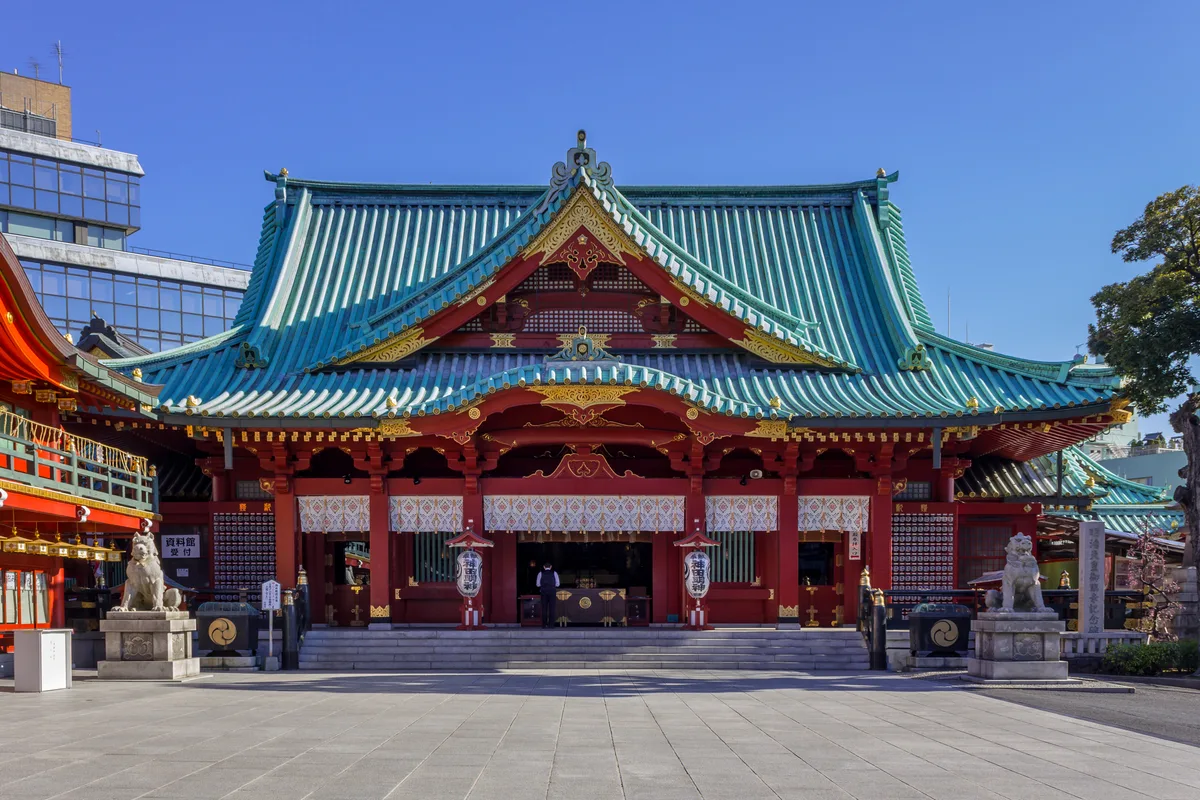
Photo: Kakidai / CC BY-SA 3.0
What Your Eye SeesA vermilion-painted Shinto shrine with a two-storey gate, located steps from the electronics district, where ancient rituals blend with anime culture.
ContextKanda Myojin was founded in 730 CE, long before Tokyo existed. During the Edo period it was designated one of the two guardian shrines of the shogun's castle. The current reinforced concrete structure was rebuilt in 1934 after the Great Kanto Earthquake and survived WWII bombing when many nearby wooden buildings did not.
The shrine also guards the legend of Taira no Masakado, whose severed head is said to have flown here from Kyoto and whose spirit it still pacifies.
On ScreenKanda Myojin appears in the anime franchise Love Live!.
Source: Wikipedia (Kanda Myojin); GO TOKYO; Wikipedia (Kanda Myojin)
DidYou
Know
The shrine also pacifies the spirit of Taira no Masakado, the rebel warrior who defied the Heian court, and who, far from being reviled, is venerated at a nearby mound (kubizuka) as a folk god of the city, his annual festival still drawing crowds.
Share→ The Anime Ema
Look for the anime-themed ema alongside the traditional wooden plaques, most famously Love Live!, which made the shrine a pilgrimage site for fans. The same tech connection runs the other way: Kanda Myojin also issues charms to protect computers, a speciality no other major shrine offers.
→ The Zuishin Gate
Look at the two-storey Zuishin-mon gate, rebuilt in 1995 in cypress wood and painted vermilion, topped with an irimoya roof. Its front bears carvings of the four Taoist guardians, the white tiger, red phoenix, black turtle, and blue dragon, standing watch over the shrine's entrance.
Sources: GO TOKYO (Kanda Shrine); JAL Japan Travel; A Geek in Japan (The Otaku Shrine); Wikipedia (Kanda Shrine); Live Japan (Kanda Myojin: Akihabara's Iconic Shrine of Prosperity)
Spiritual Seeker
6. Yushima Tenjin (Yushima Tenmangu)
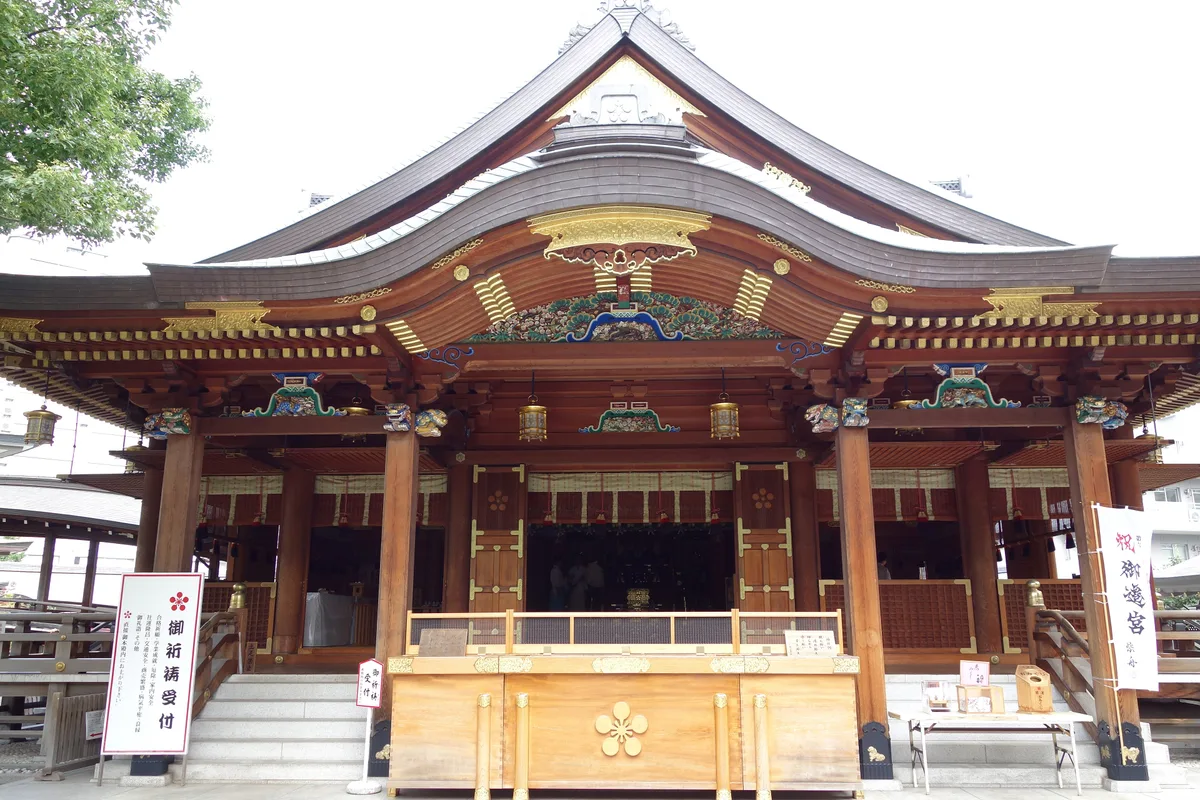
Photo: Daderot / CC0
What Your Eye SeesA quiet shrine with a bronze torii gate and hundreds of plum trees, surrounded by students writing exam wishes on wooden plaques.
ContextYushima Tenjin's origins date to 458 CE, but its association with Sugawara no Michizane, the deified scholar of learning, began in 1355. Tokugawa Ieyasu donated land to the shrine during the Edo period, and it became a place of pilgrimage for students. The bronze torii gate is a designated cultural property of Tokyo.
The Tokugawa shoguns reshaped Kyoto as well, Nijo Castle was Ieyasu's headquarters and Kiyomizu-dera was rebuilt by shogunate order.
Source: Wikipedia (Yushima Tenmangu)
DidYou
Know
Sugawara no Michizane, the scholar the shrine deifies, was a brilliant courtier unfairly exiled in 901, and after his death a run of disasters was blamed on his vengeful spirit, so the court raised him to Tenjin, the god of learning, turning a disgraced man into the patron of every student who prays here.
Share→ The Kien Hyojin-Seki
Look for the short stone pillar near the entrance, inscribed 'seeking' on the right and 'informing' on the left, it served as Edo's lost-and-found board: a child's name was pasted on one side and descriptions of the missing on the other. Today it is better known for a legend of matchmaking power that draws those hoping to find a partner.
→ The Plum Garden
Look around the shrine garden for over 300 plum trees, with early, mid, and late varieties blooming in sequence so colour lasts from early February into March. The timing matters: the blossoms open just as Japan's exam results are released, reinforcing Tenjin's bond with students.
Sources: Yushima Tenjin (yushimatenjin.or.jp); EDO-TOKYO Museum Digital Archives; Magical Trip (Yushima Tenmangu); Wikipedia (Yushima Tenmangu); Oojinja (Yushima Tenmangu); Ueno Station (Yushima Tenmangu)
Spiritual Seeker
7. Nezu Shrine
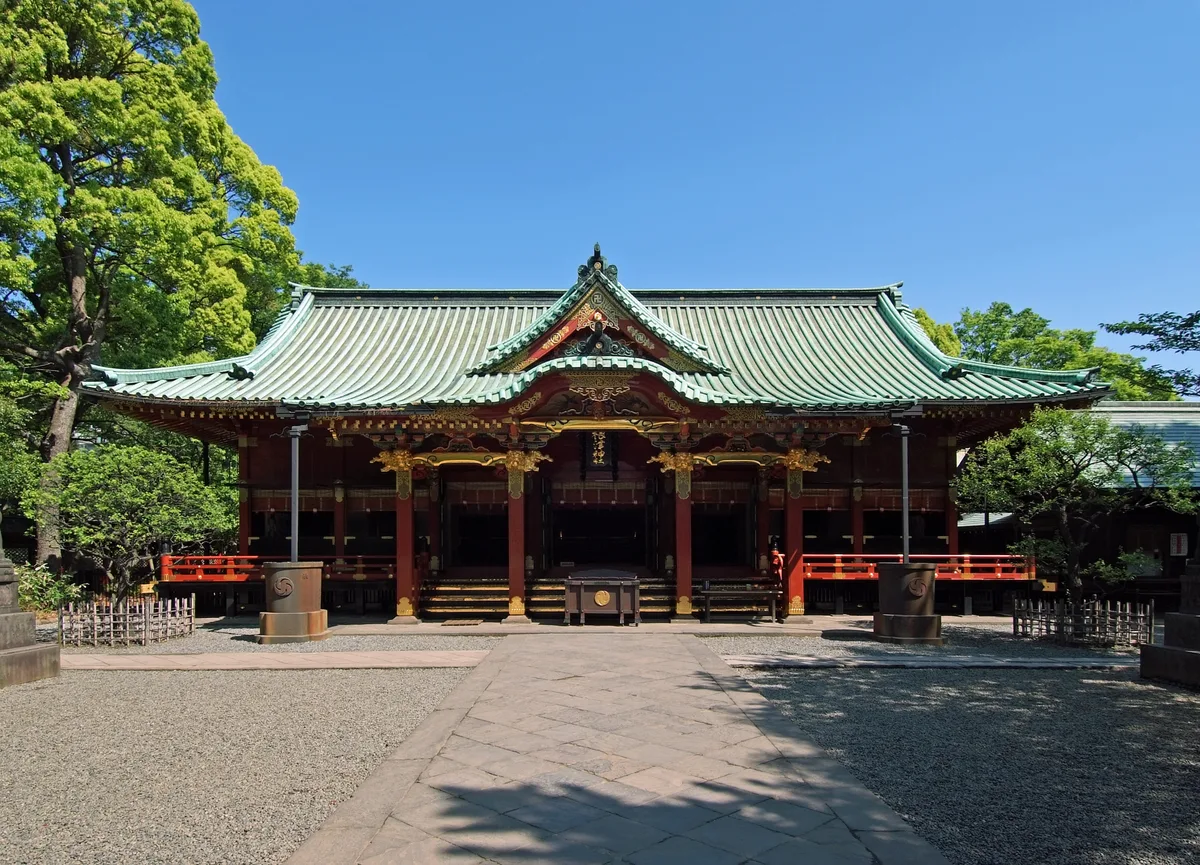
Photo: Wiiii / CC BY-SA 3.0
What Your Eye SeesA hillside shrine with a tunnel of red torii gates winding upward, surrounded by a garden of azalea bushes that erupt in colour each spring.
ContextNezu Shrine's current buildings date to 1706, rebuilt by the fifth Tokugawa shogun after a fire. Its architectural style, Gongen-zukuri, combines a main hall and worship hall under one roof. The azalea garden contains over 100 varieties planted in a deliberate sequence.
The fifth shogun's rebuild echoes the clan's Kyoto works, Nijo Castle and Kiyomizu-dera were also Tokugawa commissions.
Source: Wikipedia (Nezu Shrine)
DidYou
Know
Nezu's torii tunnel is built on ascending stone staircases so each step reveals a new layer of gates receding into the hillside, a deliberate Edo-period optical effect. The honden's black lacquer pillars and gold-leaf carvings of peonies, dragons, and phoenixes exemplify the gongen-zukuri style pioneered at Nikko Toshogu.
Share→ The Azalea Sequencing
Look around the hillside garden for roughly 3,000 azalea bushes of about 100 varieties, chosen so early, mid-season, and late cultivars bloom in overlap. Early kirishima azaleas open in mid-April, while later hirado and satsuki varieties keep the slopes in colour well into late May.
→ The Stone Lanterns
Look along the paths for the stone lanterns lining the shrine's seven Edo-period halls, rebuilt in 1706 on the orders of the fifth shogun, Tokugawa Tsunayoshi. Tsunayoshi was a passionate collector of azaleas, a taste that helps explain why a shrine so far from any famous garden district has one of Tokyo's finest azalea collections.
Sources: Matsuri Map (Azalea Season in Tokyo); Hinomaru (Nezu Shrine Tokyo); MATCHA; Wikipedia (Nezu Shrine)
Spiritual Seeker
8. Kan'ei-ji Temple & Ueno Toshogu Shrine
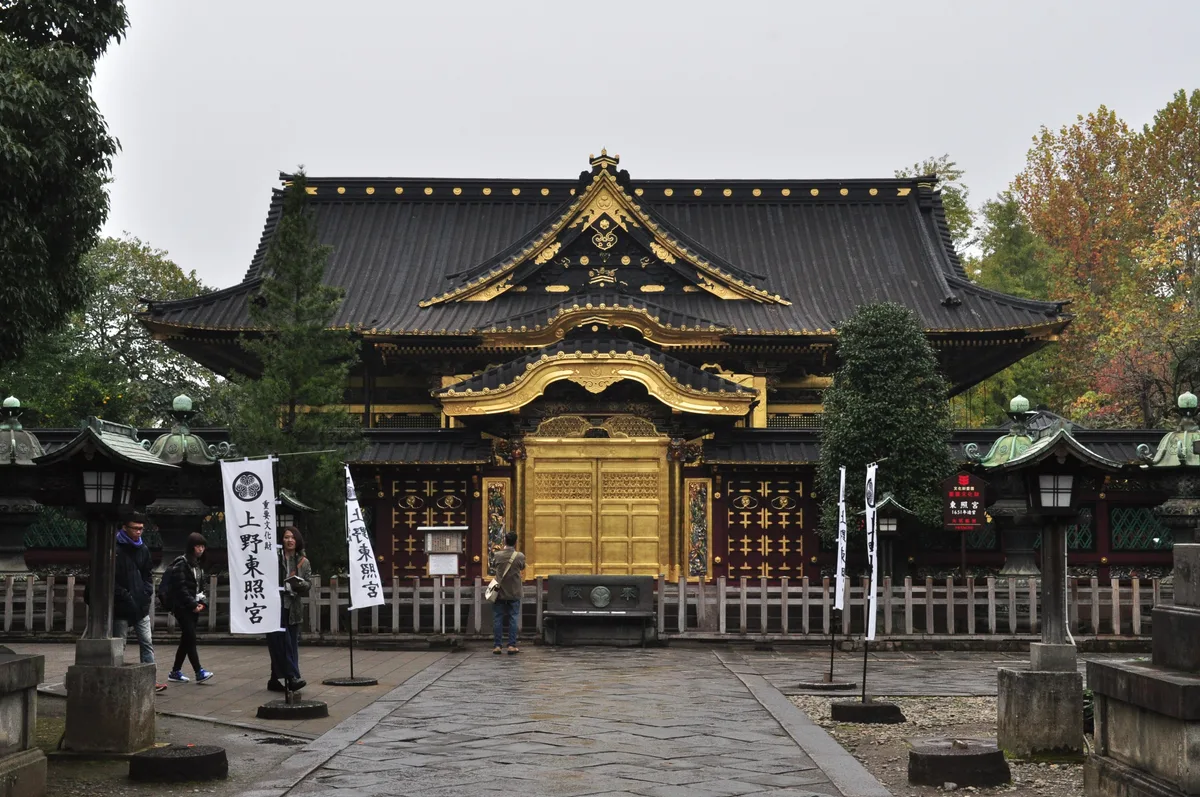
Photo: Joe Mabel on Flickr as Joe Mabel from Seattle, US / CC BY-SA 3.0
What Your Eye SeesA golden shrine hall with elaborately carved gates and rows of copper lanterns, standing within the grounds of what was once the Tokugawa family temple complex, now part of a public park.
ContextKan'ei-ji was founded in 1625 as the Tokugawa family temple, designed to protect Edo Castle from the unlucky northeast direction, the same geomantic principle that placed Enryaku-ji above Kyoto. Ueno Toshogu, built in 1627, enshrines Tokugawa Ieyasu as a deity. During the 1868 Boshin War, the battle of Ueno destroyed most of Kan'ei-ji's original buildings, but Toshogu survived intact, an accidental preservation that saved the finest Edo-period architecture in Tokyo.
The Tokugawa also held Kyoto, Nijo Castle was Ieyasu's headquarters and Kiyomizu-dera was rebuilt by shogunate order.
Source: Wikipedia (Kan'ei-ji); Kan'ei-ji (official)
DidYou
Know
Pro-shogunate holdouts made their final stand in the temple grounds of Kan'ei-ji during the 1868 Boshin War, pulling the imperial army's cannon fire onto themselves, which is precisely why the neighbouring Nezu Shrine survived the flames that consumed the rest of the temple complex.
Share→ The Karamon Gate
Look at the Karamon gate's gold-covered pillars, where two great dragons face each other, an ascending and a descending dragon attributed to the legendary carver Hidari Jingoro. Inside, a red-headed kankodori bird perches between the door and the pillar: in Chinese legend it built its nest in a drum that was never beaten because the emperor ruled so wisely, and it was carved here in hope that Tokugawa rule would be equally peaceful.
→ The Peony Garden
Look in the peony garden, opened in 1980, which blooms twice a year: about 110 varieties and 600 plants in spring, and around 40 varieties and 200 plants in winter. The winter peonies, flowering from January to mid-February, are sheltered from snow with straw mats and small umbrellas.
→ The Tokugawa Graves
Look for the mausoleum where six Tokugawa shoguns rest, Ietsuna, Tsunayoshi, Yoshimune, Ieharu, Ienari, and Iesada. Their tombs are not uniform: Tsunayoshi's is a bronze pagoda, while later shoguns chose plainer stone, reflecting the era's shifting fortunes. Stone lanterns donated by feudal lords once lined the approach in their thousands; only about a hundred remain.
Sources: Japan Tourism Agency (mlit.go.jp: Ueno Toshogu Shrine: Karamon Gate); Taito City (culture.city.taito.lg.jp); Taito City (Seeing Edo in Ueno Toshogu); Kanpai (Ueno Toshogu); Google Arts & Culture (The Final Resting Site of the Tokugawa Shoguns); Following the Shogun (A Historical Journey Through Kaneiji Temple)
Spiritual Seeker
Why is Meiji Jingu surrounded by a forest?
The forest around Meiji Jingu is man-made, planned from the start to become a self-sustaining woodland over 100 years. About 100,000 trees from all over Japan were donated and planted by some 110,000 volunteers when the shrine opened in 1920. The planners chose species by how they would look a century later, and today the forests is left without human care: fallen trees stay where they land, so the grove can renew itself.
Why was Kan'ei-ji built in Ueno?
Kan'ei-ji was founded in 1625 as a replica of Kyoto's head temple Enryaku-ji, and its name Toeizan means 'Mt Hiei of the East'. It was deliberately placed northeast of Edo Castle, the direction Japanese geomancy called the kimon (the demon gate), from which evil spirits were believed to come, so the temple could shield the city. Destroyed in the 1868 Battle of Ueno, its surviving pages and the Tokugawa shoguns' graves now sit inside Ueno Park.
These landmarks reward close attention. Vestigia is a field companion for people who look longer, with curated context, architectural detail, and the stories most visitors walk past. Free on the App Store and Google Play.