Budapest Historical Landmarks
1. Matthias Church
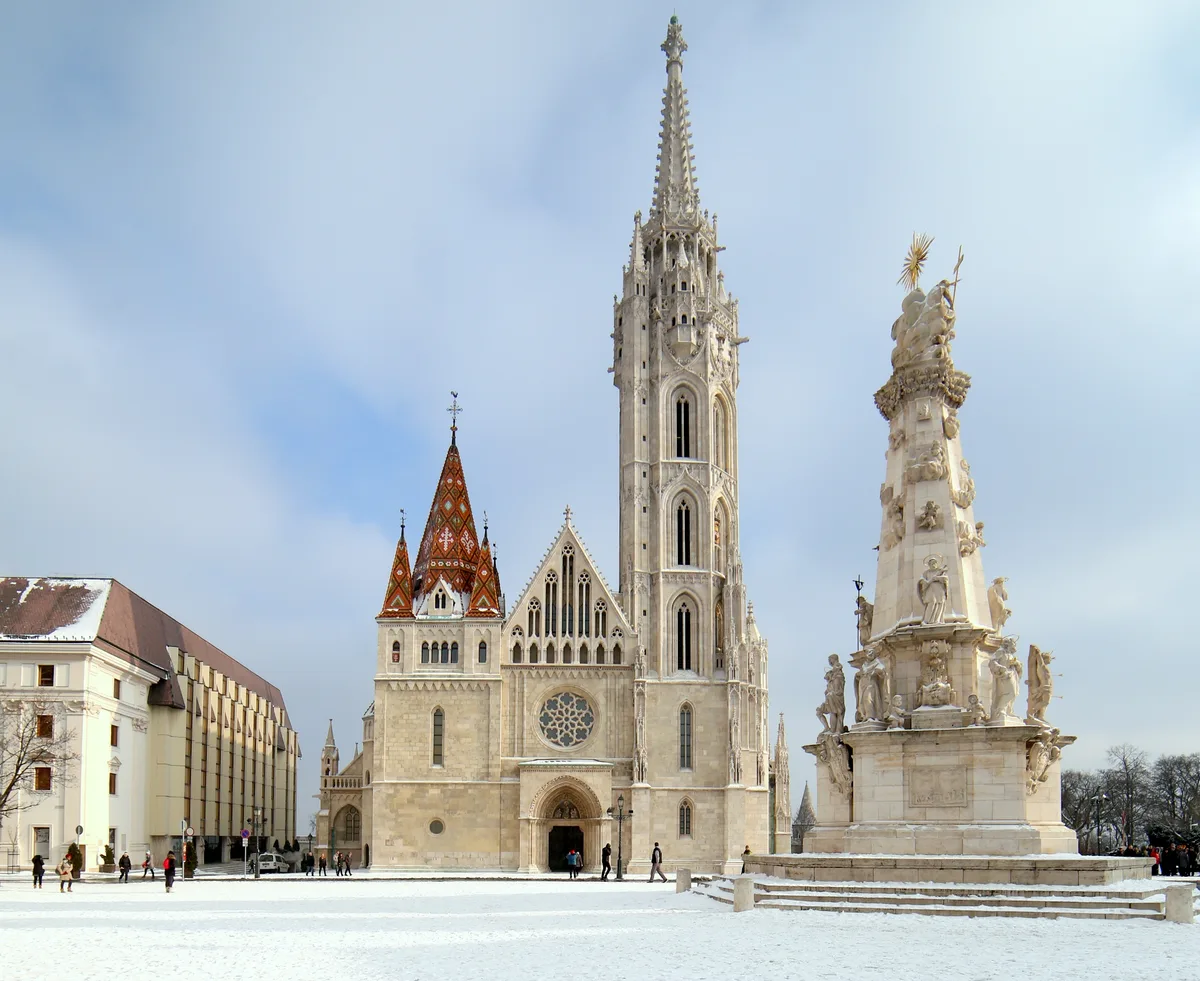
Photo: Thaler Tamas / CC BY-SA 4.0
What Your Eye SeesA towering neo-Gothic church whose roof shimmers with diamond-patterned tiles, crowned by a slender southern bell tower and richly carved portals, standing in the small Holy Trinity Square before the Fisherman's Bastion at the heart of Buda's Castle District.
ContextAccording to tradition the first church on the site was founded by King Saint Stephen around 1015; after the Mongol invasion destroyed it in 1241, the present hall church was raised between 1255 and 1269 under King Bela IV. It was rebuilt in the 15th century, earned its common name from King Matthias Corvinus, who built the southwest bell tower, and under Ottoman rule served as the city's main mosque from 1541 to 1686. It was restored between 1874 and 1896 by the architect Frigyes Schulek in a richly decorated neo-Gothic style.
Source: UNESCO (Budapest, including the Banks of the Danube); Wikipedia (Matthias Church)
 Did
DidYou
Know
Franz Joseph I (1867) and Charles IV (1916), the last two crowned kings of Hungary, received their crowns inside this church.
ShareCarved Preachers On The Pulpit
The sandstone pulpit, built in the early 1890s, is covered with richly carved figures of the four evangelists and four Latin church doctors standing beneath a blind arcade, and it is crowned by a Gothic Revival canopy topped with a wooden statue of the Good Shepherd.
A King's Double Tomb
In a side chapel stands a double sarcophagus carved for King Bela III and his wife, Anne de Chatillon. The king died in 1196 and was first buried at Szekesfehervar; his remains were brought to the church in the 19th century and placed in this stone tomb.
Sources: Wikipedia (Matthias Church); A View on Cities
 Euro Heritage
 Gothic Soul
 Spiritual Seeker
2. Buda Castle
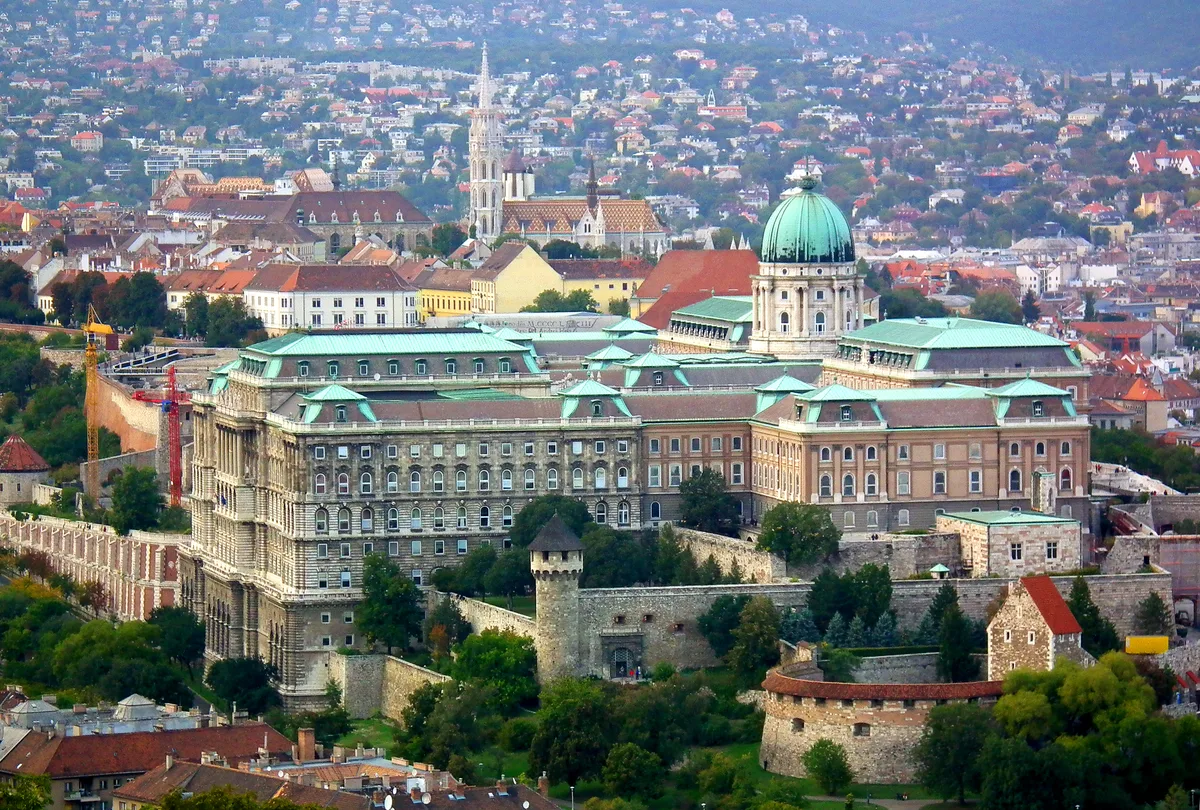
Photo: Varius / CC BY-SA 3.0
What Your Eye SeesA vast palace complex crowning the southern end of Castle Hill, with a central dome, long symmetrical wings and terraced courtyards that look out over the Danube, the Chain Bridge and the rooftops of Pest far below.
ContextThe first royal residence here was built for King Bela IV between 1247 and 1265, and the hilltop stronghold grew into the seat of Hungary's kings. Under Ottoman rule from 1541 to 1686 the castle was left to decay, and in 1686 a tower used as a gunpowder store exploded during the reconquest. It took its present Baroque form in the 18th century under Habsburg architects, with later additions by Miklos Ybl and Alajos Hauszmann. It is part of the Budapest UNESCO World Heritage site and today houses the Hungarian National Gallery and the Budapest History Museum.
On ScreenBuda Castle appears in the films Hellboy II: The Golden Army (2008) and Dracula Untold (2014).
Source: UNESCO (Budapest, including the Banks of the Danube); Wikipedia (Buda Castle); Wikipedia (Buda Castle); Hellboy II production notes
DidYou
Know
Beneath the palace lies a kilometre-long network of natural caves and medieval cellars - the 'Labyrinth of Buda Castle' - carved by thermal waters and used over the centuries as shelter and a wine cellar.
ShareThe Hunting King In Bronze
In the western forecourt rises the Matthias Fountain, a bronze hunting scene by Alajos Strobl showing King Matthias in hunting dress above a slain stag, with the peasant girl Szep Ilonka at his side - the group is built against the wall of the palace's central wing.
Calm Lions, Then Menacing
Two pairs of stone lions carved by Janos Fadrusz in 1901 guard the approach to the castle - one pair calm and placid, the other bristling and menacing.
Sources: Wikipedia (Buda Castle); A View on Cities
Euro Heritage
 Baroque Master
3. Gul Baba's Tomb
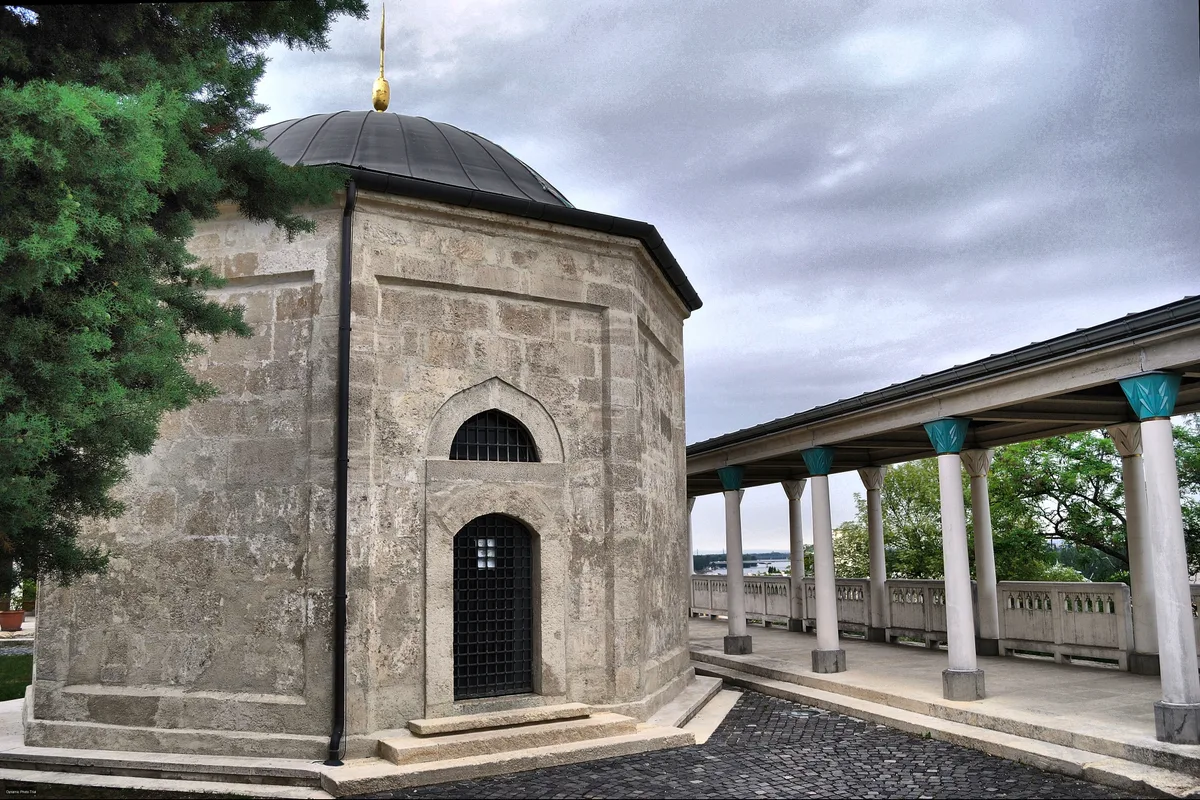
Photo: EtelkaCsilla / CC BY-SA 3.0
What Your Eye SeesA small octagonal stone tomb with a shallow lead-covered dome and pointed cap, set in a rose garden on a quiet slope of Rose Hill in Buda, looking out toward the Margaret Bridge and the Danube.
ContextThe tomb was built between 1543 and 1548 by the Ottoman governor Mehmed Pasa for Gul Baba, a Bektashi dervish who died around 1541 during the Ottoman conquest of Hungary. It is the northernmost Islamic pilgrimage site in the world, and the Ottoman traveller Evliya Celebi recorded that more than 200,000 people attended Gul Baba's funeral prayer. After 1686 it was converted into a Catholic chapel, and it has been restored several times since, most recently in 2018.
Source: Wikipedia (Gül Baba); Britannica
DidYou
Know
Gül Baba's name means 'Father of the Roses,' and legend credits the dervish with bringing the first rose to Hungary - fitting for a tomb that still sits on Budapest's Rózsadomb, or Rose Hill.
ShareA Coffin Topped With A Turban
Inside the octagonal chamber, Gul Baba's grave is marked by a wooden coffin topped with a carved turban - the traditional Ottoman sign that a man, not a woman, lies buried here.
Calligraphy In Glazed Tile
The inner walls are lined with glazed ceramic plaques inscribed with the Islamic profession of faith and other Ottoman calligraphy.
Sources: Wikipedia (Gul Baba's Tomb)
 Silk Road Legacy
Spiritual Seeker
Silk Road Legacy
Spiritual Seeker
4. Racz Thermal Bath
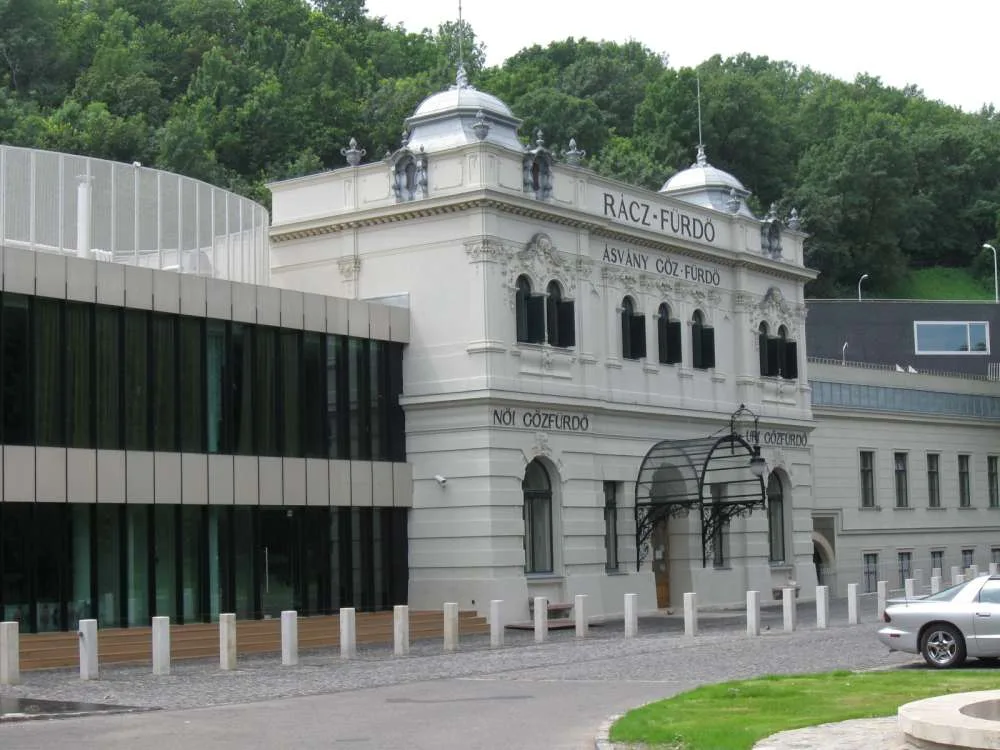
Photo: hu:User:misibacsi / CC BY-SA 3.0
What Your Eye SeesTucked among the buildings of the Buda side, a low Ottoman bathhouse whose domed Turkish cupolas rise above the street beside a later neo-Renaissance wing; inside, marble basins and steaming pools sit beneath the old brick vaults.
ContextThe Racz bath grew around one of Budapest's oldest thermal springs, used since Ottoman times. Its surviving Turkish cupola dates to 1572, and the later baths and shower corridor were added by the architect Miklos Ybl between 1865 and 1870. The bath preserves original marble basins and pools, and after long closure it was restored and reopened as part of a hotel and thermal spa.
Source: Wikipedia (Rác Thermal Bath); Britannica
DidYou
Know
Unlike most Ottoman baths, Rác's 1572 Turkish cupola still has its original 16th-century marble basin, pool and floor - making it one of the best-preserved Turkish baths in Budapest.
ShareRound Skylights Of Light
The Turkish cupola above the old pool is pierced by round skylights set into its base - an Ottoman echo of the Roman oculus - letting shafts of daylight fall straight onto the marble basin below.
Curved Walls Left Bare
In the restored halls the original brickwork was left exposed, the walls swelling upward into bubble-shaped vaults instead of being hidden behind new tile - a deliberate contrast with the polished marble basins.
Sources: Dezeen
Silk Road Legacy
5. Szechenyi Chain Bridge
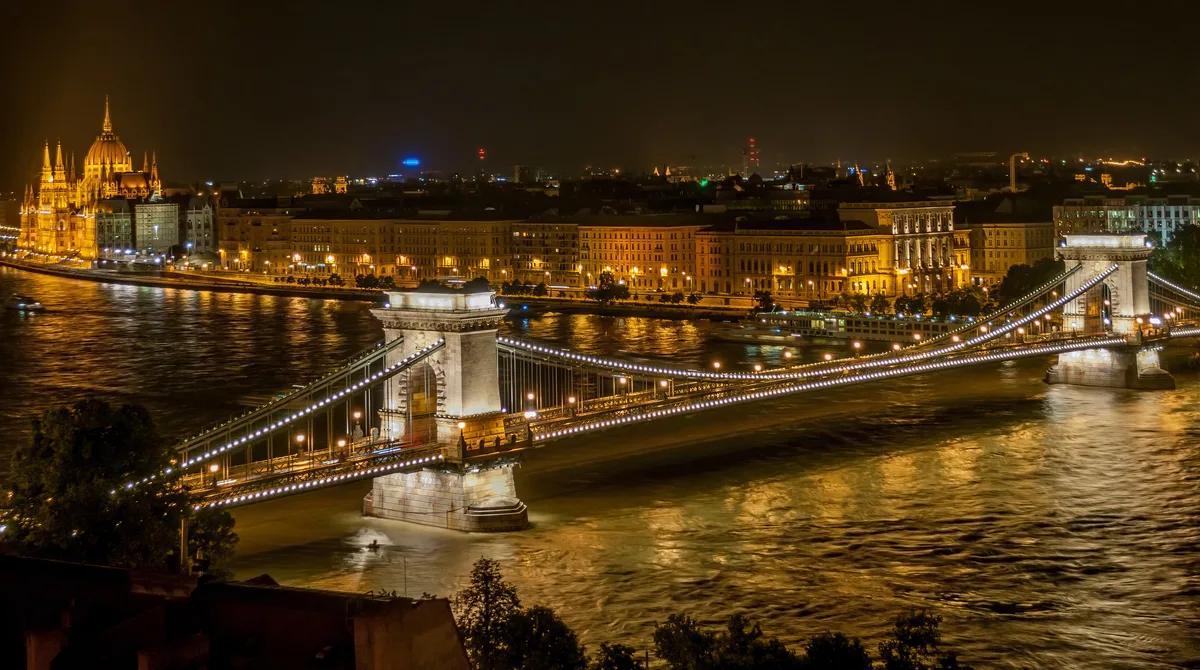
Photo: Wilfredor / CC0
What Your Eye SeesA green iron chain suspension bridge stretching across the Danube, its tall stone towers and heavy chains rising above four seated stone lions, linking the hills of Buda to the grand riverside buildings of Pest.
ContextThe bridge was designed by the English engineer William Tierney Clark and built under the Scottish engineer Adam Clark, opening on 20 November 1849 as the first permanent bridge across the Danube in Hungary. Its 202-metre central span was among the largest in the world at the time, and it was built in sections that were shipped from England. On 18 January 1945, during the siege of Budapest, retreating German troops blew up the bridge leaving only the towers; it was rebuilt and reopened in 1949.
On ScreenThe Chain Bridge features in the film Spy (2015).
Source: UNESCO (Budapest, including the Banks of the Danube); Wikipedia (Széchenyi Chain Bridge); Wikipedia (Széchenyi Chain Bridge); Spy (2015) production notes
DidYou
Know
The Chain Bridge is a larger-scale sister of William Tierney Clark's earlier suspension bridge at Marlow, across the River Thames in England - one of only two of his bridges still standing.
ShareA Coat Of Arms Without A Crown
Carved at the crown of each tower arch, above the roadway, is the coat of arms of Lajos Kossuth - shown without the Holy Crown of Hungary, a mark of the revolutionary government under which the bridge was built.
Lions Without Tongues
The four stone lions at the bridge's ends were carved by the sculptor Janos Marschalko and installed in 1852. A legend claims they have no tongues - in fact the tongues exist but are simply not visible from below.
Sources: HistoricBridges.org; Wikipedia (Szechenyi Chain Bridge)
 Green Soul
 City Hopper
6. Hungarian Parliament Building
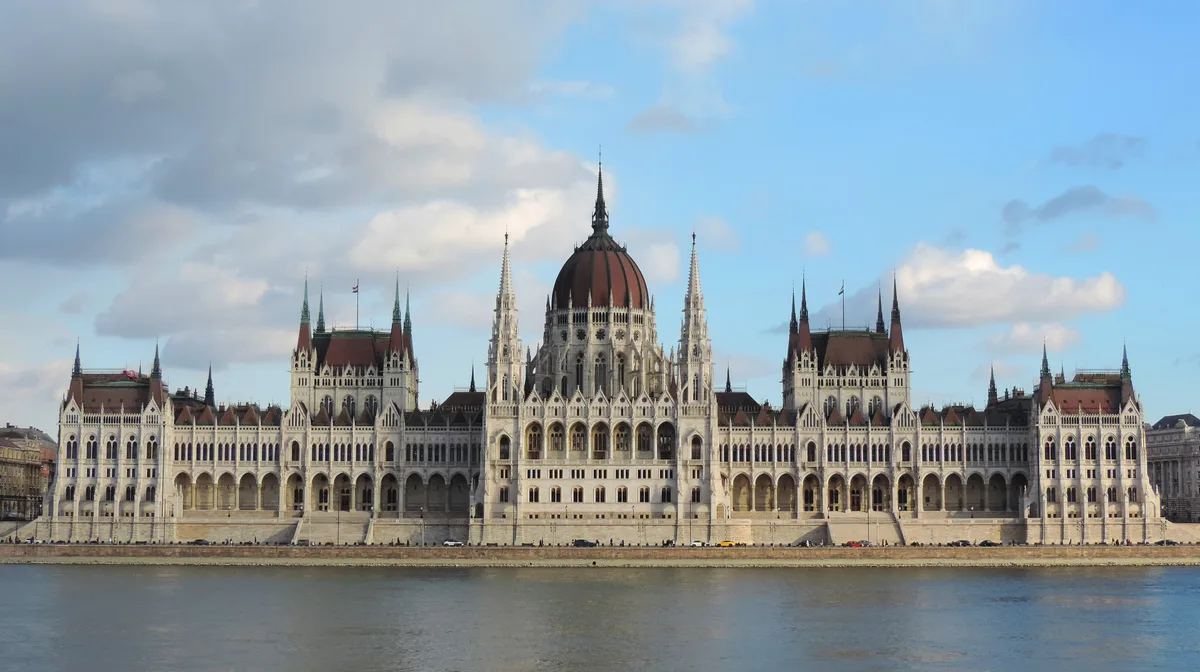
Photo: Kilyann Le Hen / CC BY 4.0
What Your Eye SeesAn immense neo-Gothic palace stretching along the Danube, its soaring central dome and forest of spires and pinnacles rising above arched galleries, red roofs and carved stonework facing the river.
ContextThe Hungarian Parliament was built between 1885 and 1904 to a design by Imre Steindl to mark the millennium of the Hungarian conquest. It is the largest building in Hungary, about 268 metres long, with 691 rooms and 29 staircases. Its 96-metre dome matches the height of St. Stephen's Basilica across the river. It houses the National Assembly, and the Holy Crown of Hungary has been displayed in its central hall since 2000.
On ScreenThe Hungarian Parliament appears in the films Atomic Blonde (2017) and Transporter 3 (2008).
Source: UNESCO (Budapest, including the Banks of the Danube); Wikipedia (Hungarian Parliament Building); Wikipedia (Hungarian Parliament); Atomic Blonde production notes
DidYou
Know
Building Hungary's Parliament consumed about 40 million bricks, half a million precious stones and 40 kilograms of gold.
ShareEighty-Eight Rulers On The Facade
Set into the walls and niches of the facades are 88 statues of Hungarian kings and Transylvanian leaders, carved over the decades of construction - a stone roll-call of the country's rulers.
Lions At The Eastern Stairs
Two carved stone lions stand guard at the eastern staircase, the visitor entrance to the building - a reminder that this seat of power, for all its Gothic spires, is a palace of government rather than a church.
Sources: Wikipedia (Hungarian Parliament Building)
Euro Heritage
Gothic Soul
7. Dohany Street Synagogue
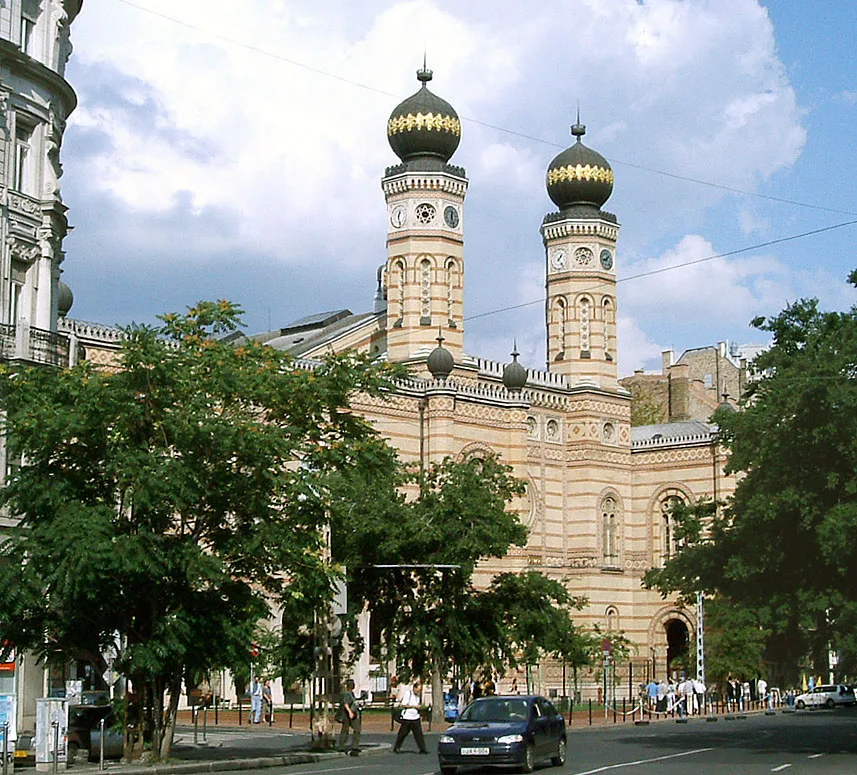
Photo: The original uploader was OsvátA at Hungarian Wikipedia. / CC BY-SA 3.0
What Your Eye SeesA vast Moorish Revival building of alternating yellow and red brick, its twin onion-domed towers rising 43 metres above the street; inside, a wide three-aisled hall holds rose windows, arcades and a great pipe organ.
ContextThe Dohany Street Synagogue was built between 1854 and 1859 by the architect Ludwig Forster and is the largest synagogue in Europe, with about 3,000 seats. Its Moorish style was modelled on the Alhambra and the golden age of Jewish life in medieval Spain. Its 5,000-pipe organ of 1859 - unusual for a synagogue - was played by Franz Liszt and Camille Saint-Saens. In the courtyard, about 2,000 Jews who died in the 1944-45 Budapest ghetto are buried.
Source: Wikipedia (Dohány Street Synagogue); Britannica
DidYou
Know
The Dohány Street Synagogue is the second-largest synagogue in the world, after New York's Temple Emanu-El.
ShareA Sanctuary Inscription Over The Door
Above the main entrance runs the Hebrew verse 'Make me a sanctuary, that I may dwell among them' (Exodus 25:8), and the small stars set into the brickwork are said to encode the date the synagogue was founded.
The Weeping Willow Of Metal
In the memorial garden stands the Tree of Life, a vast metal weeping willow whose leaves are engraved with the names of Hungarian Jews who died in the Holocaust.
Sources: Great Synagogue Budapest; TourBySpot; Wikipedia (Dohany Street Synagogue)
Silk Road Legacy
Spiritual Seeker
8. Szechenyi Thermal Bath
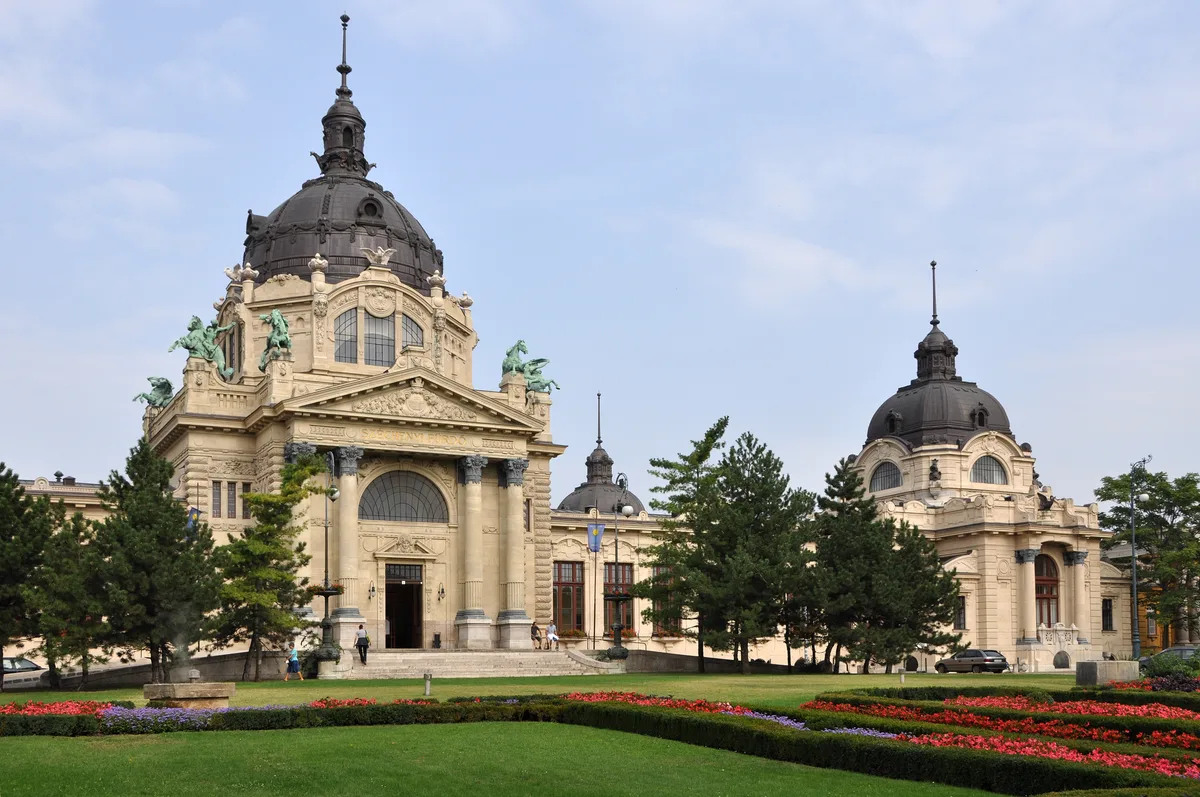
Photo: Marc Ryckaert (MJJR) / CC BY 3.0
What Your Eye SeesA colossal ochre-yellow neo-Baroque bath palace in the City Park, its monumental facade crowned by a dome and rows of statues, with steaming outdoor pools in front where bathers float year-round amid the yellow walls.
ContextThe Szechenyi Thermal Bath opened on 16 June 1913 and is the largest medicinal bath in Europe. Its hot spring water is drawn from two artesian wells - the first drilled between 1865 and 1875 to 975 metres, and a second reaching 1,256 metres in 1938 - with water temperatures of 74 to 77 degrees Celsius at the source. It sits in the City Park with three outdoor pools and fifteen indoor pools.
On ScreenThe Széchenyi Thermal Bath is where the famous snow-bath fight of Red Heat (1988), between Arnold Schwarzenegger and Jim Belushi, was shot in its outdoor pools.
Source: Wikipedia (Széchenyi Baths); Britannica; IMDb (Red Heat); sceen-it.com
DidYou
Know
Drilled in 1938, its deeper artesian well still delivers about six million litres of mineral-rich thermal water every day - the supply that keeps all of Széchenyi's outdoor and indoor pools constantly full.
ShareChess In The Steam
On the outdoor pools float chess boards where bathers stay in the steaming water and play against rivals standing at the pool's edge - a ritual that has made the bath a symbol of Budapest.
A Sun God Under The Cupola
Inside the main hall, the dome is lined with a mosaic by Miksa Róth showing Helios, the Greek sun god, driving his four-horse chariot across the sky.
Sources: Wikipedia (Szechenyi Thermal Bath); A View on Cities
Euro Heritage
Baroque Master
Green Soul
9. St. Stephen's Basilica
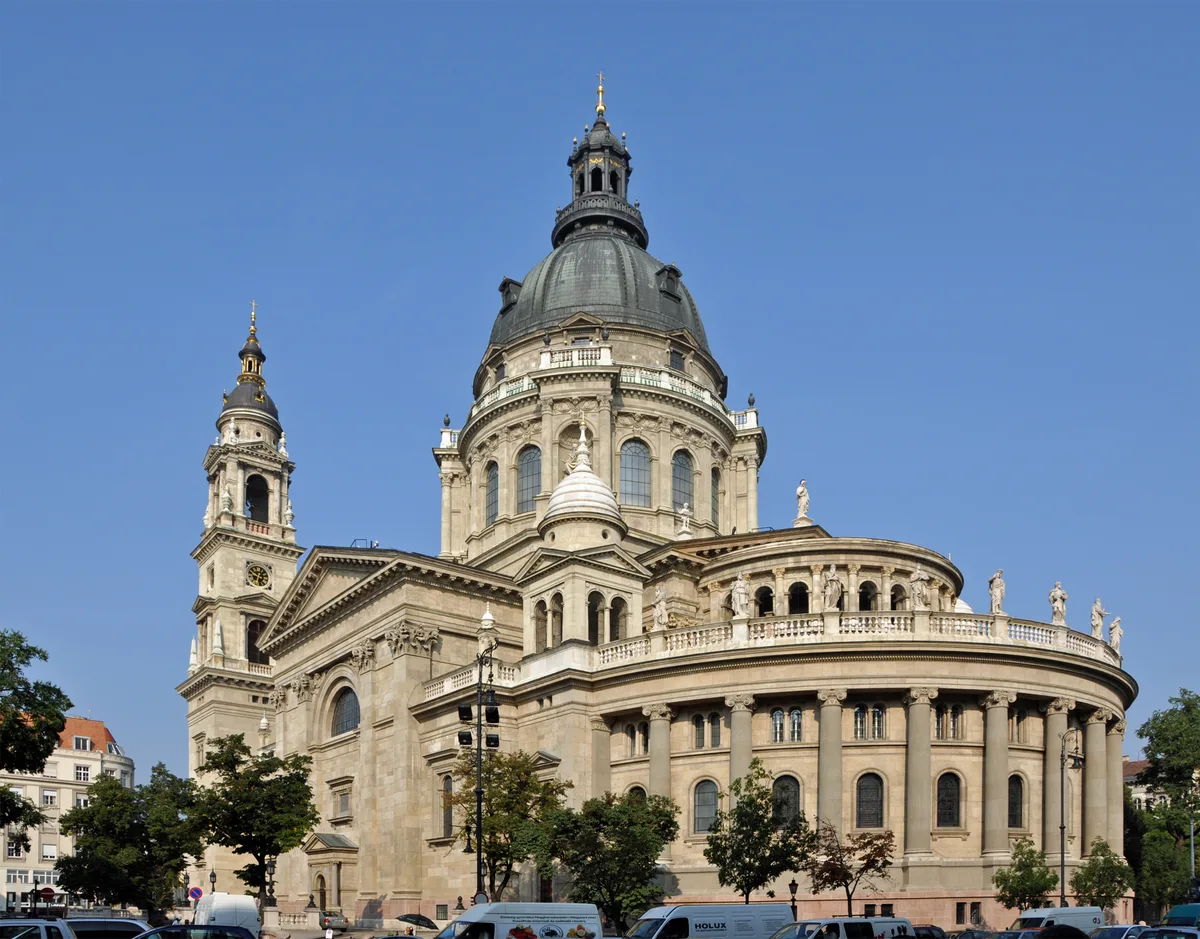
Photo: Marc Ryckaert (MJJR) / CC BY 3.0
What Your Eye SeesA vast neoclassical basilica rising on Pest's grand square, its wide porticoed facade flanked by two tall towers and crowned by a great dome; an elevator and 364 steps climb to a panorama over the whole city.
ContextSt. Stephen's Basilica is the largest church in Budapest, dedicated to Hungary's first king, Saint Stephen. Work began in 1851 under the architect Jozsef Hild, and after Hild's death and the collapse of the first dome in 1868 it was continued by Miklos Ybl and finally completed by Jozsef Kauser in 1905. Its 96-metre dome matches the Hungarian Parliament's, and the church guards the Holy Right - the preserved right hand of Saint Stephen - a national relic.
On ScreenSt Stephen's Basilica appears in the film Inferno (2016).
Source: Wikipedia (St. Stephen's Basilica); Britannica; Wikipedia (St. Stephen's Basilica); Inferno (2016) production notes
DidYou
Know
By long-standing regulation no building in Budapest may rise above 96 metres - the exact height of the basilica and Parliament - a rule meant to keep church and state as the city's equal, unrivalled silhouettes.
ShareAn Inscription Over The Door
Above the main entrance, in large gilded letters, runs the Latin inscription 'Ego sum via veritas et vita' - 'I am the way, the truth and the life' - the words of Christ placed over the basilica's door.
The King Under A Baldachin
Above the high altar rises a gilded canopy, and beneath it stands the marble statue of Saint Stephen, Hungary's first king, carved by Alajos Strobl.
Sources: bazilikabudapest.hu; Wikipedia (St. Stephen's Basilica)
Euro Heritage
Spiritual Seeker
10. Fisherman's Bastion
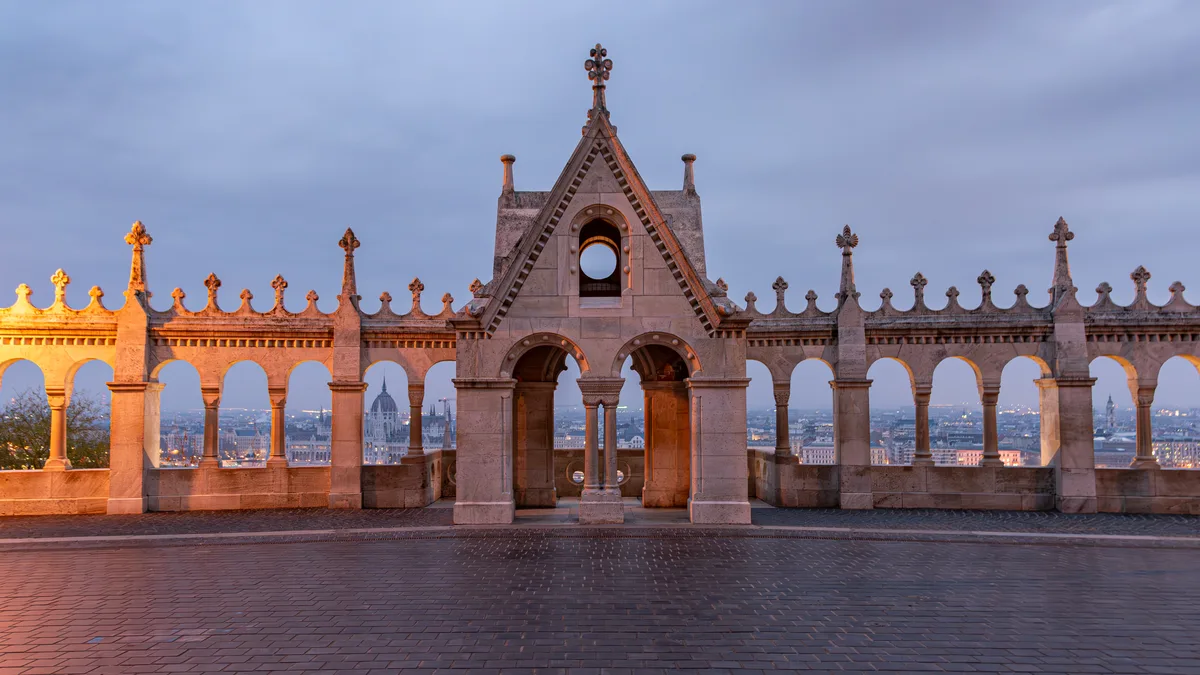
Photo: Jorge Franganillo / CC BY 2.0
What Your Eye SeesA gleaming white limestone terrace with seven conical towers and airy arcaded walkways, rising above the Danube from the Buda hillside, framing views of the Parliament across the river and joined to Matthias Church on the same square.
ContextThe Fisherman's Bastion was built between 1895 and 1902 by the architect Frigyes Schulek - the same architect who restored Matthias Church next door - as part of Budapest's millennium celebrations marking 1,000 years of the Hungarian settlement. Its seven towers symbolise the seven Magyar chieftains who led the tribes into the Carpathian Basin in 895. It stands on the site of a stretch of old castle walls and was designed as a decorative viewing terrace, not a real fortification.
On ScreenFisherman's Bastion appears in the film Dracula Untold (2014).
Source: UNESCO (Budapest, including the Banks of the Danube); Wikipedia (Fisherman's Bastion); Wikipedia (Fisherman's Bastion); Dracula Untold production notes
DidYou
Know
The bastion takes its name from the medieval guild of fishermen who defended this stretch of the city wall, and once sold their catch at the fish market that stood below the hill.
ShareThe First King On Horseback
In the square beside the bastion stands the bronze equestrian statue of Saint Stephen, Hungary's first king - carved by Alajos Strobl and erected in 1906.
Soldiers Guarding The Stairs
The ceremonial staircase from the riverside is flanked by bronze statues of 10th-century warriors, watching over the climb to the terrace above.
Sources: Wikipedia (Fisherman's Bastion); A View on Cities
Euro Heritage
11. Vajdahunyad Castle
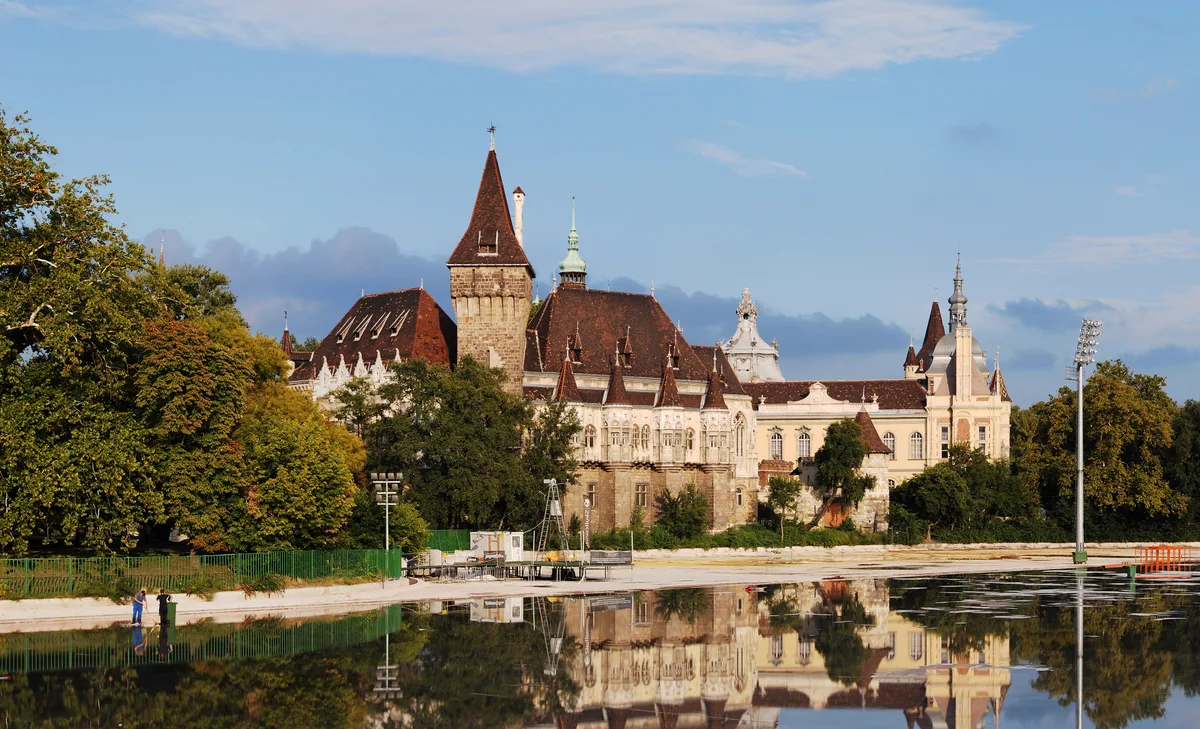
Photo: Felix König / CC BY 3.0
What Your Eye SeesA storybook castle rising from an island in City Park, its skyline a mix of Romanesque chapel tower, Gothic gate, Renaissance wing and Baroque facade, all reflected in the surrounding lake.
ContextVajdahunyad Castle was built for the 1896 Millennial Exhibition celebrating 1,000 years of Hungarian statehood, designed by Ignac Alpar to display Hungarian architecture. It reproduces famous buildings from across historic Hungary, from the Romanesque Ják chapel to the Baroque wing of Prince Paul Esterházy, with the Gothic gate modelled on Hunyad Castle in Transylvania - which gives the castle its name. It was first built of wood and cardboard for the exhibition, but became so popular that it was rebuilt in stone and brick between 1904 and 1908. Today it houses the Museum of Hungarian Agriculture, the largest agricultural museum in Europe.
On ScreenVajdahunyad Castle's courtyard and the Ják Chapel front were used for scenes in The Witcher (Netflix) and The Spy Who Dumped Me (2018).
Source: Wikipedia (Vajdahunyad Castle); Netflix (The Witcher); sceen-it.com
DidYou
Know
Writers touch the bronze pen held by the hooded figure in Vajdahunyad Castle's courtyard, rubbing its tip for luck and inspiration, a ritual so lasting it has polished the metal bright over the decades.
ShareLions Holding The City Arms
The castle is entered across the Lion Bridge, and its main gate is flanked by stone lions holding shields with the coat of arms of Budapest - a ceremonial welcome to the exhibition castle.
The Nameless Notary
In the castle courtyard stands a statue of Anonymus, the secret royal scribe of King Bela III who wrote the Gesta Hungarorum, the earliest chronicle of the Magyar conquest - his identity remains unknown to this day.
Sources: Gems of Budapest; Wikipedia (Vajdahunyad Castle)
 Renaissance
Green Soul
Renaissance
Green Soul
12. Hungarian State Opera House
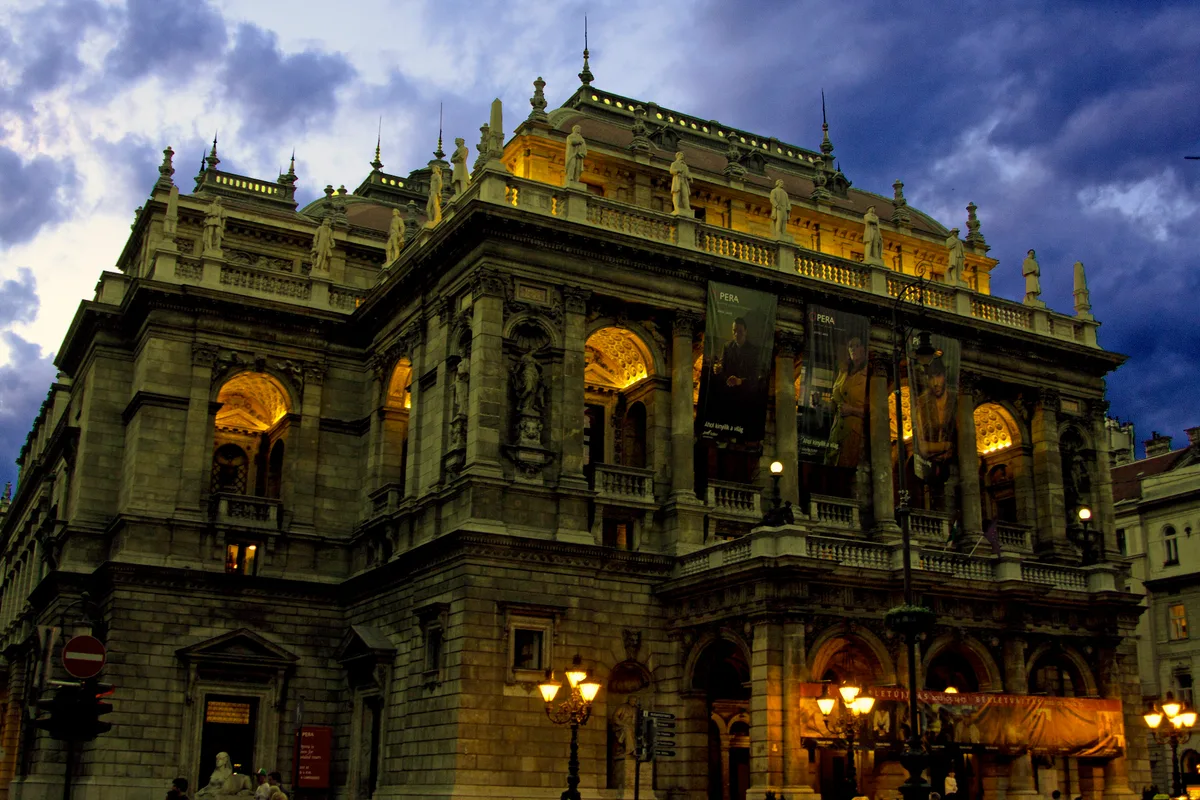
Photo: Snóbli Iván / CC BY-SA 3.0
What Your Eye SeesA grand Neo-Renaissance opera house on Andrássy Avenue, its sculpted facade crowned by a loggia and statues, with a gilded horseshoe-shaped auditorium of red and gold beneath ceiling frescoes.
ContextThe Hungarian State Opera House was built between 1875 and 1884 to designs by Miklos Ybl, Hungary's leading architect of the age, on the new Andrássy Avenue. Its auditorium seats about 1,261 people, with ceiling frescoes painted by Karoly Lotz and Bertalan Szekely. The building was among the first in Budapest to be lit by electric light from 1895. Statues of the composers Franz Liszt and Ferenc Erkel - the father of Hungarian opera - flank the entrance.
On ScreenThe State Opera House appears in the film Red Sparrow (2018).
Source: UNESCO (Budapest, including the Banks of the Danube); Wikipedia (Hungarian State Opera House); Wikipedia (Hungarian State Opera House); Red Sparrow production notes
DidYou
Know
The horseshoe-shaped auditorium is famed for its acoustics, measured in the 1970s as the third-best in Europe after La Scala in Milan and the Palais Garnier in Paris.
ShareMarble Steps And Gilded Coffers
The grand staircase is framed by marble columns and balustrades, and its coffered ceiling is gilded with allegories of music by Mor Than - the Waking of Music and the Power of Music.
Sixteen Composers On The Roofline
Along the balustrade of the upper facade stand statues of sixteen composers - a roofline roll-call of the great names of opera.
Sources: opera.hu; A View on Cities
Euro Heritage
13. Great Market Hall
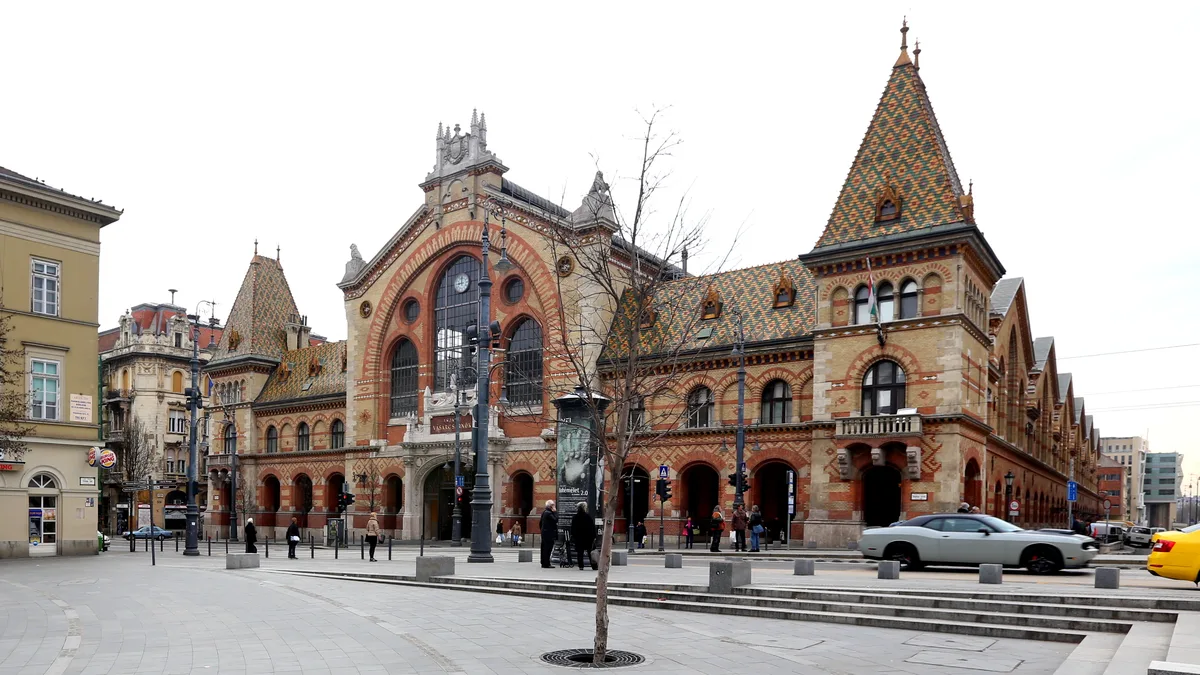
Photo: Thaler Tamas / CC BY-SA 4.0
What Your Eye SeesBudapest's largest covered market, a vast brick and steel hall whose steep roof is patterned in the colourful glazed tiles of the Zsolnay factory, standing beside the Liberty Bridge at the end of Váci Street.
ContextThe Great Market Hall was designed by architect Samu Pecz and opened on 15 February 1897, the largest and oldest indoor market in Budapest. Its 10,000-square-metre hall is covered by a steel structure, and its roof is decorated with the famous glazed tiles of the Zsolnay porcelain factory from Pécs. It is built on the Pest bank of the Danube at Fővám Square, and three floors of stalls sell produce, spices, Hungarian paprika, salami and Tokaji wine. Heavily damaged in World War II, it was thoroughly restored in the 1990s and reopened in 1997.
Source: Wikipedia (Great Market Hall, Budapest); Visit Budapest (Great Market Hall)
DidYou
Know
When it opened, the hall was engineered with an underground tunnel and a short railway link to the Danube, so fresh produce could be delivered straight to the stalls by boat and train.
ShareCast-Iron Balconies Over The Stalls
Inside the hall, the shops on the upper floor are wrapped in balconies and galleries of cast iron, their delicate railings among the finest ironwork of any market hall in the city.
Red Brick And Pointed Arches
The hall's street facade is built of red brick with tall pointed-arch windows and gables - a neo-Gothic face rare among the covered markets of Europe.
Sources: Wikipedia (Great Market Hall)
Euro Heritage
Gothic Soul
How big is the Hungarian Parliament Building?
The Hungarian Parliament (Orszaghaz) is one of the three largest parliament buildings in the world. It has 691 rooms, 29 staircases, 10 courtyards and about 365 towers, one for each day of the year. Built between 1885 and 1904 from 40 million bricks, its dome rises 96 metres in an allusion to the Hungarian settlement of the Carpathian Basin in AD 896.
Is the Hungarian Crown kept in the Parliament Building?
Yes. The Holy Crown of Hungary, the crown used for the coronation of Hungarian kings, is displayed under the central dome of the Parliament Building. Together with what Hungarians call the coronation insignia, it is guarded in the Dome Hall and seen by visitors on guided tours.
These landmarks reward close attention. Vestigia is a field companion for people who look longer, with curated context, architectural detail, and the stories most visitors walk past. Free on the App Store and Google Play.