Dubai Historical Landmarks
1. Al Fahidi Fort
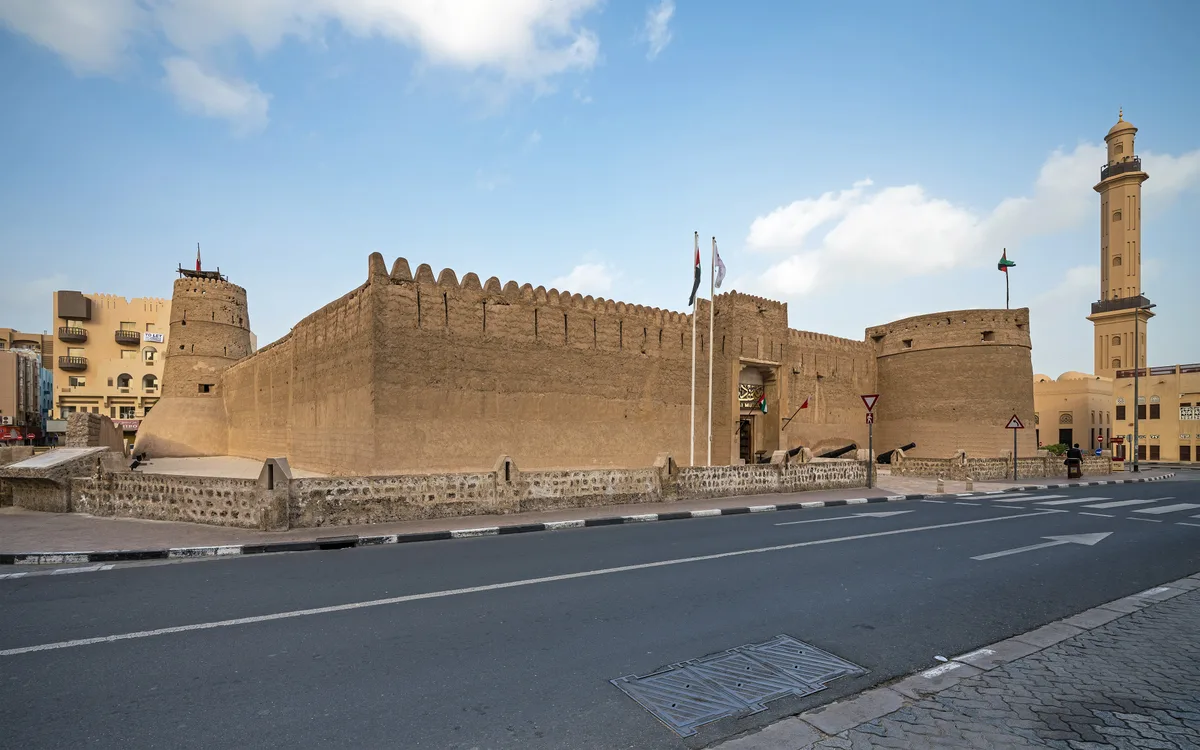
Photo: A.Savin / FAL
What Your Eye SeesA square fort of pale coral stone and gypsum standing beside Dubai Creek, its walls broken by round watchtowers at three corners and a wind tower above the roofline. A gateway opens into the courtyard of the Dubai Museum.
ContextAl Fahidi Fort was built in 1787 to guard Dubai’s growing trading port on the Creek, and is the oldest surviving building in the emirate. Over the centuries it served as the ruler’s residence, a weapons arsenal and a prison, before being restored under Sheikh Rashid bin Saeed and reopened in 1971, the year the United Arab Emirates was founded, as the Dubai Museum.
Source: Wikipedia (Dubai Museum); Dubai Culture (Dubai Museum)
 Did
DidYou
Know
Wikipedia’s timeline of Dubai’s tallest buildings records Al Fahidi Fort as the city’s tallest structure for 186 years, from 1787 until 1973, when the 69-metre Sheikh Rashid Building rose nearby. For nearly two centuries, a single-storey coral fort was the highest point on Dubai’s skyline.
Share→ The Towers At Three Corners
Only three of the fort’s four corners carry round watchtowers, the fourth corner is plain, an asymmetry most visitors never notice.
→ The Arish And Its Barjeel
Inside the courtyard stands a reconstructed palm-frond summer house (Arish) with a wind-tower that funnels breeze into living areas, the barjeel you see crowns the Arish, not the fort's outer walls.
Sources: The National (2026-02-25); Wikipedia (Dubai Museum)
 Silk Road Legacy
 Time Traveler
2. Sheikh Saeed Al Maktoum House
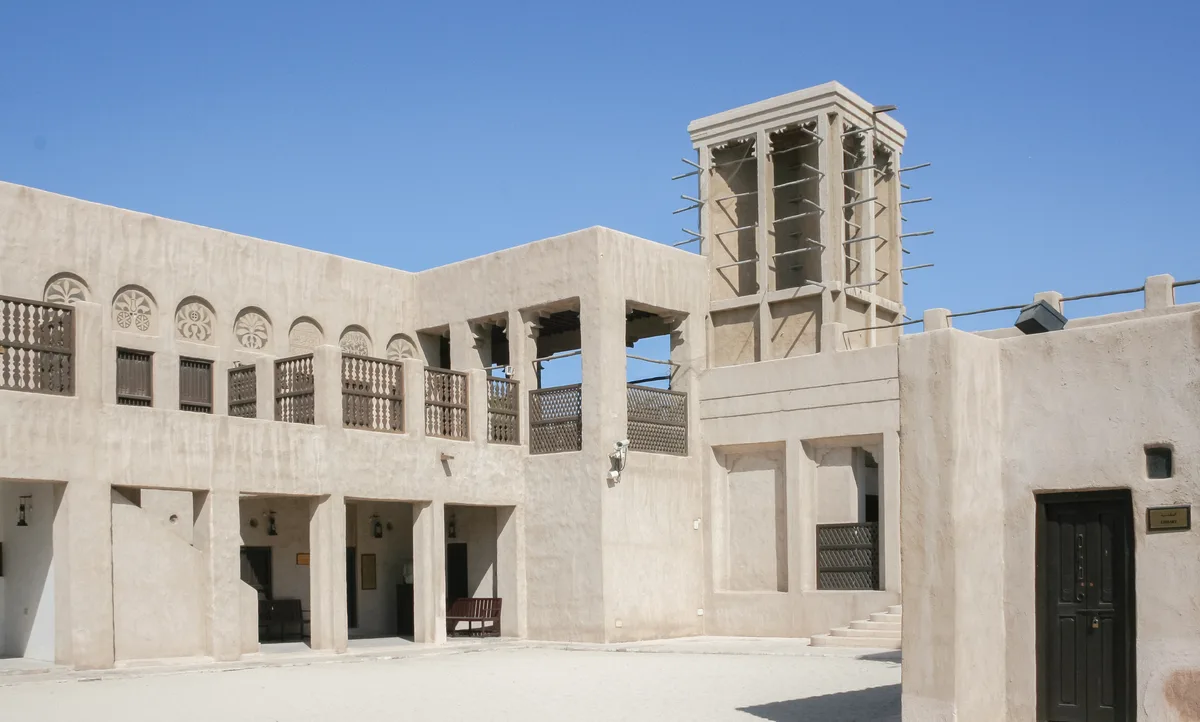
Photo: Diego Delso / CC BY-SA 4.0
What Your Eye SeesA long two-storey residence of coral stone and gypsum on the bank of Dubai Creek in Al Shindagha, its flat roofline crowned by four wind towers. Inner courtyards are ringed by some thirty rooms behind carved wooden doors.
ContextBuilt around 1896 as the seat of the Al Maktoum family, this was the residence of Sheikh Saeed bin Maktoum, ruler of Dubai from 1912 until his death in 1958, and the birthplace of his sons and grandsons. Restored in 1986, the house is now a museum of photographs, coins, stamps and documents of old Dubai.
Source: Wikipedia (Sheikh Saeed Al Maktoum House); Dubai Culture
DidYou
Know
The current ruler of Dubai, Sheikh Mohammed bin Rashid Al Maktoum, was born in this house in 1949 and spent the first ten years of his life here, running through the three inner courtyards and 30 rooms behind richly ornamented teak doors.
Share→ The Four Wind Towers
Each of the four corner towers, or barjeel, catches the prevailing breeze and channels it down into the rooms below, a cooling system that worked long before air conditioning.
→ Carved Teak Doors And Gypsum Niches
Most rooms open onto the courtyard behind carved teak doors shaded by verandahs, with geometric gypsum recesses breaking the plain coral facades.
Sources: Archnet (Sheikh Saeed House Restoration); Dubai Culture
Silk Road Legacy
Time Traveler
3. Al Ahmadiya School
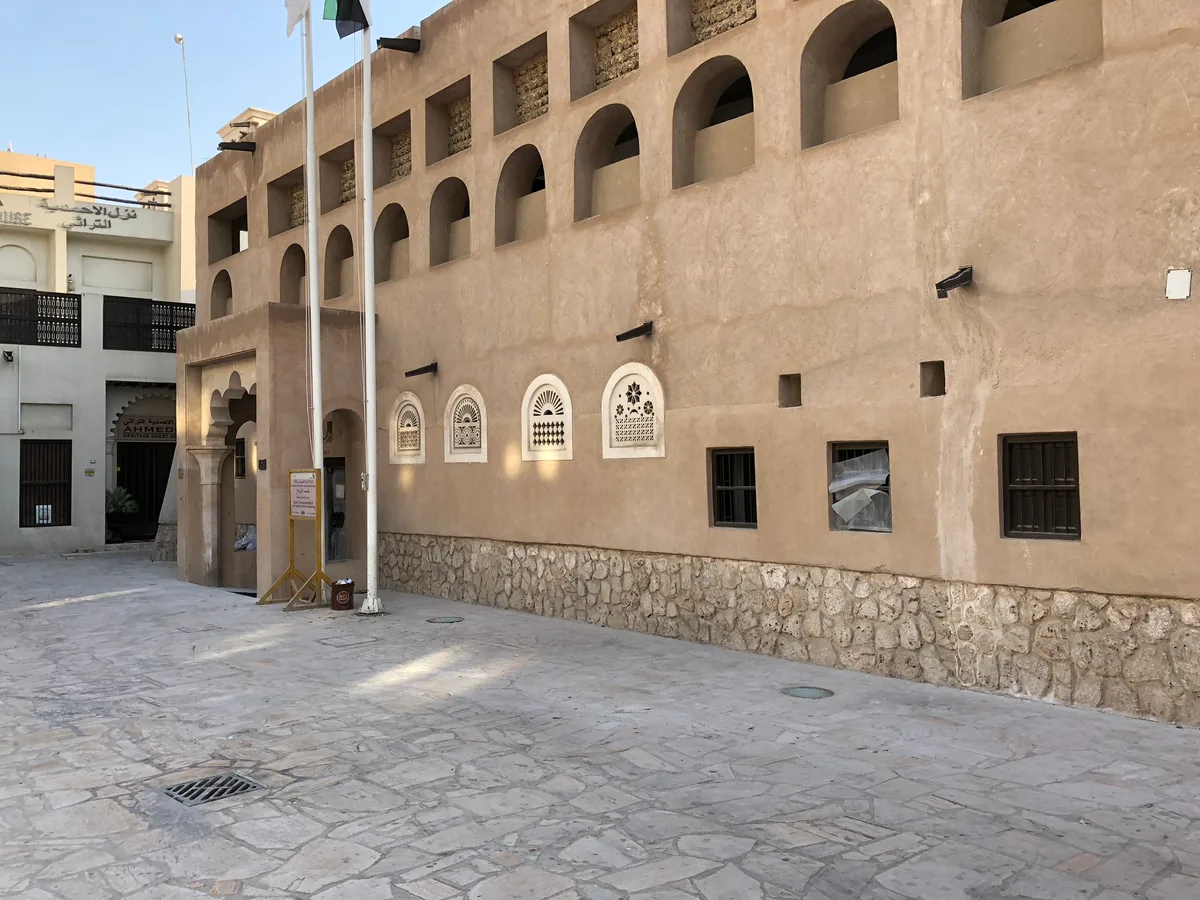
Photo: Omar Kamel / CC BY-SA 4.0
What Your Eye SeesA two-storey school building in the Al Ras district of Deira, its classrooms arranged around an inner courtyard behind carved arches and heavy ornamented doors, with decorative gypsum panels on the facade.
ContextAl Ahmadiya, founded in 1912 by the pearl merchant Sheikh Ahmed Bin Dalmouk, is Dubai’s oldest known formal educational institution. After his death, his son Sheikh Mohammed Bin Ahmed completed the building and named it in his father’s honour. The Dubai government restored it in 1994 and reopened it as a museum in 2000.
Source: Wikipedia (Al Ahmadiya School); Dubai Culture
DidYou
Know
Its alumni went on to shape modern Dubai, among them Easa Al-Gurg, Abdulla Al Futtaim, Abdulla Al Ghurair and Majid Al Futtaim, some of the emirate's most prominent business families.
Share→ The Carved Courtyard Arches
The arches of the courtyard are richly carved, an unusual level of ornament for Dubai’s plain coral buildings, and decorative gypsum panels frame the entrance.
→ Classrooms On Two Floors
The classrooms run around a rectangular courtyard on two levels, opening onto shaded verandahs that kept the desert sun off the school rooms.
Sources: Wikipedia (Al Ahmadiya School); Dubai Culture & Arts Authority
Time Traveler
Silk Road Legacy
4. Sheikh Rashid's Summer Majlis (Majlis Ghorfat Umm Al Sheif)
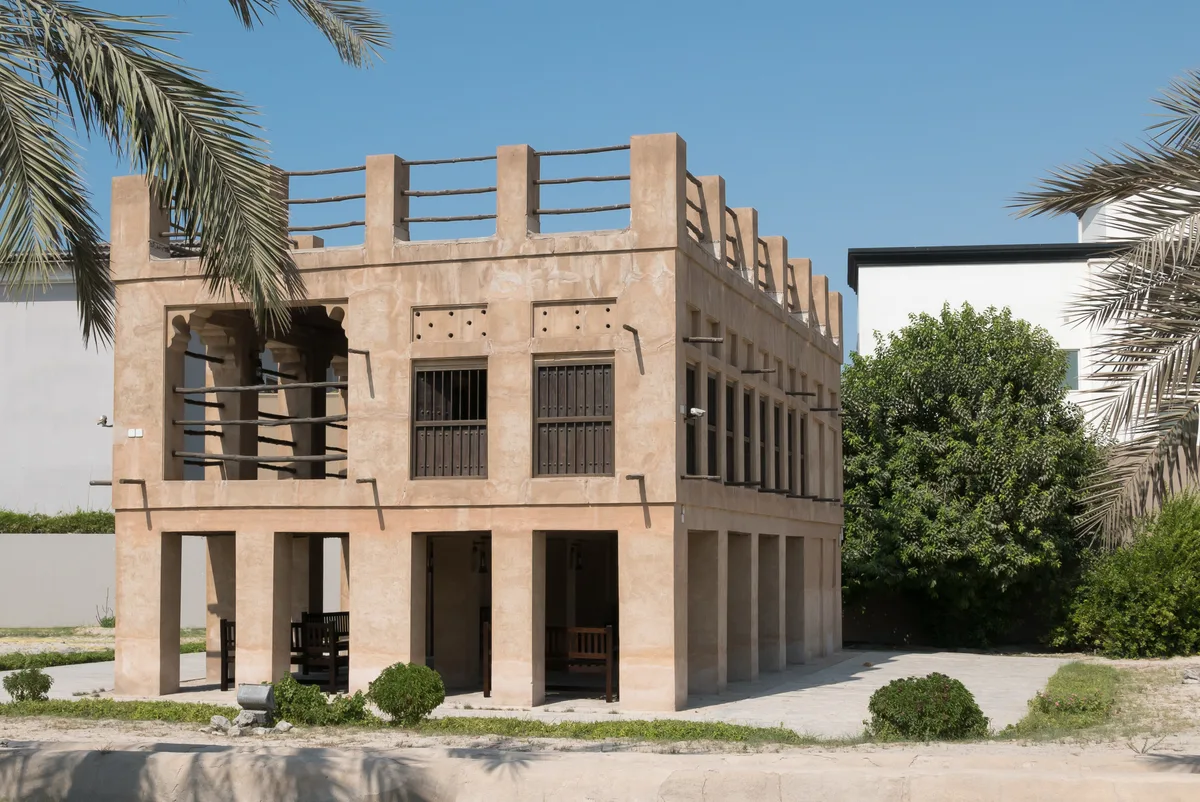
Photo: Celia Brock / CC BY-SA 4.0
What Your Eye SeesA modest two-storey summerhouse of adobe, gypsum and coral set among date palms in Jumeirah, with a flat roof terrace where dates were laid out to dry. A wooden staircase climbs to the roof.
ContextBuilt in 1955 as the summer retreat of Sheikh Rashid bin Saeed Al Maktoum, the ruler whose decisions would shape modern Dubai, the majlis then stood far from the town, near a fishing village in a date palm plantation. Fully restored in 1994, it is now managed by Dubai Culture & Arts Authority.
Source: Wikipedia (Majlis Ghorfat Umm Al Sheif); Dubai Culture
DidYou
Know
The name ‘Umm Al Sheif’ comes from a nearby pearl fishery, and the roof of the majlis was built to do double duty: on the upper terrace, dates were dried in the sun, while at night it served as a cool open-air sleeping platform.
Share→ The Falaj-Watered Garden
The garden around the house, created in the 1994 restoration, is watered by a falaj, a traditional gravity-fed irrigation channel of the kind that once watered the surrounding date palms.
→ Adobe, Gypsum And Coral
The walls mix adobe, gypsum and coral with timber, the same local materials used in the older creek-side houses of Bur Dubai, carried here when Jumeirah was still a fishing village.
Sources: Wikipedia (Majlis Ghorfat Umm Al Sheif); Dubai Culture (Majlis Ghorfat Umm Al Sheif)
Time Traveler
Silk Road Legacy
5. Saruq Al Hadid Museum
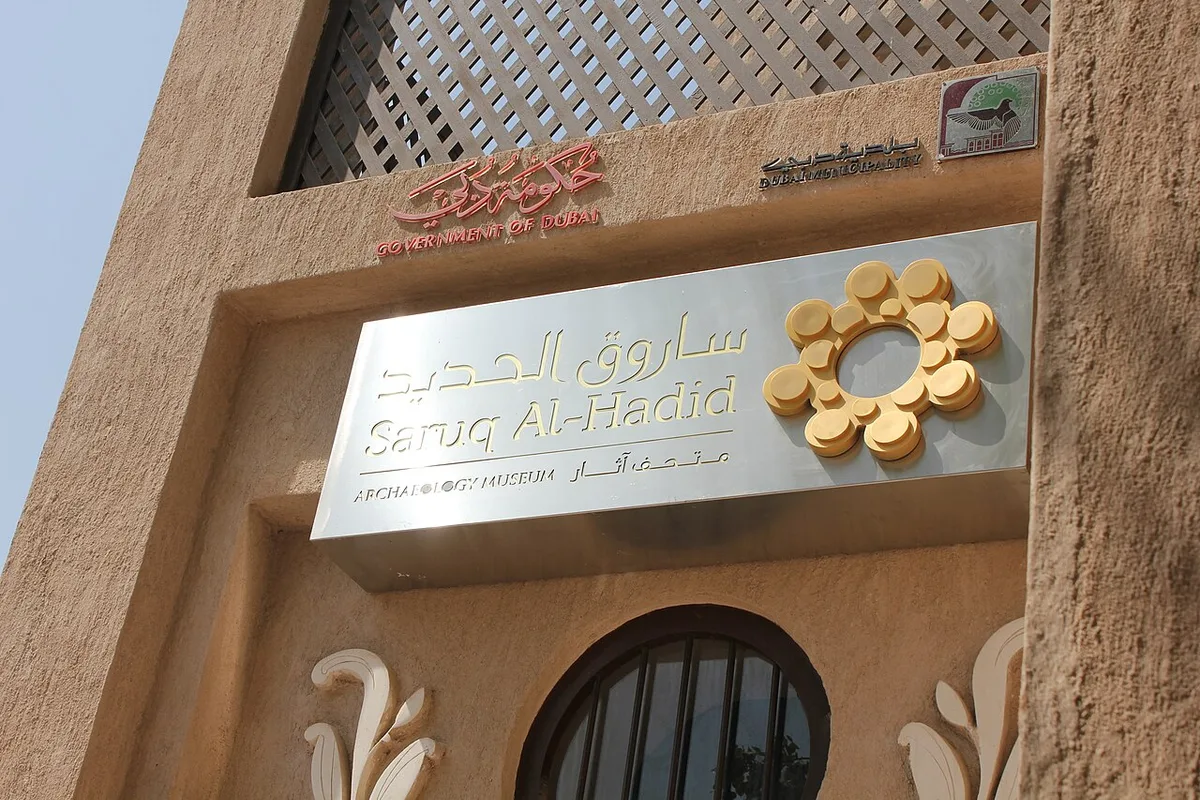
Photo: Thushara.Mohanan / CC BY-SA 4.0
What Your Eye SeesA restored wind-tower house of coral stone and gypsum in Al Shindagha, its two floors arranged around a spacious courtyard. Inside, galleries display bronze and gold objects from a 3,000-year-old desert metalworking site.
ContextThe Saruq Al Hadid Museum opened in 2016 in a house built in 1928 for Sheikh Juma bin Maktoum, brother of the ruler Sheikh Saeed. It displays finds from Saruq Al Hadid, ‘the Way of Iron’, an Iron Age metalworking centre in the desert south of Dubai, discovered in 2002 when Sheikh Mohammed bin Rashid spotted a dark slag field from his helicopter.
Source: Wikipedia (Saruq Al Hadid); Dubai Culture
DidYou
Know
An ornate gold ring dug from the site became the model for the logo of Dubai's Expo 2020; it was one of more than 12,000 objects recovered from a metalworking centre that smelted iron and copper here for well over a thousand years.
Share→ The Forecourt And Chandal Wood Beams
Look at the fore-court and the chandal-wood beams that carry the roof, the gypsum-plastered walls and mangrove-pole ceiling you can see from the courtyard are the visible structure of the 1928 house.
→ Rooms For Snake Symbols
The galleries are divided into rooms by theme, metalwork, animal bones, snake symbols and jewellery, reflecting the site’s most curious finds: hundreds of serpent figurines that suggest a local snake cult.
Sources: Wikipedia (Saruq Al Hadid); Dubai Culture (Saruq Al Hadid); The National (2025-09-26)
 Ancient Roots
Time Traveler
Ancient Roots
Time Traveler
6. Sheikh Obaid bin Thani House
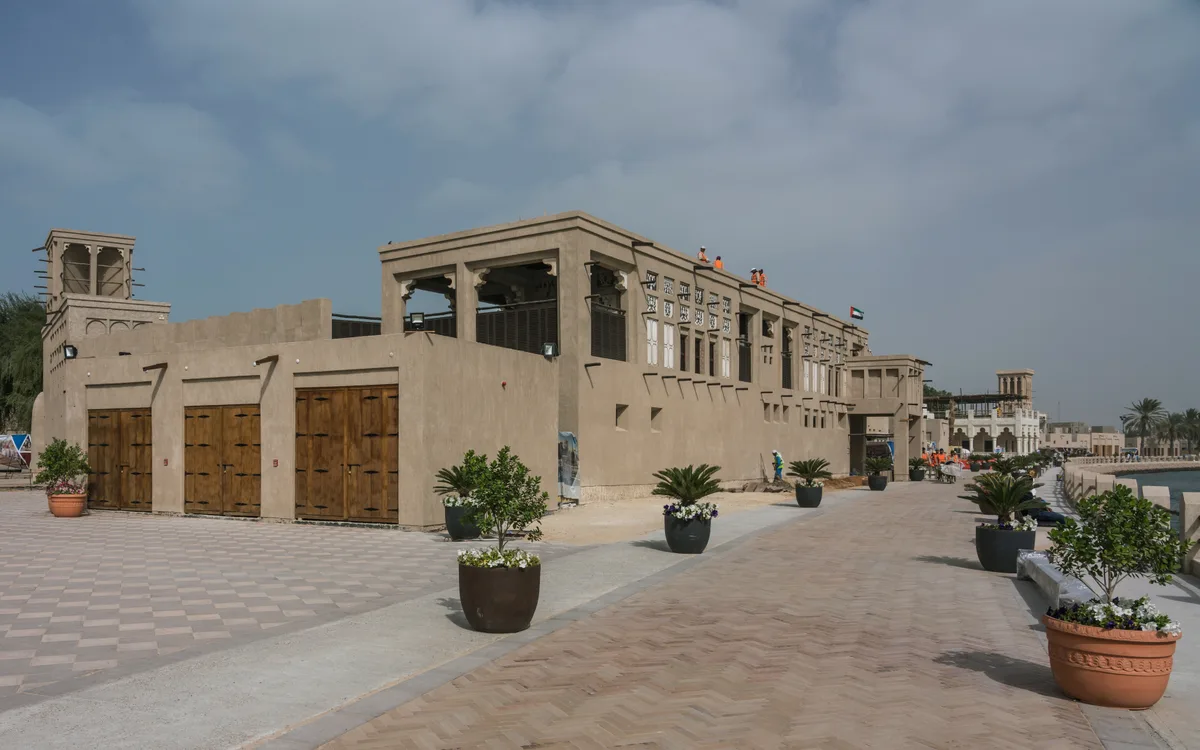
Photo: A.Savin / FAL
What Your Eye SeesA two-storey house of pale sea-stone and gypsum in Al Shindagha, its facade marked by arched doorways and timber-shuttered windows, a short walk from the creek and from Sheikh Saeed's own house.
ContextBuilt in 1916 beside Dubai Creek in the Al Shindagha district, the Sheikh Obaid bin Thani House is one of the area's oldest surviving homes. It was the residence of Sheikh Obaid bin Thani of the Al Maktoum family, kin of the ruler Sheikh Saeed, and was restored and reopened as a museum in 1998. Raised from sea-stone, gypsum and mud, it now forms part of the Shindagha Museum, the largest open-air heritage museum in the Middle East.
Source: Wikipedia (Sheikh Obaid bin Thani House); Dubai Culture
DidYou
Know
The house's foundations were sealed under sand when most of old Shindagha was cleared in the early 1990s, and that sand layer later guided the faithful stone-by-stone reconstruction.
Share→ The Arched Doorways
Arched doorways and narrow, deeply set windows pierce the thick plastered facade, the arched openings are the clearest sign of the house's early-20th-century age when seen from the street.
→ Calligraphy On The Walls
Inside, restored rooms hold a permanent exhibition of Arabic calligraphy, large ink panels that cover the walls, a visible layer added during the Shindagha Museum conversion.
Sources: Wikipedia (Sheikh Obaid bin Thani House); GPSmyCity (Sheikh Obaid bin Thani House); Dubai Culture (Sheikh Obaid bin Thani House)
Silk Road Legacy
Time Traveler
7. Heritage House
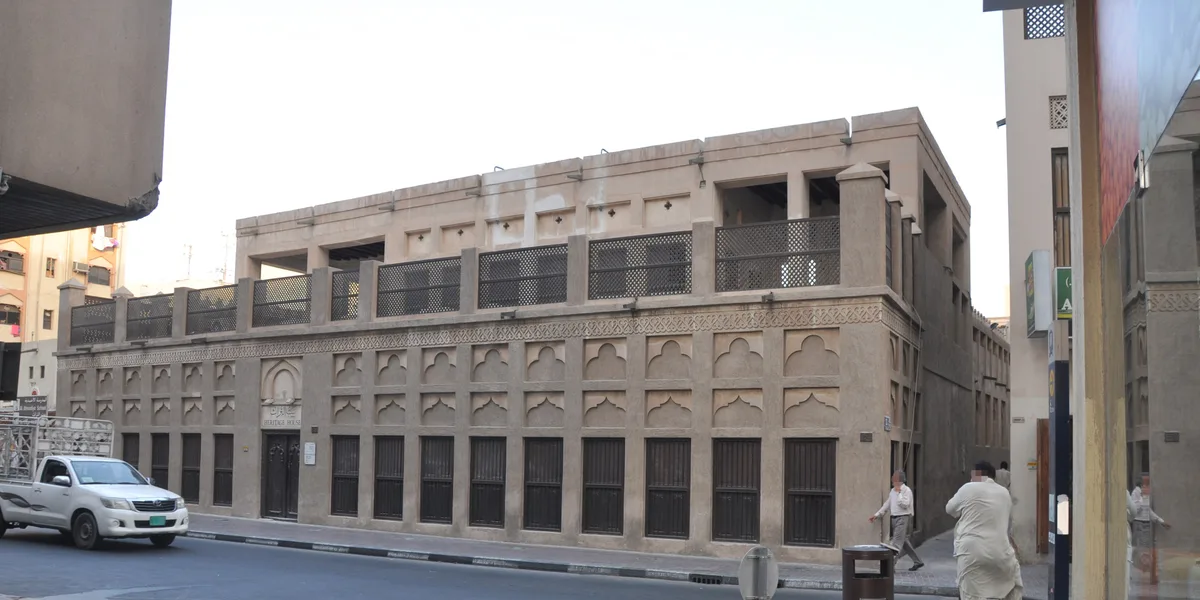
Photo: أمين علوان / CC BY-SA 4.0
What Your Eye SeesA two-storey merchant's house in Al Ras, Deira, its rooms arranged around an open courtyard, a rare surviving home of the early 20th century on the creek's Deira side.
ContextBuilt in 1890 by the merchant Matar Saeed bin Mazina, the two-storey Heritage House stands in Deira’s Al Ras quarter, one of Dubai's oldest urban quarters. Raised in coral, stone, plaster, teakwood, chandal wood and palm timber, it is now a museum of Emirati household life, filled with the tools, furniture, jewellery, clothes and toys of early-20th-century Dubai.
Source: Wikipedia (Heritage House, Dubai); Dubai Culture
DidYou
Know
Household goods on display were not only made in Dubai but imported from India and the East African coast, pottery, copper, cosmetics and children's toys from the ships that traded along the creek, a reminder that this quiet quarter was a link in global trade routes before oil.
Share→ Palm Wood In The Ceilings
The ceilings and roofs are carried on palm trunks and fronds, with teak and chandal wood for the doors and shutters, the date palm, once the strongest timber a merchant could raise on an island of sand.
→ Rooms Around A Courtyard
Rooms open onto the central courtyard, originally two majlis where the merchant greeted guests, later expanded, a layout you can still count room by room as you walk.
Sources: Dubai Culture (Heritage House); PropertyFinder (Heritage House); Gulf News (2002-04-17)
Silk Road Legacy
Time Traveler
What is the oldest building in Dubai?
Al Fahidi Fort, built in 1787 to guard Dubai's growing trading port on the Creek. A single-storey coral fort, it was the city's tallest structure for 186 years, until 1973. Over the centuries it served as the ruler's residence, a weapons arsenal and a prison, before being restored under Sheikh Rashid bin Saeed and reopened in 1971, the year the UAE was founded, as the Dubai Museum.
Where can you see the Iron Age gold of Dubai?
At the Saruq Al Hadid Museum, in a house built in 1928 for Sheikh Juma bin Maktoum. The museum displays finds from Saruq Al Hadid, the Way of Iron, an Iron Age metalworking centre in the desert south of Dubai discovered in 2002 when Sheikh Mohammed bin Rashid spotted a dark slag field from his helicopter. Over 12,000 objects were recovered, and one ornate gold ring dug from the site became the model for the logo of Dubai's Expo 2020.
These landmarks reward close attention. Vestigia is a field companion for people who look longer, with curated context, architectural detail, and the stories most visitors walk past. Free on the App Store and Google Play.