Florence Historical Landmarks
1. Florence Cathedral
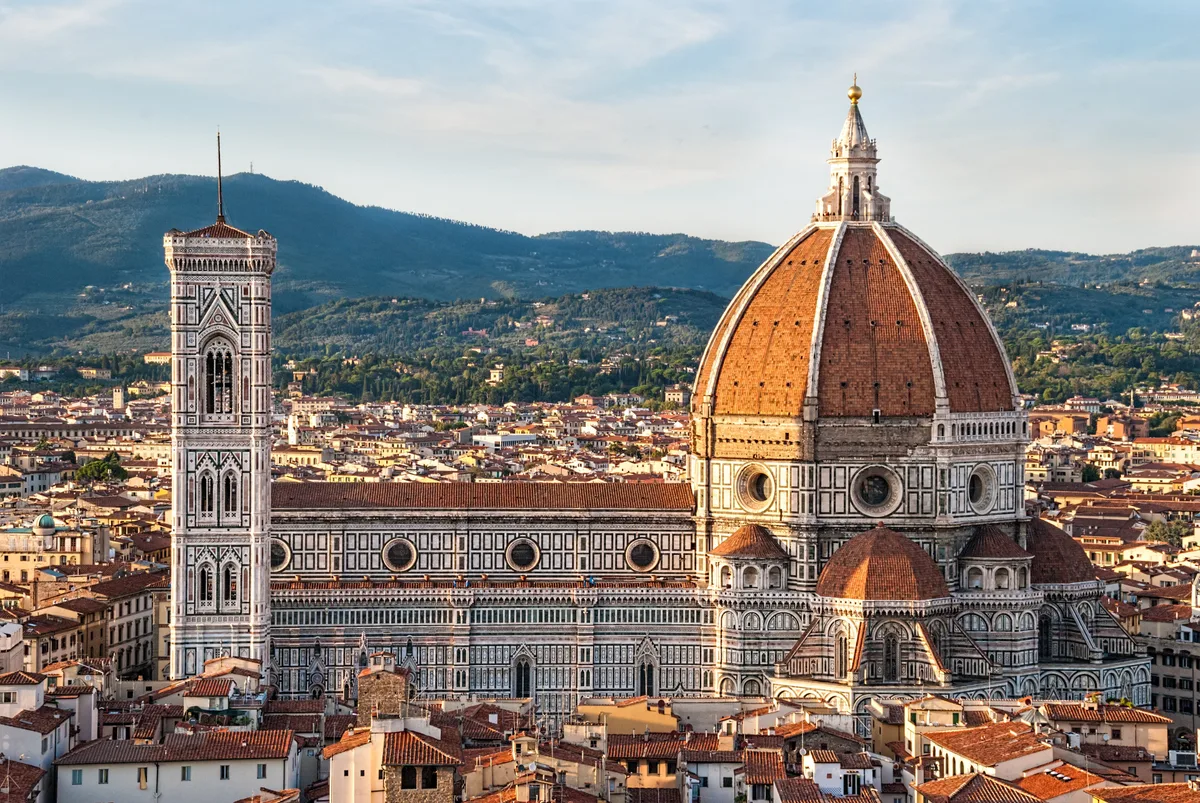
Photo: Gary Campbell-Hall / CC BY 2.0
What Your Eye SeesA vast cathedral with a polychrome marble facade of white, green and pink, crowned by Brunelleschi's great red-tiled dome - the largest masonry dome ever built - rising above the red rooftops of Florence.
ContextFlorence's cathedral was begun in 1296 under the architect Arnolfo di Cambio, though its present facade dates from the 19th century. Its most famous feature, the dome, was completed between 1420 and 1436 by Filippo Brunelleschi, who invented new hoisting machinery and building methods for it. At its consecration in 1436 the church was the largest in Christendom.
On ScreenFlorence's Duomo appears in the film Inferno (2016).
Source: UNESCO (Historic Centre of Florence); Wikipedia (Florence Cathedral); Wikipedia (Florence Cathedral); Inferno (2016) production notes
 Did
DidYou
Know
Brunelleschi raised the dome without a wooden centering framework - a feat contemporaries considered impossible - using a double shell and a herringbone brick pattern that locked each course into place.
ShareA Marble Disc Marks A Crash Site
Set into the paving on the north side of the square is a circular marble disc. It marks the spot where the gilt bronze ball from the top of the dome crashed to earth in 1600 after being struck by lightning.
A Portal Framed By An Almond
Look at the north door, the Porta della Mandorla, framed by a great carved almond shape, the mandorla, in which the Virgin Mary rises toward heaven, carved between 1391 and 1421 with Nanni di Banco and Donatello.
Sources: Wikipedia (Florence Cathedral); A View on Cities
 Euro Heritage
 Renaissance
2. Giotto's Campanile
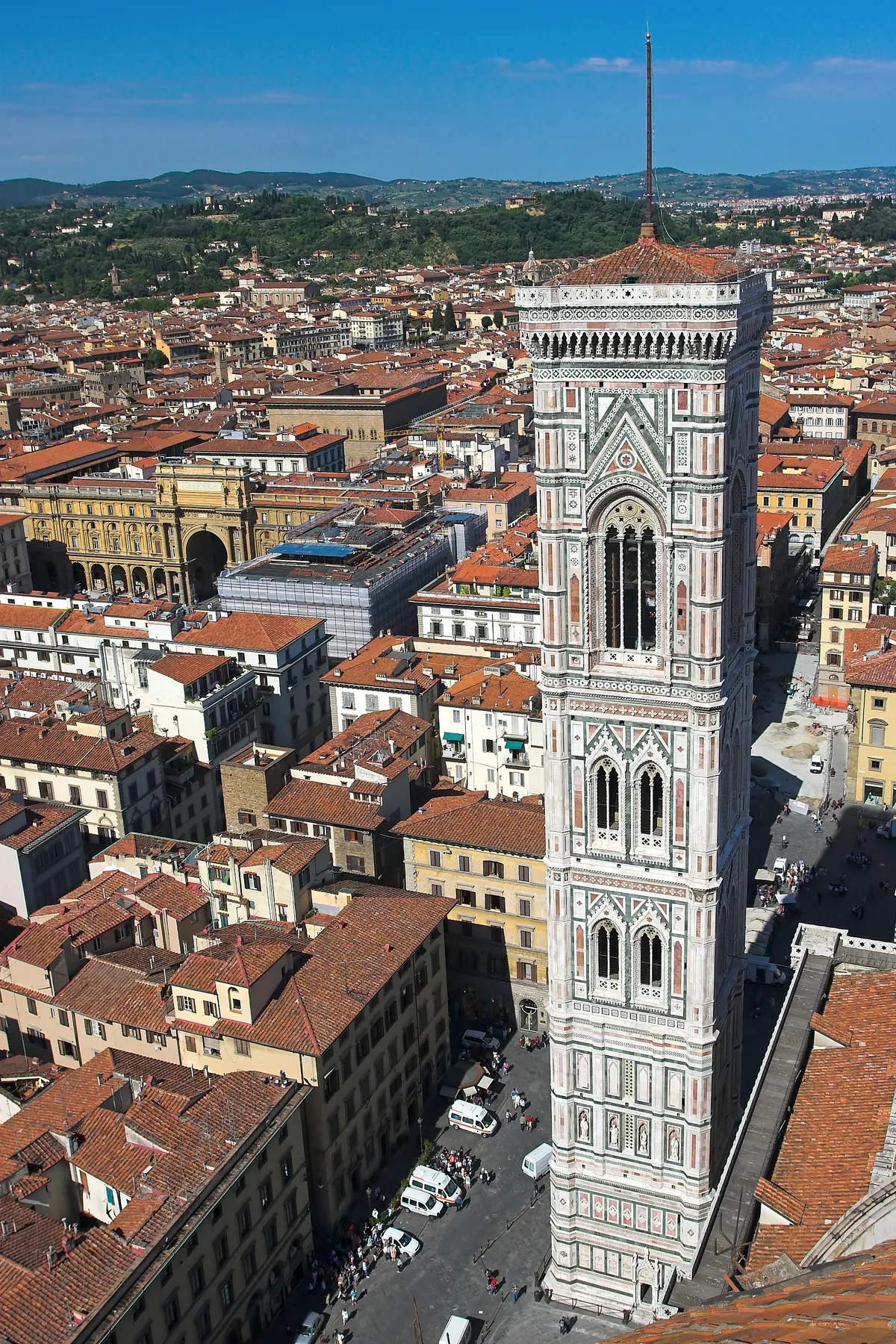
Photo: Thermos / CC BY-SA 2.5
What Your Eye SeesA slender square bell tower rising 84.7 metres beside the cathedral, clad in bands of white, green and pink marble and decorated with carved lozenges and hexagonal panels.
ContextGiotto was appointed to build the tower in 1334 and designed its marble casing, but he died in 1337 with only the lower storey complete. Andrea Pisano and then Francesco Talenti carried the work on, and the tower was finished around 1359 with its characteristic lozenge and hexagonal panels.
On ScreenGiotto's Campanile appears in the film Inferno (2016).
Source: UNESCO (Historic Centre of Florence); Wikipedia (Giotto's Campanile); Wikipedia (Giotto's Campanile); Inferno (2016) production notes
DidYou
Know
Giotto’s original plan called for a tower crowned by a tall spire and considerably taller than the one built, but the project was reduced after his death in 1337, and the soaring spire he imagined was quietly never added.
ShareCopies Where Originals Once Stood
The hexagonal relief panels around the lower storey are not the originals: most were removed between 1965 and 1967 to protect them from pollution and now live in the Museo dell'Opera del Duomo, with copies in their place.
Mosaics Set In Blue
Look at the second storey, where diamond-shaped panels against a background of blue glazed majolica depict the planets and the virtues, a vivid blue against the white, green and pink marble.
Sources: Wikipedia (Giotto's Campanile)
 Gothic Soul
Euro Heritage
Gothic Soul
Euro Heritage
3. Baptistery of San Giovanni
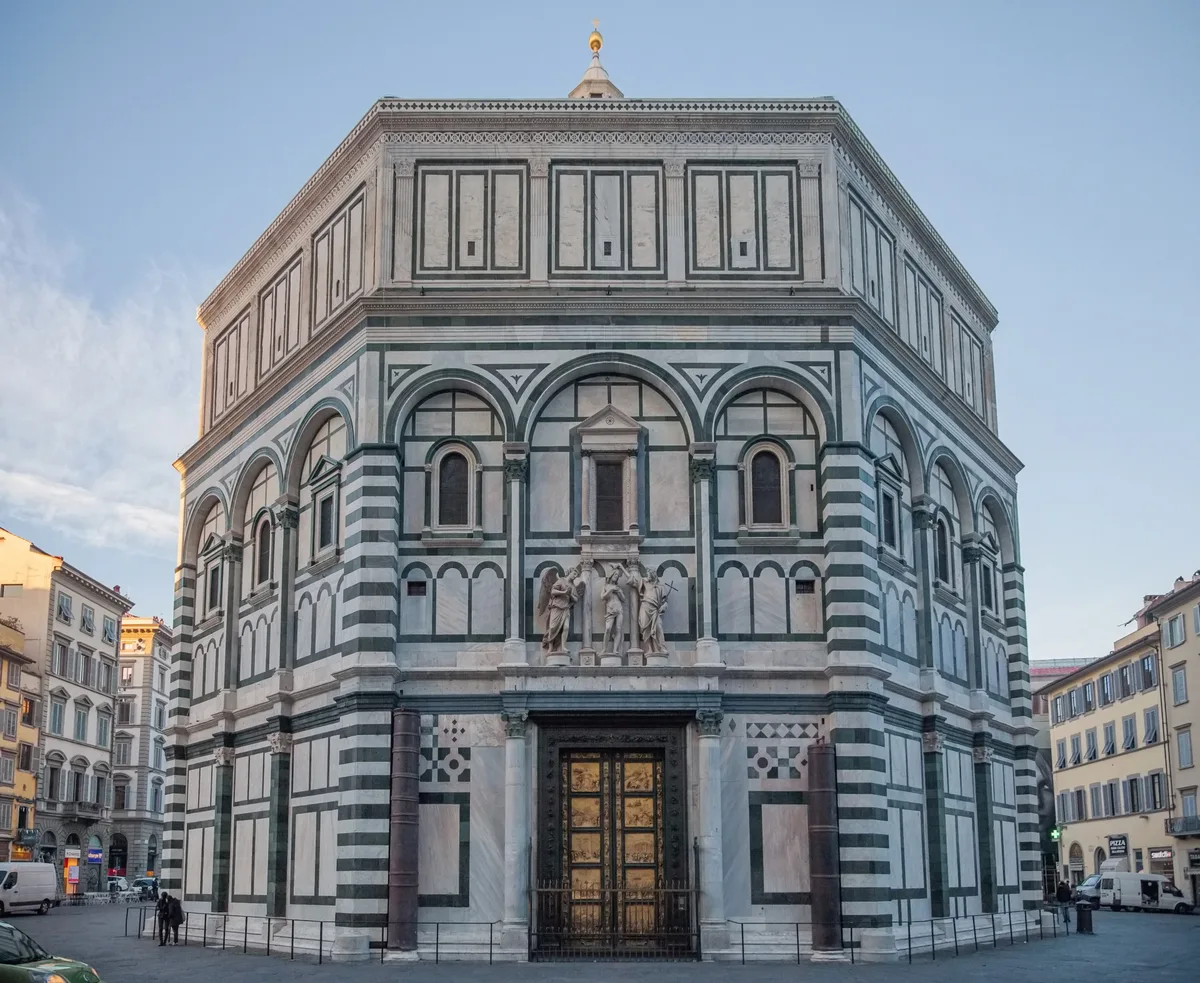
Photo: Bradley Weber / CC BY 2.0
What Your Eye SeesAn octagonal marble building with a green-and-white striped exterior and a flat pyramidal roof, standing between the cathedral and its tower, with three great bronze doors.
ContextThe Baptistery is one of Florence's oldest buildings, consecrated in 1059 and rebuilt over a Roman foundation. For centuries every Florentine was baptised here - Dante among them, in 1266. Its three sets of bronze doors are among the great works of the early Renaissance, with the east doors by Lorenzo Ghiberti.
On ScreenThe Baptistery of San Giovanni appears in the film Inferno (2016).
Source: UNESCO (Historic Centre of Florence); Wikipedia (Florence Baptistery); Wikipedia (Baptistery of San Giovanni); Inferno (2016) production notes
DidYou
Know
The famous "Gates of Paradise" are not the ones on the building: the original panels by Ghiberti were moved to the Museo dell'Opera del Duomo in the 1990s, and the doors now facing the cathedral are copies.
Share→ The Mosaic Dome
Look up at the gilded mosaic dome, Christ in Majesty surrounded by angels and saints, a 13th-century program you can see across the entire cupola.
Pillars Reused From Rome
Inside, the columns that carry the galleries are spolia - green "Saracen" marble shafts cut down from ancient Roman buildings, their reused capitals a visible link to the city's Roman past.
A Huge Christ In Mosaic
Look up into the dome for the Last Judgement mosaic's enormous Christ, possibly by Coppo di Marcovaldo, with the saved on one side and the damned on the other.
Sources: Wikipedia (Florence Baptistery); Museums of Florence (Baptistery); Wikipedia (Baptistery of San Giovanni)
 Spiritual Seeker
 Ancient Roots
Euro Heritage
Ancient Roots
Euro Heritage
4. Palazzo Vecchio
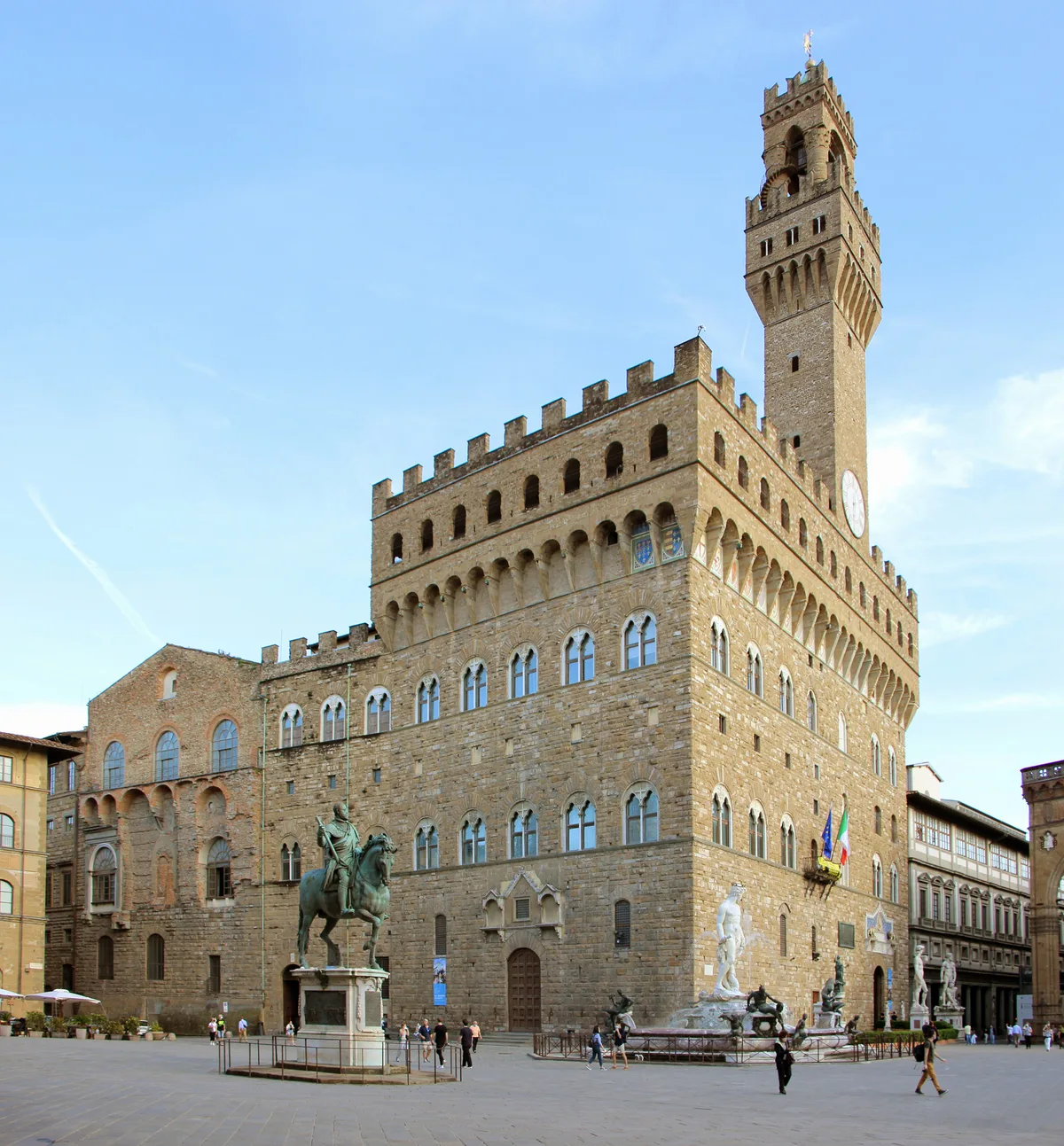
Photo: Francesco Bini / CC BY-SA 4.0
What Your Eye SeesA fortress-like palace with a projecting clock tower and crenellated roofline, its rusticated stone facade dominating the Piazza della Signoria.
ContextThe palace was begun in 1299, traditionally attributed to Arnolfo di Cambio, as the seat of the city’s government. Its crenellated tower, the Torre d’Arnolfo, rises about 94 metres and still dominates the piazza. It became the residence of the Medici dukes in the 16th century and later the seat of Italy’s parliament, and it remains Florence’s town hall today.
On ScreenPalazzo Vecchio appears in the film Inferno (2016) and the series Hannibal (2013).
Source: UNESCO (Historic Centre of Florence); Wikipedia (Palazzo Vecchio); Wikipedia (Palazzo Vecchio); Inferno (2016) production notes; Hannibal (TV) production notes
DidYou
Know
The statue of David before the main door is a copy - the famous original stood in the open air here for nearly four centuries until, in 1873, it was moved indoors to the Accademia to protect it from the weather.
ShareA Face Carved Where None Should Be
Look high on the wall above the entrance for a mysterious carved face that gazes out, long attributed by legend to Michelangelo, said to have added the prank face while the palace was being built.
The Letters That Spell Christ
Look above the main portal for the gilded monogram 'YHS', a Latin abbreviation of the name of Jesus, set into the facade, a reminder of the palace's role as the centre of the Republic of Florence.
Sources: Smithsonian Magazine; Wikipedia (Palazzo Vecchio)
Euro Heritage
Renaissance
5. Ponte Vecchio
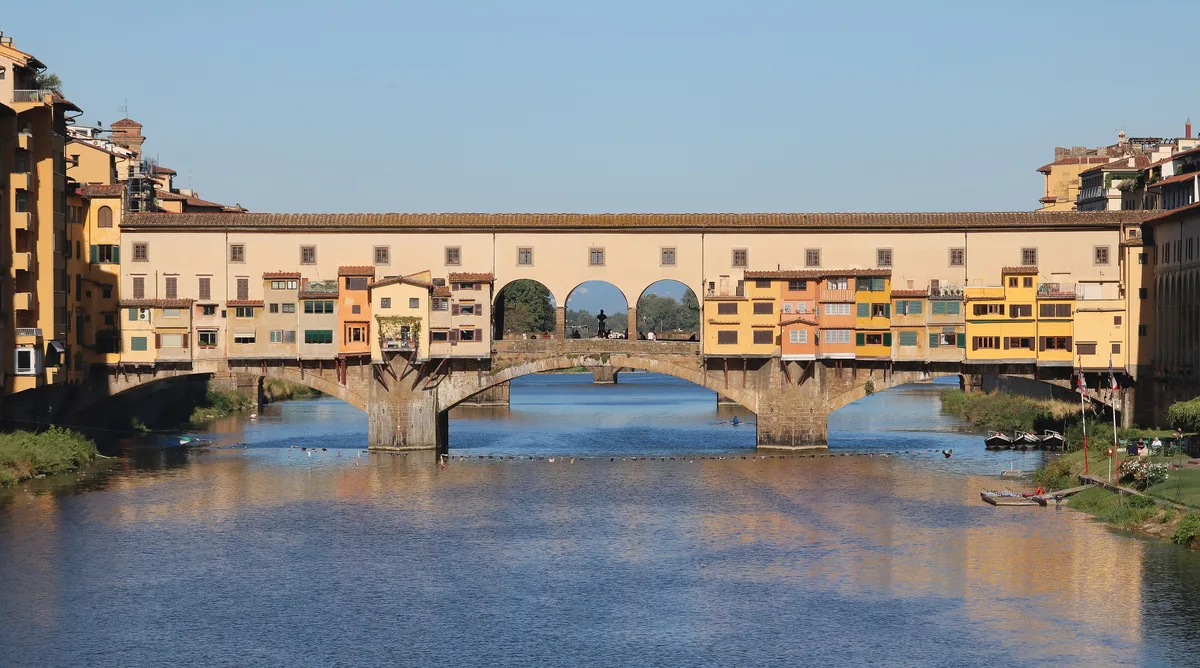
Photo: Ingo Mehling / CC BY-SA 4.0
What Your Eye SeesA low, three-arched stone bridge lined on both sides with rows of shops and topped on its eastern side by a covered two-storey gallery - the Vasari Corridor.
ContextA bridge has stood here since Roman times; the present one, built in 1345, was the only Florentine bridge over the Arno to survive the Second World War. In 1944 the retreating Germans, on Hitler’s orders, blew up the other Arno bridges but spared this one, blocking it instead by destroying the approaches. In 1442 the city ordered the butchers to move here, and in 1593 the goldsmiths and jewellers who still occupy the shops replaced them.
On ScreenThe Ponte Vecchio appears in the film Inferno (2016).
Source: UNESCO (Historic Centre of Florence); Wikipedia (Ponte Vecchio); Wikipedia (Ponte Vecchio); Inferno (2016) production notes
DidYou
Know
The enclosed gallery above the shops is the Vasari Corridor, built in 1565 in just five months so that the Medici could cross the river from the Palazzo Vecchio to the Pitti Palace without ever stepping into the street.
ShareShops That Hang Over The Water
On the river side, the backs of the shops are propped on stone brackets - sporti - that jut out over the water, their timber beams a visible holdover from the bridge's medieval structure.
A Bust Of The Master Goldsmith
At the centre of the bridge, above the shops, a bronze bust of Benvenuto Cellini - the greatest of the Florentine goldsmiths - looks out over the spot where his workshop once stood.
Sources: Wikipedia (Ponte Vecchio)
Euro Heritage
 Time Traveler
6. Basilica of Santa Croce
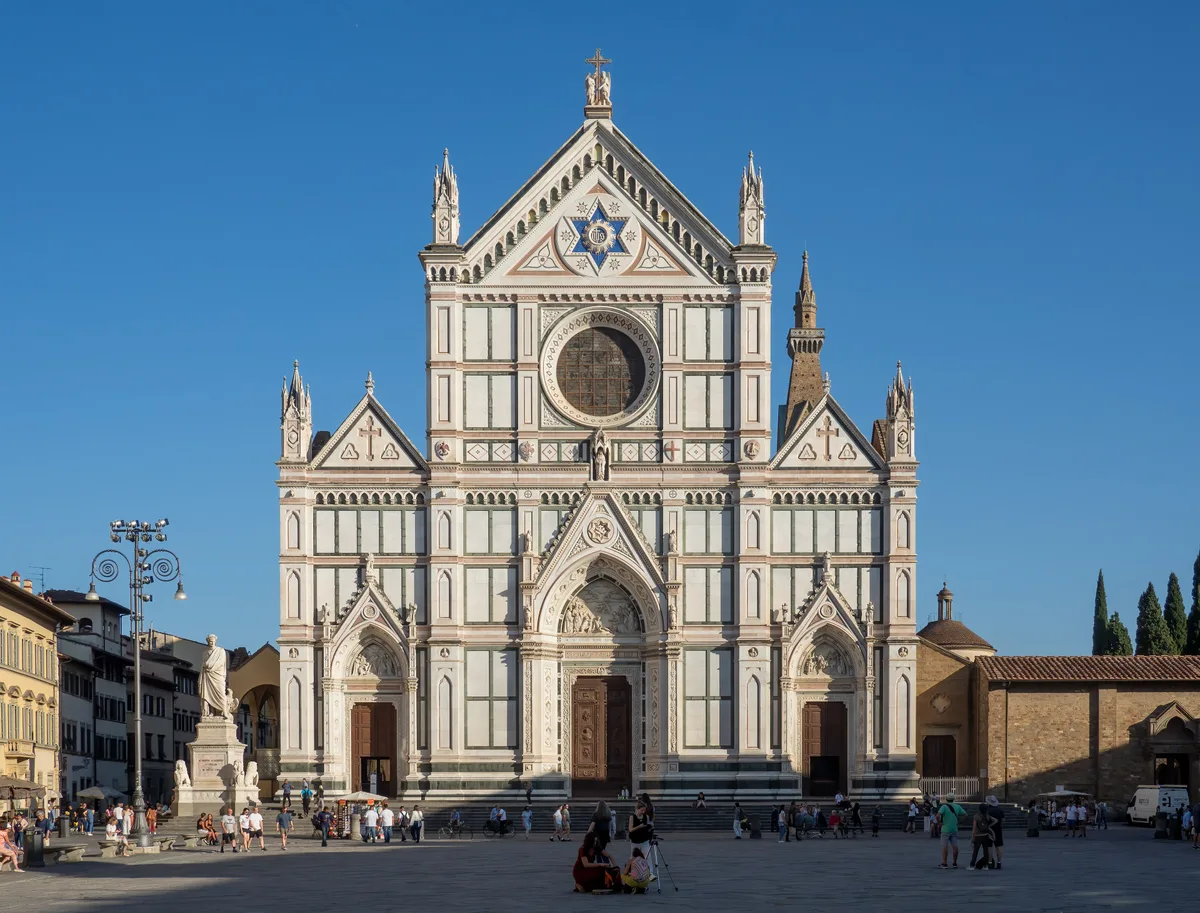
Photo: Rhododendrites / CC BY-SA 4.0
What Your Eye SeesA vast Franciscan church whose 19th-century marble facade of white, green and pink is crowned by a large Star of David, standing in the square of the same name.
ContextThe church was begun in 1294, traditionally attributed to Arnolfo di Cambio, and is the largest Franciscan church in the world. It contains the tombs and monuments of many of the greatest Florentines - Michelangelo, Galileo and Machiavelli among them - which is why it is called the "Temple of the Italian Glories".
On ScreenThe Basilica of Santa Croce appears in A Room with a View (1985), most memorably in the church scenes of the Merchant Ivory film.
Source: UNESCO (Historic Centre of Florence); Wikipedia (Basilica of Santa Croce, Florence); IMDb; Wikipedia (A Room with a View)
DidYou
Know
The Star of David that crowns the facade is there because the architect Niccolò Matas, who designed the 19th-century facade, was Jewish - and when he died he could not be buried inside the consecrated church, so he was laid to rest beneath its portico instead.
ShareMarks Left By The River
Look at the wall to the left of the entrance for three marble plaques marking the levels reached by the River Arno in its great floods of 1557, 1844 and 1966, the last rising several metres inside the church.
A Lunette Above The Door
Above the central portal, a carved lunette by Giovanni Dupré shows the Triumph of the Cross with the Virgin Mary and John the Evangelist, set against the marble of the 19th-century facade.
Sources: Wikipedia (Basilica of Santa Croce)
Spiritual Seeker
Gothic Soul
Euro Heritage
7. San Miniato al Monte
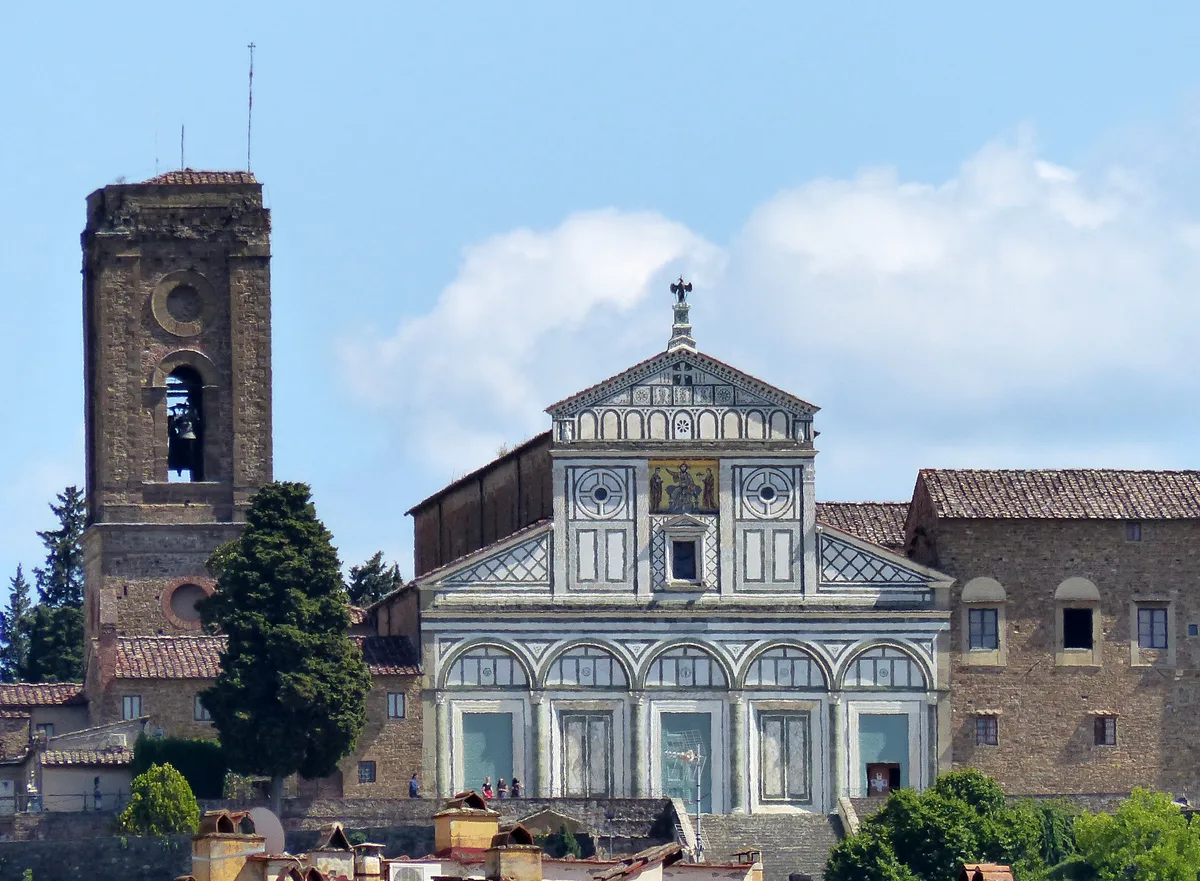
Photo: Benjamín Núñez González / CC BY-SA 4.0
What Your Eye SeesA Romanesque basilica on a hilltop south of the Arno, its white-and-green marble facade topped by a gilded mosaic and an eagle above a sack of wool.
ContextThe church was begun in 1018 over the tomb of Saint Minias and largely finished in the early 13th century. Tradition holds that Minias was an Armenian prince martyred in Florence around AD 250, and its green-and-white marble facade is a masterpiece of Tuscan Romanesque. From the 13th century it was placed in the care of the Calimala - the guild of wool merchants - whose emblem of an eagle on a bale of wool adorns the facade.
Source: UNESCO (Historic Centre of Florence); Wikipedia (San Miniato al Monte)
DidYou
Know
During the siege of Florence in 1530, Michelangelo used the church and its bell tower as an artillery post - and packed the tower with mattresses to cushion it against cannon fire.
ShareA Zodiac Worked In Stone
Look at the nave floor for a large inlaid zodiac dated 1207, a marble astrological circle almost unique among the churches of Florence.
A Mosaic Against The Sun
Look at the gable of the facade for a gold-ground mosaic of Christ blessing, flanked by the Virgin and Saint Minias, shimmering above the plain of Florence.
Sources: A View on Cities; Wikipedia (San Miniato al Monte)
Spiritual Seeker
Ancient Roots
Euro Heritage
8. Badia Fiorentina
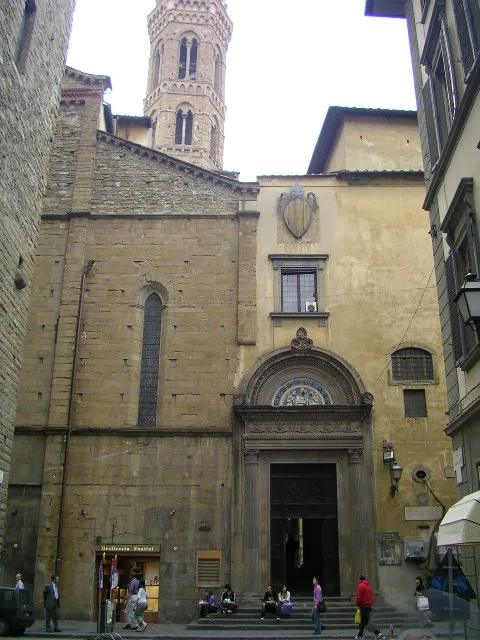
Photo: Sailko / CC BY-SA 3.0
What Your Eye SeesA quiet church squeezed between buildings on a narrow street, whose hexagonal bell tower - one of the oddest in Florence - rises above the rooftops.
ContextThe Badia Fiorentina was founded in 978 by Willa, mother of the Margrave Ugo, and is one of Florence’s oldest religious houses. Ugo, called the “Great Baron”, is remembered in Dante’s Paradiso, and the church was rebuilt in Gothic form by Arnolfo di Cambio from 1285. Its Romanesque campanile, begun in the early 14th century, rises about 70 metres - among the tallest in the city.
On ScreenThe Badia Fiorentina appears in the film Inferno (2016).
Source: UNESCO (Historic Centre of Florence); Wikipedia (Badia Fiorentina); Wikipedia (Badia Fiorentina); Inferno (2016) production notes
DidYou
Know
According to tradition Dante first saw Beatrice here; Boccaccio lectured on Dante in 1373 in the adjoining Santo Stefano chapel.
ShareWindows Walled Up For A Street
Look at the Via del Proconsolo side, where the tall blind arches of the Gothic windows are still visible, filled in to strengthen the walls.
A Tower With Six Sides
The campanile is a rare hexagonal bell tower built around a round tower of the 10th century - an unusual six-sided form that makes it stand out from every roof in the neighbourhood.
Sources: Wikipedia (Badia Fiorentina)
Spiritual Seeker
Gothic Soul
Ancient Roots
9. Palazzo Medici Riccardi
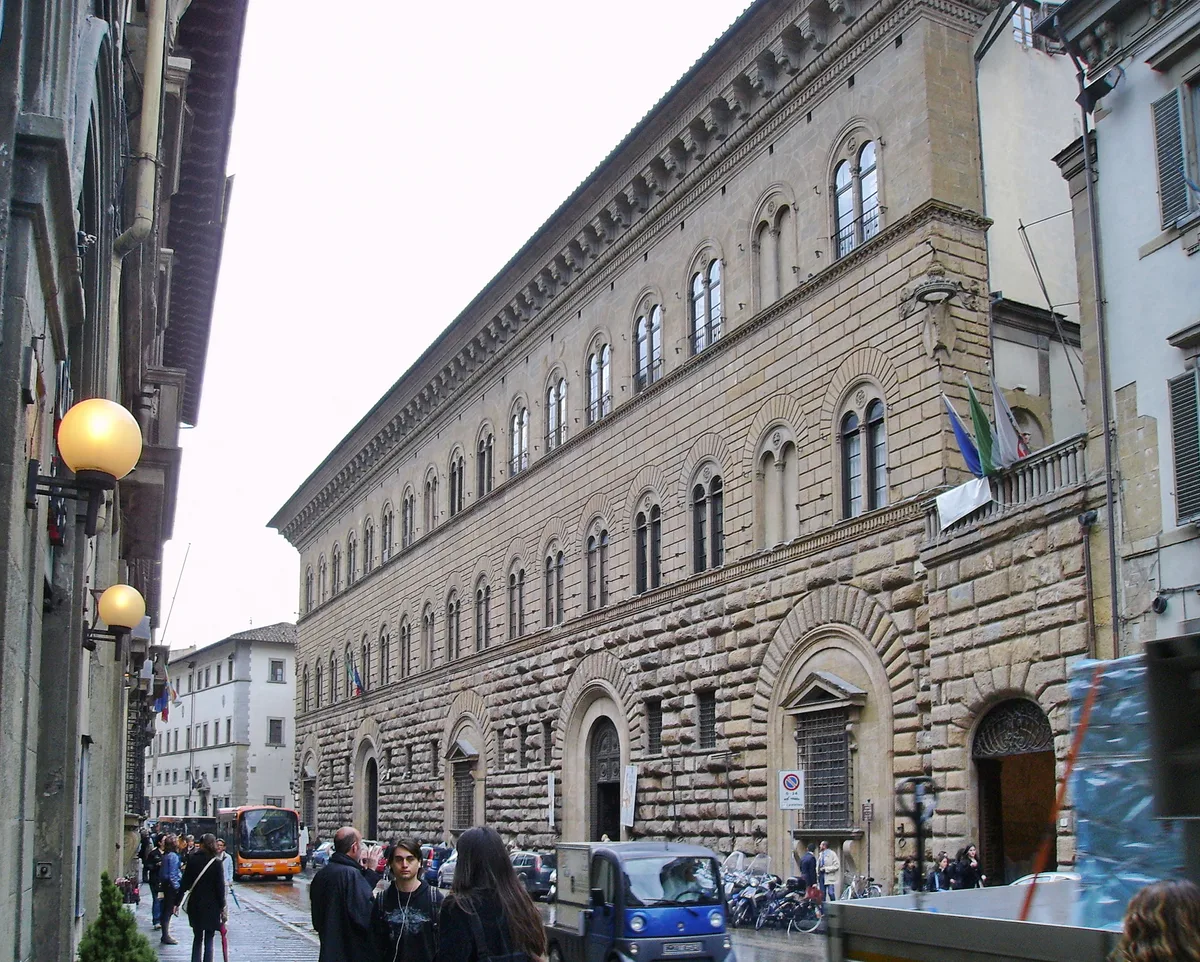
Photo: Yair Haklai / CC BY-SA 3.0
What Your Eye SeesA three-storey stone palace whose rusticated walls grow smoother from floor to floor, topped by a bold projecting cornice, on a street corner in the heart of Florence.
ContextThe palace was built between 1444 and 1460 for Cosimo de’ Medici to designs by Michelozzo, and it set the pattern for every great Florentine palace that followed. Its most celebrated interior is the private chapel decorated by Benozzo Gozzoli with a fresco of the journey of the Magi, painted from 1459 and hiding portraits of the Medici themselves - including a young Lorenzo - within the glittering procession.
On ScreenPalazzo Medici Riccardi was used as a set for the series Medici: Masters of Florence (2016) and its sequel Medici: The Magnificent.
Source: UNESCO (Historic Centre of Florence); Wikipedia (Palazzo Medici Riccardi); Città Metropolitana di Firenze; Visit Tuscany
DidYou
Know
The two upper rows of windows with their curved “kneeling” sills were added around 1517 and have long been attributed to Michelangelo - a rare example of his work in domestic architecture.
ShareMasonry That Rises To The Occasion
The three storeys are built in graduated rustication: rough, heavy blocks at street level, flatter stone on the first floor and smooth ashlar above - a visible symbol of the Medici rise from trade to dynasty.
Arms And An Iron Ring
On the corner of the building the Medici coat of arms is carved in the stone, and beside the entrance iron torch-holders and rings for horses still hang from the wall.
Sources: Wikipedia (Palazzo Medici Riccardi)
Renaissance
Euro Heritage
10. Palazzo Davanzati
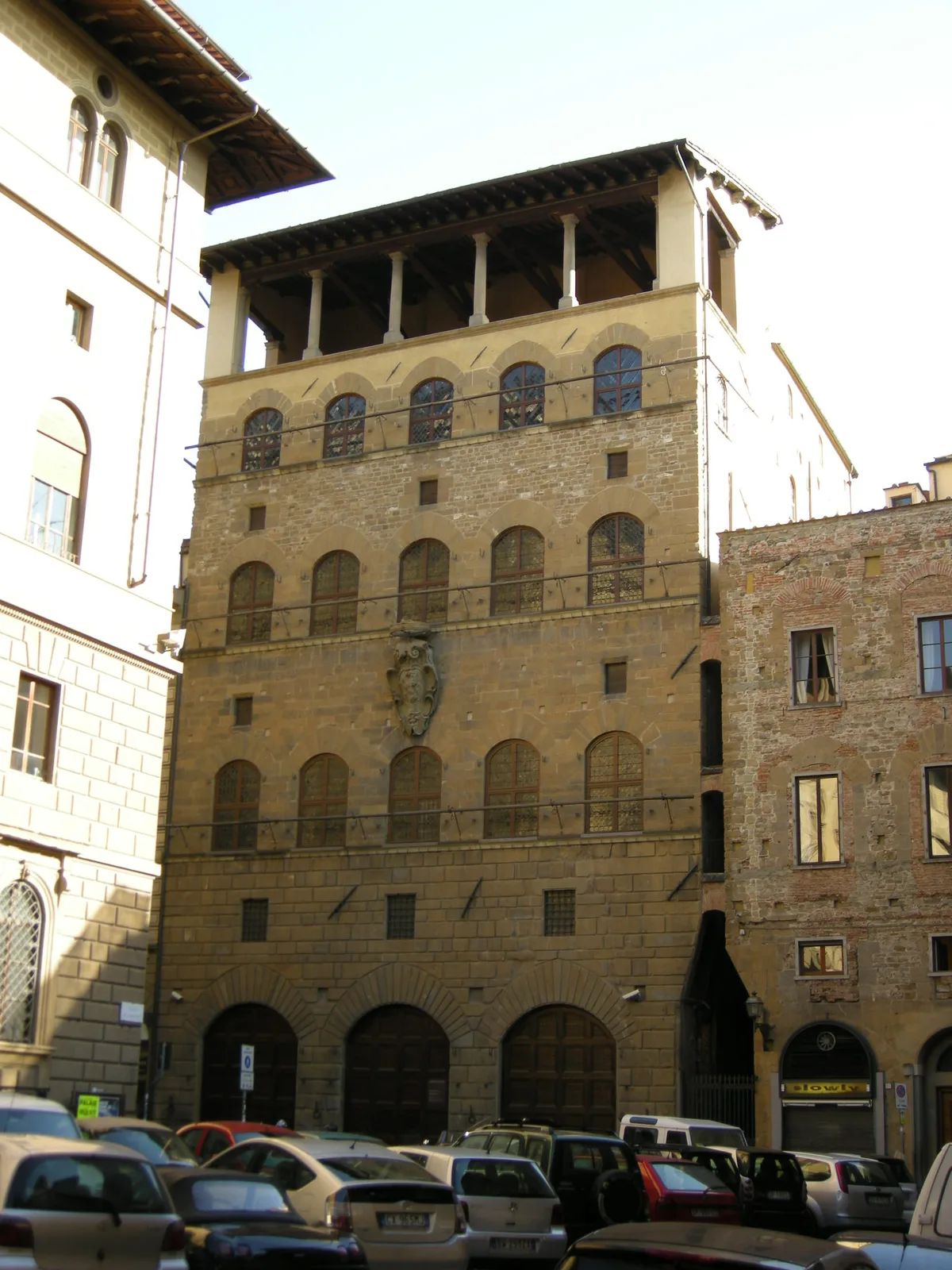
Photo: sailko / CC BY 2.5
What Your Eye SeesA four-storey medieval tower-house of dark stone, its facade pierced by rows of pointed windows with carved corbels, standing on a narrow street in the old city.
ContextPalazzo Davanzati was built in the mid-14th century for the Davizzi, a family of wool merchants, and passed to the Davanzati in 1578. The best-preserved medieval Florentine townhouse, it was saved from demolition in the early 1900s and acquired by the Italian state in 1951, becoming the Museum of the Old Florentine House.
Source: UNESCO (Historic Centre of Florence); Wikipedia (Palazzo Davanzati)
DidYou
Know
The palace's most famous treasure is the Guicciardini Quilt, a rare embroidered work showing scenes of the love story of Tristan and Isolde, made in Sicily in the late 1300s and bought by the museum in the 20th century.
ShareA Capital With A Difference
Look in the courtyard for one column whose capital is carved with small human heads, unlike the leafy capitals of the others, a detail often read as a portrait of the Davizzi family.
Three Arches For Merchants
Look at street level, where the palace opens in three wide segmental arches, the shops and workrooms of the ground floor that once belonged to the wool trade.
Sources: Museums of Florence
Renaissance
Euro Heritage
Time Traveler
11. Museo Nazionale del Bargello
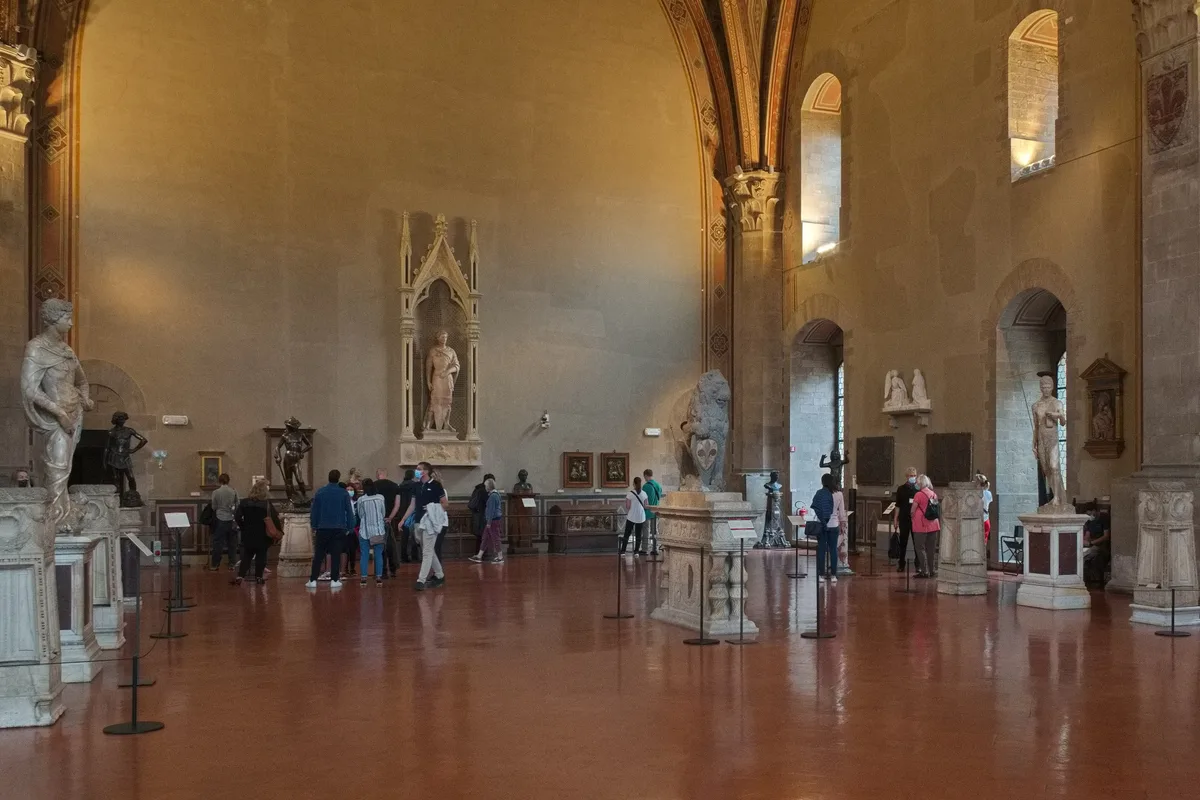
Photo: MenkinAlRire / CC BY-SA 4.0
What Your Eye SeesA fortress-like stone palace with a crenellated roofline and a tall battlemented tower, its rugged walls pierced by rows of arched windows, standing on the Piazza del Bargello.
ContextBuilt in 1255 as the residence of the Capitano del Popolo and later the seat of the Podestà, the building became the office of the chief of police - the bargello - in 1574 and served as a prison until 1859. It opened as Italy's first national museum in 1865, and its courtyard and halls now hold what is often called the world's greatest collection of Renaissance sculpture.
Source: UNESCO (Historic Centre of Florence); Wikipedia (Bargello)
DidYou
Know
Both trial panels from the famous 1401 competition for the Baptistery's bronze doors are displayed here side by side - Ghiberti's winning entry and the losing panel by Brunelleschi - making it possible to compare the two great rivals' work directly.
ShareA Third Storey In Smaller Stone
Look at the top storey, rebuilt after the 1323 fire with noticeably smaller stone blocks than the floors below, a visible change in the masonry as the building rises above the first two storeys.
A Well In The Courtyard
Look in the centre of the courtyard for the open well, built between 1280 and 1285 and ringed by columns, crowned with a stone balustrade, the oldest feature still in place.
Dante In The Prison Chapel
In the ground-floor Maddalena Chapel, the former prison chapel, a fresco cycle from the school of Giotto includes one of the earliest portraits of Dante, who was banished from Florence in 1302.
Sources: Wikipedia (Museo Nazionale del Bargello)
Renaissance
Euro Heritage
12. Orsanmichele
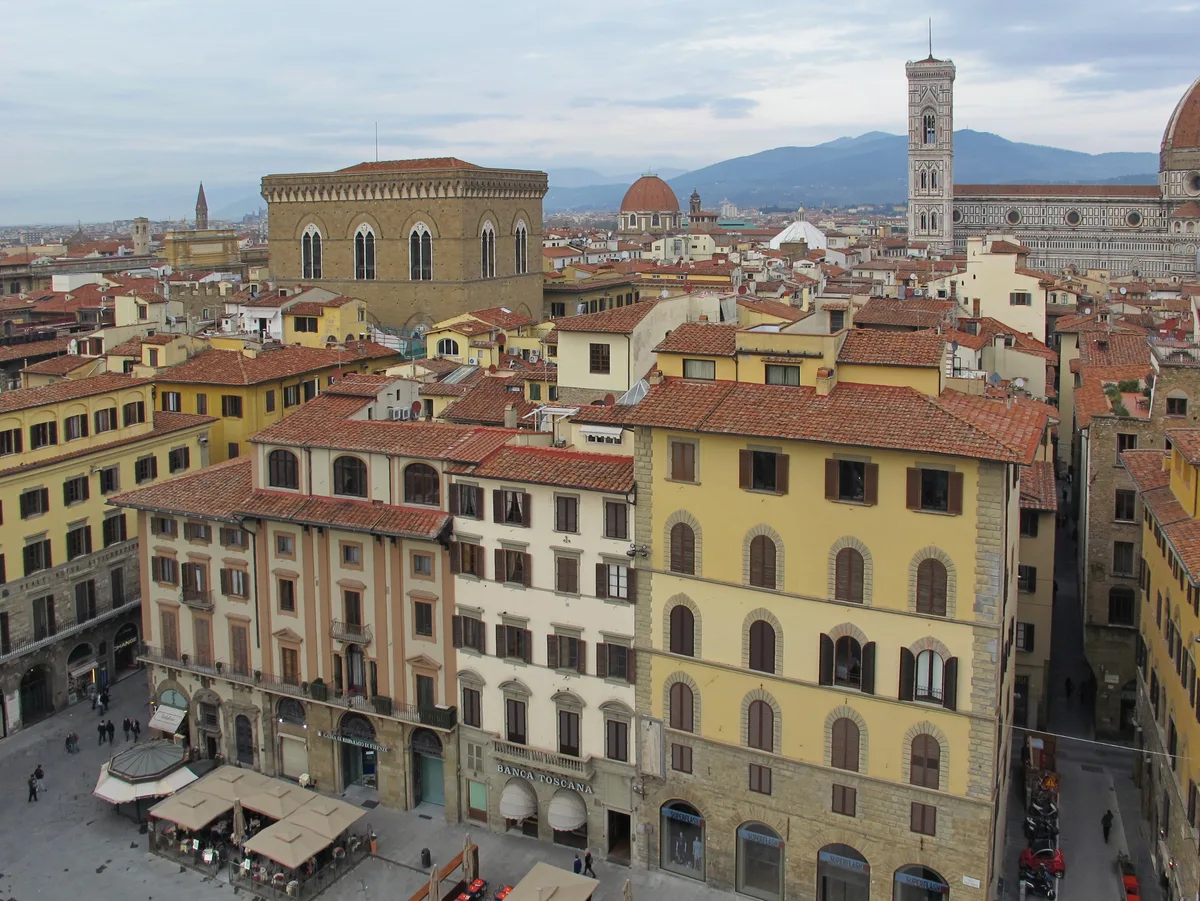
Photo: user:Sailko / CC BY 3.0
What Your Eye SeesA square stone building on a busy street corner, its upper storeys ringed by deep Gothic niches holding statues of saints, its ground floor a walled loggia of traceried windows.
ContextOrsanmichele was built in 1290 as a loggia for the city's grain market and, after a fire in 1304, rebuilt as a church between 1336 and 1404. From 1339 the guilds of Florence commissioned statues of their patron saints for the exterior niches - a competition that produced some of the first great works of Renaissance sculpture.
Source: UNESCO (Historic Centre of Florence); Wikipedia (Orsanmichele)
DidYou
Know
For centuries this building was also Florence's emergency granary: grain was stored in the upper floors and, in times of famine, distributed free to the poor from the loggia below - a church that doubled as the city's food store.
ShareCopies Where Originals Once Stood
Look at the exterior niches, the saints are all copies; the originals by Donatello, Ghiberti, Nanni di Banco and others were moved to a museum on the building's upper floor, opened in 2006.
Walled-Up Market Arches
The tall pointed windows of the ground floor were set into the arches of the original grain-market loggia when it was enclosed in the 14th century - traces of the old open arcade are still legible.
A Shrine Of Gilded Mosaic
Look inside for the marble tabernacle carved by Andrea Orcagna between 1352 and 1359, enclosing Bernardo Daddi's Madonna and Child in a canopy inlaid with gilded mosaic.
Sources: Wikipedia (Orsanmichele)
Spiritual Seeker
Gothic Soul
Renaissance
13. Basilica of Santa Maria Novella
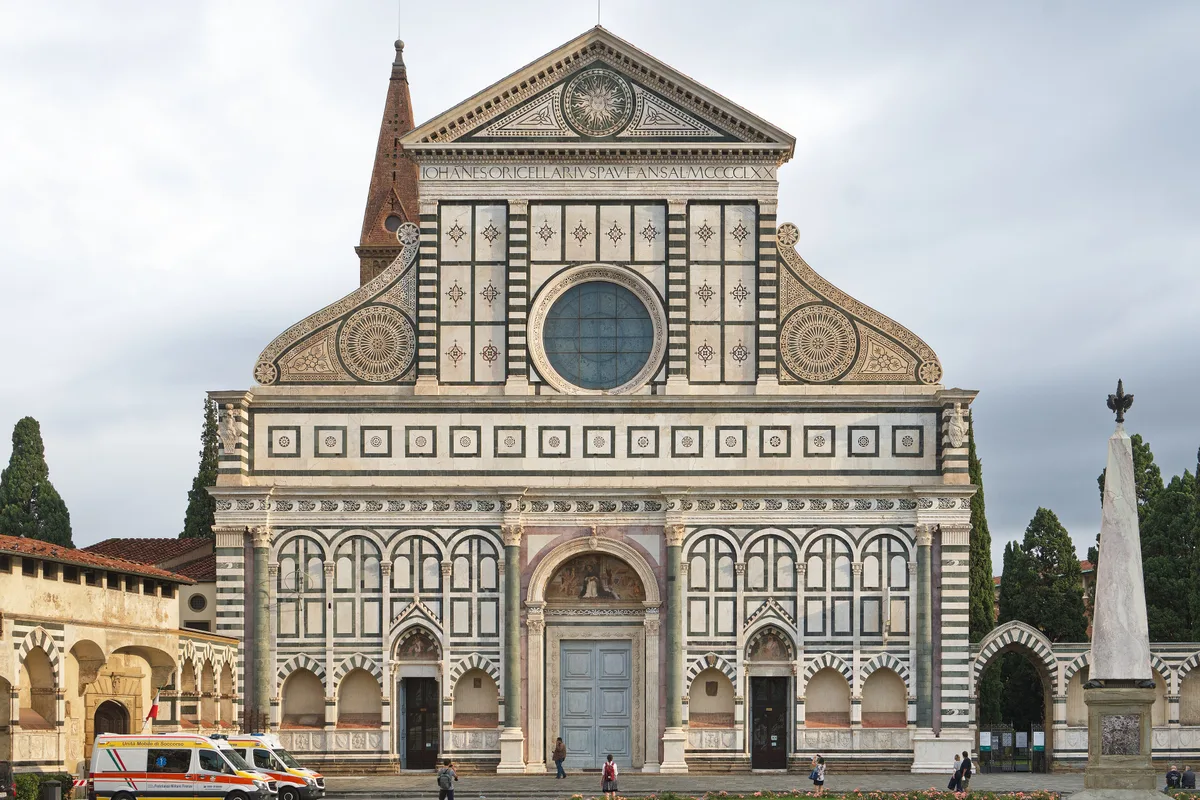
Photo: Armin Kleiner / CC BY-SA 4.0
What Your Eye SeesA vast basilica whose white-and-green marble facade is crowned by curling scrolls and a triangular pediment, standing across the square from the city's main railway station.
ContextThe Dominicans began the church in 1279 and completed it around 1360; the lower facade is 14th-century Gothic, while the upper storey, with its famous scrolls, was added by Leon Battista Alberti in 1470. Inside, Masaccio's Holy Trinity is one of the first paintings to use correct linear perspective, and the church holds frescoes by Ghirlandaio, the Strozzi Chapel by Filippino Lippi, and Giotto's great crucifix.
Source: UNESCO (Historic Centre of Florence); Wikipedia (Santa Maria Novella)
DidYou
Know
In 1572 the Dominican mathematician Ignazio Danti set an armillary sphere and a sundial into the church and used them to fix the exact date of Easter - measurements that helped bring about the Gregorian calendar reform of 1582.
ShareAlberti's Curling Scrolls
The great S-shaped volutes of the upper facade, added in 1470, were Alberti's solution for joining the wide lower storey to the narrow upper one - a pattern copied on churches across Europe.
The Pulpit That Shook Galileo
Look inside for the marble Rucellai pulpit, where in 1613 the friar Tommaso Caccini preached a sermon denouncing Galileo's Copernican ideas, the event that opened the Galileo controversy.
Sources: Wikipedia (Basilica of Santa Maria Novella)
Spiritual Seeker
Gothic Soul
Renaissance
14. Basilica of Santo Spirito
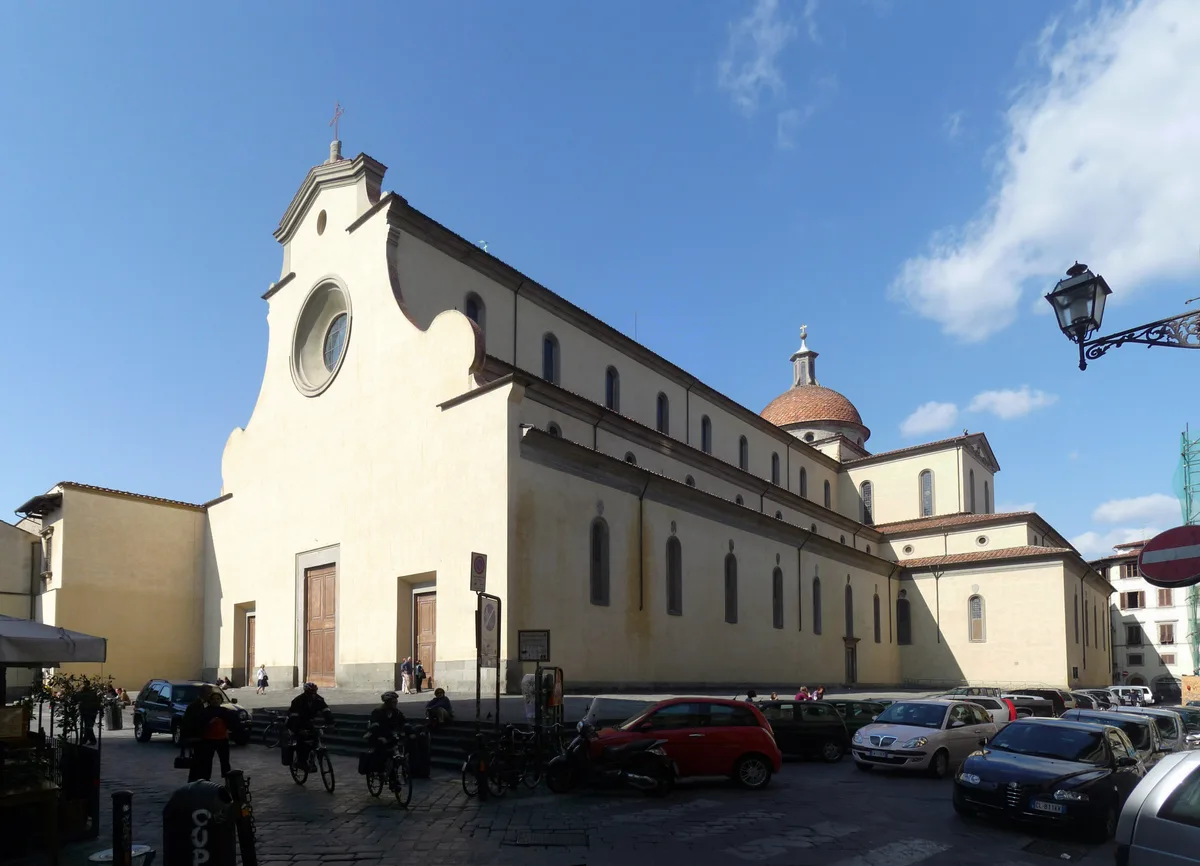
Photo: Lucarelli / CC BY-SA 3.0
What Your Eye SeesA vast brick-and-stone basilica whose plain, unfinished facade - never completed - opens onto a broad square in the Oltrarno, while inside a forest of identical columns carries Brunelleschi's serene arches.
ContextBrunelleschi designed the church around 1428, construction began in 1444 and it was consecrated in 1481. The facade he planned was never built, leaving the bare wall that faces the square. Inside, the harmonious grid of identical columns and semicircular chapels is considered the purest expression of Brunelleschi's Renaissance ideal of proportion.
Source: UNESCO (Historic Centre of Florence); Wikipedia (Santo Spirito, Florence)
DidYou
Know
As a teenager Michelangelo was allowed to dissect corpses from the convent's hospital here to study anatomy, and carved a wooden crucifix in thanks - the Crucifix of Santo Spirito still hangs in the octagonal sacristy of the church.
ShareA Facade That Was Never Built
Look at the plain west wall, Brunelleschi's design called for a facade that was never executed, so the church has stood without a finished front for over five centuries, one of the few great Renaissance buildings with no completed front.
One Module, Repeated
Look at the interior, which repeats a single module, a column, an arch, a chapel, along the whole length of the church, so the building reads as one calm, repeating rhythm.
Sources: Wikipedia (Basilica of Santo Spirito)
Renaissance
Spiritual Seeker
15. Brancacci Chapel
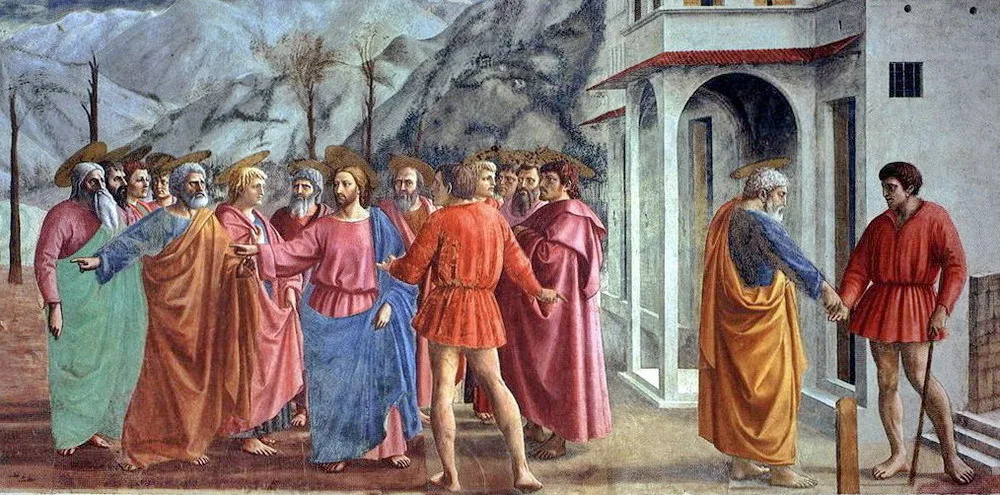
Photo: Masaccio / Public domain
What Your Eye SeesA small chapel at the end of the transept of Santa Maria del Carmine, its walls covered with frescoes of the lives of Saint Peter, most famously the expulsion of Adam and Eve from Eden.
ContextThe chapel was commissioned around 1422 by Felice Brancacci. Masolino began the frescoes in 1425, and his young collaborator Masaccio - just 21 - painted the scenes that changed European painting before dying in Rome at 27. The cycle was completed by Filippino Lippi in the 1480s and became the school where generations of artists, including Michelangelo, learned to paint.
Source: UNESCO (Historic Centre of Florence); Wikipedia (Brancacci Chapel)
DidYou
Know
Michelangelo's nose was broken in this chapel: as a young apprentice he was punched by a jealous rival, Pietro Torrigiano, who later featured that he had "crushed his nose like a biscuit".
ShareFaces From Two Hands
Look at the frescoes: half are by Masaccio, completed by Filippino Lippi nearly sixty years later; the two artists' styles are visible side by side, especially in the Raising of Theophilus.
A Portrait In The Crowd
In the Raising of the Son of Theophilus, Masaccio painted his own face among the onlookers; in the scene of the Disputation with Simon Magus, Filippino later added his own self-portrait and the face of his friend and teacher Sandro Botticelli.
Sources: Wikipedia (Brancacci Chapel)
Renaissance
Spiritual Seeker
How was the Florence Cathedral dome built without scaffolding?
Architect Filippo Brunelleschi solved the problem in the 1420s by building two interlocking shells instead of one. He laid the bricks in a self-supporting herringbone pattern so the dome could rise ring by ring with no wooden centring, and he invented an ox-powered hoist to lift stone to the top. Completed in 1436, it remains the largest masonry dome ever built.
What is the largest masonry dome in the world?
The dome of Florence Cathedral, built by Filippo Brunelleschi between 1420 and 1436. It spans about 45.5 metres inside and is made of more than four million bricks. Because it was finished without external scaffolding or buttresses, it helped define the engineering of the Renaissance and still surprises modern engineers today.
These landmarks reward close attention. Vestigia is a field companion for people who look longer, with curated context, architectural detail, and the stories most visitors walk past. Free on the App Store and Google Play.