Rio de Janeiro Historical Landmarks
1. Cristo Redentor (Christ the Redeemer)
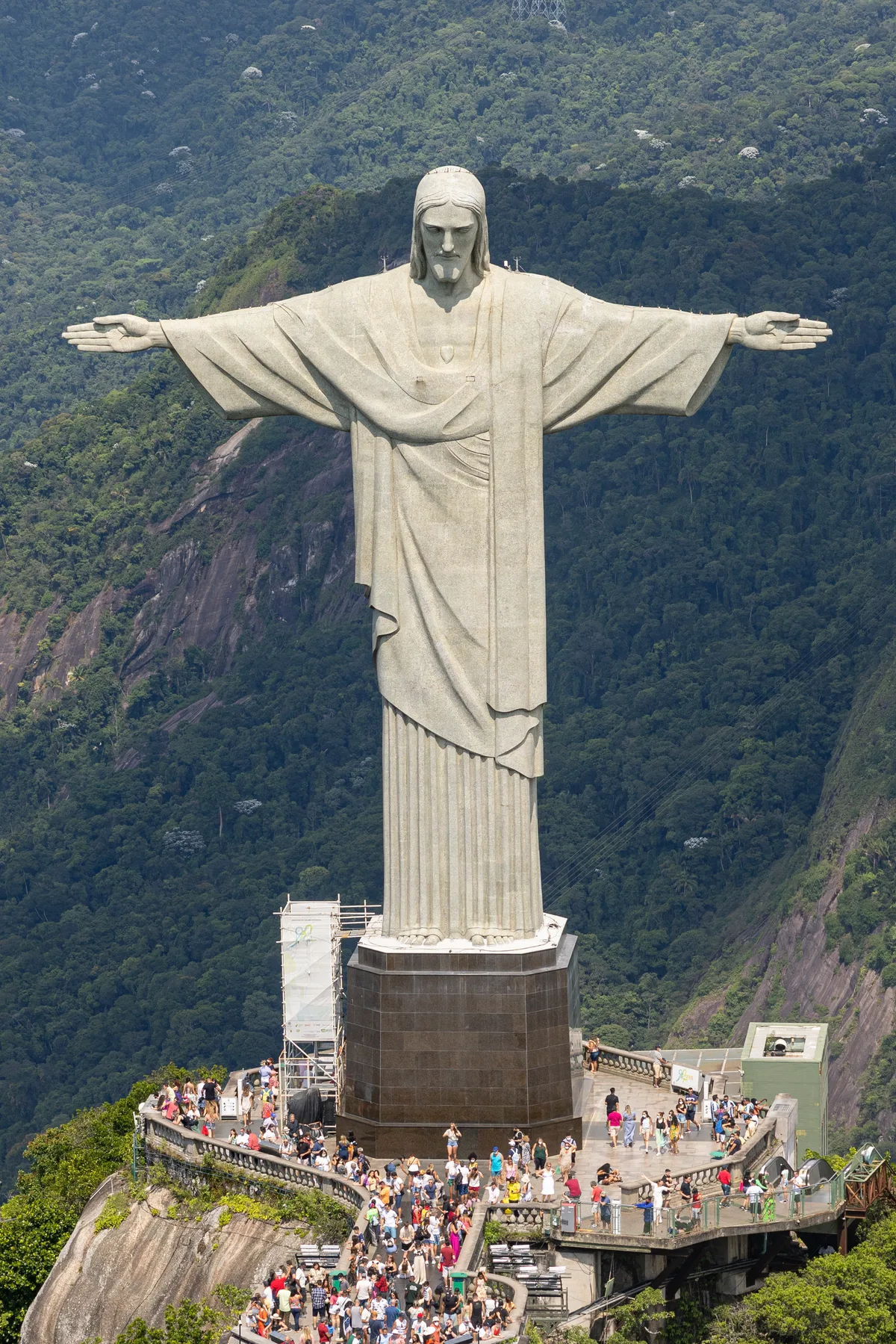
Photo: Arne Müseler / CC BY-SA 3.0 de
What Your Eye SeesA 30-metre Art Deco statue of Christ with arms outstretched, standing on an 8-metre pedestal atop the 710-metre Corcovado mountain, visible from nearly anywhere in the city.
ContextCristo Redentor was conceived in the 1850s but construction only began in 1922, funded by donations from Brazilian Catholics. The monument was designed by Brazilian engineer Heitor da Silva Costa and sculpted by French artist Paul Landowski. Completed in 1931, it remains one of the largest Art Deco statues in the world and was named one of the New Seven Wonders of the World in 2007.
On ScreenChrist the Redeemer appears in the films Rio (2011), 2012 (2009), Fast Five (2011) and the James Bond film Moonraker (1979).
Source: UNESCO (Carioca Landscapes of Rio de Janeiro); Wikipedia (Christ the Redeemer); Wikipedia (Christ the Redeemer); Rio production notes; Moonraker production notes
 Did
DidYou
Know
The pedestal houses a small chapel dedicated to Our Lady of Aparecida, added in 2006. The statue has been struck by lightning multiple times since 1931, a 2014 strike dislodged a finger from the right hand.
Share→ Heads And Hands, Made In Paris
Landowski carved the head (3.75 metres) and the hands (3.20 metres) at full scale in his Paris workshop; the face was modelled by the Romanian sculptor Gheorghe Leonida. The finished parts were shipped to Rio and enlarged from a four-metre plaster model.
Sources: Google Arts & Culture (Paul Landowski); Wikipedia (Christ the Redeemer)
 Renaissance
 Modernist
2. Paço Imperial (Imperial Palace)
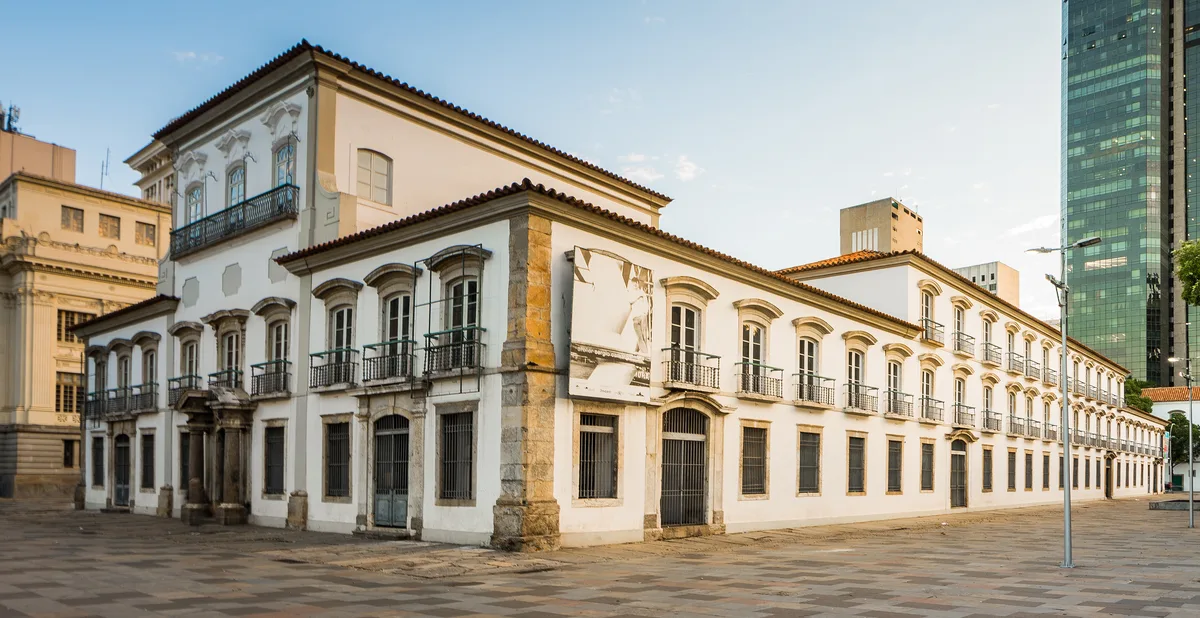
Photo: Donatas Dabravolskas / CC BY-SA 4.0
What Your Eye SeesA two-storey colonial palace with a Baroque facade and a central courtyard, painted in the yellow of the Portuguese royal house, facing a wide square.
ContextThe Paço Imperial was built in 1743 as the colonial mint and later converted into the residence of the Portuguese governors. In 1808, when Prince Regent João (later King João VI) arrived with his entire court, the palace became the seat of the Portuguese Empire, the only time a European monarchy governed its entire empire from a colony. It was here that the declaration of Brazilian independence was signed in 1822.
Source: Wikipedia (Paço Imperial)
DidYou
Know
In January 1822 some 8,000 citizens filled the palace courtyard with a 'Fico' petition, demanding that Prince Pedro stay in Brazil against his father's orders in Lisbon. Seven months later, from this same palace, he declared the country's independence.
Share→ Where Slavery Was Abolished
On 13 May 1888, Princess Isabel, acting as regent while Pedro II was abroad, signed the Lei Áurea in a room of the palace, abolishing slavery throughout Brazil without compensation to owners.
→ The Coronation Balcony
A monumental annex called the ‘Varanda’ was built between the palace and the neighbouring Carmo Convent for the acclamation of King João VI. The same structure later staged the coronations of Pedro I and Pedro II before being demolished during the Second Reign.
Sources: Wikipedia (Paço Imperial); IPHAN (gov.br); Museu do Imperialismo
 Euro Heritage
 Baroque Master
3. Mosteiro de São Bento (Monastery of St. Benedict)
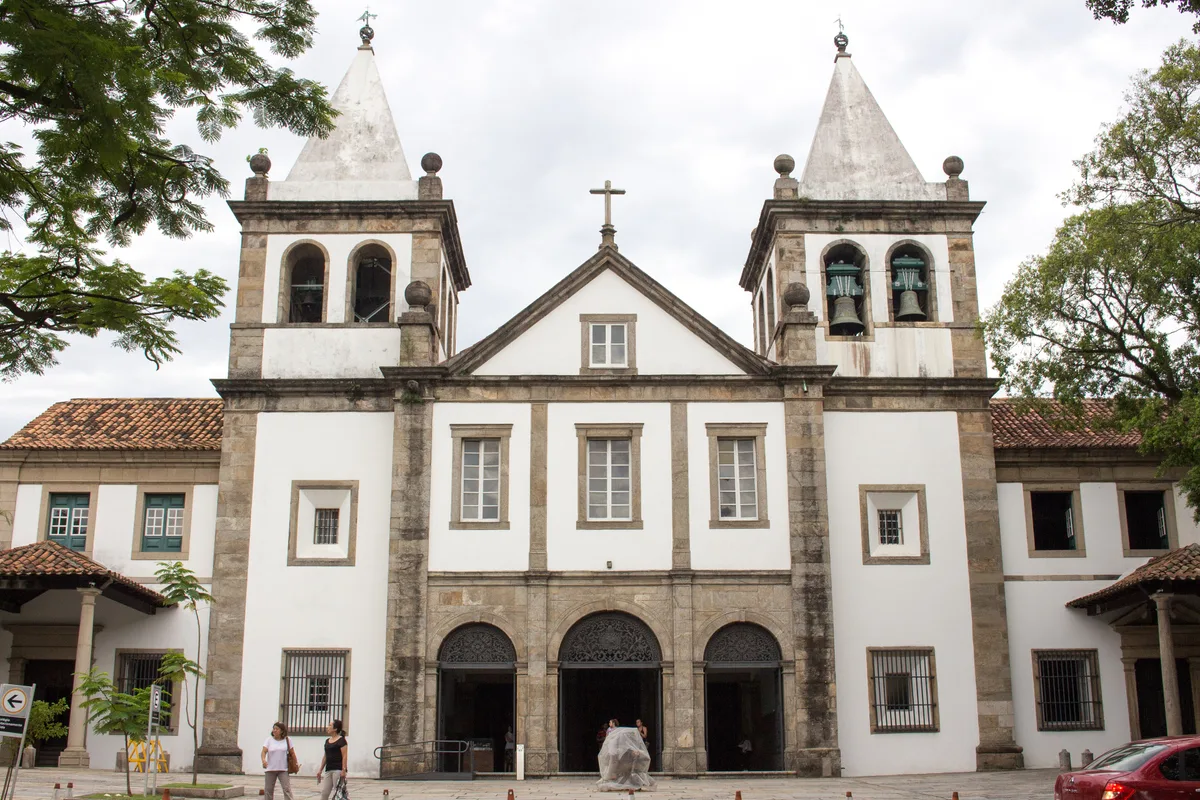
Photo: Klayton Aurélio de Oliveira / CC BY-SA 4.0
What Your Eye SeesAn austere colonial church facade hiding one of the most sumptuous Baroque interiors in the Americas, walls covered in carved and gilded wood, with an ornate altarpiece rising behind the main altar.
ContextThe Monastery of St. Benedict was founded in 1590 by Benedictine monks who arrived from Portugal. The current church was completed in 1633. Its interior decoration, carried out over the next century, represents the peak of Brazilian Baroque, the gilded carvings were executed by indigenous and enslaved African craftsmen working under Portuguese masters. The monastery continues to function as an active religious community.
Source: Wikipedia (Mosteiro de São Bento, Rio de Janeiro)
DidYou
Know
The Benedictine monks have sung the Divine Office in Gregorian chant here every day since 1590, an unbroken liturgical tradition older than Brazil itself. Their monastery is still a working community, and the chant drifting from the church is the same one the founding monks carried from Portugal.
Share→ The German Monk’s Masterpiece
The sacristy holds the masterpiece of Frei Ricardo do Pilar, a German-born Benedictine monk and painter: his Senhor dos Martírios, painted around 1690, is considered one of the great religious canvases of the Portuguese-Brazilian Baroque.
→ Carved By The Monks
The exuberant woodcarving of the nave was designed from 1669 onward by the Portuguese monk Frei Domingos da Conceição and carried on by the sculptors Alexandre Machado Pereira and Inácio Ferreira Pinto, the latter reworking the high chapel in rococo in the late 18th century.
Sources: Wikipedia (Mosteiro de São Bento, Rio de Janeiro); pedrachave.org; Mosteiro de Sao Bento (official site); Riotur.Rio
Euro Heritage
Baroque Master
 Spiritual Seeker
4. Candelária Church
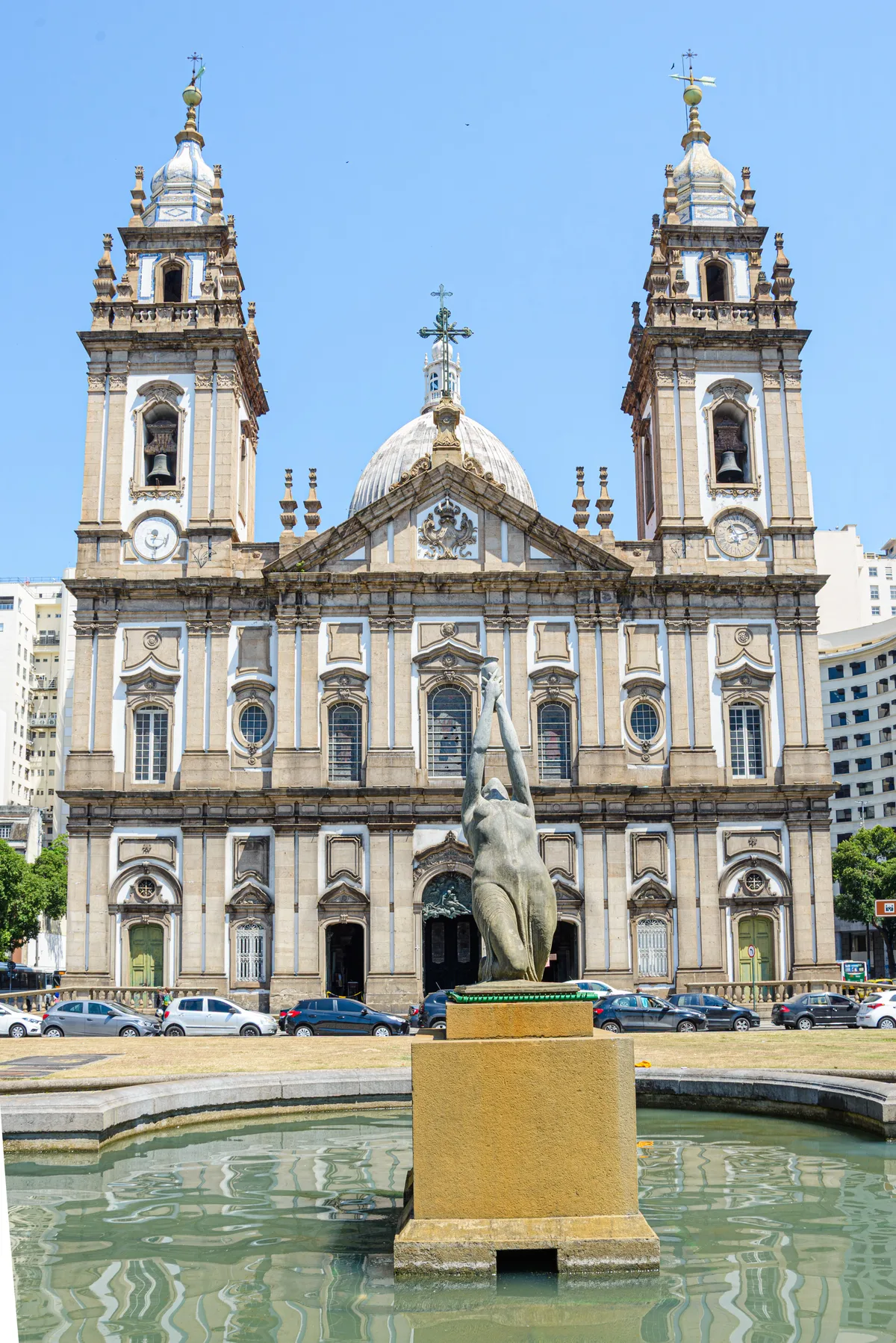
Photo: Essadariux / CC BY-SA 4.0
What Your Eye SeesA monumental twin-towered church with a Baroque facade and a neoclassical interior, occupying an entire city block near the waterfront.
ContextPortuguese settlers who survived a shipwreck in the early 17th century vowed to build a chapel if they reached land safely; the current church's construction began in 1775 to a design by the Portuguese military engineer Francisco João do Róscio and lasted 123 years, ending with its inauguration in 1898. It became the church of the Portuguese court after 1808 and later witnessed key events in Brazilian history, including the 1893 Naval Revolt and the 1993 Candelária massacre.
Source: Wikipedia (Candelária Church)
DidYou
Know
When its white Lioz-stone cupola was finished in 1877 it was the tallest structure in Rio, a deliberately Roman statement in a colonial port. Inside, the Italian marble floor is laid in a geometric pattern echoing St. Peter's Basilica, the court church dressing itself in the visual language of Rome.
Share→ Munich Glass
The church’s stained-glass windows were designed by the Brazilian artist João Zeferino da Costa with help from Henrique Bernardelli, fabricated in 1898 by the royal stained-glass studio of F. X. Zettler in Munich, and installed the following year. In 2026 they began their first restoration.
Sources: Igreja da Candearia (candeario.org.br); Prefeitura do Rio; Wikipedia (Candearia Church)
Euro Heritage
Baroque Master
Spiritual Seeker
5. Theatro Municipal
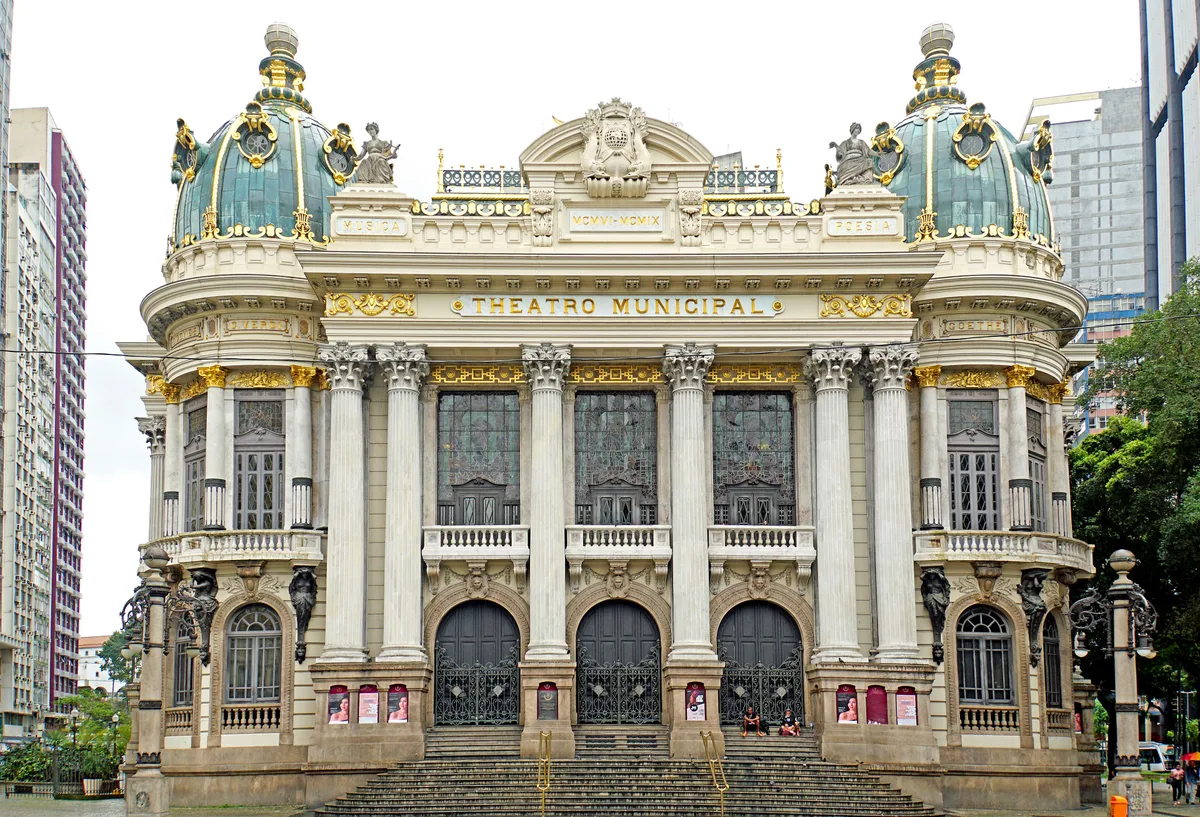
Photo: Dennis G. Jarvis / CC BY-SA 2.0
What Your Eye SeesA magnificent Belle Époque opera house with a richly sculpted facade, a central dome, and an interior of marble, gold leaf, and crystal chandeliers.
ContextThe Theatro Municipal was built during the rubber boom, when Amazonian wealth funded Rio's transformation into a European-style capital. It was modelled on the Paris Opera and took five years to construct (1905–1909). The theatre was the centrepiece of the Beaux-Arts redevelopment of the city centre overseen by mayor Pereira Passos, a project that demolished hundreds of colonial buildings to create Parisian boulevards.
Source: Wikipedia (Theatro Municipal, Rio de Janeiro)
DidYou
Know
The ceiling fresco by Eliseu Visconti depicts figures from Greco-Roman mythology, Muses, the Three Graces, and Apollo. The foyer murals by Eliseu Visconti, A Musica, A Arte Lingica, and O Drama, were executed in Paris between 1913 and 1916 in a pointillist divisionist style.
Share→ The Great Drop Curtain
Behind the stage proscenium hangs the pano de boca, the monumental curtain painted by Eliseu Visconti in 1908, titled A Influência das Artes sobre a Civilização and roughly 12 by 16 metres. It shows an allegorical procession of figures honouring art and science, and is often described as the largest canvas ever painted in Brazil; visitors can still see regular figures of black Brazilians and communal players set within the grand European-style allegory.
→ The Assyrian Cellar
Beneath the theatre, the Salão Assírio is decorated in a Babylonian-Assyrian-Persian style with bull-headed columns and mosaic panels, a deliberate contrast to the Belle Époque auditorium. In 2026, an ancient Persian inscription that had puzzled visitors for 117 years was finally deciphered by Brazilian academics from UFRJ and UERJ.
Sources: Wikipedia (Theatro Municipal do Rio de Janeiro); Eliseu Visconti Institute (eliseuvisconti.com.br); Rio Film Commission; O Globo (2026)
Renaissance
 City Hopper
6. Museu Histórico Nacional (National Historical Museum)
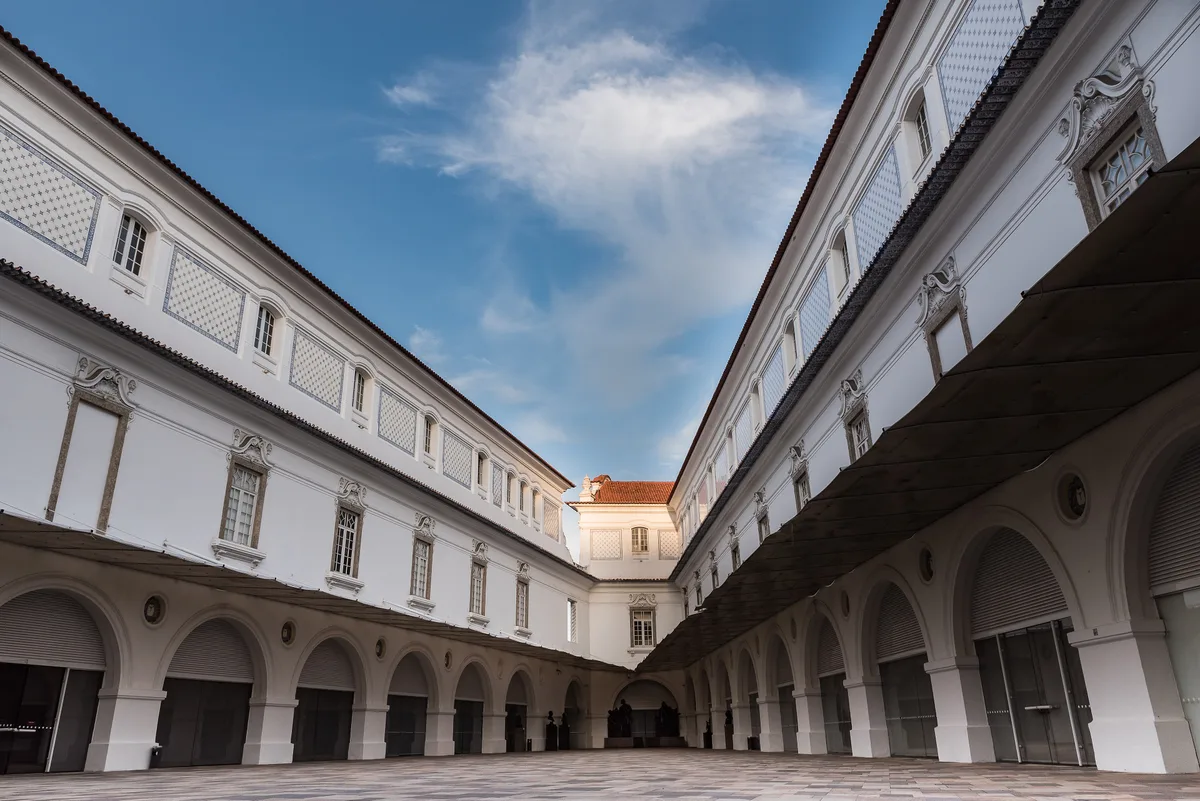
Photo: V.abdalla / CC BY-SA 4.0
What Your Eye SeesA massive complex of colonial buildings around a central courtyard, housing one of Latin America's largest historical collections, spanning pre-Columbian artefacts through imperial Brazil.
ContextThe Museu Histórico Nacional occupies a colonial fortress begun as the Forte de Santiago in 1603 and later enlarged with the Casa do Trem (1762) and the War Arsenal (1764); it was founded in 1922 to mark the centennial of Brazilian independence. The collection holds over 300,000 items including the golden crown of Emperor Pedro II and the pen used to sign the abolition of slavery in 1888.
Source: Wikipedia (National Historical Museum, Rio de Janeiro)
DidYou
Know
Its coin collection is the largest in Latin America, running from Greek and Roman pieces to colonial Portuguese issues, among the rarest is a gold 'dobra', one of the great Portuguese colonial coins and the largest denomination minted in the empire.
Share→ The Empress’s Berlin
The museum’s carriage collection includes a richly decorated ‘berlinda de aparato’, a glass-windowed state coach used by Empress Teresa Cristina, consort of Pedro II, alongside an 18th-century berlin that belonged to the Portuguese Royal House.
→ The Cannons’ Courtyard
The ‘Pátio dos canhões’ (‘cannons’ courtyard) has displayed its artillery since the museum’s first exhibition in 1922. Most of the guns came from the army arsenal that operated in these buildings until it moved to the Caju district in 1903.
Sources: Museu Histórico Nacional (mhn.acervos.museus.gov.br); Google Arts & Culture (MHN); Museu Histórico Nacional (mhn.museus.gov.br)
Renaissance
7. Forte de Copacabana (Copacabana Fort)
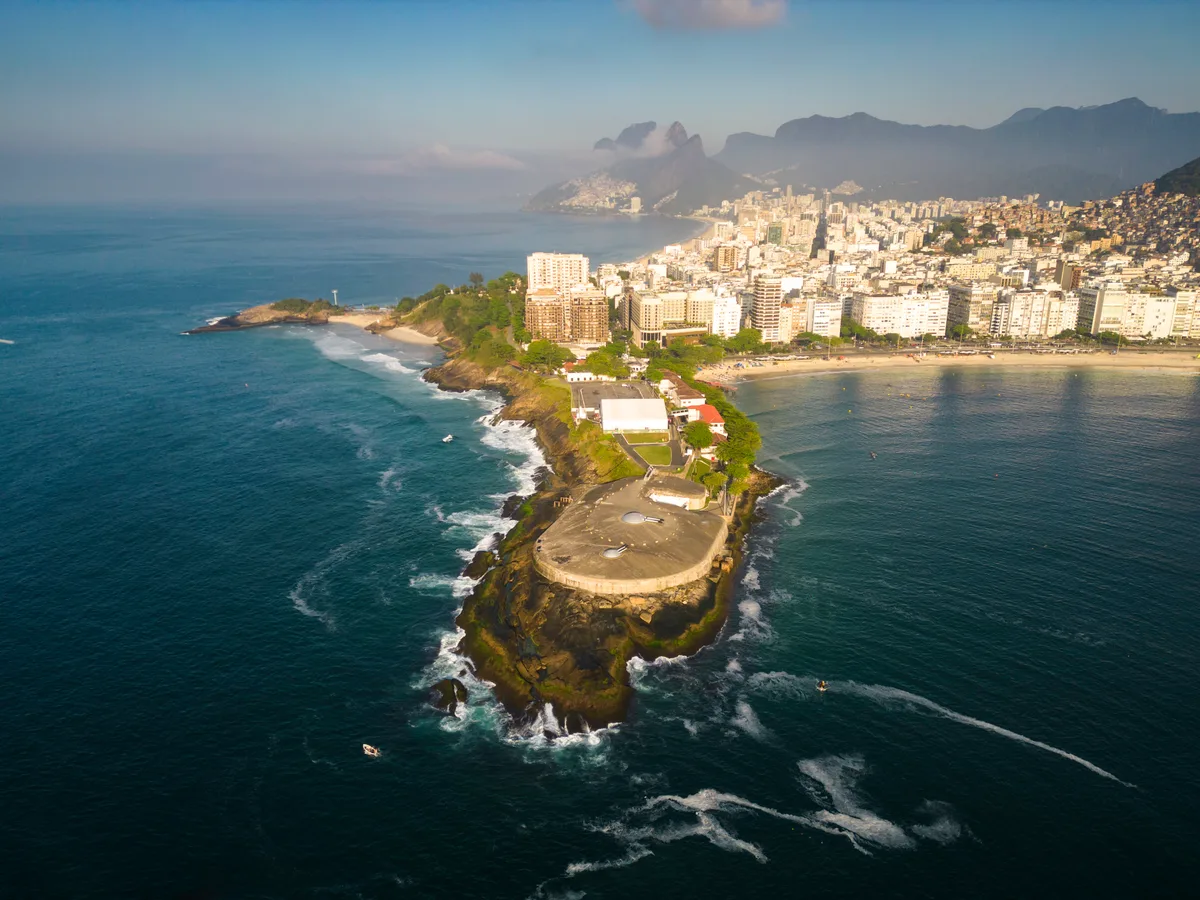
Photo: Donatas Dabravolskas / CC BY-SA 4.0
What Your Eye SeesA early 20th-century coastal fortress with thick concrete walls and original artillery pieces, built on a rocky promontory at the southern end of Copacabana beach.
ContextForte de Copacabana was built between 1908 and 1914 as part of a coastal defence system protecting Rio's harbour. It was the site of the 'Revolt of the 18 of the Fort' in 1922, the first uprising of the tenente (lieutenant) movement against the Brazilian government, which marked the beginning of the end of the Old Republic. The fort was decommissioned in 1987 and converted into the Army Historical Museum.
Source: Wikipedia (Fort Copacabana)
DidYou
Know
The fort's two 305-mm Krupp cannons were among the largest coastal defence guns in South America, each could fire a roughly 445-kilogram shell up to 23 kilometres. The seaward outer walls are up to 12 metres thick, built as a casemate designed to withstand naval bombardment.
Share→ The Names Nailed Into The Stone
Before the last rebels marched out on 6 July 1922, they scored their own names into the fort wall with nails, then cut the flag into pieces so each man could carry a fragment on his chest. The act of writing directly onto the stone is the rare, physical trace of the episode you can still look for on the structure, down to the graffiti-style lettering of soldiers who knew they would not all return.
→ The Guns That Named Them
The fort’s two great Krupp guns sit in the ‘Duque de Caxias’ cupola and are individually named Barroso and Osório, after two celebrated Brazilian commanders. Each was mounted in a rotating armoured cupola that the crew could retract out of sight after firing.
Sources: Wikipedia (Copacabana Fort revolt); MHEXFC; Wikipedia (Fort Copacabana)
 Time Traveler
City Hopper
Time Traveler
City Hopper
8. Ilha Fiscal (Fiscal Island)
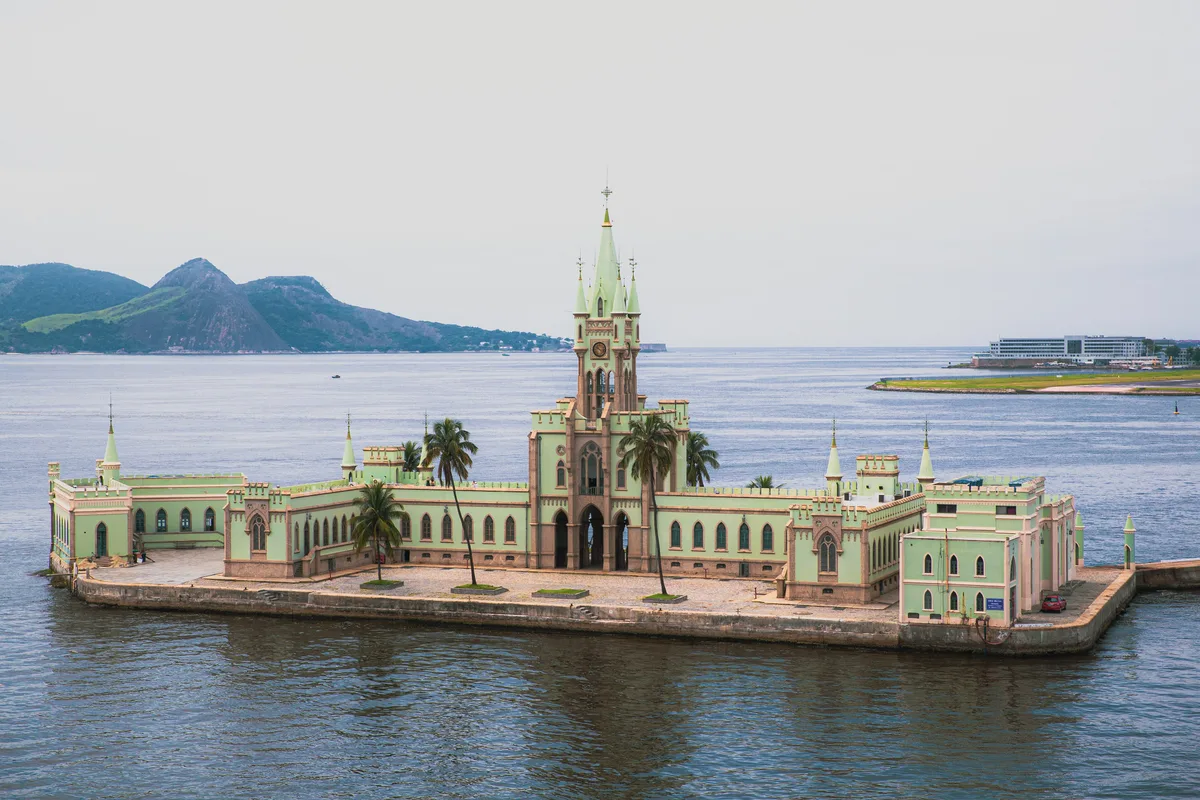
Photo: Marinha do Brasil / CC BY-SA 2.0
What Your Eye SeesA pale green neo-Gothic palace on a small island in Guanabara Bay, looking like a miniature castle, surrounded by water on all sides.
ContextIlha Fiscal (Fiscal Island) was built in 1889 as the headquarters of the Brazilian customs service, located on an island so that goods entering the harbour could be inspected before reaching land. The palace was designed by the Brazilian engineer Adolpho José Del Vecchio in a Provençal-inspired neo-Gothic style. It was the venue for the last imperial ball on November 9, 1889, six days before a military coup overthrew the monarchy.
Source: Wikipedia (Ilha Fiscal)
DidYou
Know
At the November 1889 ball, Emperor Pedro II made his last public appearance, while several officers present were already plotting the republic that overthrew the monarchy days afterward. The navy took the island in 1913, and a stone causeway finally linked it to the mainland in 1931.
Share→ Rat Island
Before the customs service moved in, the island was known as Ilha dos Ratos (‘Rat Island’). The name Ilha Fiscal comes from the Guarda Fiscal customs post that served the imperial capital’s port there from the mid-1800s.
→ The Four-Faced German Clock
The Torreão, the castle’s observation tower, houses a four-faced clock built in Germany and a floor mosaic made from 14 different precious Brazilian woods.
Sources: Wikipedia (Ilha Fiscal); Marinha do Brasil; Museus do Rio (Complexo Cultural da Marinha)
Euro Heritage
 Gothic Soul
9. Escadaria Selarón
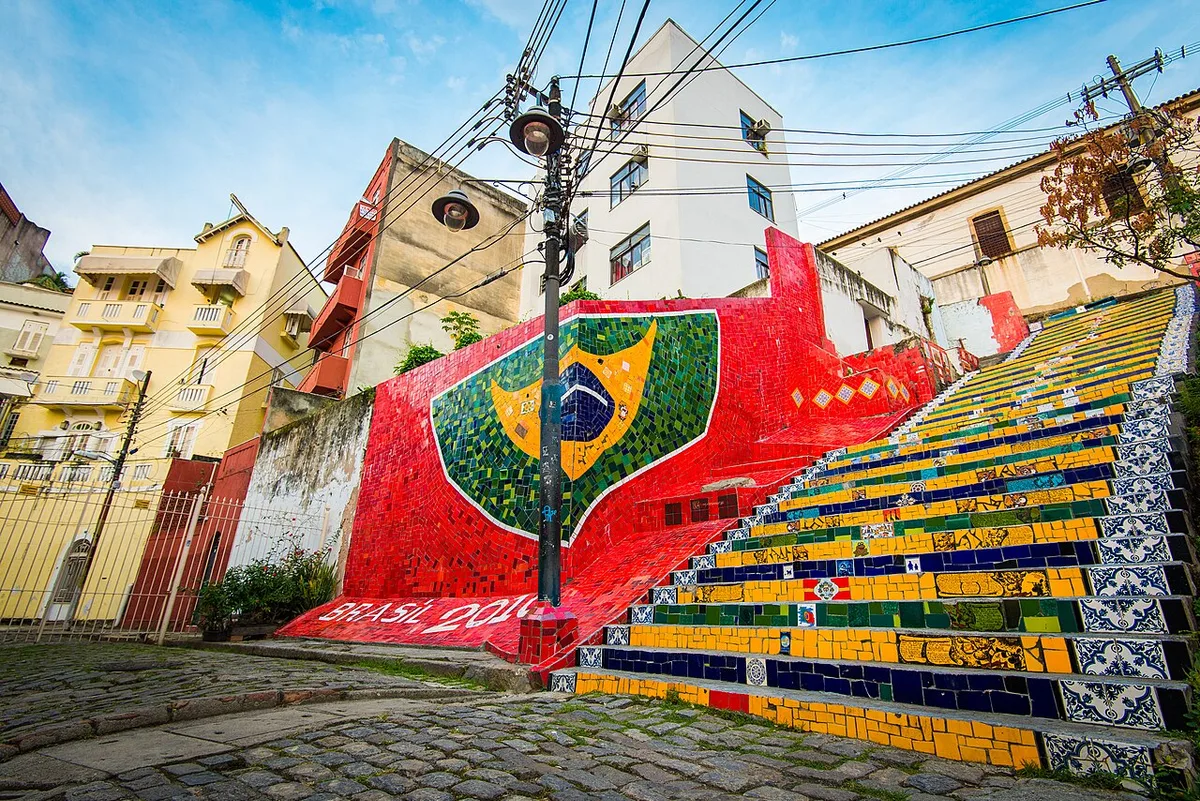
Photo: Donatas Dabravolskas / CC BY-SA 4.0
What Your Eye SeesA steep public staircase of 215 steps covered in thousands of ceramic tiles, mirrors and porcelain from over 60 countries, in a chaotic riot of blue, green, yellow and red.
ContextIn 1990 the Chilean-born artist Jorge Selarón began tiling the crumbling steps outside his house in Lapa as a tribute to the Brazilian people. He worked on them until his death in 2013, constantly replacing sections so the work was never complete. The steps were declared a city landmark in 2005.
On ScreenThe Selarón Steps appear in music videos by Snoop Dogg and U2 and in the series The Amazing Race.
Source: Wikipedia (Escadaria Selarón); Wikipedia (Escadaria Selarón); Snoop Dogg 'Beautiful'
DidYou
Know
Selarón funded the stairs by selling his own paintings, he claimed to have painted more than 25,000 portraits, and the steps later starred in Rio's successful bid video for the 2016 Summer Olympics.
Share→ Tiles From Around The World
More than 2,000 tiles cover the steps, collected from over 60 countries. Early tiles were scavenged from construction sites and urban waste, but in later years visitors donated tiles from their home countries.
→ The Pregnant Woman
Around 300 of the tiles were hand-painted by Selarón depicting a pregnant African woman. He never explained the image, only calling it a ‘personal problem from my past’.
Sources: Wikipedia (Escadaria Selarón); Atlas Obscura
Renaissance
10. Sugarloaf Mountain
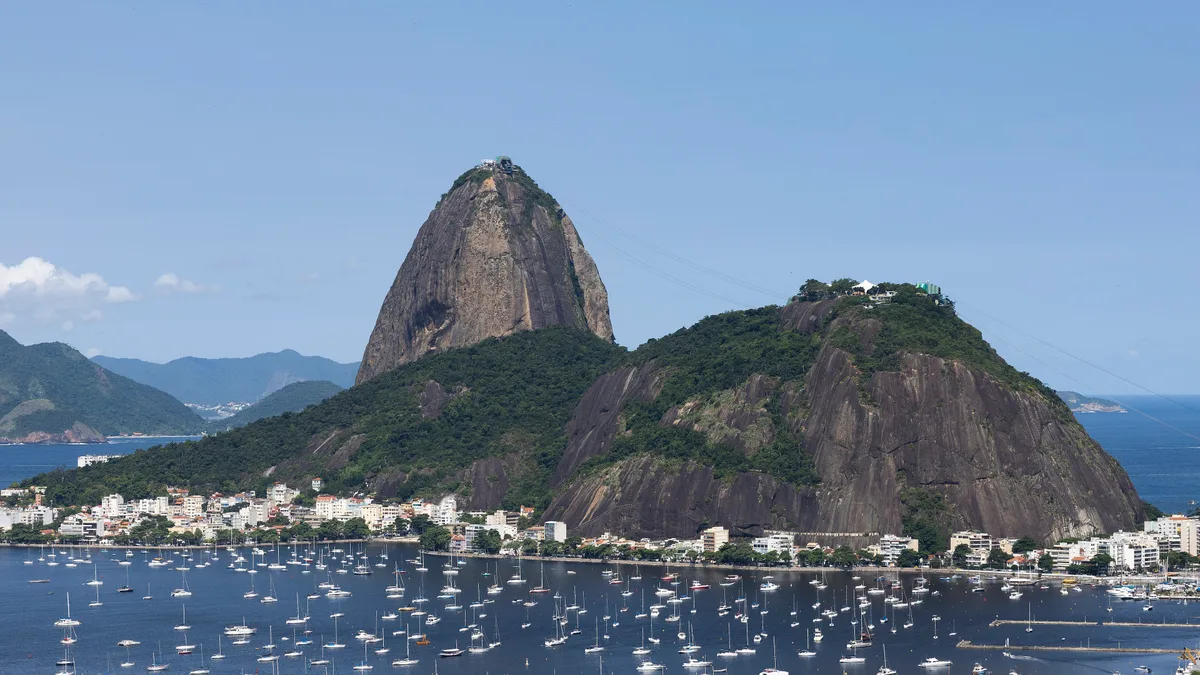
Photo: Arne Müseler / CC BY-SA 3.0 de
What Your Eye SeesA 396-metre granite and quartz peak rising straight from the water at the mouth of Guanabara Bay, shaped like a sugarloaf, with cable cars climbing to its flat summit.
ContextSugarloaf Mountain is a monolith formed from bornhardt granite that rises 396 metres above the harbour. It was named by Portuguese traders in the 16th century for its resemblance to the conical moulds used to shape refined sugar. The cable car opened in 1912, the first in Brazil and only the third in the world, connecting Praia Vermelha to Morro da Urca and then to the summit.
On ScreenSugarloaf Mountain was a filming location for the James Bond film Moonraker (1979).
Source: UNESCO (Carioca Landscapes of Rio de Janeiro); Wikipedia (Sugarloaf Mountain); Wikipedia (Sugarloaf Mountain); Moonraker production notes
DidYou
Know
The cable car was the vision of engineer Augusto Ferreira Ramos in 1908. He needed only four years to finish it, even though the mayor gave him thirty. The summit and cable cars appeared in the James Bond film Moonraker (1979).
Share→ A Mountain Of Two Names
The Portuguese name Pão de Açúcar (‘sugarloaf’) comes from the shape of sugar moulds, but the Tupi people called the peak Pau-nh-Acuqua, meaning ‘high, isolated, pointed hill’.
→ The Oldest Cars
The first cable cars were built of coated wood and ran for 61 years. They were replaced in 1972–73 with cars holding 75 passengers, and rebuilt again in 2008 with Swiss-made glass-walled cabins.
Sources: Wikipedia (Sugarloaf Mountain); Rio the Guide; Wikipedia (Sugarloaf Cable Car)
 Green Soul
City Hopper
Green Soul
City Hopper
11. Arcos da Lapa
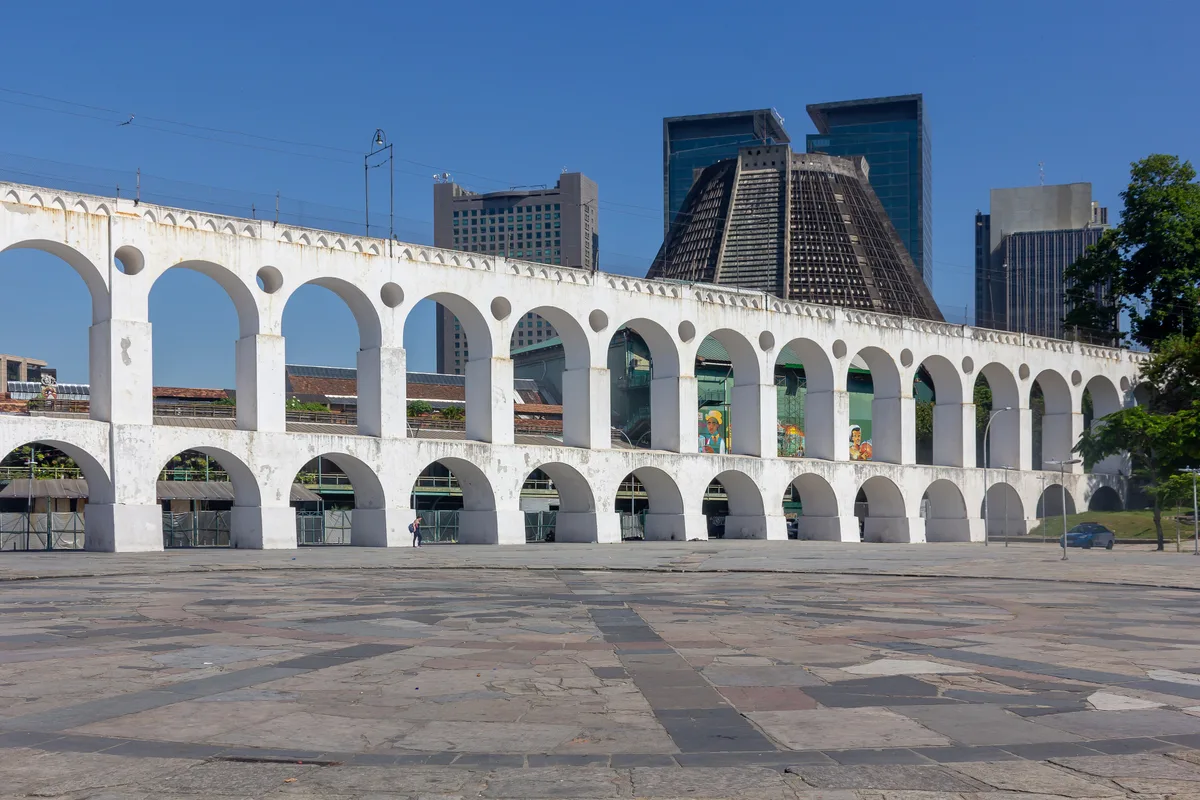
Photo: Photograph by Mike Peel (www.mikepeel.net). / CC BY-SA 4.0
What Your Eye SeesA monumental double-tiered arcade of 42 Roman-style stone arches spanning 270 metres across the Lapa neighbourhood, with a small yellow tram running along its top.
ContextThe Carioca Aqueduct was built in the mid-18th century to carry fresh water from the Carioca River to Rio's centre, replacing an earlier 1723 conduit. The surviving 42-arch section was completed in 1750 by the Portuguese military engineer José Fernandes Pinto Alpoim. When the aqueduct was deactivated, it was adapted in 1896 as a viaduct for the Santa Teresa Tramway.
Source: Wikipedia (Arcos da Lapa)
DidYou
Know
The Santa Teresa Tramway, the Bonde, is the only streetcar still operating in Rio de Janeiro. Every day it crosses the top of the 18th-century arches, carrying passengers between the city centre and the hilly Santa Teresa neighbourhood.
Share→ Water For A Thirsty City
Rio’s early centre sat on swamps with bad water, so fresh water had to be carried from distant streams. Plans to pipe the Carioca River dated to 1602, but the monumental arches only reached completion in 1750.
→ A Lisbon Model
Engineer José Fernandes Pinto Alpoim modelled the aqueduct on the Águas Livres Aqueduct in Lisbon, the same engineer who designed the Paço Imperial earlier in the same century.
Sources: Wikipedia (Carioca Aqueduct); Structurae
Time Traveler
City Hopper
Why was Christ the Redeemer built in Rio?
The idea dates to the 1850s, but construction began only in 1922, funded by donations from Brazilian Catholics. Brazilian engineer Heitor da Silva Costa designed the monument and French artist Paul Landowski sculpted the figure. Completed in 1931, it is one of the largest Art Deco statues in the world and was named one of the New Seven Wonders of the World in 2007.
Who built the colorful staircase in Rio's Lapa neighborhood?
A Chilean-born artist named Jorge Selaron. In 1990 he began tiling the crumbling steps outside his house in Lapa as a tribute to the Brazilian people, and he worked on them until his death in 2013, constantly replacing sections so the work was never complete. He funded the project by selling his own paintings, said he had painted more than 25,000 portraits, and the steps later appeared in Rio's successful bid video for the 2016 Summer Olympics. The staircase was declared a city landmark in 2005.
How do you reach the top of Sugarloaf Mountain?
By cable car, in two stages: from Praia Vermelha to Morro da Urca, then up to the summit at 396 metres. The cable car opened in 1912 as the first in Brazil and only the third in the world, the vision of engineer Augusto Ferreira Ramos, who finished it in just four years even though the mayor gave him thirty. Sugarloaf was named by Portuguese traders in the 16th century because it resembles the conical moulds used to shape refined sugar.
These landmarks reward close attention. Vestigia is a field companion for people who look longer, with curated context, architectural detail, and the stories most visitors walk past. Free on the App Store and Google Play.