Singapore Historical Landmarks
1. Masjid Omar Kampong Melaka
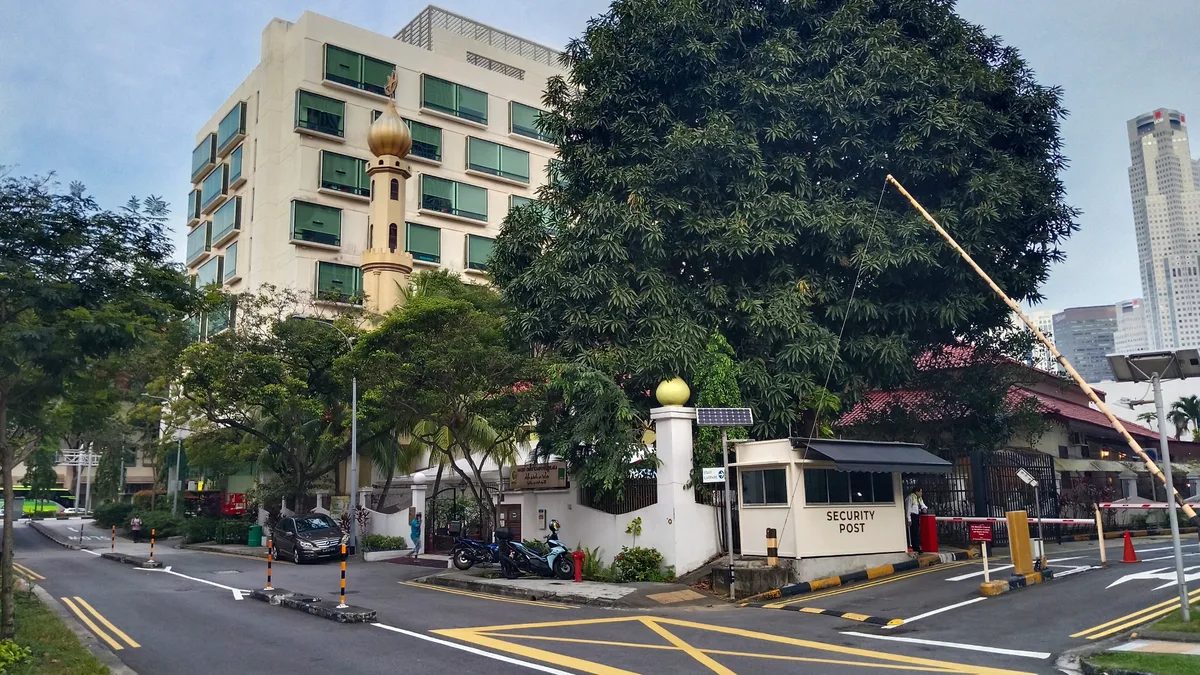
Photo: M. Adrian Jurhami / CC BY 4.0
What Your Eye SeesA plain white prayer hall tucked into a quiet corner of the historic quarter, its arched facade and slim dome rising beside rows of old shophouses. Simple timber doors and clean white walls give the building a calm, uncluttered look.
ContextBuilt in 1820 by Arab merchant and philanthropist Syed Omar Aljunied, Masjid Omar Kampong Melaka is the oldest mosque in Singapore and is often described as the island's first purpose-built place of worship. It began as a small wooden hall, was rebuilt in brick in 1855, and was gazetted a national monument in 2001.
Source: Wikipedia (Masjid Omar Kampong Melaka); National Heritage Board (Singapore)
 Did
DidYou
Know
Did you know this modest mosque marks the first recorded waqf, or Islamic charitable endowment, in Singapore's history? Its founder, Syed Omar Aljunied, also donated land for St Andrew's Cathedral, quietly weaving the island's early Muslim and Christian communities together.
ShareA Minaret That Arrived Late
For more than 160 years this mosque had no minaret at all. The slim tower now rising beside the prayer hall was only added in 1985, long after the rest of the building took shape.
Graves In The Courtyard
Look down as you cross the small courtyard: the graves of Syed Omar Aljunied's family lie here, reinterred at this spot in 2002 so the founder's line would rest within the mosque that carries his name.
Sources: MUIS (Masjid Omar Kampong Melaka); National Heritage Board (Singapore)
 Spiritual Seeker
2. Thian Hock Keng Temple
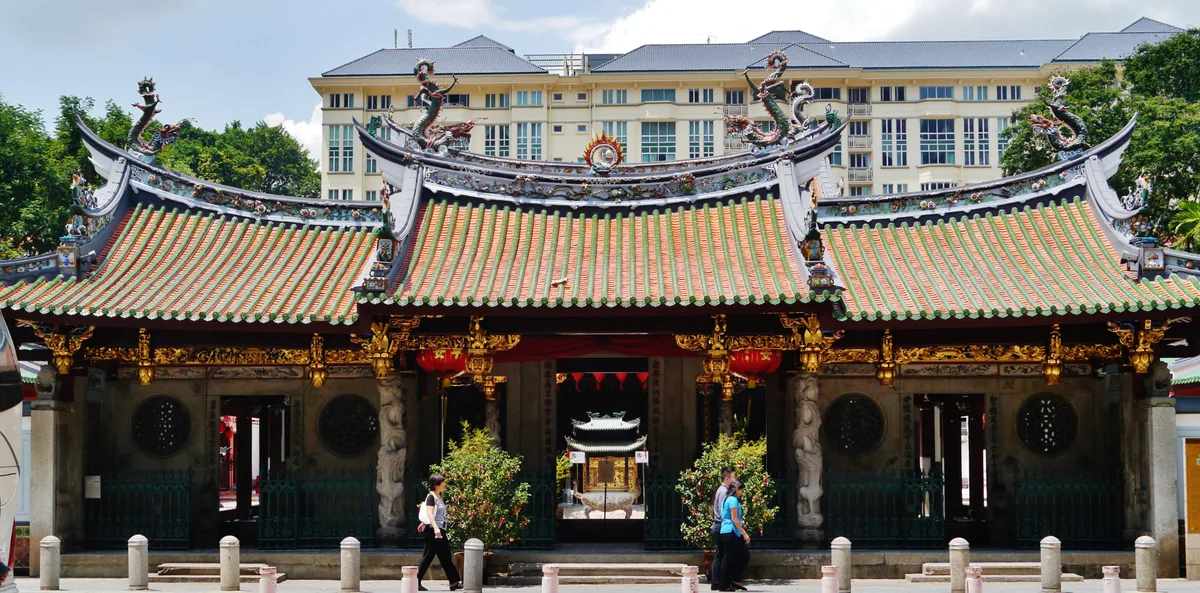
Photo: Zairon / CC BY-SA 4.0
What Your Eye SeesA richly decorated Chinese temple with sweeping tiled roofs and gilded ridge carvings, wrapped in the warm red and gold glow of hanging lanterns. Ornate stone pillars and curls of incense smoke frame its open courtyard among the surrounding shophouses.
ContextBuilt between 1839 and 1842, Thian Hock Keng is the oldest Chinese temple in Singapore. The Hokkien Chinese community raised it as a thank-offering for safe sea journeys, led by merchant Tan Tock Seng. Dedicated to Mazu, goddess of the sea, it once faced the shoreline before land reclamation pushed the coast out, and was gazetted a national monument in 1973.
Source: Wikipedia (Thian Hock Keng); National Heritage Board (Singapore)
DidYou
Know
Did you know Thian Hock Keng was assembled entirely without nails? Master craftsmen from Fujian fitted its timber, granite and tiles using traditional joinery, a feat of Minnan carpentry that helped it earn an honourable mention in the 2001 UNESCO Asia-Pacific Heritage Awards.
ShareDragons Chasing A Pearl
On the entrance hall roof, four dancing dragons chase a blazing pearl, their open mouths straining toward the prize. In Chinese tradition the pearl holds the gift of blessings, and the chase is meant to draw good fortune down on the temple.
European Touches On A Chinese Temple
Trace the courtyard walls and you will find a dado of glazed ceramic tiles and slender cast-iron railings - European details shipped to Singapore and worked into the traditional Minnan temple.
Sources: Thian Hock Keng official site; National Heritage Board (Singapore)
 Eastern Spirit
Spiritual Seeker
Eastern Spirit
Spiritual Seeker
3. Sultan Mosque
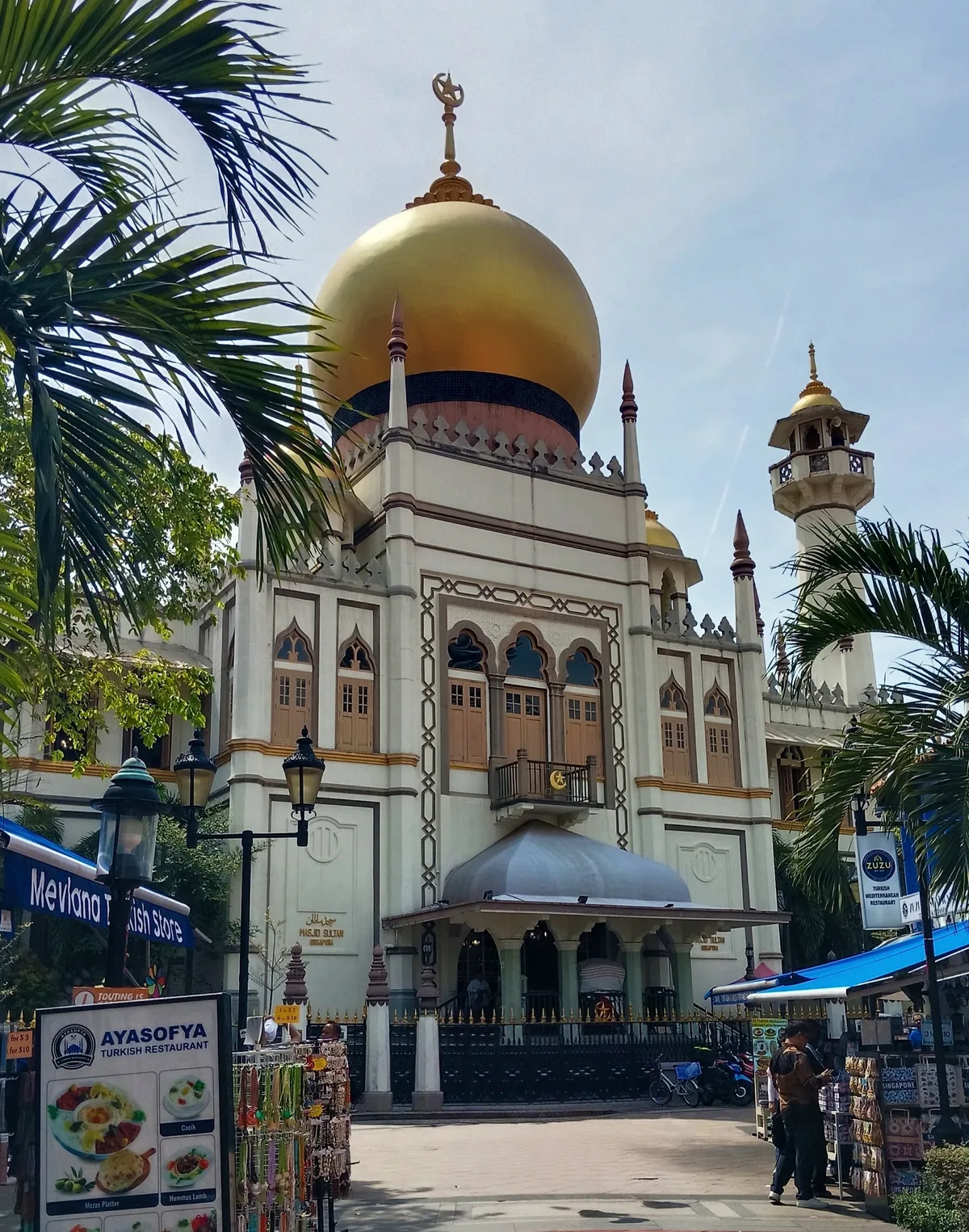
Photo: M. Adrian Jurhami / CC BY 4.0
What Your Eye SeesA striking mosque topped by a large golden onion dome, its broad white facade framed by slender minarets. Wide arched entrances and Islamic geometric detail give it a dignified, imposing silhouette over the Kampong Glam quarter.
ContextFounded in 1824 by Sultan Hussein Shah of Johor, Sultan Mosque stands in Kampong Glam. The present building was designed by Irish architect Denis Santry of Swan & Maclaren in the Indo-Saracenic style, rebuilt from 1924 and completed in 1932, its golden onion domes funded partly by communal donations.
Source: Wikipedia (Sultan Mosque); National Heritage Board (Singapore)
DidYou
Know
Did you know one of Sultan Mosque's two great golden domes does not crown the prayer hall but a royal mausoleum? Beneath it lie the descendants of Sultan Hussein Shah, the fallen royal family of Kampong Glam, so the building is both a house of worship and a tomb woven into the same golden roof.
ShareGlass Bottles Under The Gold
Run your eye down each golden dome and you will find a dark band of sawn-off glass bottle ends set into the base. Poorer Muslims donated empty bottles instead of money, so that every member of the community could contribute to the rebuilding, whatever they could afford.
Set At An Angle To The Street
The mosque does not line up with the streets around it. Its prayer hall is deliberately skewed on the plot so worshippers face Mecca, breaking the colonial grid of the quarter.
Sources: Wikipedia (Sultan Mosque); NLB Infopedia
Spiritual Seeker
4. Sri Mariamman Temple
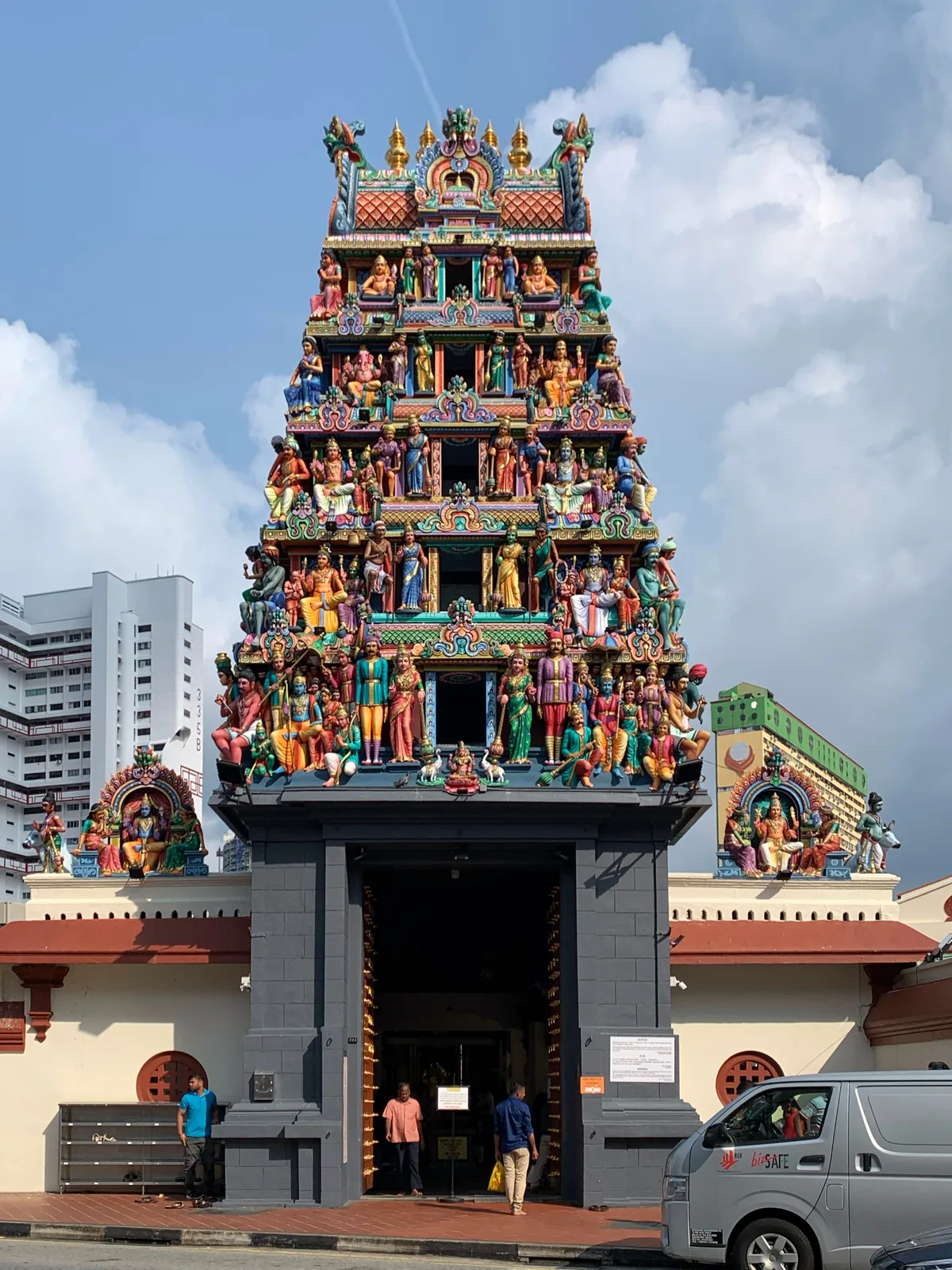
Photo: Chainwit. / CC BY-SA 4.0
What Your Eye SeesA Hindu temple crowned by a tall, colourful gopura tower packed with painted sculptures of deities. The vivid tower rises above the street entrance, while simpler shrines and a columned prayer hall lie within the busy compound.
ContextBuilt in 1827, Sri Mariamman is the oldest Hindu temple in Singapore, founded by Naraina Pillai. It began as an attap-and-wood structure before a brick building replaced it, and its present Dravidian-style gopuram was raised in 1925. Known for its colourful tower and the annual Theemithi fire-walking festival, it was gazetted a national monument in 1973.
Source: Wikipedia (Sri Mariamman Temple, Singapore); National Heritage Board (Singapore)
DidYou
Know
Did you know that each year devotees at Singapore's oldest Hindu temple walk barefoot across a bed of burning charcoal about three metres long, the Theemithi ordeal honouring Draupadi's trial from the Mahabharata, before cooling their feet in a pit of milk?
ShareSix Tiers Of Painted Gods
The entrance tower rises in six levels, each packed with rows of brightly painted gods and goddesses, their colours standing out sharply against the dark grey of the walls behind them.
The Street Named After A Tower
Pagoda Street, the lane running beside the temple, takes its name from this very gopuram: the tiered tower looked so much like a pagoda to colonial onlookers that the whole street was named for it.
Sources: NLB Infopedia; Wikipedia (Sri Mariamman Temple)
Eastern Spirit
Spiritual Seeker
5. The Arts House (Old Parliament House)
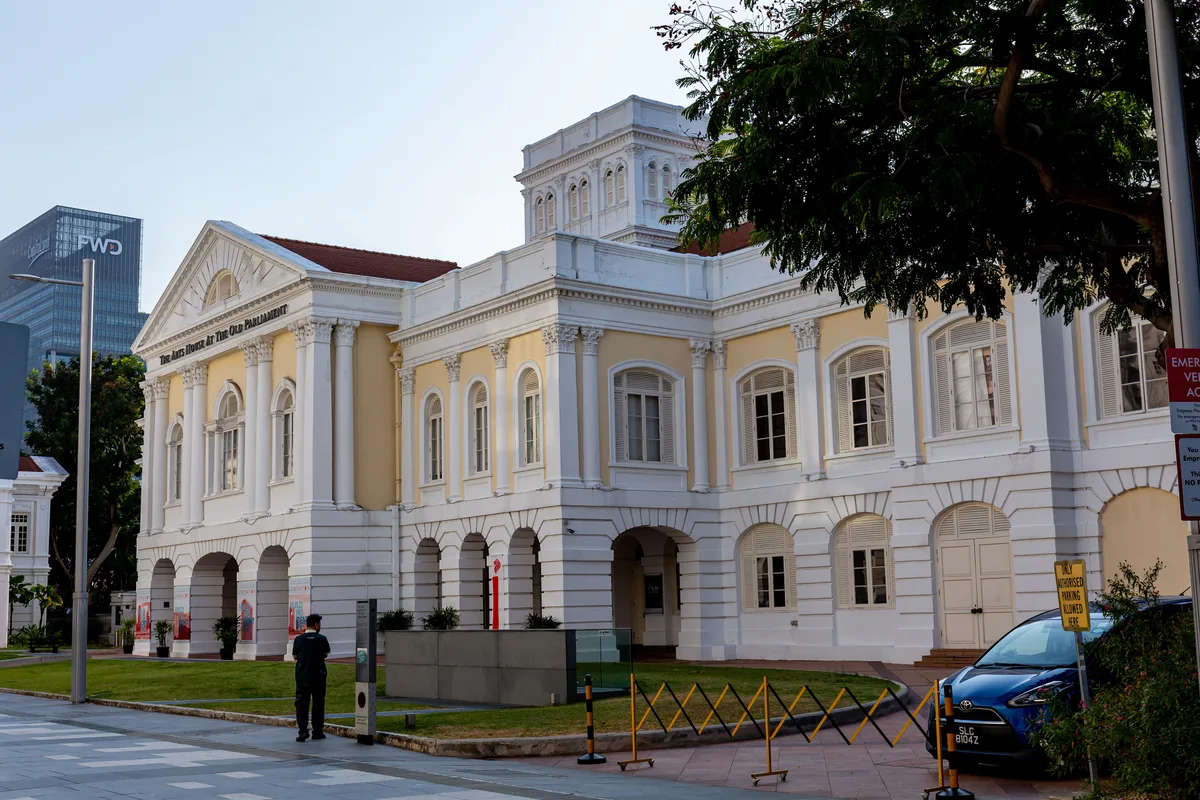
Photo: Balon Greyjoy / CC0
What Your Eye SeesA stately neoclassical building with a columned frontage and a low stone silhouette set back from the old civic square. Its white facade, broad steps and row of tall windows give it a calm, official character.
ContextBuilt in 1827 as the private residence of Scottish merchant John Argyle Maxwell, this building was designed by George D. Coleman and is the oldest surviving public building in Singapore. It later became the courthouse, then the nation's Parliament House from 1965 to 1999, and today operates as the arts venue The Arts House.
Source: Wikipedia (The Arts House)
DidYou
Know
Did you know the grand mansion was never actually Maxwell's home? It was built on land Raffles had reserved for public use, so the Scottish merchant who commissioned it leased it straight to the government as a courthouse and is not recorded to have spent a single night there.
ShareAn Elephant For A King's Visit
A bronze elephant stands on the walkway before the building, a gift from King Chulalongkorn of Siam after his 1871 stay in Singapore - the first foreign country ever visited by a Siamese monarch. The plaque at its base records the visit.
Windows Framed In Yellow
Look up at the front facade and you will see the long windows on the upper floors framed in yellow - a surviving touch of the original design by George Drumgoole Coleman, the building's architect.
Sources: NLB Infopedia; Wikipedia (The Arts House)
 Euro Heritage
6. Armenian Church of Saint Gregory the Illuminator
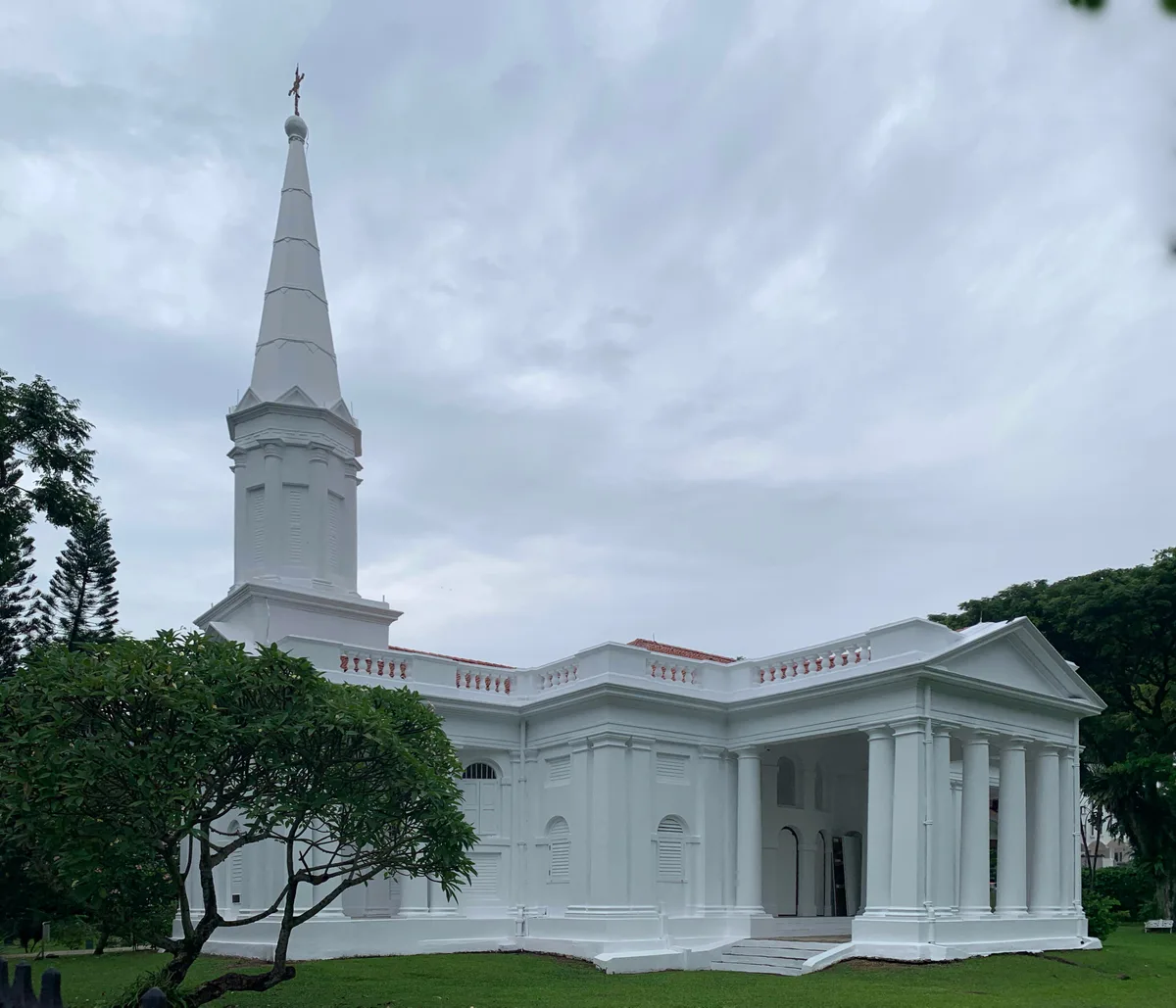
Photo: Chainwit. / CC BY-SA 4.0
What Your Eye SeesA compact white neoclassical church with a simple pillared portico and a small round cupola rising from its pitched roof. Clean lines, a plain white body and a quiet tree-lined setting make it look more like a classical villa than a grand cathedral.
ContextBuilt in 1835, the Armenian Church of Saint Gregory the Illuminator is the first Christian church in Singapore. Designed by George D. Coleman, the colony's first government architect, for the small Armenian community, it follows a distinctive cross-shaped Neoclassical plan with Doric columns and was gazetted a national monument in 1973.
Source: Wikipedia (Armenian Church, Singapore)
DidYou
Know
Did you know the Armenian Church was the first church in Singapore to be fitted with electric lights and fans, in 1909? Its small but prosperous diaspora community privately funded such modern touches and every later restoration of the building.
ShareThe Bell That Hung Late
The bell in the belfry was cast by George Mears and Co. in 1861 but was only hung some two decades later, in 1883, likely delayed by the small congregation's needs.
A Tombstone For The National Flower
In the Memorial Garden stands a tombstone bearing the name Agnes Joaquim, the Armenian-Singaporean who bred the Vanda Miss Joaquim orchid - Singapore's national flower. The stones here were recovered from exhumed cemeteries at Fort Canning Hill and Bukit Timah.
Sources: Wikipedia (Armenian Church, Singapore); roots.gov.sg; NLB Infopedia
Euro Heritage
Spiritual Seeker
7. St. Andrew's Cathedral
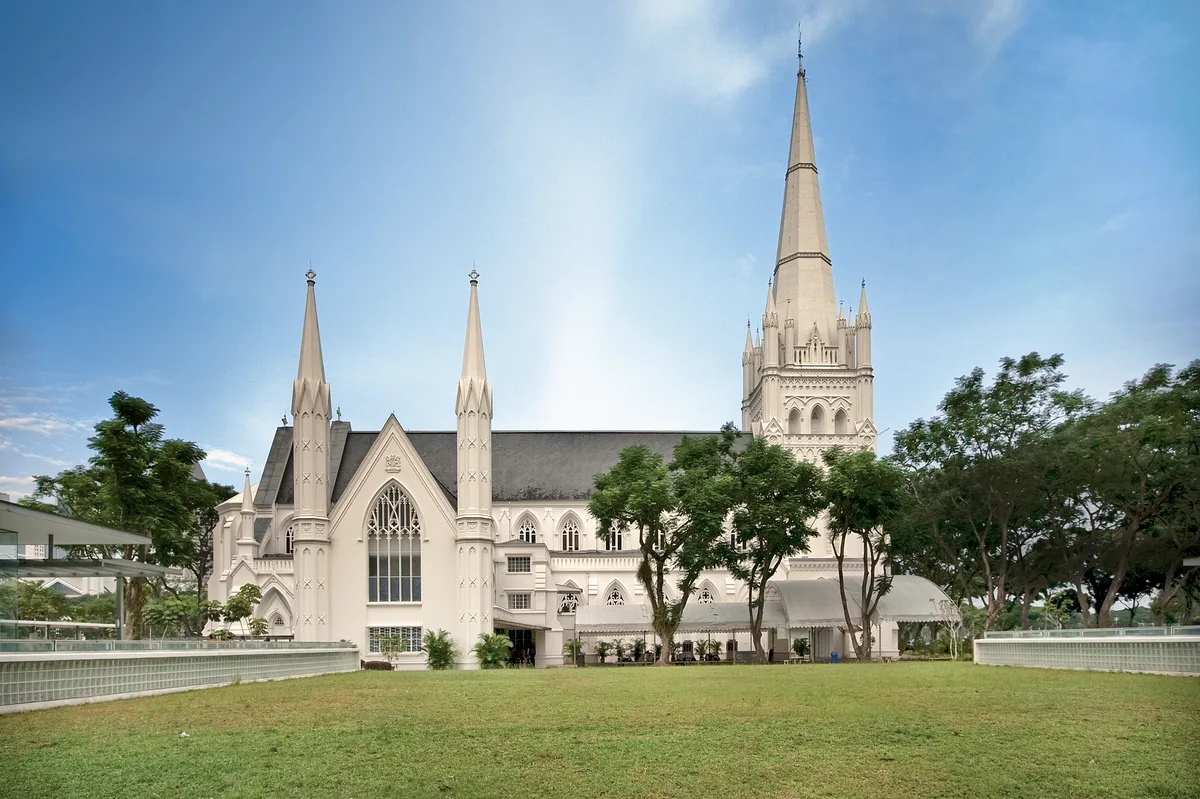
Photo: Someformofhuman. / CC BY-SA 3.0
What Your Eye SeesA pale Gothic cathedral with twin spires and pointed arched windows rising beside a green lawn in the old civic district. White stonework, delicate pinnacles and a long nave give the building an airy, graceful presence.
ContextThe present St. Andrew's Cathedral was completed in 1861 and consecrated in 1862, replacing an earlier church struck by lightning. Designed by Colonel Ronald MacPherson in the Gothic Revival style, it was built largely by Indian convict labour and raised to cathedral status in 1870, remaining a centrepiece of the city for over a century.
Source: Wikipedia (St Andrew's Cathedral, Singapore); National Heritage Board (Singapore)
DidYou
Know
Did you know the cathedral's design was inspired by Netley Abbey, a ruined 13th-century Cistercian monastery in Hampshire, England? Architect Ronald MacPherson drew on its nave piers for Singapore's mother church, completed after his transfer to Malacca by other engineers.
ShareWindows Framing A Nation's Founders
Behind the altar, three colossal stained-glass windows commemorate John Crawfurd, Stamford Raffles and William Butterworth, the men who shaped early Singapore - each window bearing the man's coat of arms.
Walls Polished From Egg And Lime
The cathedral's smooth, glossy walls were finished with chunam plaster, a labour-intensive mix of shell lime, egg white, coarse sugar and coconut husk, rubbed to a shine with stones.
Sources: roots.gov.sg; NLB Infopedia
Euro Heritage
 Gothic Soul
Spiritual Seeker
Gothic Soul
Spiritual Seeker
What is the oldest building in Singapore?
Masjid Omar Kampong Melaka, built in 1820 by the Arab merchant and philanthropist Syed Omar Aljunied, is the oldest mosque in Singapore and among the city’s oldest surviving buildings. Other early landmarks include Sri Mariamman Temple (1827, the oldest Hindu temple) and Thian Hock Keng (1839–1842, the oldest Chinese temple).
What are the must-see historical landmarks in Singapore?
Our guide covers seven of the city’s most notable historical landmarks: Masjid Omar Kampong Melaka, Thian Hock Keng Temple, Sultan Mosque, Sri Mariamman Temple, The Arts House (Old Parliament House), the Armenian Church of Saint Gregory the Illuminator, and St. Andrew’s Cathedral, from the island’s oldest mosque to its colonial-era churches.
These landmarks reward close attention. Vestigia is a field companion for people who look longer, with curated context, architectural detail, and the stories most visitors walk past. Free on the App Store and Google Play.