Stockholm Historical Landmarks
1. Riddarholmen Church (Riddarholmskyrkan)
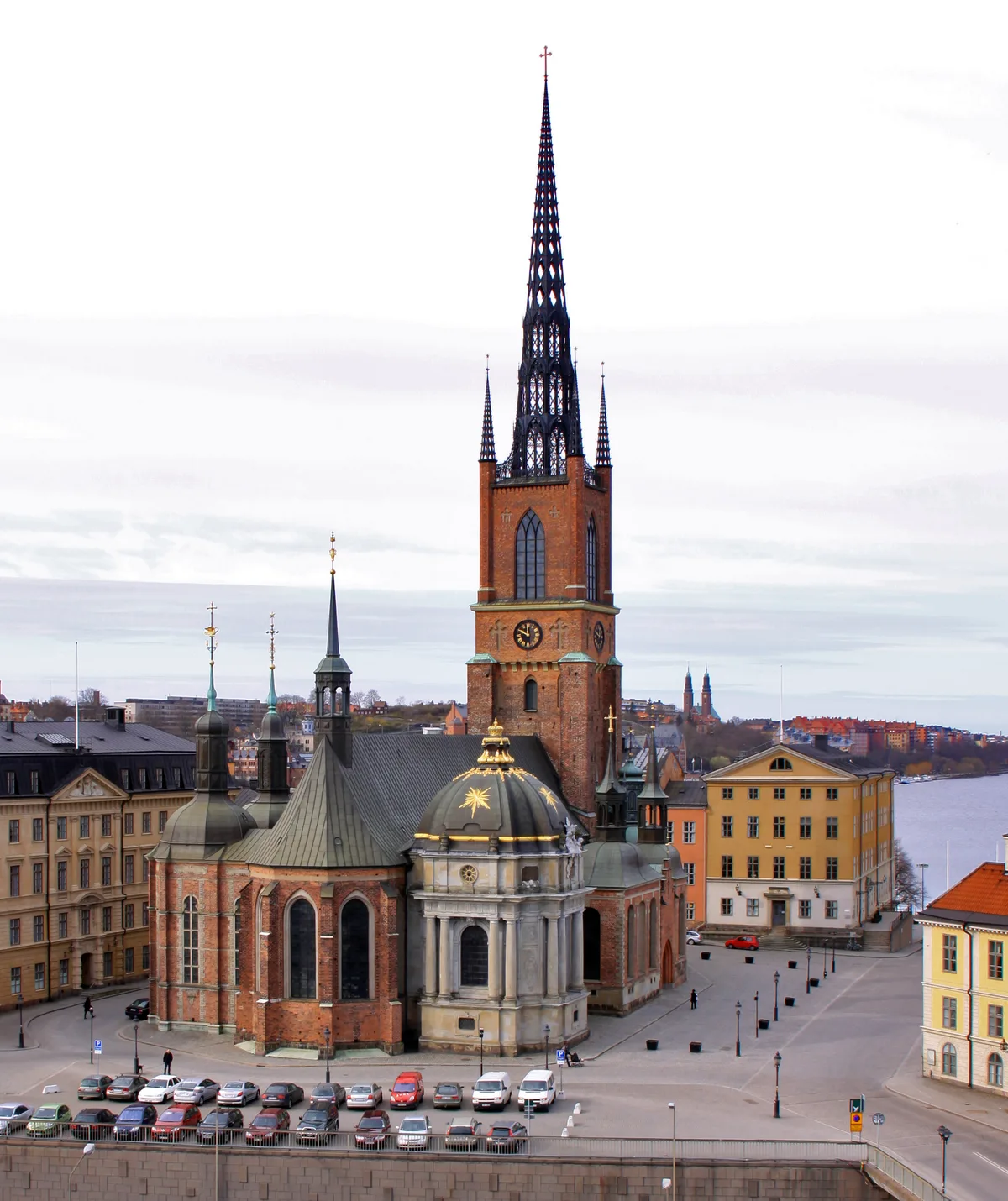
Photo: Alexandru Baboş Albabos / CC BY 3.0
What Your Eye SeesA long, dark-red brick church with a lacy cast-iron spire rising over the western shore of the old town. Its stepped gables, pointed windows and slate roofs look medieval, but the delicate spire is cast iron from 1835.
ContextFounded in 1270 as a Franciscan monastery church and completed around 1300, Riddarholmskyrkan is Stockholm's oldest surviving building and its royal burial church. From Gustav II Adolf (d. 1632) to Gustaf V (d. 1950) almost every Swedish monarch has been entombed here, alongside earlier kings such as Magnus Ladulås. The original wooden, copper-clad spire burned after a lightning strike in 1835 and was replaced with the present cast-iron spire.
Source: Kungliga slotten; Store norske leksikon
 Did
DidYou
Know
Stockholm's medieval Franciscan friars printed Sweden's first book here in 1483, decades before the printing press reached most of Europe, making this quiet island monastery one of the earliest publishing houses in the Nordic world.
Share→ The Cast-Iron Spire
A lightning strike on 28 July 1835 destroyed the earlier wooden, copper-clad spire. The replacement, designed by sculptor Erik Gustaf Göthe and built in 1838–40, was cast in iron, then an unusual choice for church architecture, giving the church its delicate, almost lace-like silhouette that has defined Stockholm's skyline ever since.
→ Shields Of The Highest Honour
Look inside and on the walls: rows of hand-painted shields, the armorial plates of the Royal Order of the Seraphim. When a knight of the order dies, his coat of arms is carried from the Royal Palace and hung here; at the funeral the church bells ring for a full hour.
Sources: Kungliga slotten; Wikipedia (Riddarholmen Church); Kungahuset
 Euro Heritage
 Gothic Soul
 Spiritual Seeker
2. Storkyrkan, Stockholm Cathedral (Sankt Nikolai kyrka)
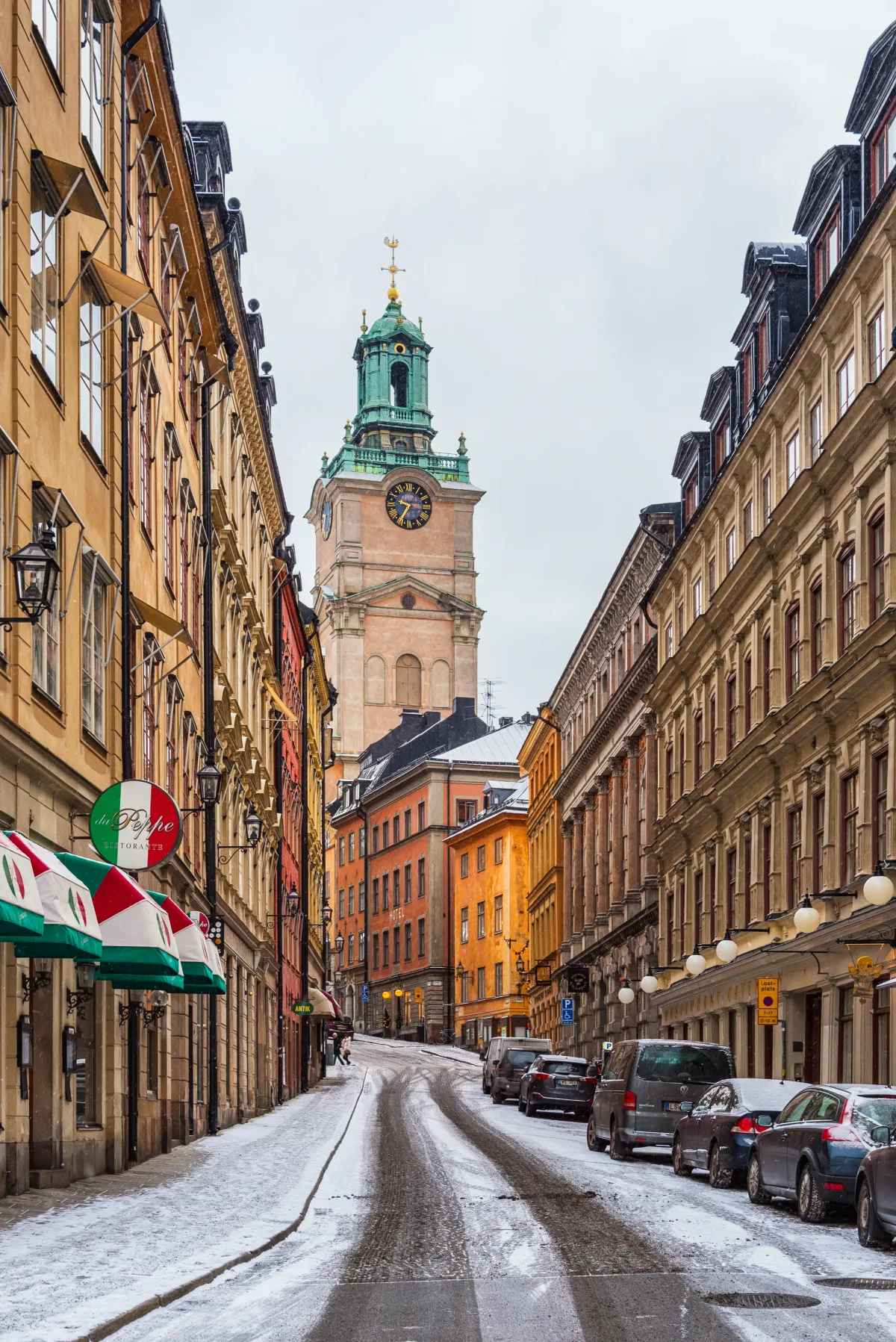
Photo: Julian Herzog / CC BY 4.0
What Your Eye SeesA large brick hall church wedged between Stockholm Palace and Stortorget, the old town's main square. Its Baroque façade hides a vast medieval interior of brick pillars and vaults.
ContextStorkyrkan is Stockholm's oldest church, consecrated to Saint Nicholas in 1306 but probably begun in the 1200s. For centuries it was the city's only parish church and the place where Swedish kings were crowned, beginning with Magnus Eriksson in 1336. During the Reformation in the 1520s, the first Mass in Swedish was celebrated here. Its exterior was remodelled in Baroque style in the 1730s–40s.
Source: Svenska kyrkan; Stockholmskaellan; Store norske leksikon
DidYou
Know
Inside Storkyrkan hangs one of the largest medieval wooden sculptures in northern Europe: St. George and the Dragon, carved by Bernt Notke around 1489 as a political allegory, the saint stood for Sten Sture, saviour of Sweden against the Danish crown, and the dragon for the king who ordered the Stockholm Bloodbath.
Share→ The Sky Full Of Suns
Look for the painting of a sky filled with rings of suns, the Vädersolstavlan. It records the mock suns seen over Stockholm on 20 April 1535, read at the time as a divine omen. The picture on the wall is a 1636 copy by Jacob Elbfas; the lost 1535 original is the oldest known depiction of Stockholm.
→ The Silver Altar
At the east end rises the great altar of silver and ebony: a triptych of silver reliefs made by the Hamburg goldsmith Eustachius Erdmüller, completed in 1652. Its panels show the Crucifixion, the Entombment and Christ among the dead, flanked by silver statuettes of Moses, John the Baptist and the four Evangelists.
Sources: Stockholmskaellan; Wikipedia (Storkyrkan); A View on Cities
Euro Heritage
 Baroque Master
Gothic Soul
Spiritual Seeker
Baroque Master
Gothic Soul
Spiritual Seeker
3. German Church (Tyska kyrkan / Sankta Gertruds kyrka)
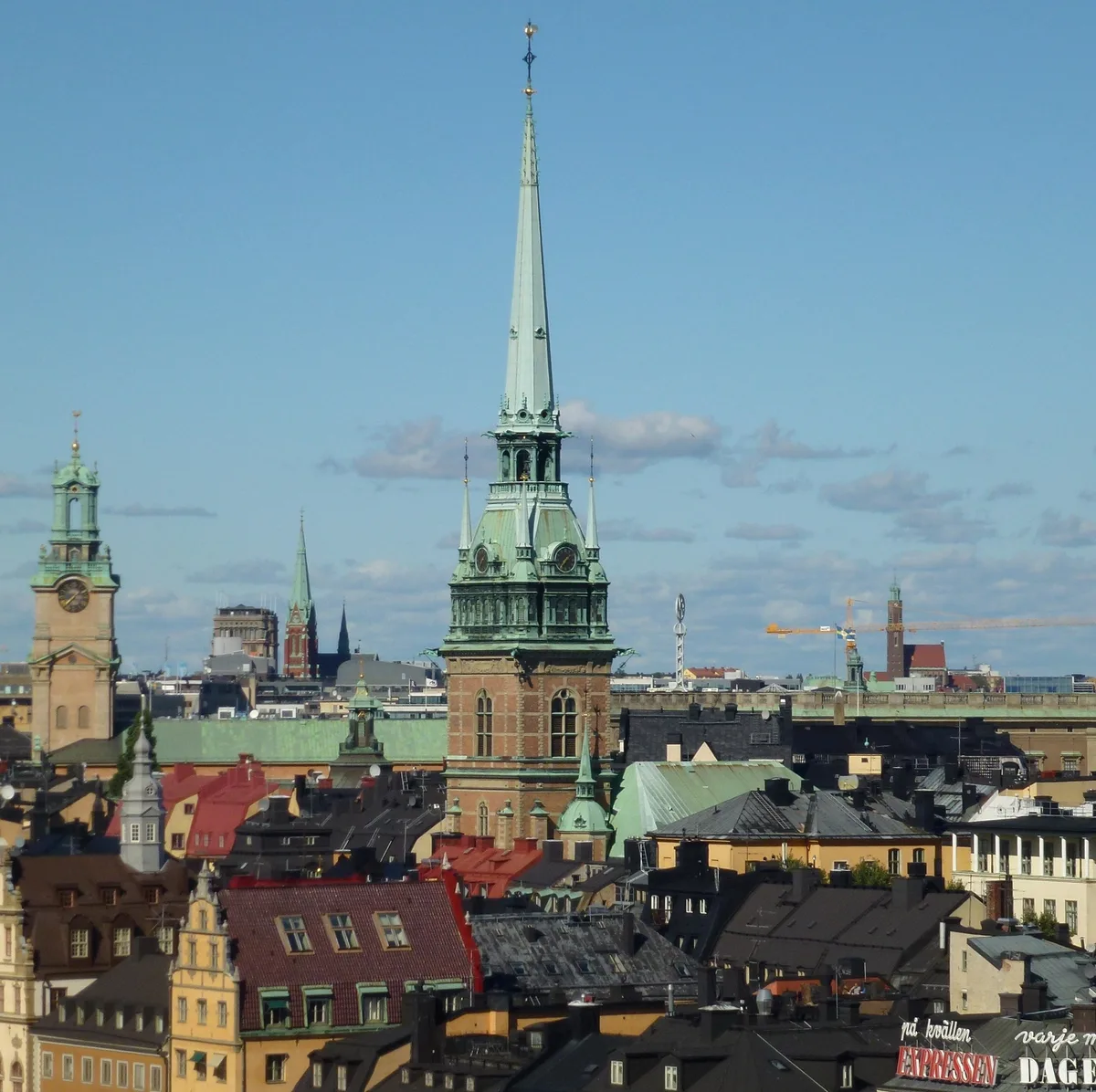
Photo: Holger.Ellgaard / CC BY-SA 3.0
What Your Eye SeesA tall red-brick church squeezed into the old town's narrow alleys, crowned by a copper spire that rises 96 metres, the highest point in Gamla Stan. Its sculpted south portal is covered in figures.
ContextThe German Church began as the hall of the St. Gertrude Guild, founded by German merchants in the 14th century when the Hanseatic League dominated Baltic trade. In 1571 King John III granted the German merchants their own parish, the first German church parish outside Germany, and the guild hall was gradually rebuilt into the present church, completed in 1642.
Source: German Parish Stockholm (st-gertrud.se); Runeberg (Nordisk familjebok)
DidYou
Know
In 1448, King Charles VIII of Sweden was elected inside the guild hall of the German merchants of St. Gertrude, the building that later became this church. It was one of the last times a Scandinavian king was chosen by a popular assembly rather than by hereditary succession.
Share→ The Spire That Rose Twice
The first tower, built 1613–18, burned down in the fire of 1878. The restoration was given to the Berlin architect Julius Raschdorff, whose replacement spire, finished in 1886 and rising 96 metres, is still the highest point in Gamla Stan.
→ Alabaster, Ebony And A Royal Gallery
Inside, a baroque pulpit made of alabaster and ebony dates from 1660, and the gilded King's Gallery was built by Nicodemus Tessin the Elder for the German-born Queen Hedvig Eleonora. Even the wine cellars of the original medieval guild house survive beneath the floor.
Sources: Wikipedia (Tyska kyrkan); Julius Raschdorff archive; German Parish Stockholm; A View on Cities
Spiritual Seeker
4. House of Nobility (Riddarhuset)
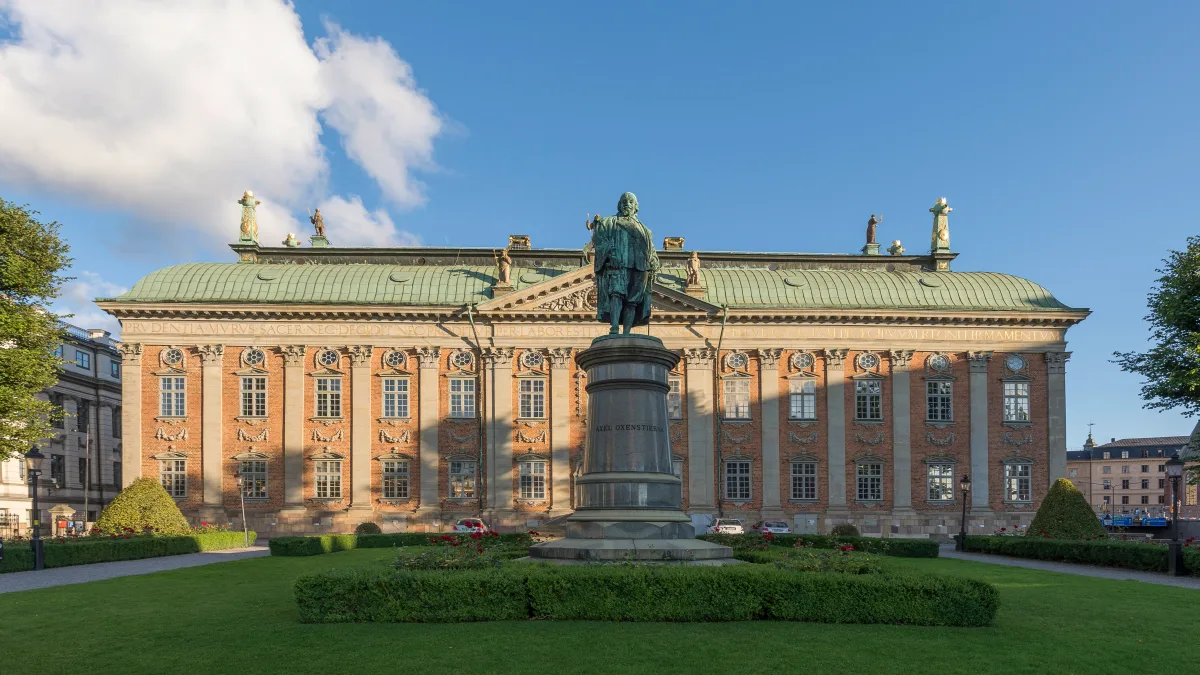
Photo: Arild Vågen / CC BY-SA 4.0
What Your Eye SeesA low, broad Baroque building with a hipped copper roof and a sculpted triangular pediment, standing on the small square that bears its name. Above the entrance hangs a giant coat of arms.
ContextThe House of Nobility was built between 1641 and 1674 to give Sweden's nobles a meeting hall for their assembly, the Riddarhuset, which still owns the building. Designed by Simon de la Vallée and completed by his son Jean de la Vallée after Simon was murdered in 1642, it rose at the height of the Swedish Empire, when the nobility was among the most powerful in Europe and voted on matters of state here.
Source: Riddarhuset.se (official); Visit Stockholm; SFV
DidYou
Know
The great hall of the House of Nobility carries rows of hand-painted copper plates, the coats of arms of over 2,300 noble families introduced since the 17th century, arranged in the order of their admission. Above them hangs the ceiling painting Glorification of Sweden by David Klöcker Ehrenstrahl, completed in the 1670s.
Share→ Mars And Minerva At The Door
Turn to the north entrance: above it stand Mars, god of war, and Minerva, goddess of wisdom, flanking the motto "Arte et Marte", "by art and by arms". More allegorical figures line the roof, each paired with a Latin inscription written on the facade.
→ 2,300 Family Shields
Inside the assembly hall, the walls carry rows of copper plates bearing the coats of arms of some 2,300 noble families, hung in the order of their introduction to the House of Nobility.
Sources: A View on Cities; Riddarhuset.se; Riddarhuset.se (official); Visit Stockholm
Euro Heritage
Baroque Master
5. Stockholm Palace (Kungliga Slottet)
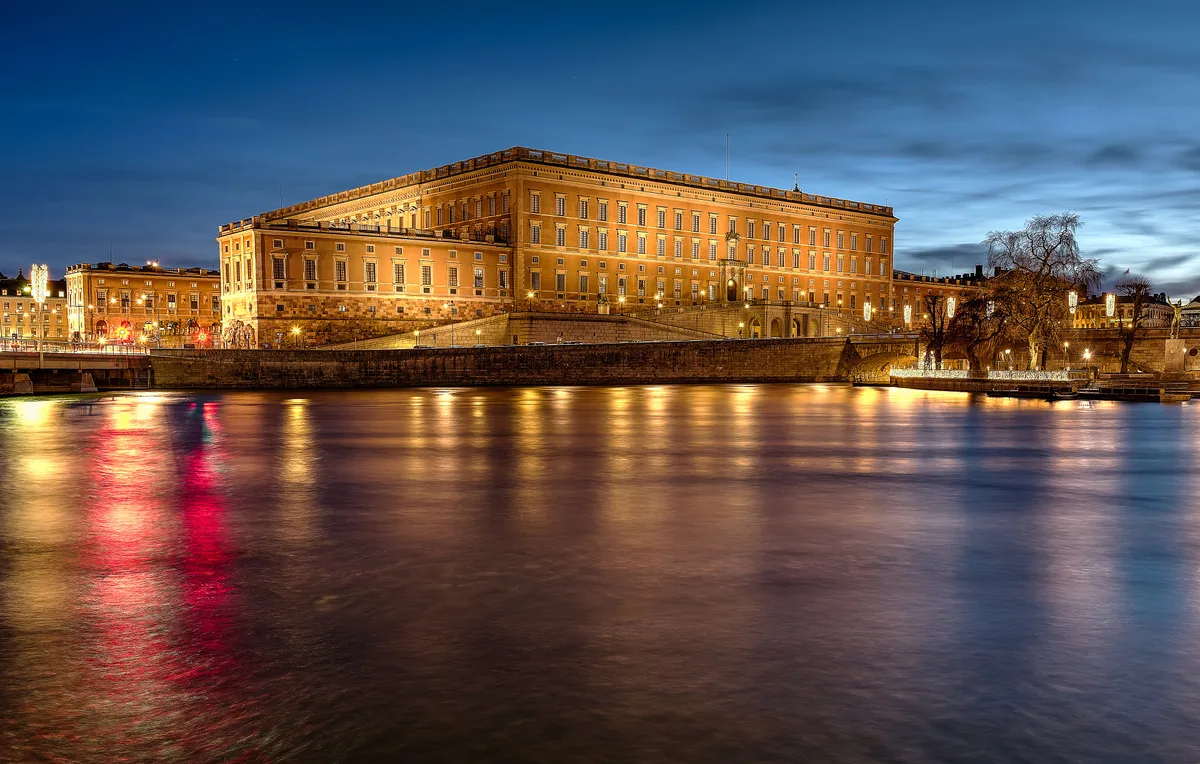
Photo: Magnus Johansson / CC BY-SA 2.0
What Your Eye SeesA vast, austere Baroque palace forming a hollow square on the edge of Gamla Stan, with 600 rooms and three wings around an inner courtyard. Bronze lions guard the ramp leading to the north entrance.
ContextThe palace stands on the site of the medieval Tre Kronor Castle, built in the 1200s by Birger Jarl, which burned on 7 May 1697. Nicodemus Tessin the Younger designed the new palace within six weeks of the fire; construction took over half a century and the royal family moved in only in 1754. Today it is one of Europe's largest active royal residences.
On ScreenThe Royal Palace appears in the film The Square (2017).
Source: Kungliga slotten; Visit Stockholm; SFV; The Location Guide (2017); goodbyeKansas.com (VFX); IMDb (The Square)
DidYou
Know
Under the palace's north wing lies a five-metre-thick medieval defensive wall, the surviving core of the original Tre Kronor fortress, open to visitors as the Tre Kronor Museum showing how Stockholm's medieval stronghold became a royal palace.
Share→ The Silver Throne
In the Hall of State stands Queen Christina's Silver Throne, made in Augsburg in 1650 for her coronation, a gift from the nobleman Magnus Gabriel De la Gardie, and the only piece of its kind left from the age when Sweden was a great power.
→ Four Bronze Allegories By The Water
Walk along the Logården, the palace garden facing the water: on the balustrade stand four bronze statues, Mercy, Poetry, Music and Religion, carved in 1903 by Johan Axel Wetterlund, the sculptor who filled the palace's south facade with statues of famous Swedes.
Sources: Kungliga slotten; Visit Stockholm; SFV (Stockholm Palace)
Euro Heritage
Baroque Master
6. Bonde Palace (Bondeska palatset)
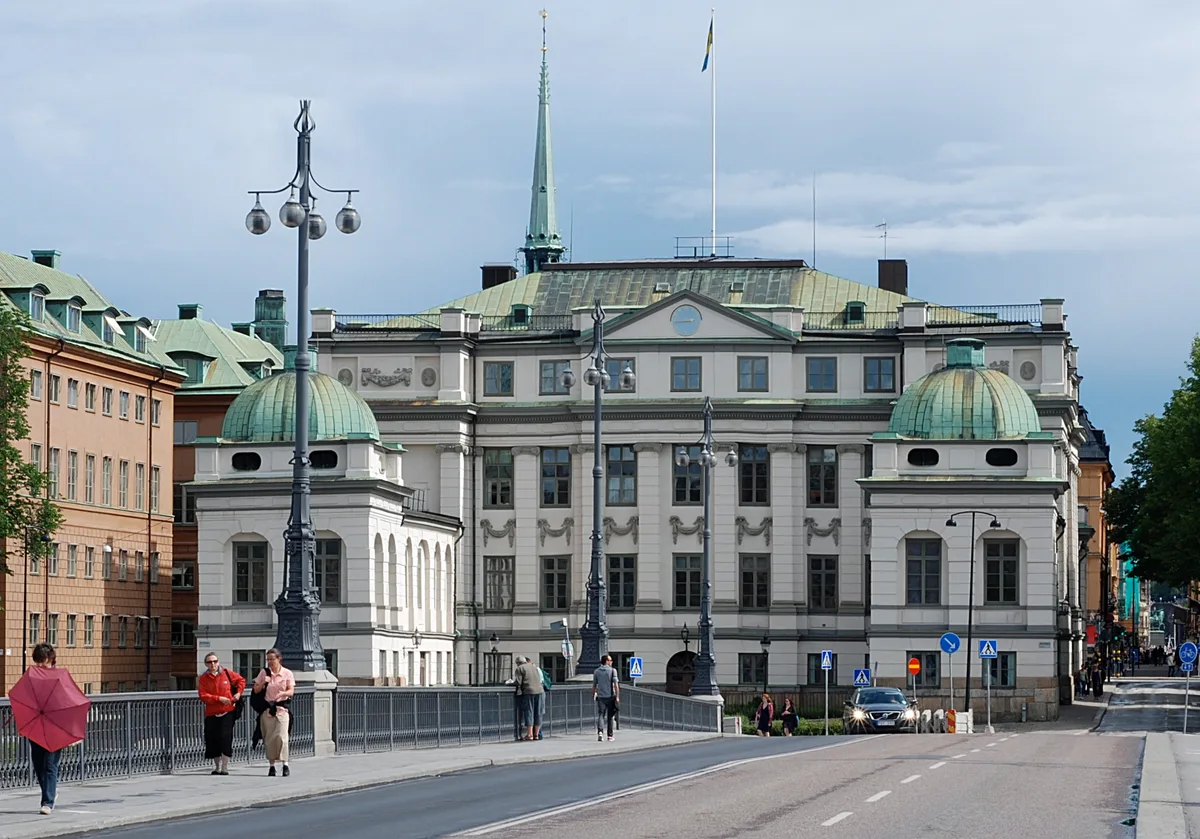
Photo: Ankara / CC BY-SA 3.0
What Your Eye SeesA stately 17th-century palace with a rusticated ground floor and a mansard roof, standing on Riddarhustorget beside the House of Nobility. Its tall windows and sculpted portal mark it as one of the old town's grandest houses.
ContextBonde Palace was built in the 1660s to designs by the leading architects Nicodemus Tessin the Elder and Jean de la Vallée for Gustav Bonde, a powerful lord of the world. In the 18th century it became a government building, and since 1949 it has housed Sweden's Supreme Court (Högsta domstolen), its decisions handed down in the palace's historic halls.
Source: SFV (Bondeska palatset); ancient-history-sites.com; Wikipedia (Bonde Palace)
DidYou
Know
For almost two centuries this palace was Stockholm's town hall, and the stage for two of Sweden's most lurid public spectacles: the flogging of Jacob Johan Anckarström, the assassin of King Gustav III, in 1792, and the mob lynching of the statesman Axel von Fersen in 1810. Justice, in both its formal and raw forms, played out under this roof.
Share→ Roman Emperors On The Facade
Look up at the palace facade: among the pilasters and stone festoons run portraits of Roman emperors, an antique motif the architects borrowed from the Roman palace facades they had studied abroad.
→ A Gate Inscribed 1949
At the entrance on Riddarhustorget stands an ornate cast-iron gate bearing the date 1949, the year the Supreme Court moved into the old palace and gave the building its present life.
Sources: SFV (Bondeska palatset); Wikipedia (Bonde Palace)
Euro Heritage
Baroque Master
7. Tessin Palace (Tessinska palatset)
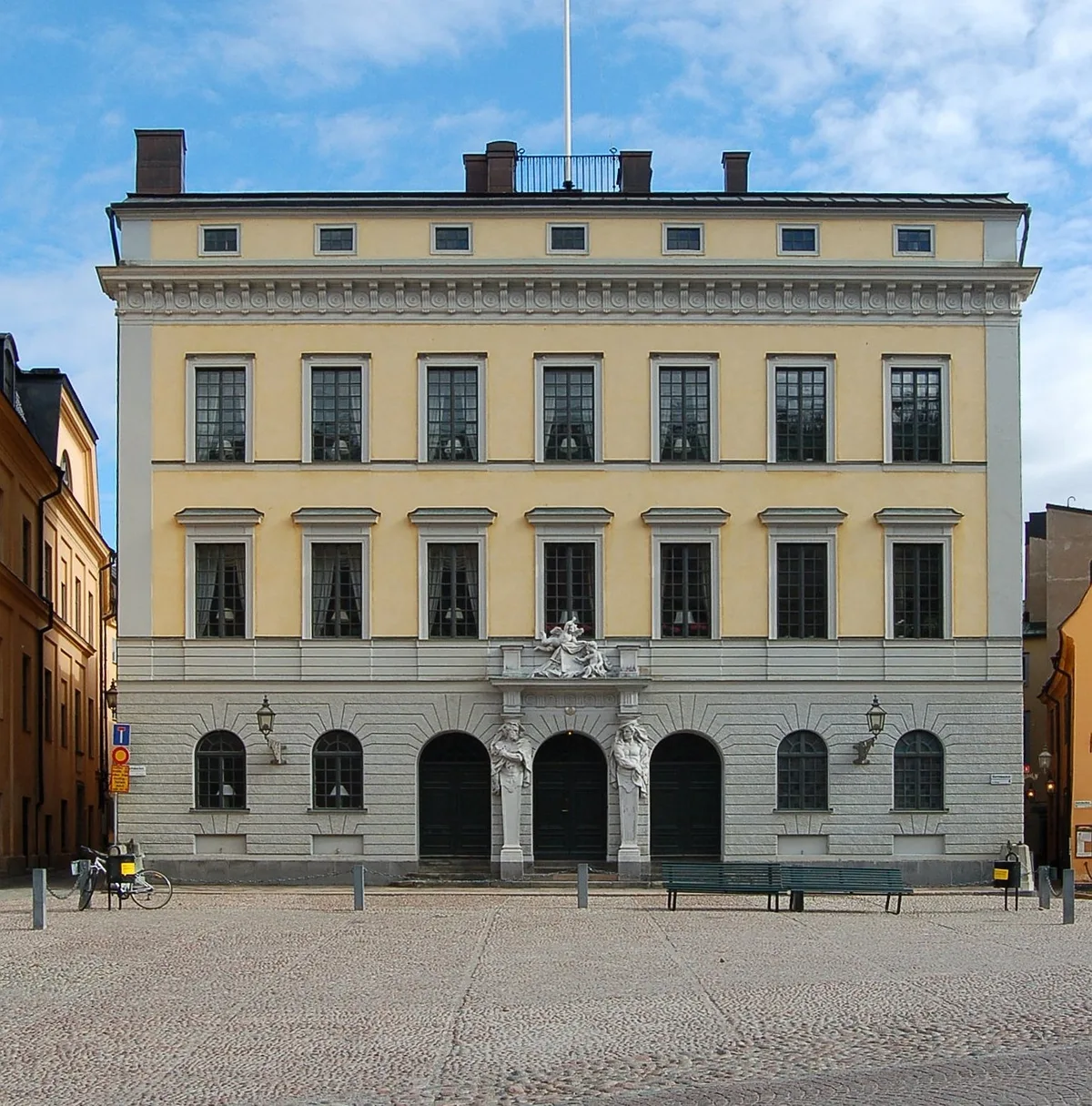
Photo: FriskoKry / CC BY-SA 3.0
What Your Eye SeesAn austere Roman Baroque townhouse with a restrained façade facing the Royal Palace across Slottsbacken. Its plain exterior conceals a richly decorated interior.
ContextTessin Palace was built between 1694 and 1700 as the private home of Nicodemus Tessin the Younger, the architect of Stockholm Palace. Its austere Roman Baroque façade, inspired by the buildings Tessin studied in Rome under Bernini, hides an interior decorated by French artists. The palace later became the residence of Stockholm's governor.
Source: SFV (Tessin Palace); Länsstyrelsen
DidYou
Know
The architect's son, Carl Gustaf Tessin, inherited this palace and filled it with one of Sweden's greatest art collections, the core of what became the Nationalmuseum, but the spending ruined him, and in 1755 he was forced to sell his father's masterpiece to the Crown.
Share→ The Painted Courtyard
Glance through the gateway on Slottsbacken: the courtyard walls are painted with trompe-l'oeil perspectives, so painted columns and balustrades seem to recede into a depth that is only flat wall. Tessin used the illusion to make his small plot feel like a grand Italian garden.
→ A Garden In Miniature
In the same courtyard lies a miniature Baroque garden of clipped boxwood and raked gravel, restored in the 1960s from Tessin's own drawings, the private garden of the architect who gave Stockholm its royal palace.
Sources: SFV (Tessin Palace); Wikipedia (Tessin Palace); SFV; Länsstyrelsen
 Ancient Roots
Euro Heritage
Baroque Master
Ancient Roots
Euro Heritage
Baroque Master
8. Katarina Church (Katarina kyrka)
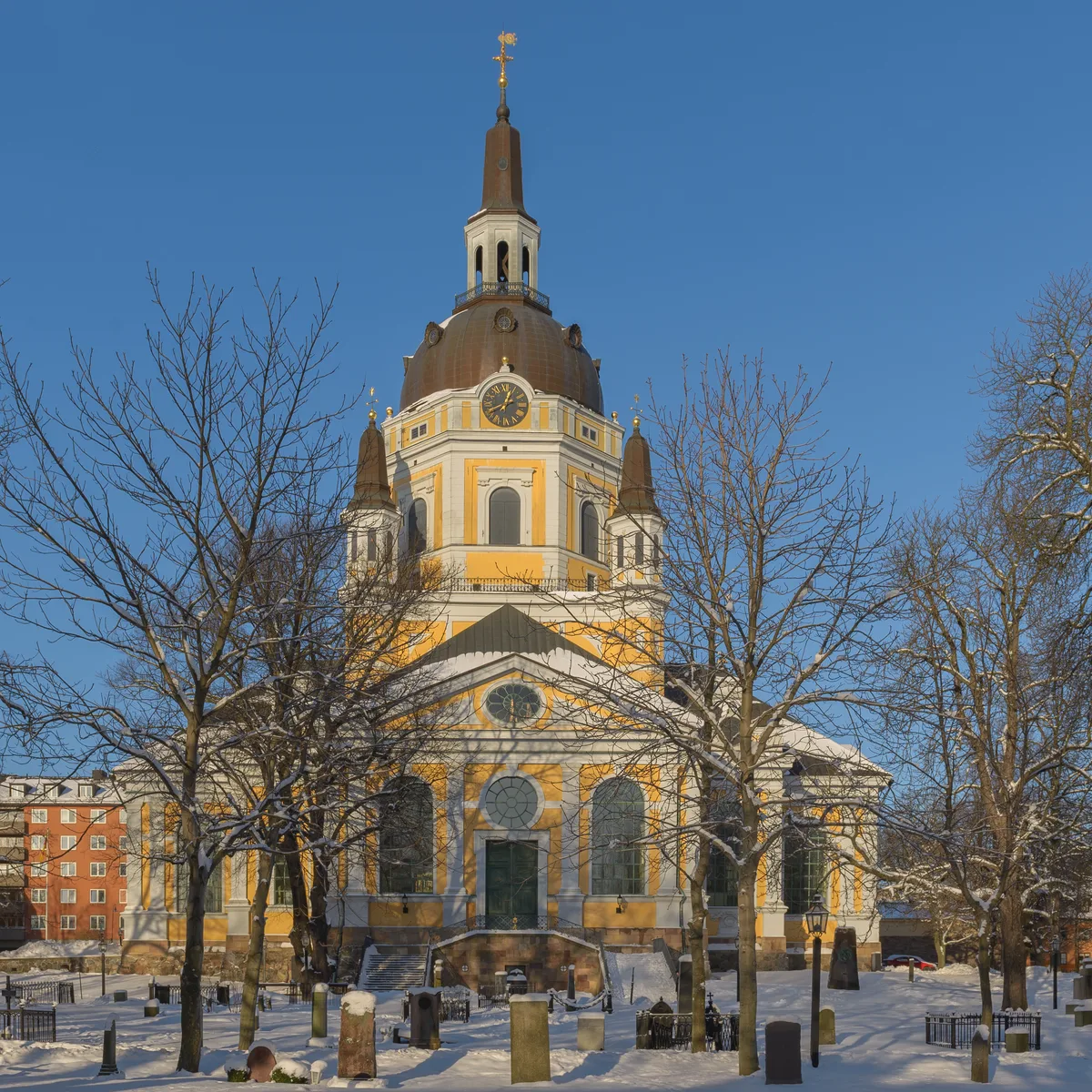
Photo: Arild Vågen / CC BY-SA 3.0
What Your Eye SeesA Greek-cross Baroque church with a huge green copper dome rising above Södermalm, the southern hill of Stockholm. Four cross-shaped arms radiate from the dome, visible from across the water.
ContextKatarina Church was designed by Jean de la Vallée and built between 1656 and 1695 on Södermalm, named after Princess Catherine, mother of King Charles X. It has been destroyed by fire twice, in 1723 and again in 1990, and rebuilt both times, the last reconstruction reopening in 1995.
Source: Svenska kyrkan; Wikipedia (Katarina Church)
DidYou
Know
Katarina Church was designed on a Greek-cross plan, a radical Lutheran design placing the altar and pulpit at the room's centre rather than at the end of a long nave. Set high on Södermalm, it was laid out as a navigational landmark, visible to ships steering toward Stockholm from Lake Mälären.
Share→ Karl XII's Stair
At the church's south side, a double staircase of 30 steps climbs from the churchyard to the door. Legend says Charles XII once rode his horse straight up it; the ornate iron railing was forged in 1712–15 by the Saxon blacksmith Benjamin Danielsson Roth, and the king's royal monogram is set above.
→ Graves Of The Famous
Walk among the gravestones around the church, a churchyard that has grown since the church was founded in the 1650s. The assassinated foreign minister Anna Lindh, the singer Cornelis Vreeswijk and the actor Gösta Ekman are all buried here.
Sources: svenskakyrkan.se; Wikipedia (Katarina Church)
Euro Heritage
Baroque Master
Spiritual Seeker
Why is Stockholm's Royal Palace so different from other royal palaces?
Because it is a replacement. The medieval Tre Kronor Castle on the same site burned on 7 May 1697, and architect Nicodemus Tessin the Younger drew up plans for the new palace within six weeks of the fire. Construction took over half a century, and the royal family moved in only in 1754. The palace is one of Europe's largest active royal residences, and beneath its north wing survives a five-metre-thick medieval wall from the original fortress, now open as the Tre Kronor Museum.
Where is Bernt Notke's famous St George and the Dragon sculpture?
Inside Storkyrkan, Stockholm's oldest church, consecrated in 1306. The carving, made around 1489 by Bernt Notke, is one of the largest medieval wooden sculptures in northern Europe and was a deliberate political allegory: the saint stood for Sten Sture, saviour of Sweden against the Danish crown, and the dragon for the king who ordered the Stockholm Bloodbath. Storkyrkan was also the church where Swedish kings were crowned, beginning with Magnus Eriksson in 1336.
These landmarks reward close attention. Vestigia is a field companion for people who look longer, with curated context, architectural detail, and the stories most visitors walk past. Free on the App Store and Google Play.