Copenhagen Historical Landmarks
1. Church of the Holy Spirit (Helligåndskirken)
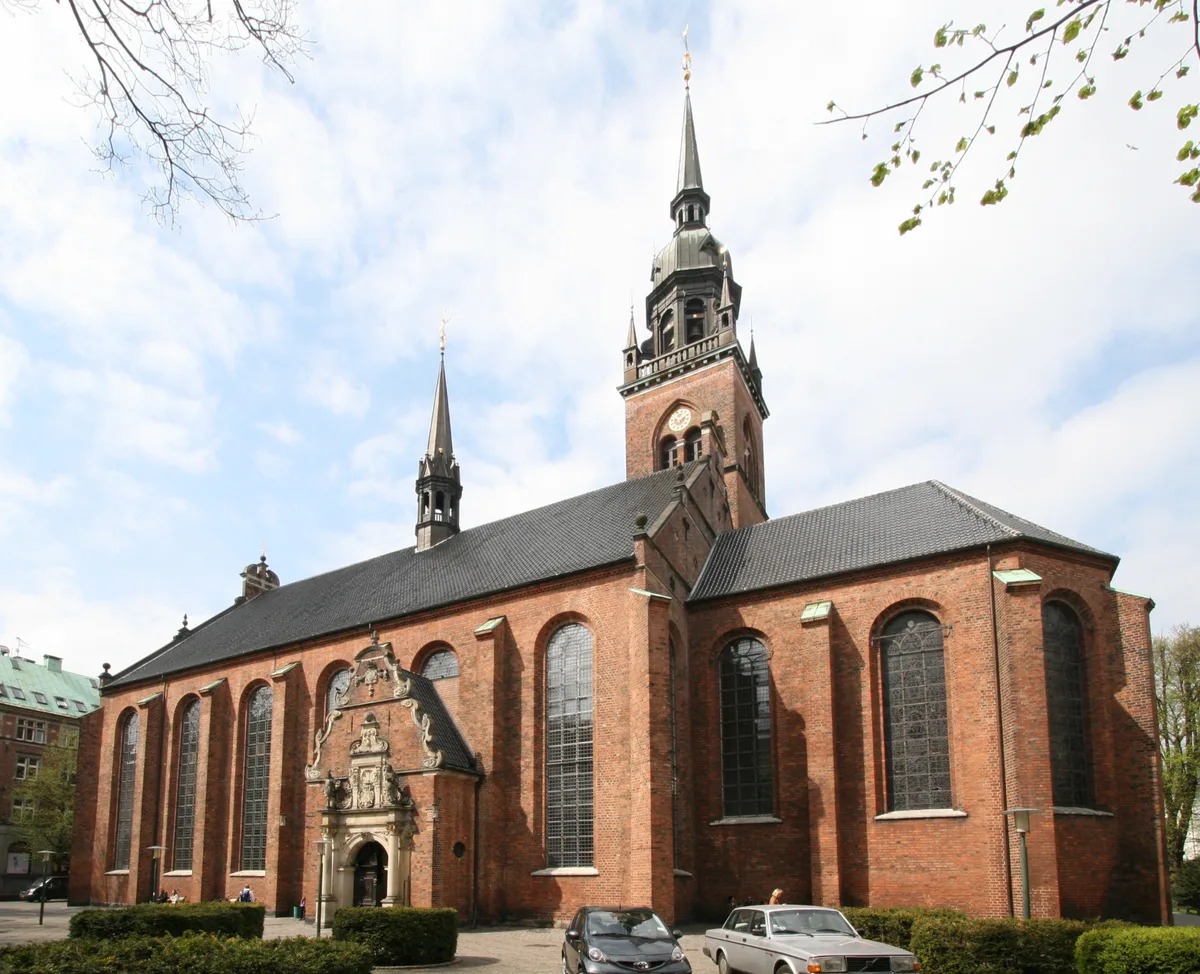
Photo: Ib Rasmussen / Public domain
What Your Eye SeesA tall red-brick church with a stepped gable, squeezed between shops on the pedestrian street Strøget. Its copper spire rises above the busy square, and a hospital wing from the late 15th century, the largest medieval building in Copenhagen, leans against its northern side.
ContextHelligåndskirken began around 1295 as a hospital for the poor founded by Bishop Johannes Krag, on a site with the same boundaries as the Reformation-era church. In 1469 King Christian I turned the hospital into an abbey of the Order of the Holy Ghost, approved by the pope in 1474. The church suffered in the great fire of 1728, was rebuilt, and in 1878–81 was given its present Renaissance form. Søren Kierkegaard was christened here in 1813.
Source: Lex (Trap Danmark); Copenhagen Tourist (copenhagenet.dk)
 Did
DidYou
Know
After the Reformation the abbey was dissolved, yet the hospital that gave the church its name simply carried on, as a civic institution caring for Copenhagen's poor, sick and elderly. Few medieval Danish monasteries kept their welfare role alive once the church that ran them was gone, making this one of the rare survivors.
Share→ A Font By Thorvaldsen
Near the front of the nave stands the church's marble baptismal font, a four-sided work carved by Bertel Thorvaldsen in Rome in 1827, originally made for the sculptor's fatherland, Iceland. Bought at auction in London in 1939 and donated to the church, it is still in use for baptisms today.
→ A Clockwork Chandelier
Inside, look up for one of the church's oldest objects, a large gilt-bronze chandelier with a clockwork mechanism hidden inside its central globe. Made around 1610, it reached the church in 1750 and still hangs in the interior today.
Sources: Lex (Trap Danmark); Copenhagen Tourist (copenhagenet.dk); Wikipedia (Helligandskirken)
 Euro Heritage
 Gothic Soul
 Spiritual Seeker
2. St. Peter's Church (Sankt Petri Kirke)
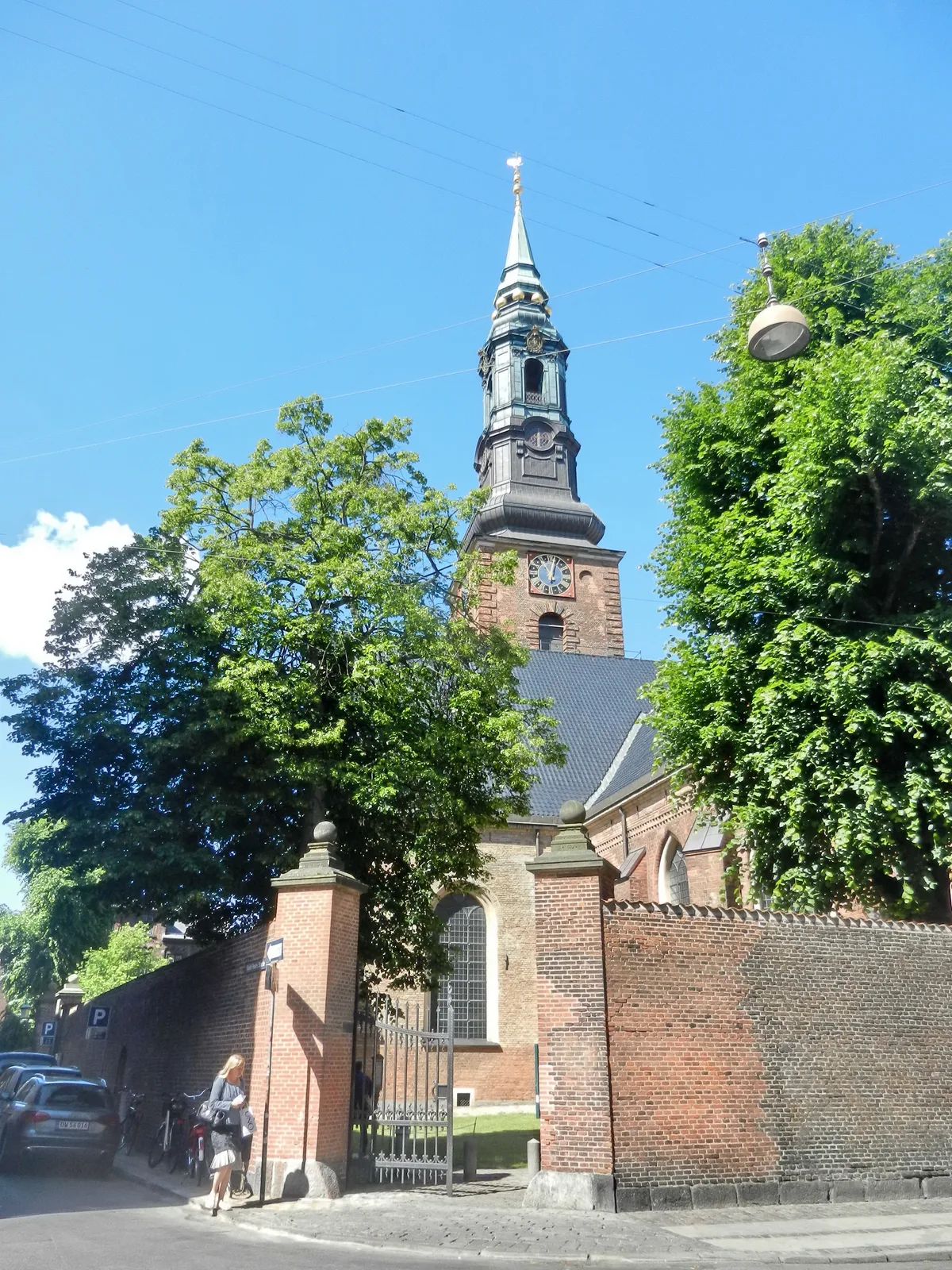
Photo: Tanya Dedyukhina / CC BY 3.0
What Your Eye SeesA solid single-nave Gothic church with a tall tower, tucked into the corner of Nørregade and Sankt Peders Stræde in the Latin Quarter. Around it spreads an unusual complex of low sepulchral chapels built like small houses.
ContextSankt Petri Kirke was built in the mid-15th century as a single-nave church, making it the oldest church still in operation in central Copenhagen. Since 1585 it has served the German-speaking Evangelical-Lutheran community of the city. It is notable for its extensive complex of sepulchral chapels added over the centuries.
Source: Lonely Planet (Sankt Petri Kirke); Lex (Trap Danmark)
DidYou
Know
Beneath the church lies a curious royal scandal: Johan Friedrich Struensee, the German-born royal physician who ruled Denmark in the early 1770s, was beheaded in 1772. His bones, examined in 1927, may rest in a child's coffin in the crypt, although as a declared atheist he never set foot in the church during his life.
Share→ The Baroque Doorway
Walk around to the main entrance in the southern transept and stop at the richly carved Baroque portal, made in 1731 by the sculptor Diderik Gercken. It is an elaborate piece of high Baroque set against the older red-brick walls of the church's 15th-century core.
→ Saw-Tooth Bands In The Brick
Run your eye over the pointed-arch windows and you'll see the double bands of saw-brick above them, where the bricks are laid diagonally so their corners poke outward. This medieval detail marks Sankt Petri as the only church in the capital that still shows clear medieval masonry.
Sources: Wikipedia (St. Peter's Church, Copenhagen); Lex (Trap Danmark); Lex (Trap Danmark: Sankt Petri Kirke)
Euro Heritage
Gothic Soul
Spiritual Seeker
3. Church of Our Lady (Vor Frue Kirke)
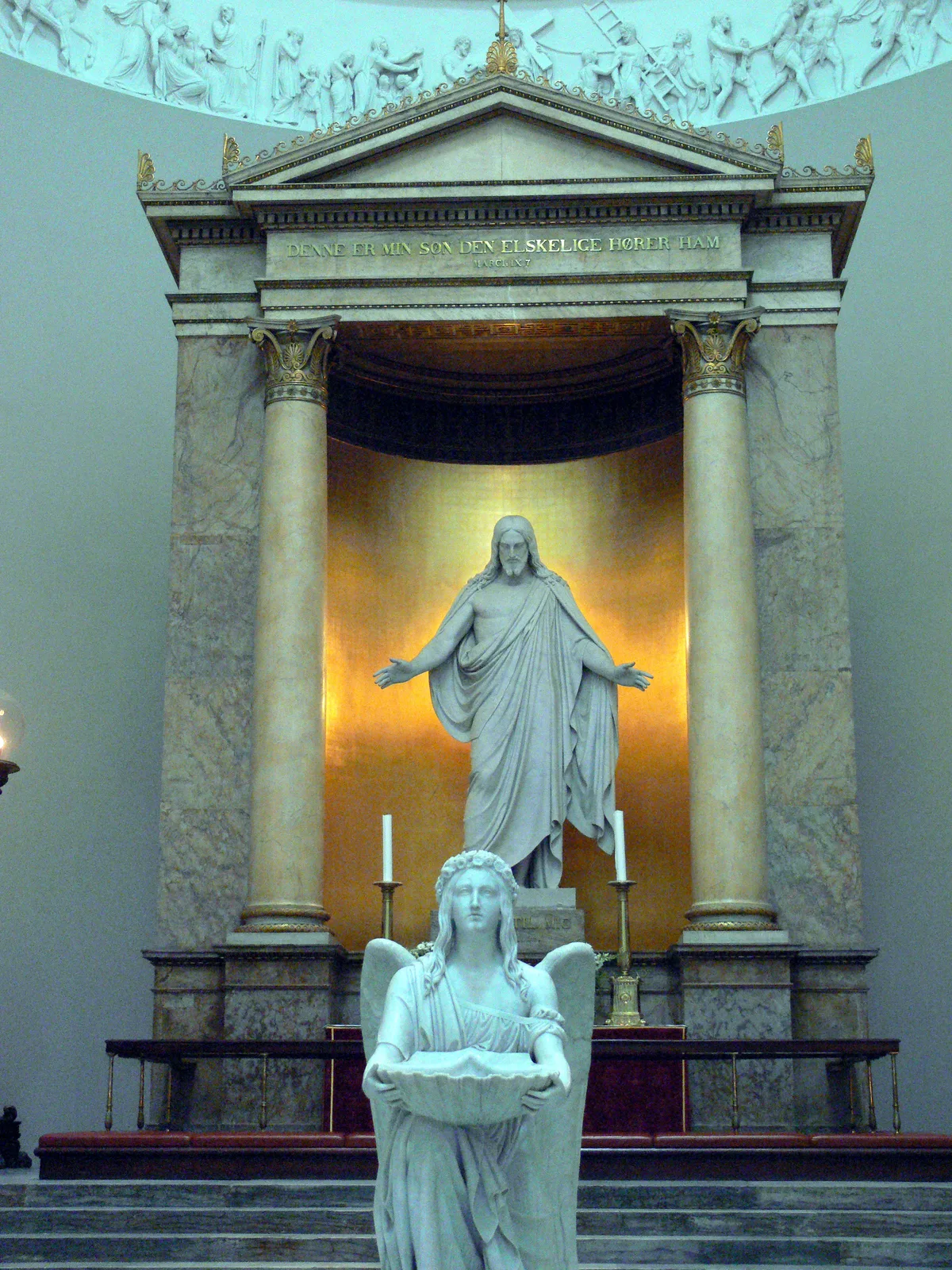
Photo: Christian Bickel / CC BY-SA 2.0
What Your Eye SeesA broad neoclassical facade with a tall square tower and a colonnaded portico, rising on the highest point of the old city next to the University of Copenhagen. Inside, white marble apostles stand in rows beneath a flat painted ceiling.
ContextVor Frue Kirke has stood on this site since 1187, when Bishop Absalon collected tithes to build the Church of Holy Mary. It was Copenhagen's cathedral, burned in 1314, 1728, and destroyed by British bombardment in 1807. Rebuilt by C.F. Hansen in the neoclassical style and consecrated in 1829, it was decorated by the sculptor Bertel Thorvaldsen with his famous marble Christ and the Twelve Apostles.
Source: Thorvaldsens Museum; domkirken.dk; Store norske leksikon
DidYou
Know
Vor Frue Kirke is the burial church of the Danish Golden Age, the funeral services of the sculptor Bertel Thorvaldsen, the philosopher Søren Kierkegaard, and the storyteller Hans Christian Andersen were all held here. For a century, the nation's greatest minds passed through these doors for their final services.
Share→ The World's Most Reproduced Christ
Look up at the white marble Christ above the altar, arms outstretched in blessing, one of the most reproduced sculptures in the world, its copies standing in churches and homes across the globe.
→ No Judas, Only Paul
Among the Twelve Apostles standing in the nave there is no Judas, Thorvaldsen carved St. Paul instead, who became an apostle after the betrayal. The sculptures were installed in marble between 1838 and 1848.
Sources: Thorvaldsens Museum; domkirken.dk; Wikipedia (Church of Our Lady, Copenhagen)
Euro Heritage
Spiritual Seeker
4. Holmen Church (Holmens Kirke)
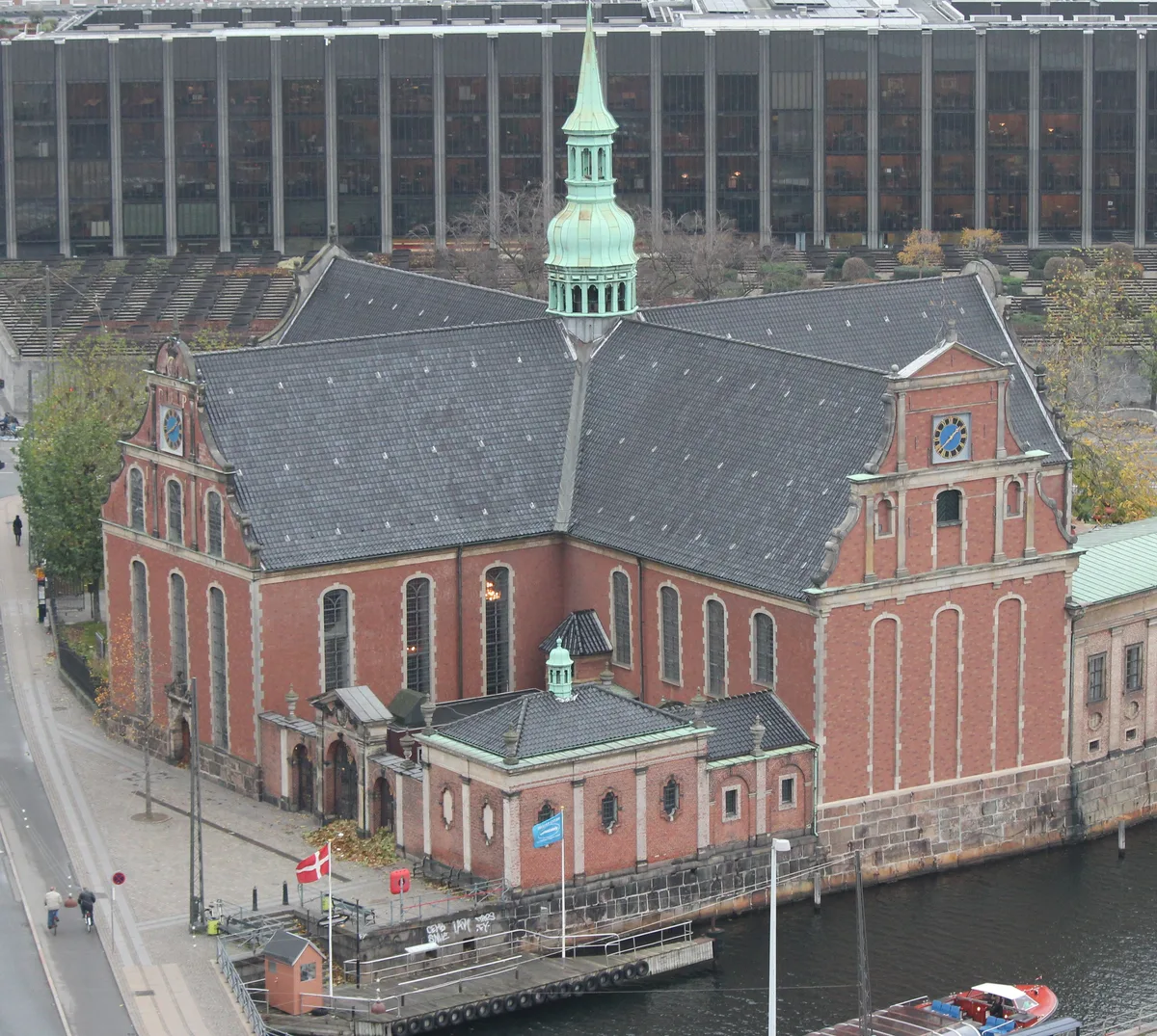
Photo: Grayswoodsurrey / CC BY-SA 4.0
What Your Eye SeesA white and gold church with a slim cupola tower rising over Holmens Kanal. Its facade carries fine carvings, and inside, gilded altarpieces and a richly decorated pulpit fill a space that once rang with the hammer of an anchor forge.
ContextHolmens Kirke was first built in 1563 as an anchor forge for the Royal Danish Navy. King Christian IV converted it into a naval church, and it later became one of Copenhagen's most important churches. It hosted the wedding of Queen Margrethe II and Prince Henrik in 1967, and holds the tombs of naval heroes such as Niels Juel and Peter Tordenskjold.
The same King Christian IV who refashioned this church also left his mark across the Øresund, at Akershus Fortress in Oslo, which he rebuilt as a Renaissance palace.
Source: VisitCopenhagen; Copenhagen Tourist (copenhagenet.dk)
DidYou
Know
The church holds a remarkable artistic pairing, canvases by Karel van Mander, the Dutch Golden Age painter, share the space with sculptures by Bertel Thorvaldsen, Denmark's great neoclassical master. The mix of northern realism and Italian classicism mirrors the church's double life as a royal and naval sanctuary.
Share→ The Ship Above The Nave
Look up in the crossing and you'll find a model of the warship Christianus Quintus hanging from the ceiling, the flagship on which Admiral Niels Juel commanded his fleet to victory over the Swedish navy at the Battle of Køge Bay in 1677. The scale model was built at the naval shipyard in 1904.
→ A Sarcophagus Of Cathedral Marble
In the great burial chapel, Vice-Admiral Peter Tordenskjold lies in a marble sarcophagus made from marble of the Church of Our Lady, destroyed in the British bombardment of 1807. The tomb was not installed until 1819, a century after the naval hero died.
Sources: VisitCopenhagen; Copenhagen Tourist (copenhagenet.dk)
Euro Heritage
 Baroque Master
Spiritual Seeker
Baroque Master
Spiritual Seeker
5. Rosenborg Castle (Rosenborg Slot)
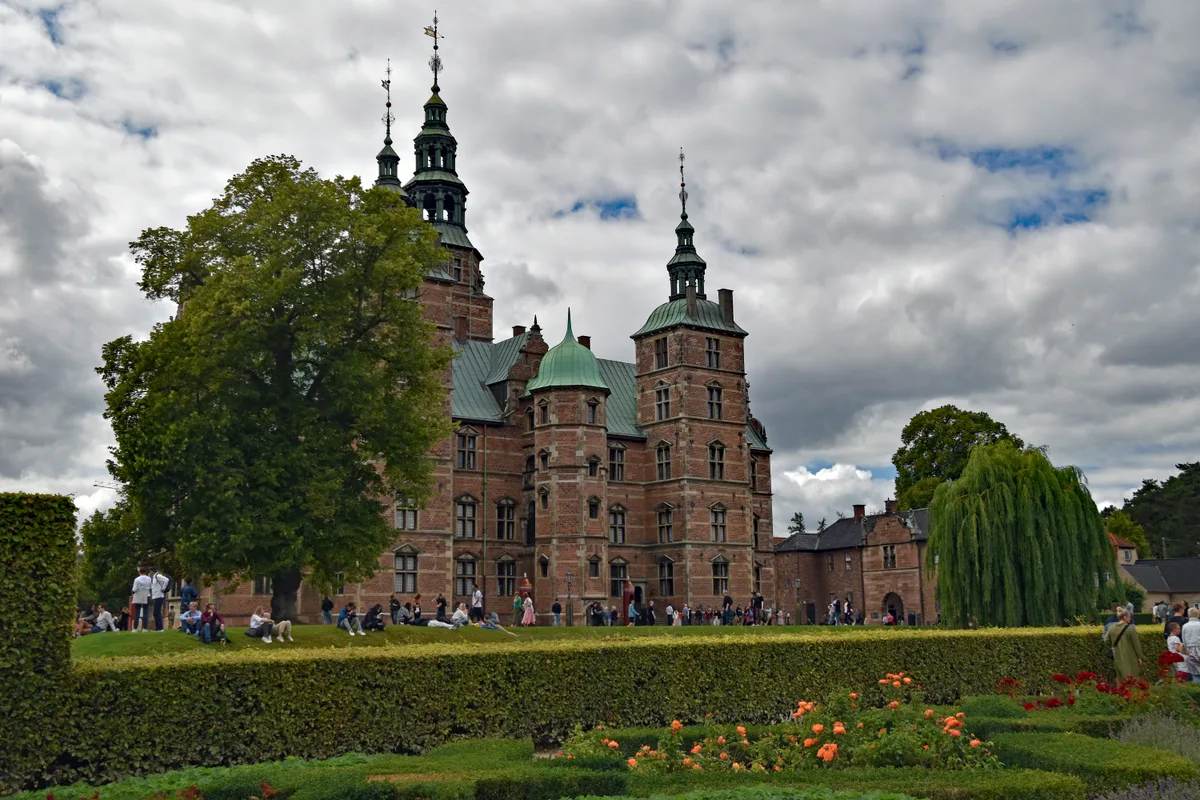
Photo: Thomas Dahlstrøm Nielsen / CC BY-SA 4.0
What Your Eye SeesA fairy-tale Renaissance castle of red brick and sandstone with copper turrets and stepped gables, standing in the park of Kongens Have. Its slender towers and Dutch-style ornament make it look like a storybook palace built to a single dream.
ContextRosenborg Castle was begun in 1606 as a country summerhouse for King Christian IV and expanded over the following years until it reached its present form in 1624. Built in the Dutch Renaissance style with architects Bertel Lange and Hans van Steenwinckel the Younger, it served as a royal residence and now houses the Danish crown jewels and the royal collection.
Christian IV's building zeal crossed the water too: he rebuilt Akershus Fortress in Oslo as a Renaissance stronghold and laid out Christiania's grid after the 1624 fire.
On ScreenRosenborg Castle appears in the film The Danish Girl (2015).
Source: The Royal Danish Collection (Rosenborg); Store norske leksikon; epicureandestinations.com; cinenoir.net; IMDb (The Danish Girl)
DidYou
Know
Rosenborg's builder, Christian IV, never treated it as a mere retreat, he died here in 1648, in the red-leather bedchamber that is still on display. The king who filled Copenhagen with so many of its landmarks thus ended his days in the one he is said to have loved best.
Share→ The Three Silver Lions
In the Knights' Hall, three life-size silver lions guard the throne of the Danish kings. Cast in Copenhagen between 1665 and 1670 by the silversmith Ferdinand Küblich, each weighs around 130 kilograms, and they are still brought out to guard the coffin of a deceased monarch.
→ The Crown Jewels
Below the Long Hall, the dark cellar vaults hold the Danish crown jewels and the coronation regalia, kept in the deepest, most protected part of the castle.
Sources: The Royal Danish Collection (Rosenborg)
Euro Heritage
6. The Old Stock Exchange (Børsen)
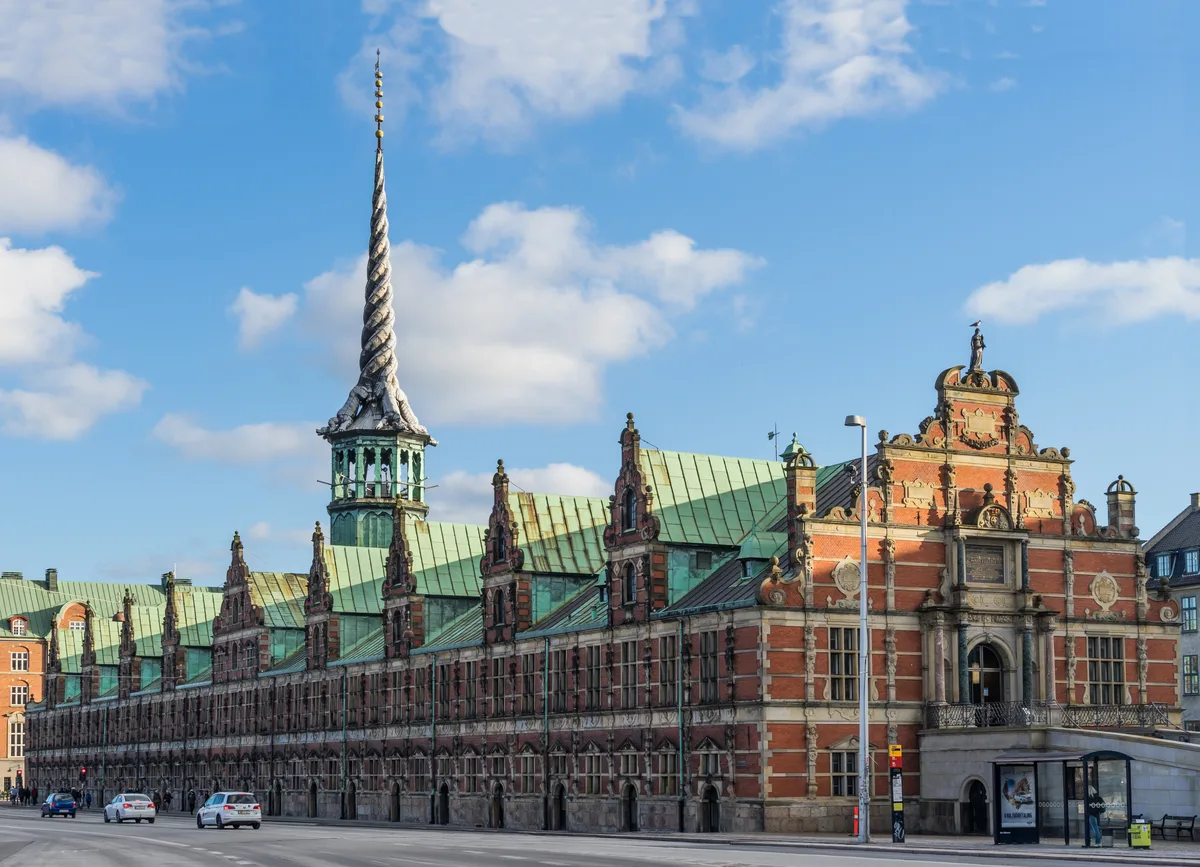
Photo: Jebulon / CC0
What Your Eye SeesA long low Dutch Renaissance trading hall in warm red brick and sandstone, crowned by the famous dragon spire, four twisted dragon tails rising to a needle point. The building sits on the islet of Slotsholmen beside Christiansborg Palace.
ContextBørsen was built between 1619 and 1640 as a commodity bourse for the merchants of Copenhagen, on the orders of Christian IV. For centuries it housed the city's stock exchange, and its dragon spire, formed of four intertwined dragon tails, became one of Copenhagen's most recognisable symbols. It stands on Slotsholmen, the same island as the Danish parliament.
The king's appetite for building reached Oslo as well, Akershus Fortress there was rebuilt by Christian IV as a Renaissance palace.
Source: AP News (Copenhagen stock exchange fire); The Art Newspaper
DidYou
Know
Borsen's dragon spire, four intertwined dragon tails, was designed by Christian IV's fireworks master to protect the building from enemies and fire. The spire was crowned with three crowns, symbolizing the kingdoms of Denmark, Norway, and Sweden. Few merchants' exchanges in the world carry such a symbol.
Share→ The Spire That Fell In 2024
For centuries the dragon spire, four intertwined tails rising 56 metres above the rooftops, was believed to protect the merchants below from fire. In April 2024 a fire toppled it and destroyed more than half of the building. Reconstruction is under way to recreate the spire to the original design, with work expected to continue into 2029.
Sources: AP News (Copenhagen stock exchange fire); The Art Newspaper
Euro Heritage
7. The Round Tower (Rundetårn)
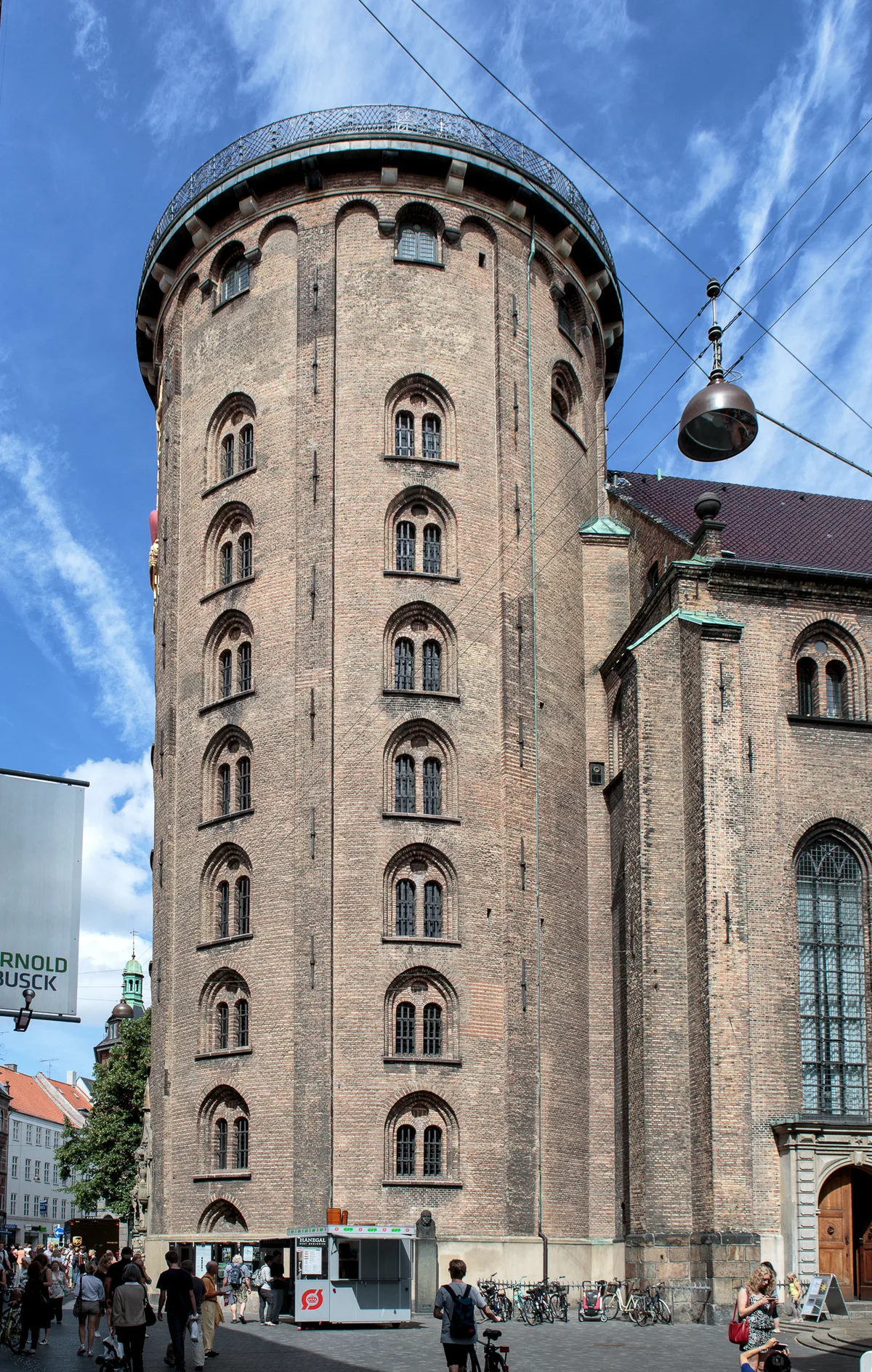
Photo: Avda / CC BY-SA 3.0
What Your Eye SeesA massive round brick tower, the height of a small skyscraper, standing on Købmagergade. Its smooth cylindrical wall is pierced by windows, and a single spiral corridor winds around the inside in 7.5 turns to a platform open to the sky.
ContextRundetårn, the Round Tower, was built in 1642 as an astronomical observatory, one of the many architectural projects of King Christian IV. It is famous for its equestrian staircase, a 7.5-turn helical corridor so gentle that a horse could be ridden to the top, allowing scholars and royalty to ascend without climbing steps.
Tsar Peter the Great climbed this tower in 1716, the same ruler who founded Peter and Paul Fortress and built Peterhof Palace in St Petersburg.
Source: Rundetaarn (official); Store norske leksikon
DidYou
Know
Rundetårn was built as the observatory of Trinitatis Church, forming a single scientific complex with the church and its university library. It is Europe's oldest surviving working observatory, and for centuries the students of the University of Copenhagen climbed the spiral to study the stars.
Share→ The Equestrian Staircase
Climb the spiral and notice there are no steps, the corridor rises 209 metres in 7.5 turns, built so gently that a horse could ride to the top. Tsar Peter the Great reportedly did so in 1716.
→ The Library That Became A Museum
Halfway up, the ramp opens into the Library Hall, where the University of Copenhagen kept its books from 1657. In the 1820s it was here that prehistory was first divided into the Stone, Bronze and Iron Ages, a system still used worldwide, giving the collection its start as the National Museum of Denmark.
Sources: Rundetaarn (official); Wikipedia (Rundetaarn); Rundetaarn
Euro Heritage
8. Christian VIII's Palace (Amalienborg Museum)
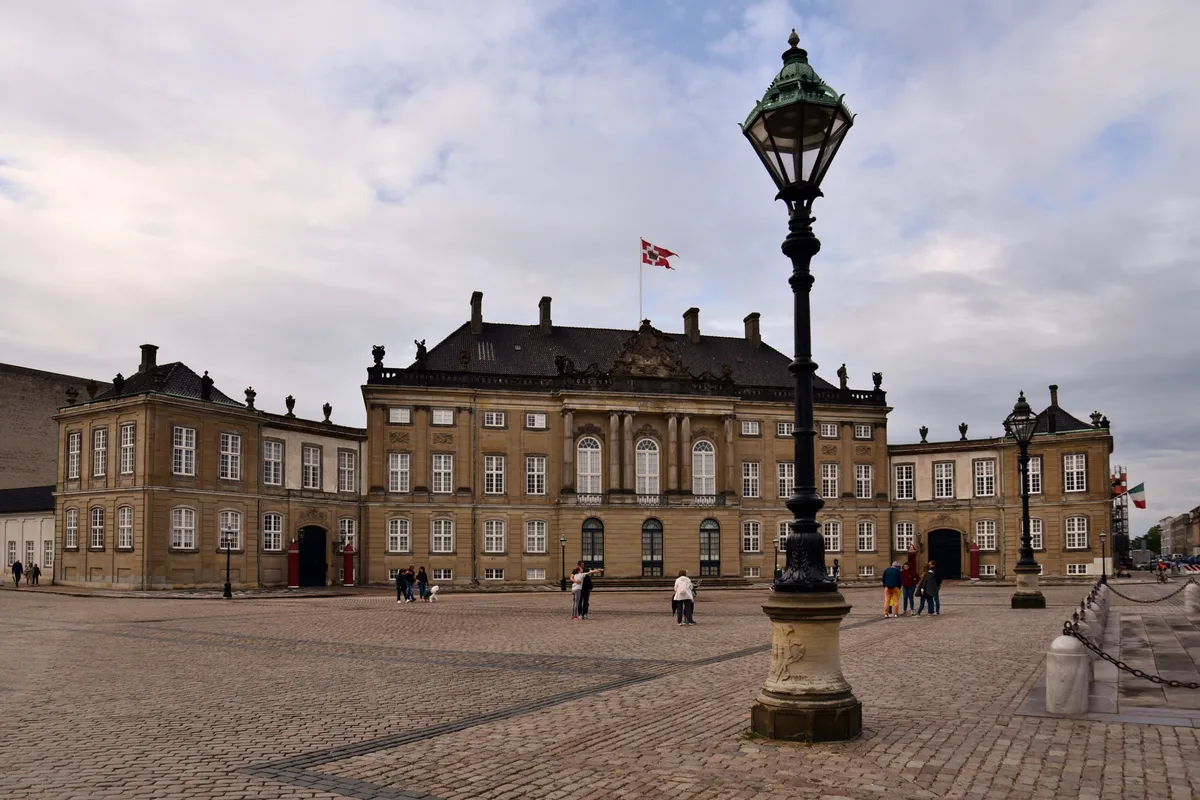
Photo: Bahnfrend / CC BY-SA 4.0
What Your Eye SeesA three-storey rococo palace of pale rendered brick, the northwestern face of Amalienborg's octagon. Its nine-bay facade is crowned by a low triangular pediment, and above the doorways hang the gilded coats of arms of the noble families who once owned these mansions.
ContextChristian VIII's Palace, originally Levetzau's Palace, was built in 1750–1760 for Privy Councillor Count Christian Frederik Levetzau, to a design by Nicolai Eigtved as part of the four-palace octagon. After Christiansborg Palace burned in 1794, the royal family bought all four mansions; Crown Prince Frederik took this one, and his son Christian, later King Christian VIII, grew up here. The palace today houses the Amalienborg Museum, which opened to the public in 1994 and displays the royal interiors of Christian IX and his descendants.
Source: The Royal Danish Collection (Amalienborg Museum); VisitCopenhagen
DidYou
Know
The Amalienborg Museum tells the story of Christian IX and Queen Louise, known across Europe as 'the in-laws of Europe', their children sat on the thrones of Denmark, Britain, Russia, and Greece. A room displays Faberge jewellery from the Russian Court Jeweller Peter Carl Faberge, gifted to the Danish royal family over decades.
Share→ The Gala Hall In Living Use
At the end of the museum route, the neoclassical Gala Hall on the piano nobile is still used by the royal family for official visits and events, on most days you can walk into a room that remains a working part of a royal residence rather than a museum display.
→ The Royal Apartments
The museum's interiors are displayed largely as they were left by the royal families who lived here, a war-era dining room, a study, and the gilt and silk reception rooms of Christian IX. Unlike a modern museum display, visitors walk through rooms arranged as homes, not exhibitions.
Sources: VisitCopenhagen; The Royal Danish Collection (Amalienborg Museum)
 Renaissance
9. Christiansborg Palace (Christiansborg Slot)
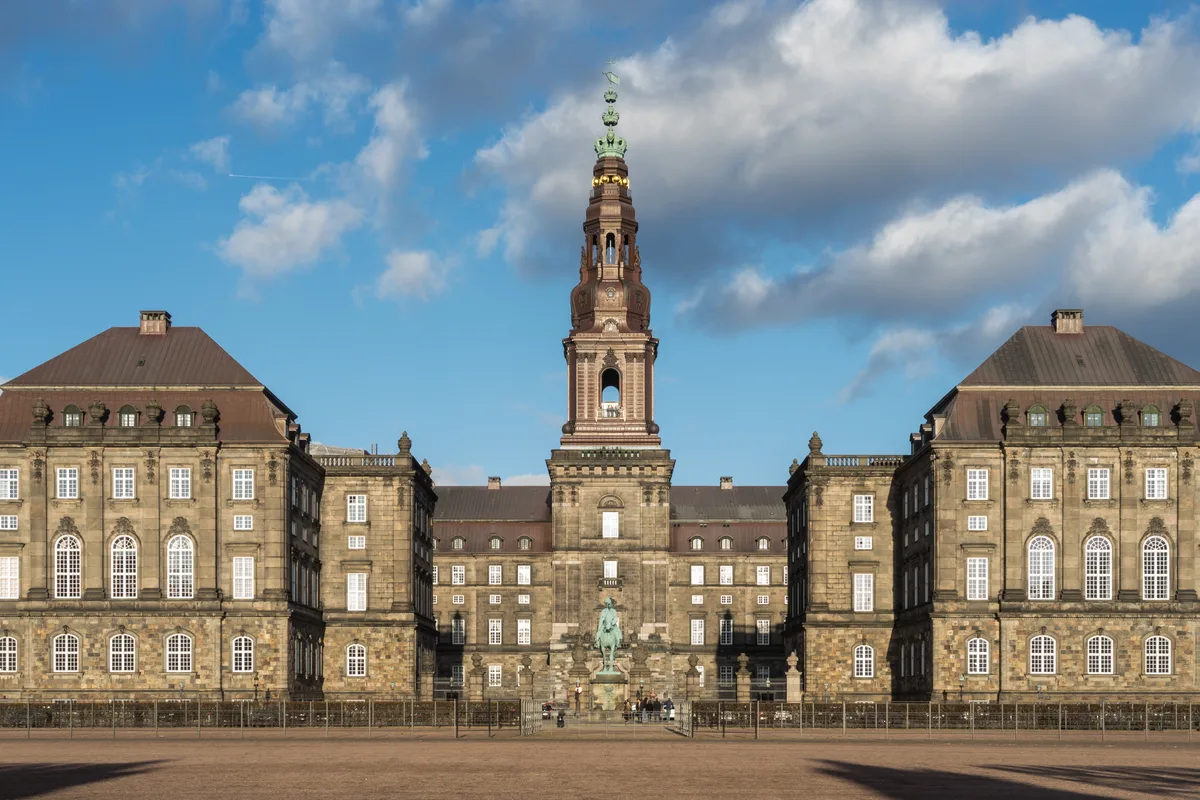
Photo: Jebulon / CC0
What Your Eye SeesA vast granite-clad palace with a copper-crowned tower rising 106 metres over Slotsholmen, the island in the heart of Copenhagen. A row of circular granite markers on the square in front traces the outline of the castle that first stood here in 1167.
ContextChristiansborg sits on the same islet where Bishop Absalon built his fortress in 1167, the moment Copenhagen's history begins. That castle was razed by the Hanseatic League in 1369, and its successors burned down twice more, in 1794 and 1884. The third and current palace was built between 1907 and 1928, and since 1849 the site has been home to Denmark's parliament, making it the country's centre of power for over 800 years.
Christian IV's hand also shaped Oslo: he rebuilt Akershus Fortress as a Renaissance palace and laid out Christiania's streets after the 1624 fire.
On ScreenChristiansborg Palace appears in the series Borgen (2010) and The Killing.
Source: Danish Parliament (thedanishparliament.dk); castlesintheworld.com; plizio.com; FT (Borgen tour 2023); standard.co.uk (actor interview); detour-roadtrips.com
DidYou
Know
No other building on Earth houses all three branches of a country's government. Under one roof at Christiansborg sit the Danish Parliament (Folketinget), the Prime Minister's Office and the Supreme Court, the legislative, executive and judicial powers of an entire nation gathered in a single palace, with the royal reception rooms above them.
Share→ The Castle Beneath The Palace
While casting the foundations in 1907, workers unearthed the ruins of Absalon's 1167 castle and the later Copenhagen Castle. They were opened to the public in 1924, you can walk through 800 years of Danish power beneath the parliament floor, including the Blue Tower where Christian IV's favourite daughter, Leonora Christina, was imprisoned for 22 years.
→ The Tower That Gained Crowns
The 106-metre tower was finished in 1928 with a single crown on its roof. Danes complained it looked like a small-town railway station, so after a nationwide collection the tiles were replaced with copper and a third crown was added, a palace tower reshaped by public opinion.
Sources: Danish Parliament (thedanishparliament.dk); Wikipedia (Christiansborg Palace)
Euro Heritage
Baroque Master
What are the historical sites in Copenhagen?
Our guide covers nine of Copenhagen’s most notable historical sites: Rosenborg Castle, Christiansborg Palace, Christian VIII’s Palace at Amalienborg, the Round Tower, the Old Stock Exchange (Børsen), and the churches of the Holy Spirit, St. Peter, Our Lady, and Holmen.
What palaces are in Copenhagen?
Copenhagen’s royal heritage is centred on its palaces. Our guide includes Rosenborg Castle, Christiansborg Palace, seat of the Danish parliament, and Christian VIII’s Palace at Amalienborg, the royal residence.
These landmarks reward close attention. Vestigia is a field companion for people who look longer, with curated context, architectural detail, and the stories most visitors walk past. Free on the App Store and Google Play.