Dubrovnik Historical Landmarks
1. Rector's Palace
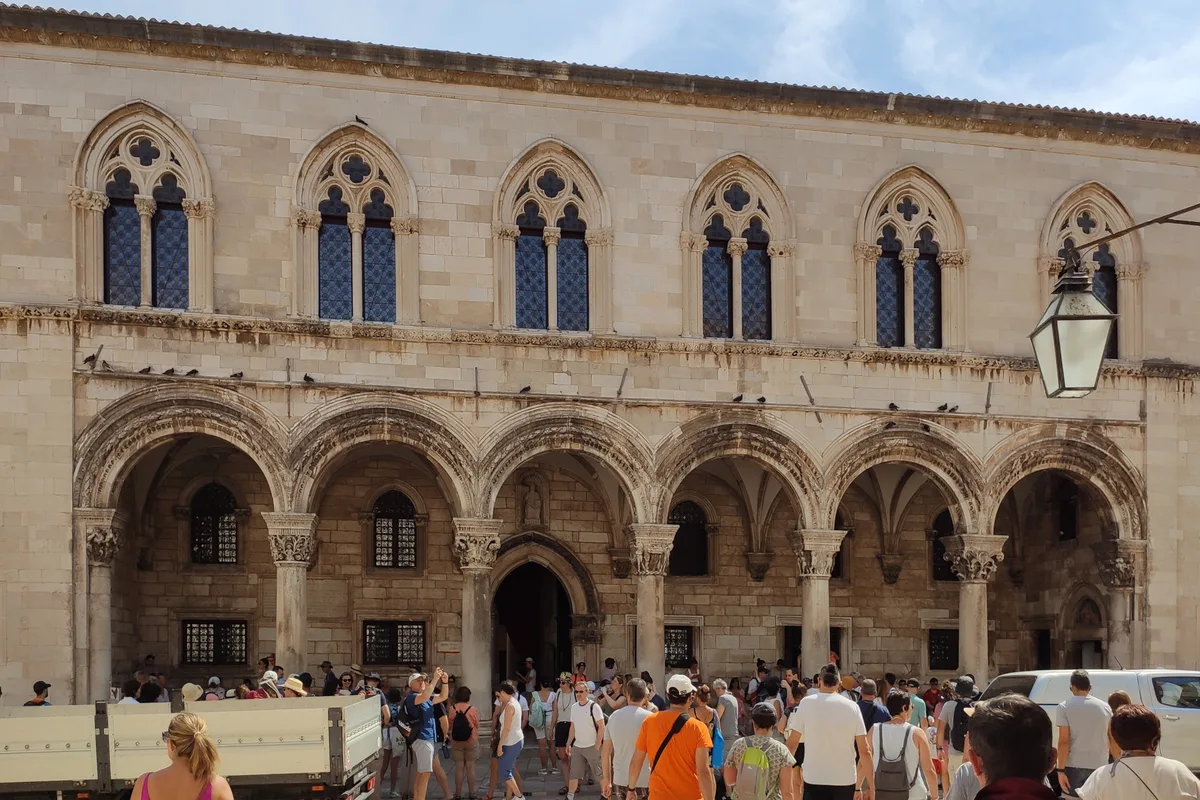
Photo: Américo Toledano / CC BY-SA 4.0
What Your Eye SeesA harmonious Gothic-Renaissance palace with a vaulted portico on the ground floor, an arcaded courtyard and a sculpted corner. Its facades blend pointed Gothic arches with Renaissance windows and a Baroque staircase, the product of centuries of rebuilding after fires, a gunpowder explosion and the 1667 earthquake.
ContextThe palace was the seat of the Rector of the Republic of Ragusa, the head of state elected for a one-month term and forbidden to leave the building except on official business. A defence structure occupied the site from the early Middle Ages; after the fire of 1435 the government ordered a new and more beautiful palace, which survives today as the home of the Cultural History Museum.
On ScreenThe Rector's Palace was a filming location for the series Game of Thrones (2012–2019) and appears in the film Star Wars: The Last Jedi (2017).
Source: UNESCO (Old City of Dubrovnik); Wikipedia (Rector's Palace); Wikipedia (Rector's Palace); Game of Thrones production notes; Star Wars: The Last Jedi production notes
 Did
DidYou
Know
A Rector could not be re-elected for two full years after his term, a deliberate lock written into Ragusan law so that no single nobleman could ever build a power base. The republic's head of state was, in effect, a president kept under constant watch.
Share→ The Renaissance Window
Look at the Renaissance window on the first floor, it is said to be the work of Salvi di Michele of Florence, who rebuilt the portico from 1467 after Michelozzo was rejected in 1464.
→ The Latin Inscription
Above the doorway that once linked the palace to the Town Hall, an inscription reads "Obliti privatorum publica curate", "Forget private matters, tend to public ones." It greeted every Rector as he passed from his chambers to the council hall.
→ The Bust Of Miho Pracat
Step into the atrium to find the only monument the republic ever erected to a private citizen, the bust of Miho Pracat, a wealthy sea captain who bequeathed his fortune to the city in the early 17th century.
Sources: Wikipedia (Rector's Palace, Dubrovnik); Experience Dubrovnik (Rector's Palace); Experience Dubrovnik, The Rector's Palace; Dubrovnik City, Rector's Palace
 Renaissance
 Euro Heritage
2. Sponza Palace
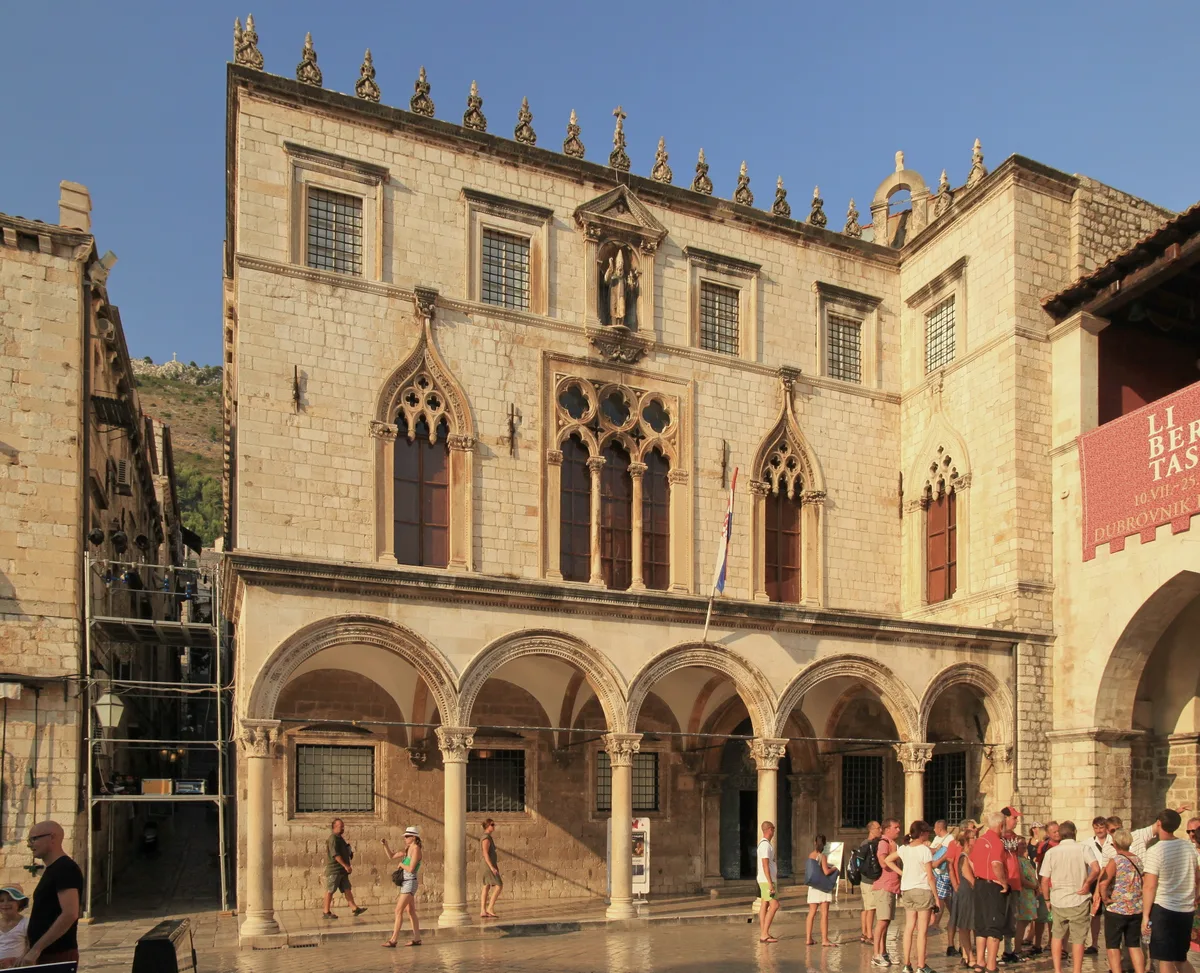
Photo: Marcin Konsek / CC BY-SA 4.0
What Your Eye SeesA rectangular Gothic-Renaissance palace with an arcaded central courtyard and an open loggia on the upper floor, built of pale limestone. Its corner position on Luža Square gives it two street facades, both crowned by a row of elegant arched windows above a heavy stone base.
ContextBuilt between 1516 and 1522 by Paskoje Miličević Mihov, the Sponza Palace served the Republic of Ragusa as customs house, mint, armoury, treasury and bank, its name "Divona" derives from the Italian dogana, "customs". It is the only large secular building of its era in Dubrovnik to survive the 1667 earthquake intact, which let the state keep functioning while the city lay in ruins.
Source: UNESCO (Old City of Dubrovnik); Wikipedia (Sponza Palace)
DidYou
Know
Today Sponza holds the State Archives, whose records reach back to the 12th century, the republic's contracts, letters and ship logs, a continuous paper trail of a maritime state that outlasted most of its Mediterranean rivals.
Share→ The Weights Inscription
Look up at an arch in the atrium for the Latin inscription 'Fallere nostra vetant et falli pondera', 'Our weights forbid cheating and being cheated', the customs house's carved promise of honest trade.
→ Bullet Holes From The 1990s
On the walls of the palace, and the cathedral nearby, bullet holes from the siege of Dubrovnik in 1991–92 remain visible, a raw trace of the city's modern war left untouched.
Sources: History Hit, Sponza Palace; Wikipedia (Sponza Palace)
Renaissance
Euro Heritage
3. Dubrovnik Cathedral
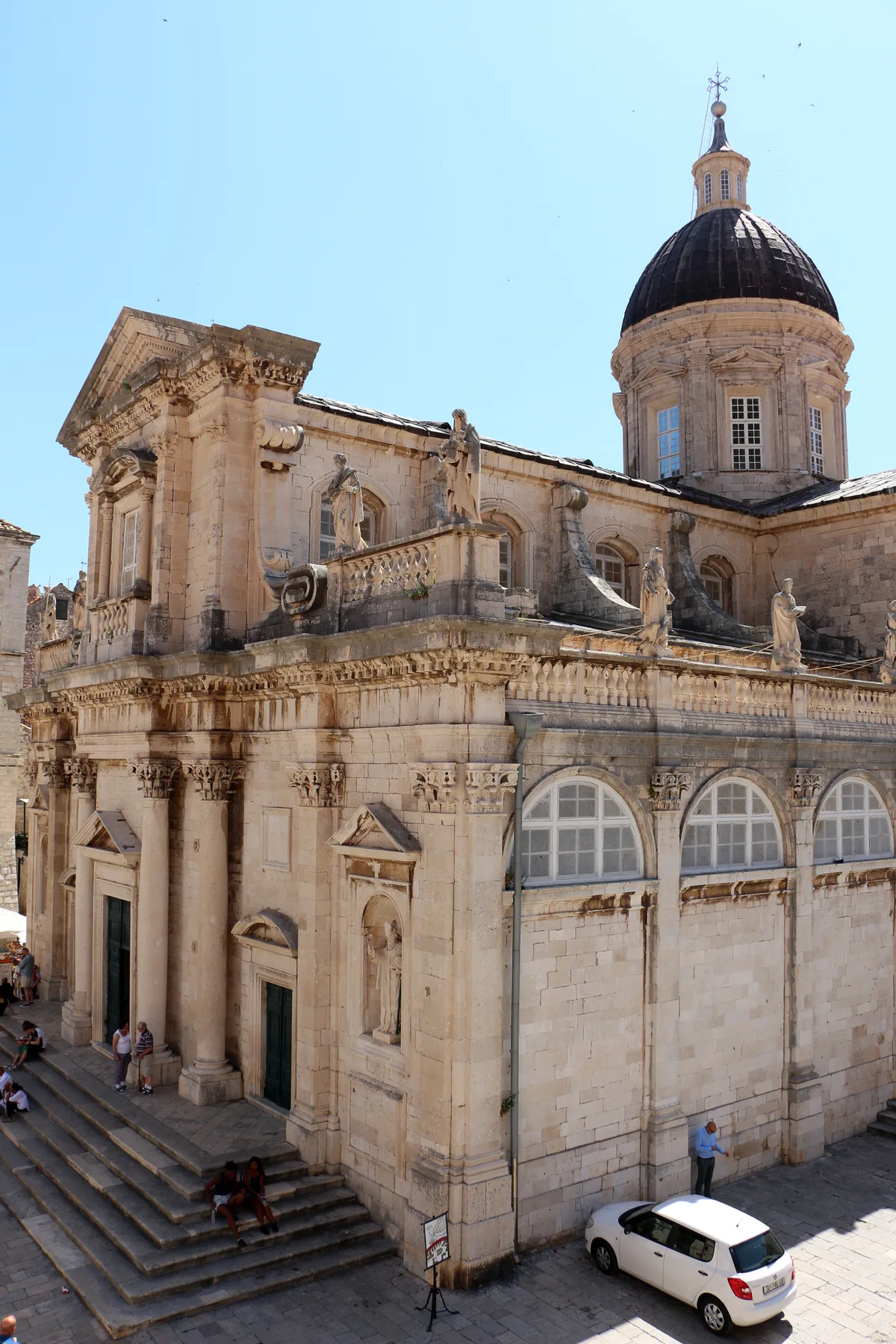
Photo: Sailko / CC BY 3.0
What Your Eye SeesA broad three-aisled Baroque basilica with a tall dome and side chapels, its pale stone facade completed on all four sides, unusual for a church of its time, when most Italian Baroque facades were left unfinished. Inside, marble columns frame a spacious nave beneath the main altar's Titian polyptych.
ContextThe Romanesque cathedral that stood here since the 12th century was destroyed in the great earthquake of 6 April 1667. The republic ordered a new Baroque cathedral built on the same foundations; construction ran from 1671 to 1713, with plans commissioned in Rome. The treasury preserves more than 130 relics of saints, including the reliquaries of St Blaise, Dubrovnik's patron saint.
Source: UNESCO (Old City of Dubrovnik); Wikipedia (Dubrovnik Cathedral)
DidYou
Know
Every 3 February the relics of St Blaise are carried through the Old Town in the Feast of St Blaise procession, one of the longest continuously observed civic-religious events in Croatia, centred on a gold Byzantine reliquary, decorated with 11th-century enamel medallions, said to hold the saint's skull.
Share→ The Titian Altarpiece
Approach the main altar for 'The Assumption of the Virgin', a polyptych painted by Titian in 1552, more than a century before the Baroque cathedral that houses it was begun.
→ The Foundation Stones Below
Look down beneath the Baroque floor, where excavations revealed the foundations of the earlier Romanesque cathedral destroyed in 1667, evidence of a church on this spot since at least the 12th century.
Sources: Wikipedia (Dubrovnik Cathedral); Dubrovnik City, Cathedral; croatialovers.com
 Baroque Master
 Spiritual Seeker
4. Church of St. Blaise
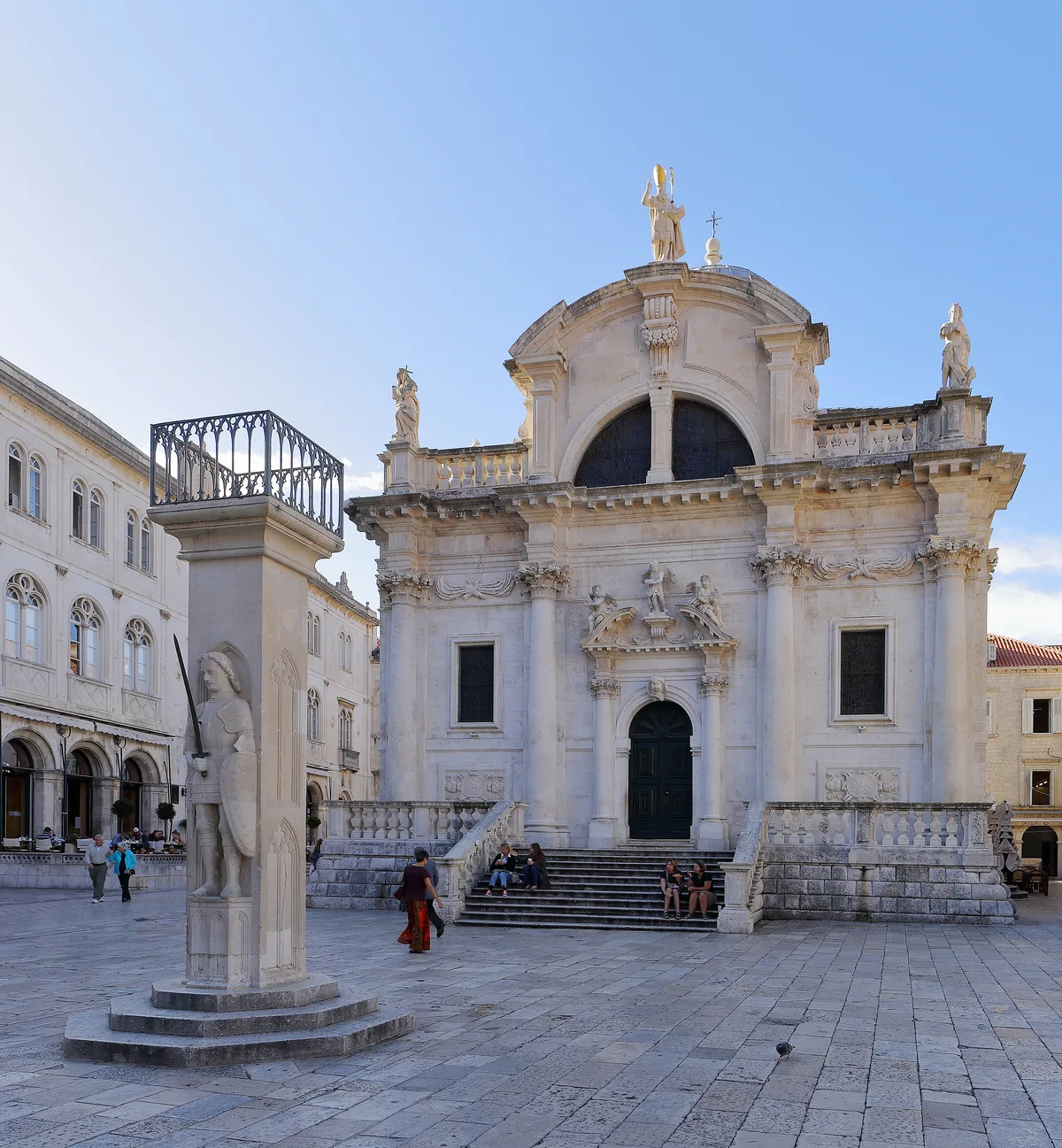
Photo: Martin Falbisoner / CC BY-SA 4.0
What Your Eye SeesA Baroque church with an elegant curved facade of pale stone, a large dome and a wide staircase rising to the main portal. It stands at the eastern end of Stradun on Luža Square, its position marking the very centre of civic life in the Old Town.
ContextThe church is dedicated to St Blaise, the patron saint of Dubrovnik, whose festival on 3 February has been celebrated since at least 972. The medieval church on this site survived the 1667 earthquake but burned down in 1706; the present Baroque church was built by the Venetian architect Marino Gropelli in 1715 on its foundations.
Source: UNESCO (Old City of Dubrovnik); Wikipedia (Church of St. Blaise, Dubrovnik)
DidYou
Know
Inside the church stands the silver statue of St Blaise holding a model of Dubrovnik, the most precious object in the city's history. The gilded 15th-century statue survived both the 1667 earthquake and the 1706 fire, and the model in its hand shows the city as it looked before the disaster.
Share→ The Barrel Vault And Dome Tambour
Look up at the barrel vault and dome tambour carried on four Corinthian columns; blind cupolas fill the nave corners, the 1715 Greek-cross plan keeps the altar visible from every point.
→ Upper Facade Statues
Upper facade statues of St Blaise with Faith and Hope by Marino Gropelli (1715), the saint holding a model of the pre-1667 city.
Sources: Wikipedia (St Blaise's Church, Dubrovnik); baroqueart.museumwnf.org (St Blaise); baroqueart.museumwnf.org
Baroque Master
Spiritual Seeker
5. Fort Lovrijenac
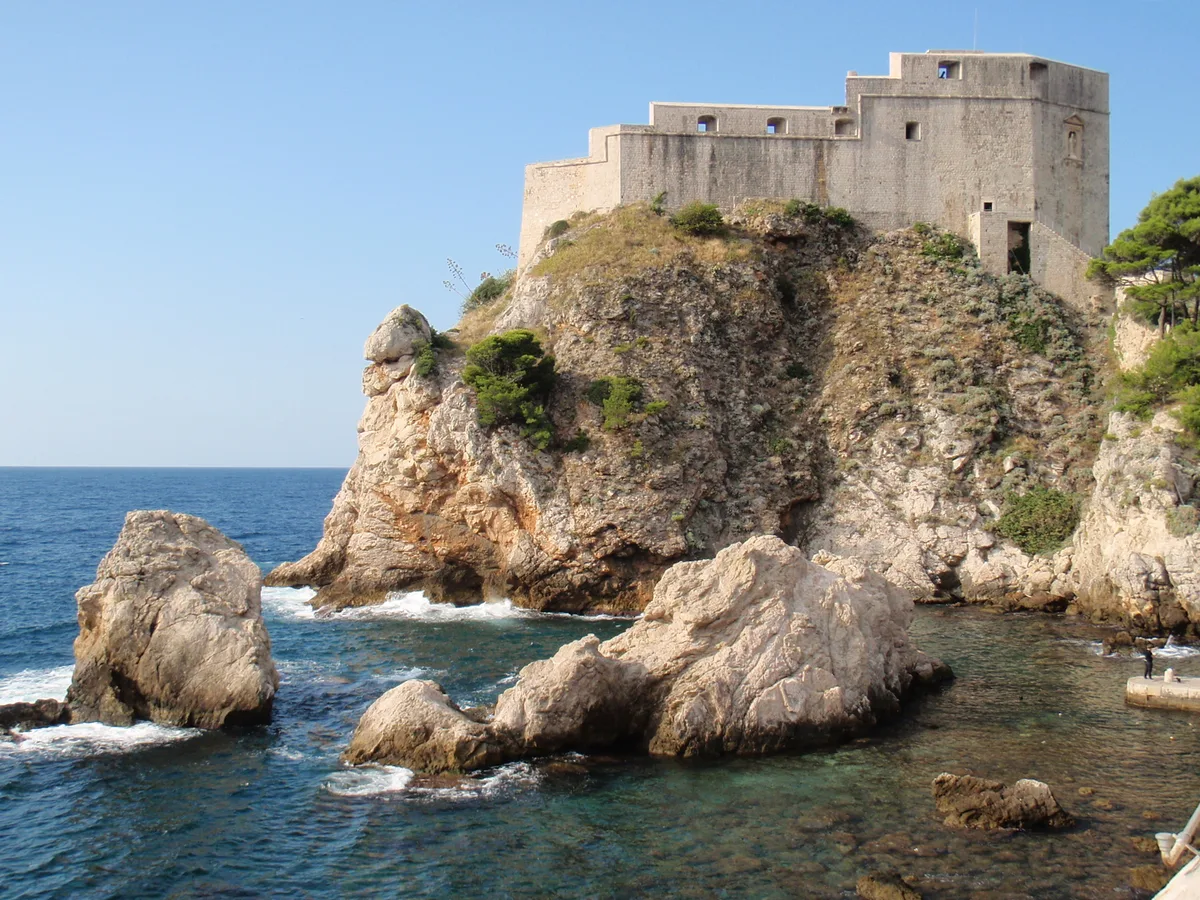
Photo: Raki_Man / CC BY 3.0
What Your Eye SeesA triangular fortress on a 37-metre rock above the sea just outside the western walls, its sheer outer walls rising from the water. Three terraces with heavy parapets step down the rock, and above the gate a Latin inscription is carved in stone.
ContextFort Lovrijenac, "Dubrovnik's Gibraltar", guarded the western approach to the city against the republic's great rival, Venice. Chronologists date the fort to 1018 or 1038, and legend holds that Ragusan citizens raced the Venetians to build on the rock first, finishing in just three months. The fortress was repaired after the 1667 earthquake, and today its terraces host performances of Shakespeare's Hamlet during the Dubrovnik Summer Festival.
On ScreenFort Lovrijenac stood in for the Red Keep of King's Landing in Game of Thrones (2012–2019); its terrace hosted Joffrey's name-day tournament in Season 2 and its courtyards appear throughout the series.
Source: UNESCO (Old City of Dubrovnik); Wikipedia (Lovrijenac); Wikipedia (Lovrijenac); Game of Thrones production notes
DidYou
Know
The fortress's fail-safe is written into its walls: the sea-facing walls are nearly 12 metres thick, but the wall facing the city is only 60 centimetres, thin enough for Dubrovnik's own cannons to breach it if the fort ever fell to an enemy or a mutinous commander.
Share→ The Liberty Inscription
Look up above the entrance for the inscription 'NON BENE PRO TOTO LIBERTAS VENDITUR AURO', 'Freedom is not sold for all the gold in the world', the motto of the Republic of Ragusa, which banned the slave trade in 1416.
→ The Lizard Cannon
Search the ramparts for the fortress's most famous cannon, 'Gušter' (the Lizard), cast in 1537 by master founder Ivan Rabljanin. It never fired a shot; in the 19th century it was lost to the sea when the rope broke as Austrian troops lowered it.
→ The Red Keep
Stand on the terraces of Lovrijenac, which Game of Thrones fans will recognise as the Red Keep in King's Landing, where the tournament in honour of King Joffrey was filmed.
Sources: Wikipedia (Lovrijenac); Dubrovnik City, Fortress Lovrijenac; ancient-history-sites.com; absolute-croatia.com
Euro Heritage
 Time Traveler
6. Minceta Tower
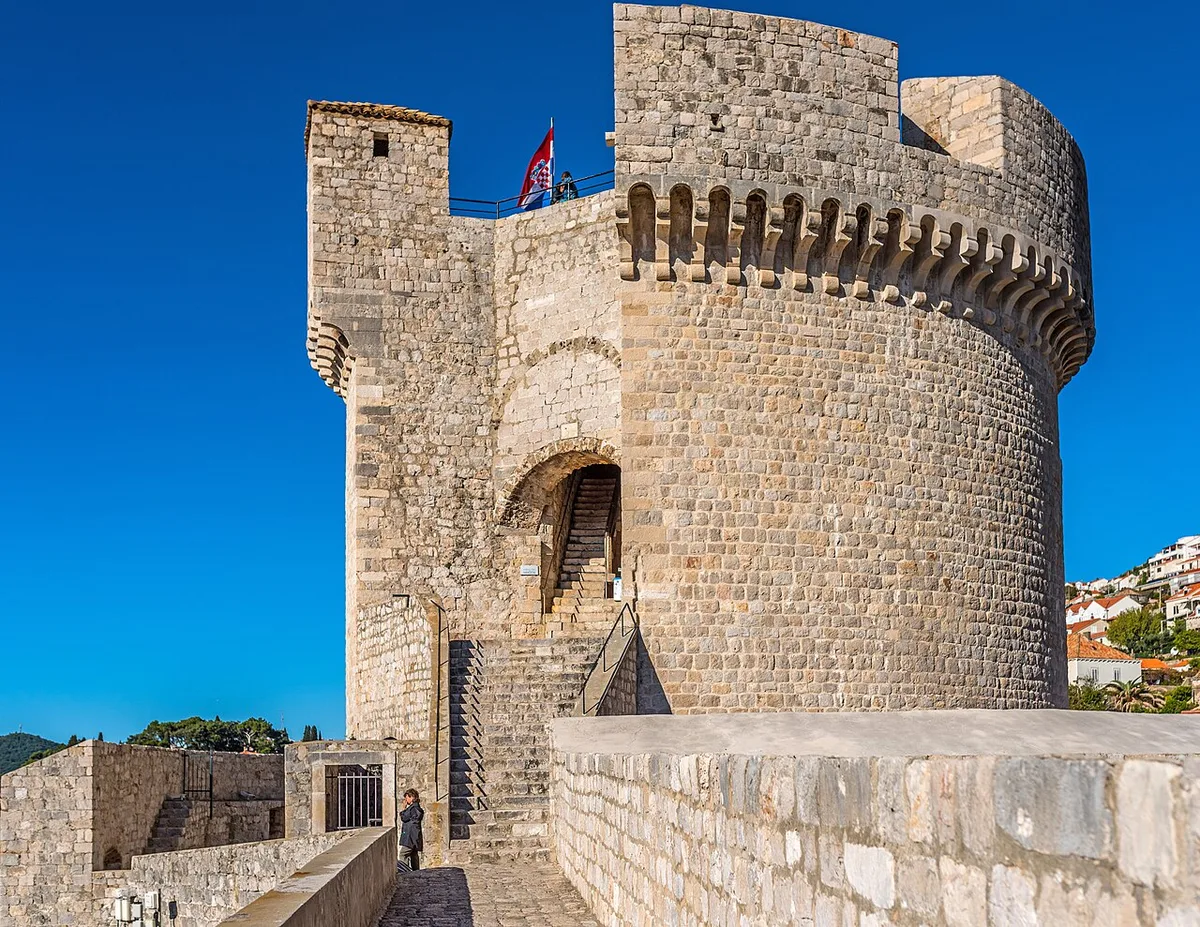
Photo: Bengt Nyman from Vaxholm, Sweden / CC BY 2.0
What Your Eye SeesA massive round tower dominating the north-western corner of the city walls, its cylindrical form crowned by a ring of Gothic battlements. Its walls are six metres thick, and from its summit the whole of the Old Town and the Adriatic open out below.
ContextA four-sided fort stood here from 1319, taking its name from the Menčetić family that owned the land. After the fall of Constantinople in 1453, the republic called in the Florentine architect Michelozzo to rebuild it as a round tower adapted for gunpowder warfare. Michelozzo fell out with the city authorities and left; Juraj Dalmatinac completed the tower in 1464, adding the lower stabilising courses and the distinctive Gothic crown.
Michelozzo's Florentine hand is also felt at the Palazzo Medici Riccardi in Florence, built for Cosimo de' Medici.
On ScreenMinčeta Tower doubled as the windowless House of the Undying in Game of Thrones (2012–2019), the tower Daenerys circles in Season 2 while searching for her stolen dragons.
Source: UNESCO (Old City of Dubrovnik); Wikipedia (Minčeta Tower); Wikipedia (Minčeta Tower); Game of Thrones production notes
DidYou
Know
Minceta is the symbol of Dubrovnik's slogan "the unconquerable city". During the Dubrovnik Summer Festival a second flag flies beside the Croatian flag on the tower, the white Libertas flag of the old republic, with "libertas", Latin for freedom, written on it.
Share→ The Gothic Crown
Look at the Gothic crown by Juraj Dalmatinac (1464), whose Dalmatian Renaissance work also crowns Šibenik Cathedral, a visible link between the two Adriatic cities.
→ Six-Metre Walls
Trace the tower's walls, six metres thick, designed for the age of cannon: gun ports pierce the masonry at intervals, each commanding a stretch of the northern approach where the Ottomans threatened.
→ The House Of The Undying
Climb toward the round Minceta tower, which Game of Thrones fans will recognise as the House of the Undying in Qarth, where Daenerys searches for her stolen dragons in Season 2.
Sources: History Hit (Minčeta Tower); Wikipedia (Minčeta Tower); History Hit, Minceta Tower
Euro Heritage
 Gothic Soul
7. Franciscan Monastery & Old Pharmacy
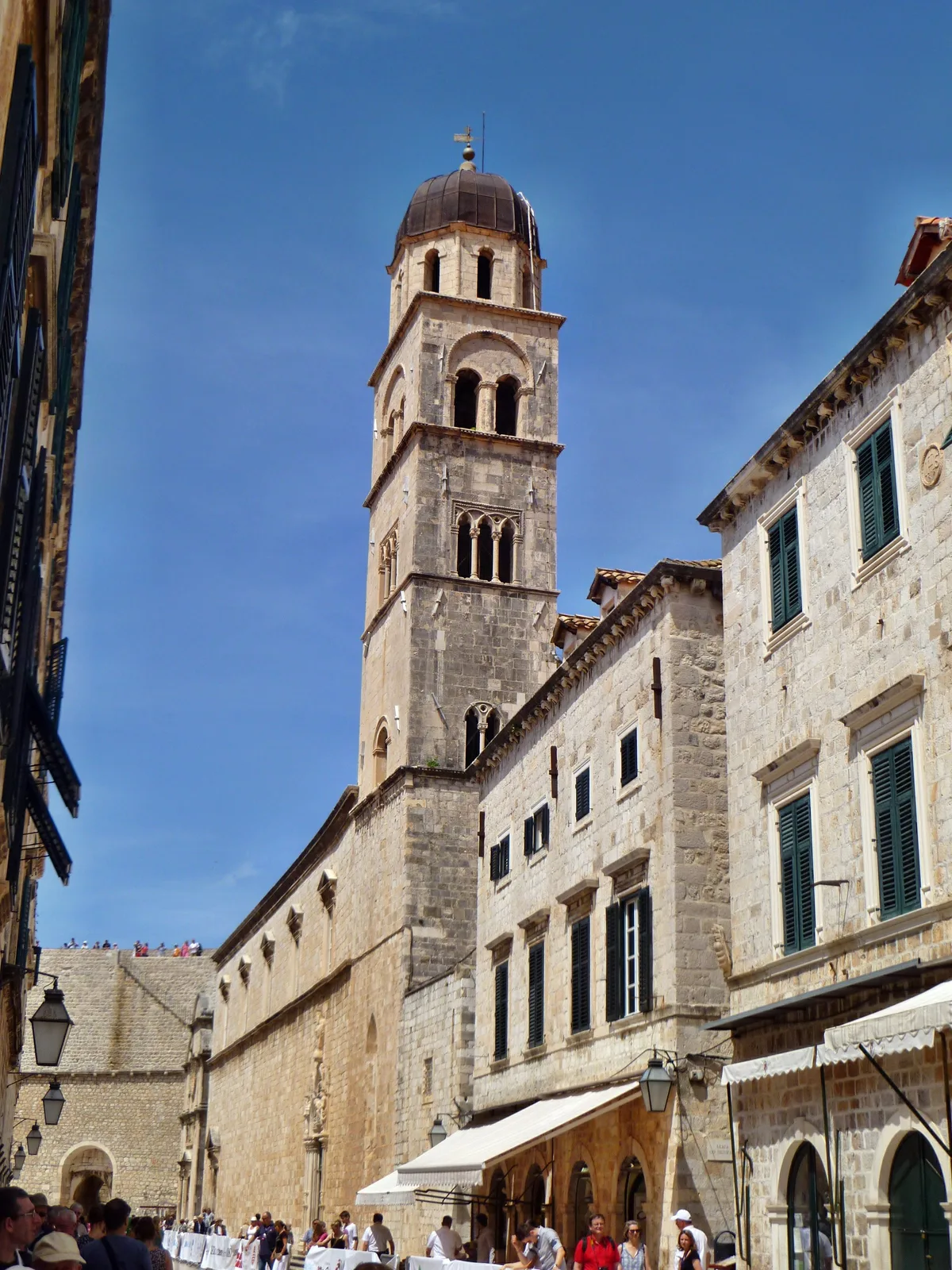
Photo: JoJan / CC BY 3.0
What Your Eye SeesInside the Pile Gate, a Romanesque south portal with a carved Pietà opens off Stradun onto a serene cloister of double columns, each capital carved differently with human faces, animals and grotesques. A small garden and well fill the centre, and the church interior beyond is Baroque.
ContextThe Franciscans arrived in Dubrovnik around 1234, and the friary moved inside the walls to this site in 1317. Its pharmacy, founded the same year to care for the friars and opened to the public, has operated continuously for over 700 years, one of the oldest working pharmacies in the world. The late Romanesque cloister was built by the master Mihoje Brajkov of Bar in 1360 and survived the 1667 earthquake, which destroyed most of the rest of the monastery.
Source: UNESCO (Old City of Dubrovnik); Wikipedia (Franciscan Church and Monastery, Dubrovnik)
DidYou
Know
The friary church holds works by the masters of the Dubrovnik school, including a 15th-century crucifix by Nikola Božidarević, painted on wood that has survived fire, earthquake and war on this site for six centuries.
Share→ The Pietà On The Street
Above the south portal on Stradun, a Pietà carved in 1498 by the Petrović brothers survives in place, it came through the 1667 earthquake that destroyed the building around it, and pedestrians have walked past the same carving for over 500 years.
→ The Carved Capitals
Walk the cloister and study its double columns, each topped by a different capital, human heads, animals, plants and grotesques, a late Romanesque carver's personal gallery, no two alike.
Sources: dubrovnik-tickets.co, Franciscan Monastery; Wikipedia (Franciscan Monastery, Dubrovnik); Dubrovnik City, Franciscan Monastery
Spiritual Seeker
 Ancient Roots
8. Dominican Monastery
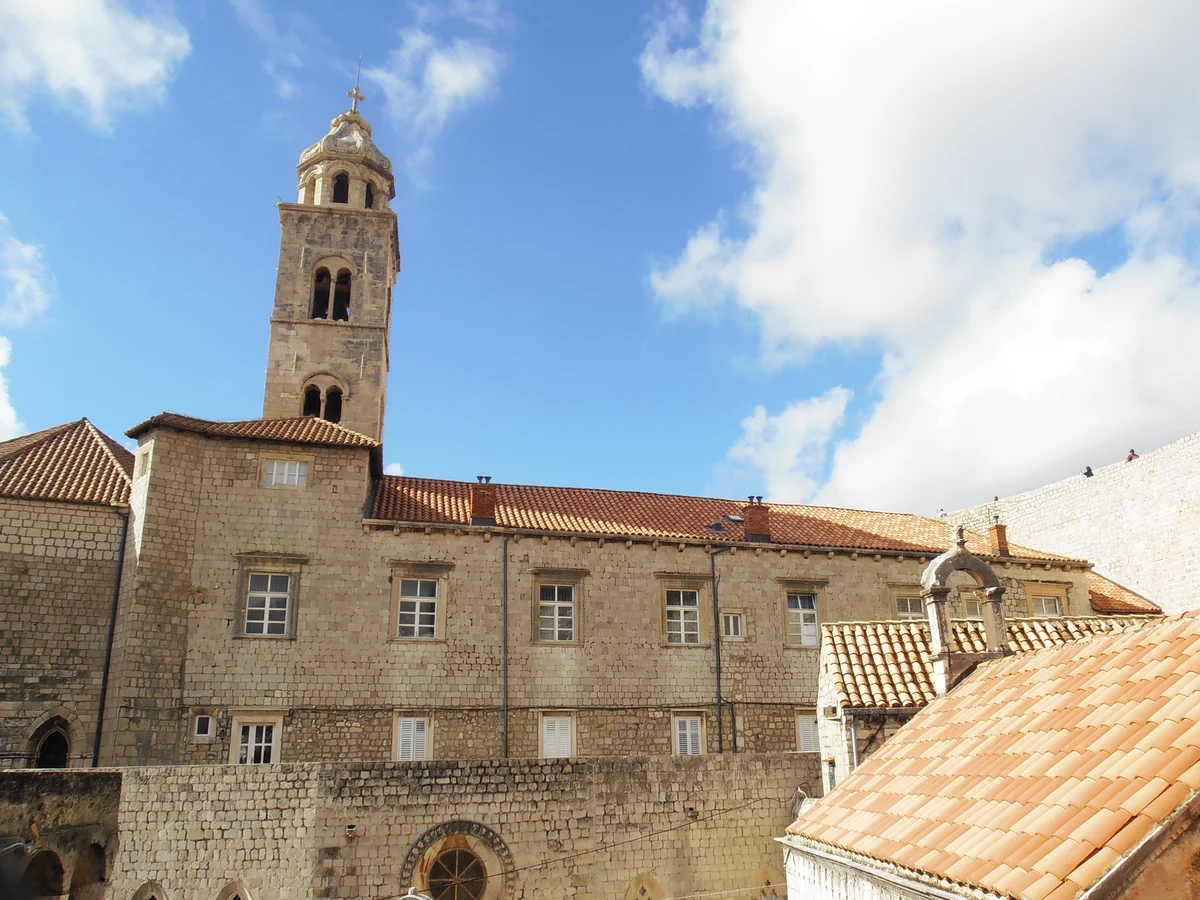
Photo: IoannesII / CC BY-SA 3.0
What Your Eye SeesA fortified monastery complex pressed against the eastern city walls, its heavy bare walls looking more like a fortress than a church. Inside, a late-Gothic cloister with slender, tall columns opens around a quiet garden, one of the least visited corners of the Old Town.
ContextThe Dominican order established a presence in Dubrovnik in 1225, and the monastery was built deliberately against the city's eastern defences, with its bell tower doubling as a watchtower in the fortification system. The church took shape through the 14th century, and the cloister porticoes were added between 1456 and 1483 from designs by the Florentine Maso di Bartolommeo. Damaged in the 1667 earthquake, the complex was rebuilt, and its museum now holds the most important collection of Dubrovnik School paintings in existence.
On ScreenThe Dominican Monastery appears in the series Game of Thrones (2012–2019).
Source: UNESCO (Old City of Dubrovnik); Wikipedia (Dominican Monastery, Dubrovnik); Wikipedia (Dominican Monastery, Dubrovnik); Game of Thrones production notes
DidYou
Know
The monastery's museum owns the finest painting in any Dubrovnik museum: a Mary Magdalene with St Blaise and the Archangel Raphael attributed to Titian, dated to around 1554. The building has kept it for nearly five centuries, through earthquake, fire and war.
Share→ The Architect's Toothache
Find the last capital on the left after the entrance, where a sculpted head has a swollen cheek, the architect's self-portrait. Master Bartolommeo carved his own face into the cloister, immortalising himself mid-toothache.
→ The Napoleonic Horse Troughs
Step among the cloister pillars to find the stone feeding troughs left from when Napoleon's troops occupied Ragusa in the early 19th century and used the church to stable horses.
→ The Walled-Up Balustrade
Look at the stone balustrade of the great stairway leading to the south portal, the lower openings are filled with mortar, walled up by the friars so the ankles of women ascending to church would not be seen.
Sources: Wikipedia (Dominican Monastery, Dubrovnik); dubrovnikcity.com (Dominican Monastery); History Hit (Dominican Monastery, Dubrovnik); Dubrovnik City (Dominican Monastery)
Spiritual Seeker
Gothic Soul
9. Big Onofrio's Fountain
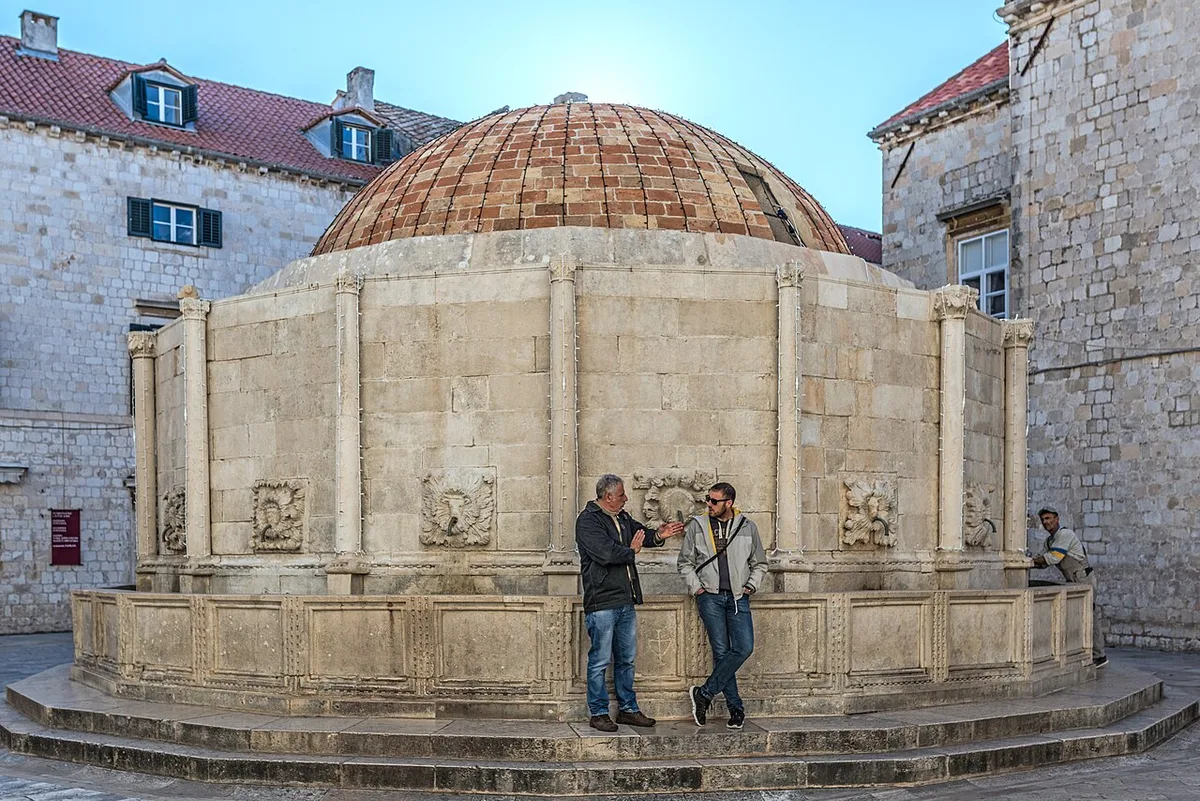
Photo: Bengt Nyman from Vaxholm, Sweden / CC BY 2.0
What Your Eye SeesA sixteen-sided domed fountain of pale stone at the west end of Stradun, just inside the Pile Gate. Around its base, sixteen carved stone "maskerons", faces of a sort, pour water from their mouths into a round drainage pool where visitors still fill their bottles.
ContextIn the mid-15th century, Dubrovnik's lack of drinkable water became urgent as the republic grew rich on trade. The senate commissioned the Neapolitan architect Onofrio della Cava to build an aqueduct from the Šumet spring, about 12 kilometres away; the fountain, built 1438–1440, was its grand terminus. The original dome was crowned by a dragon and rich sculpture, lost in the 1667 earthquake, only the sixteen carved heads remain.
Source: UNESCO (Old City of Dubrovnik); Wikipedia (Onofrio's Fountain)
DidYou
Know
The fountain is no relic: the same spring at Šumet still supplies Dubrovnik, and the water running from the maskerons today is potable. Locals used Onofrio's fountains as their main water source until the end of the 19th century.
Share→ Sixteen Faces, All Different
Each of the fountain's sixteen sides bears a unique stone-carved maskeron, a masked face with the water tap projecting from its mouth. No two are alike; the original sculptural decoration was lost to the 1667 earthquake.
→ The Bare Cupola
Look up at the bare cupola: the stone dome today is plainer than the lost original, with the 16 maskerons as sole surviving sculpture.
→ The Aqueduct Channel On Top
Look for the stone course along the dome top marking where the aqueduct once fed the basin, the covered channel that carried water from Šumet is visible as a raised stone ring above the street.
Sources: History Hit, Large Onofrio Fountain; Dubrovnik City, Onofrio's Fountains; Dubrovnik City (Onofrio's Fountains); History Hit (Large Onofrio Fountain)
Renaissance
Euro Heritage
10. St. Ignatius Church
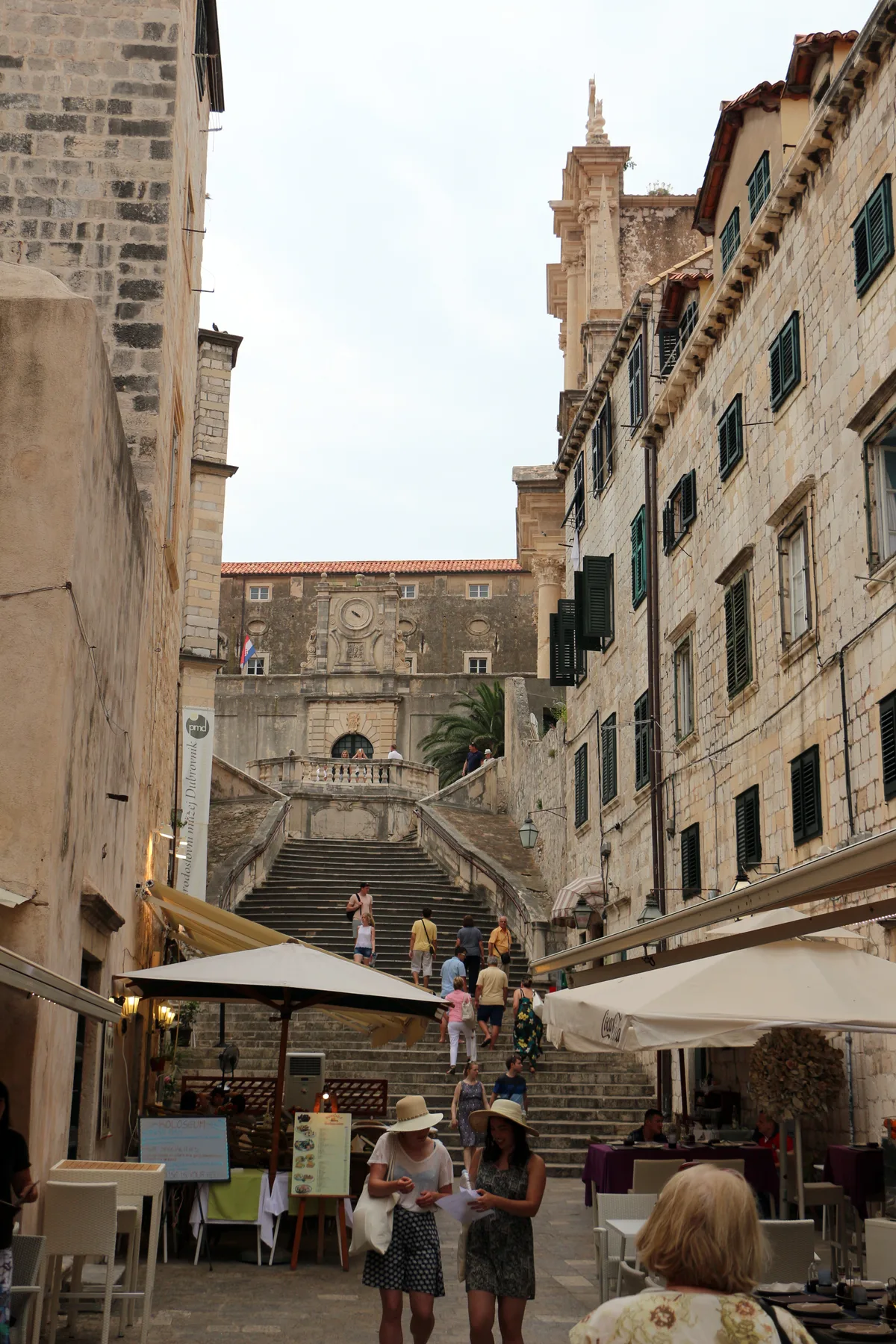
Photo: Sailko / CC BY 3.0
What Your Eye SeesA grand Baroque Jesuit church at the top of a broad double staircase above the Gundulić Square market. Its painted ceiling and ornate altars glow inside, while the flight of stone steps below, the Jesuit Stairs, sweeps down through the Old Town.
ContextThe Church of St Ignatius was built during Dubrovnik's period of active Jesuit community life, to designs by the Jesuit architect Andrea Pozzo, and completed in 1725. It stands at the top of the monumental Jesuit Stairs, designed to match the Spanish Steps in Rome.
On ScreenThe Jesuit staircase of St Ignatius Church is where Cersei's Walk of Shame was filmed in Game of Thrones (2012–2019), the season-five finale in which she is forced to parade through King's Landing.
Source: UNESCO (Old City of Dubrovnik); Wikipedia (Church of St. Ignatius, Dubrovnik); Wikipedia (Game of Thrones); production notes
DidYou
Know
The church's bell dates to 1355, cast some 370 years before the church was finished, making it the oldest bell in Dubrovnik. It had already survived three centuries of fires, sieges and earthquakes before the Baroque building around it existed.
Share→ The IHS Monogram
Look up high on the facade, carved in stone, for the monogram IHS, the first three letters of Jesus's name in Greek and the universal mark of the Jesuit order, identifying the building as Jesuit before you reach the doorway.
→ The Collegium Beside The Church
The Collegium Ragusinum beside the church stands askew to the church, a visible kink where the Jesuits inserted the Baroque complex into the medieval street grid.
Sources: Dubrovnik Tourist Board (Church of St Ignatius); baroqueart.museumwnf.org (St Ignatius); Visit Dubrovnik (Church of St Ignatius)
Baroque Master
Spiritual Seeker
11. St. Saviour Church
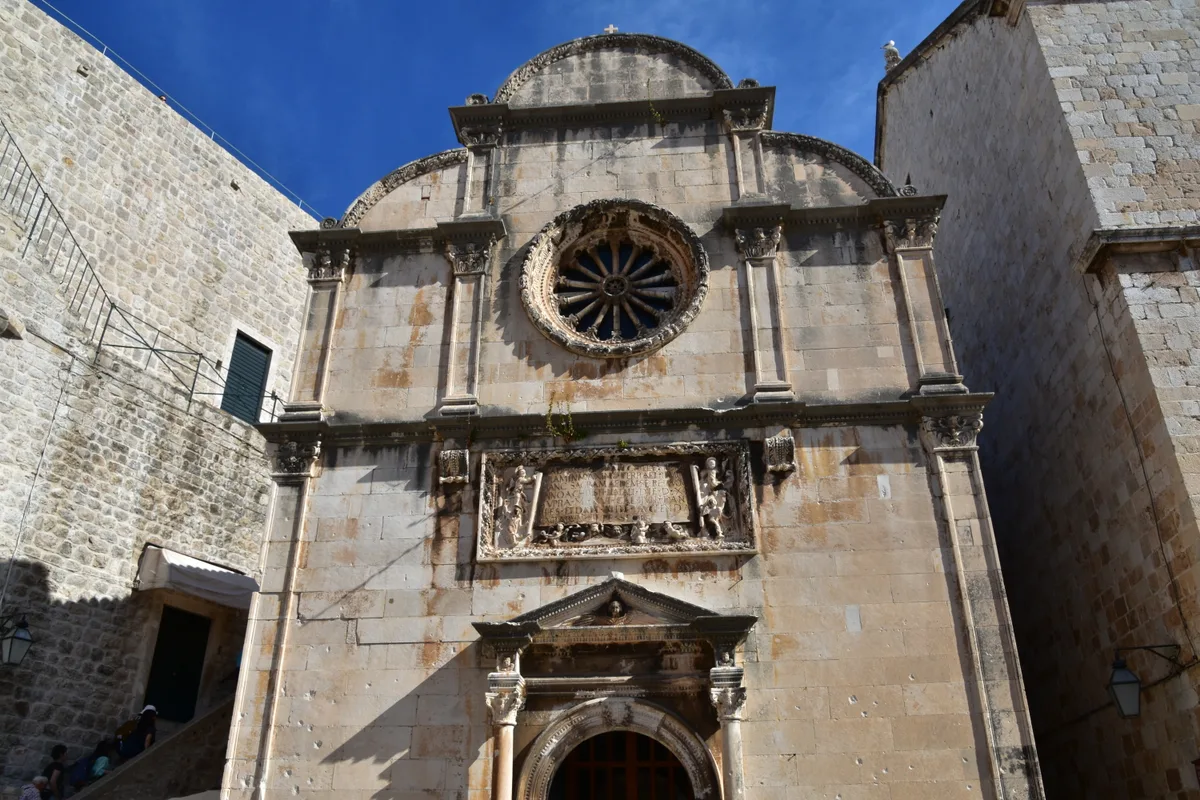
Photo: Richard Mortel / CC BY 2.0
What Your Eye SeesA small single-nave church on Stradun between the Franciscan Monastery and the Pile Gate, its simple facade crowned by a curved three-lobed gable. The interior's Gothic ribbed vault and pointed-arch windows mix with the Renaissance lines of the facade and the semicircular apse.
ContextThe church was built as a votive offering after the earthquake of 1520, which the senate read as a warning: the republic vowed to raise a church to the Holy Saviour in thanks for the city's survival. Construction ran from 1520 to 1528 under the master Petar Andrijić of Korčula. When the far greater earthquake of 6 April 1667 destroyed much of the city and killed some 5,000 citizens, the little church stood firm and survives today largely in its original form.
Source: UNESCO (Old City of Dubrovnik); Wikipedia (St. Saviour Church, Dubrovnik)
DidYou
Know
St Saviour is one of the purest early Renaissance buildings in Dubrovnik, finished by Petar Andrijić of Korčula in 1528, and unlike the cathedral and other churches rebuilt in Baroque after 1667, it survives exactly as its master mason left it.
Share→ The Senate's Vow Inscription
Look above the main inscription plaque on the façade, held by winged putti, recording the Senate's 1520 vow in Latin, the visible text of the thanksgiving that built the church.
→ The Three-Lobed Gable
Study the facade's curved, three-lobed gable and the semicircular apse, which belong firmly to the Renaissance, while the ribbed vault inside is still Gothic, a building caught between two styles, preserved as built.
Sources: Wikipedia (St. Saviour Church, Dubrovnik); Hrcak (St Saviour 1520-1534); Hrcak (St Saviour)
Spiritual Seeker
Renaissance
Where is King’s Landing in real life?
King’s Landing in Game of Thrones is Dubrovnik, Croatia. The Red Keep is Fort Lovrijenac, perched on a 37-metre cliff nicknamed “Dubrovnik’s Gibraltar”; the House of the Undying is the round Minčeta Tower; the Rector’s Palace doubled for the Spice King’s palace in Qarth; and Cersei’s Walk of Shame descends the Jesuit Stairs by St Ignatius Church. Season 1 actually used Mdina in Malta, Dubrovnik took over from Season 2 because of its scale. The Walk of Shame sequence almost didn’t happen: the church initially refused to allow nudity so close to its sacred stairs.
Where was Cersei’s Walk of Shame filmed?
Cersei’s Walk of Shame was filmed on the Jesuit Stairs, the monumental baroque staircase below St Ignatius Church in Dubrovnik’s Old Town, deliberately designed to echo Rome’s Spanish Steps. The scene almost didn’t happen: the church initially refused to allow filming with nudity so near its sacred space. Visitors now climb the same steps retracing Cersei’s penance.
These landmarks reward close attention. Vestigia is a field companion for people who look longer, with curated context, architectural detail, and the stories most visitors walk past. Free on the App Store and Google Play.